What is the taxonomic classification of a red squirrel?
The common name "red squirrel" often sparks an image in one's mind, but depending on where you are in the world, that image could represent two very distinct animals. Understanding the taxonomic classification is the scientific key that unlocks the differences and similarities between these spirited creatures, tracing their lineage from the broadest divisions of life right down to their specific species names. The classification process reveals that while they share a place in the squirrel family, they diverged long ago, resulting in different scientific designations for the North American and Eurasian versions. [1]
# Life Kingdom
Every living organism is slotted into a hierarchy that organizes biological diversity. The red squirrel, whether the one flashing through a pine forest in Alaska or scurrying up an oak in Scotland, begins its journey in the Kingdom Animalia. [6] This immediately places it among multicellular, eukaryotic organisms that must consume other organisms for energy. Moving down the line, they are part of the Phylum Chordata, signifying that at some point in their development, they possessed a notochord, which in the case of squirrels, develops into a backbone. [6]
# Class Mammalia
The next significant placement is the Class Mammalia. [6] This group is defined by several key, easily recognizable characteristics: they are warm-blooded vertebrates, they possess hair or fur—a necessity for surviving colder climates—and perhaps most notably, the females produce milk to nourish their young via mammary glands. [6] This class placement connects the red squirrel to everything from whales to bats, but the subsequent order narrows the focus considerably toward smaller, terrestrial mammals.
# Order Rodentia
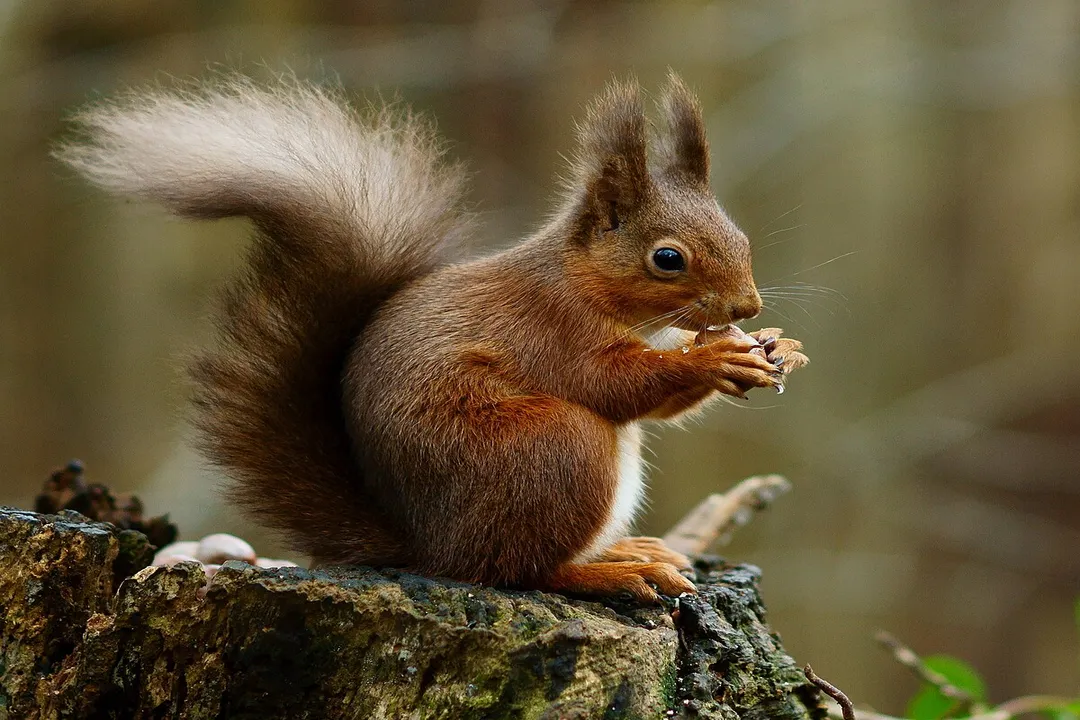
The order to which all squirrels belong is Rodentia. [6] This massive group is characterized almost entirely by its dentition. Rodents are defined by having a single pair of continuously growing incisors in both the upper and lower jaws. [6] These chisel-like teeth require constant gnawing to keep them worn down, which explains the persistent gnawing behavior seen in many squirrel species, including the red squirrel. Within this order, squirrels fall into the suborder Sciuromorpha, distinguishing them from other major rodent groups like mice or rats. [6]
# Family Sciuridae
Deeper still, we find the family Sciuridae, which encompasses all squirrels, chipmunks, marmots, and prairie dogs. [6] This family level groups animals that share a more recent common ancestor and possess similar anatomical features, such as relatively short limbs and long bushy tails, although not all members of Sciuridae display the classic bushy tail associated with tree squirrels. [6] The squirrel family itself is quite diverse, spanning arboreal (tree-dwelling), ground, and flying species. The animals we focus on here are members of the tree squirrel group.
# Genus Distinction
It is at the genus level that the paths of the Eurasian and American red squirrels truly separate. This is where the scientific ambiguity of the common name is resolved.
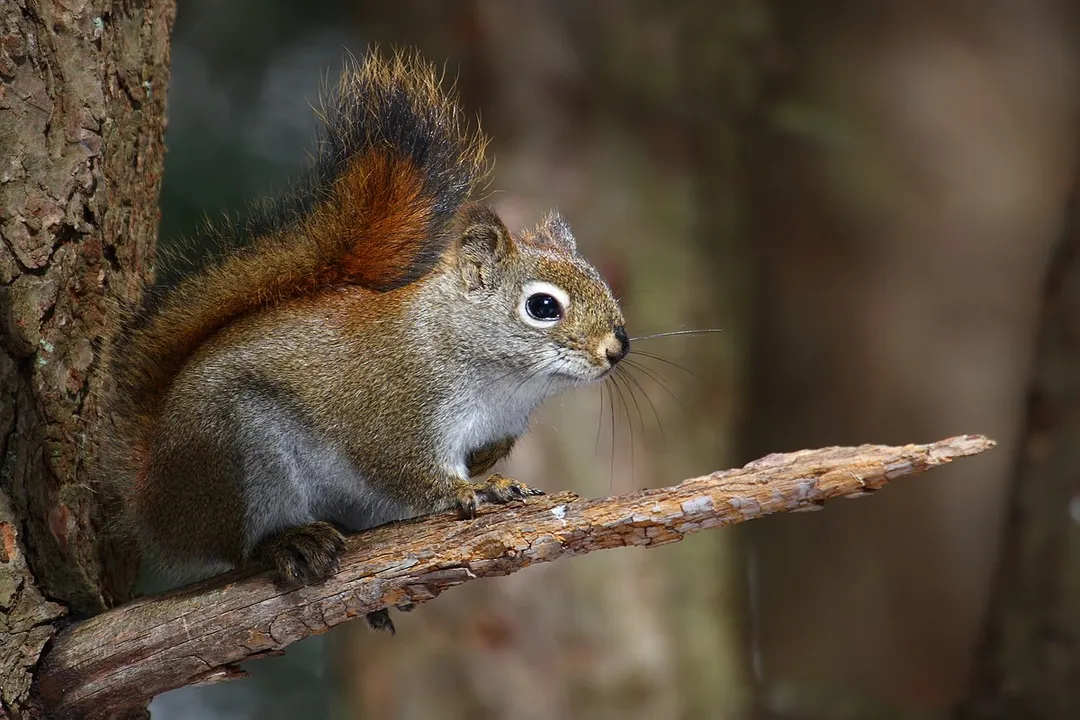
For the American red squirrel, its official classification places it in the genus Tamiasciurus. [3] These North American species are known for being feisty, territorial, and prolific hoarders of cones and nuts. [2] The scientific name for the American red squirrel is Tamiasciurus hudsonicus. [3][7] This name, hudsonicus, hints at its historical distribution near the Hudson Bay region, though its range is much broader across North America. [7] In some regions, the American red squirrel is also known by its Indigenous name, the chickaree. [3][4]
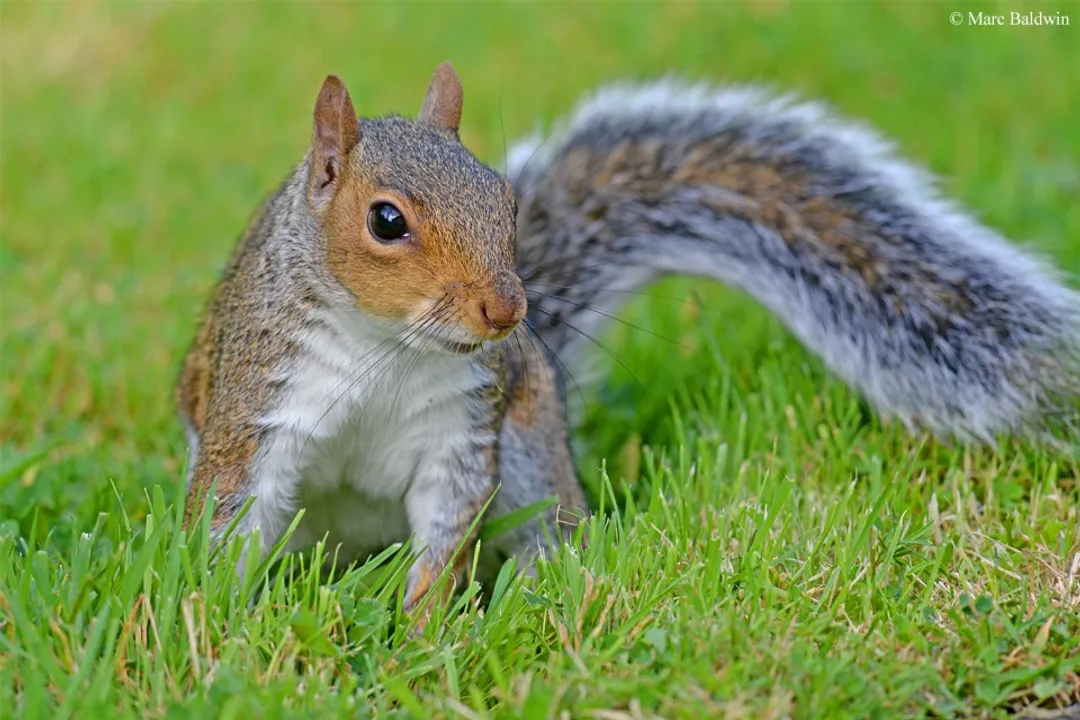
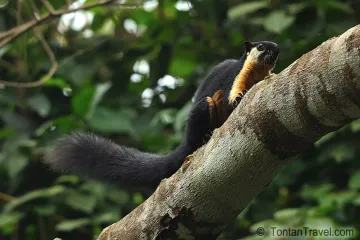
In contrast, the Eurasian red squirrel, which is prevalent across Europe and Asia, belongs to a different genus: Sciurus. [1] Its specific binomial nomenclature is Sciurus vulgaris. [1] While both are called "red squirrels" due to their common reddish-brown summer coats, their evolutionary separation means they are classified in different genera, indicating that their most recent common ancestor lived significantly further back in time than the split between different species within the Tamiasciurus genus. [1]
If we were to visualize the primary differences between the North American species based on their taxonomy and known ecology—a common point of synthesis for field observers—we might compare T. hudsonicus with its close relative, the Douglas squirrel (Tamiasciurus douglasii), which is sometimes considered a subspecies or a distinct species depending on the scientific authority, though both belong to the same genus. [3] The classification highlights that while the Eurasian S. vulgaris and the American T. hudsonicus share the same basic squirrel blueprint (Family Sciuridae), they represent distinct evolutionary radiations.
This divergence is fascinating when considering conservation. For instance, in the UK, the native Eurasian red squirrel (S. vulgaris) faces significant pressure from the introduced Eastern gray squirrel (Sciurus carolinensis), which outcompetes it for resources and carries the squirrel pox virus. [1] Understanding the precise taxonomy is crucial here; the American species isn't involved in this specific European competition, reinforcing the importance of binomial nomenclature over common names.
# American Species Taxonomy
The extensive focus on the American red squirrel (T. hudsonicus) in North American wildlife literature allows for a deeper look into its classification within the genus Tamiasciurus. [7] The U.S. Fish and Wildlife Service taxonomic tree confirms the placement of T. hudsonicus within the Kingdom Animalia, Phylum Chordata, Class Mammalia, Order Rodentia, Family Sciuridae, and Subfamily Sciurinae. [5] The subfamily Sciurinae contains the tribe Sciurini, which includes the tree squirrels like Tamiasciurus, Sciurus, and Tamiasciurus. [5]
The species T. hudsonicus itself is known to have numerous recognized subspecies across its vast range stretching from Alaska to the eastern United States. [9] For example, the Alaskan red squirrel, often cited in literature about the region, is Tamiasciurus hudsonicus hudsonicus or another local subspecies, showcasing the intraspecies variation recognized by taxonomists. [9] The U.S. Forest Service data often emphasizes this subspecies level when discussing management, indicating that while the classification above the species level unites them, ecological differences exist at the sub-level. [7]
| Taxonomic Rank | Placement | Key Shared Trait |
|---|---|---|
| Kingdom | Animalia | Multicellular organism |
| Phylum | Chordata | Possesses a notochord/backbone |
| Class | Mammalia | Warm-blooded, nurse young |
| Order | Rodentia | Single pair of growing incisors |
| Family | Sciuridae | Belong to the squirrel family |
| Genus (American) | Tamiasciurus | North American tree squirrels |
| Genus (Eurasian) | Sciurus | Eurasian tree squirrels |
| Species (American) | T. hudsonicus | Chickaree |
| Species (Eurasian) | S. vulgaris | The classic European red squirrel |
# Classification in Context
It is insightful to consider how easily a species can be classified simply by observing its appearance versus using its formal scientific designation. A casual observer sees a small, reddish-brown tree dweller; a taxonomist sees an organism defined by dental morphology (Rodentia) and specific genetic divergence (genus Tamiasciurus vs. Sciurus). [6] The classification system provides a stable reference point that transcends local language variations like "chickaree" or "red squirrel". [3]
When analyzing wildlife records, especially those dealing with historical data or intercontinental comparisons, relying solely on the common name is risky. For instance, an old trapping record from Montana might refer to the American species (T. hudsonicus), [10] whereas a corresponding record from British Columbia might reference T. hudsonicus or its close neighbor, the Douglas Squirrel, depending on the specific area's boundaries and historical taxonomy. [8] The specific designation Tamiasciurus hudsonicus ensures scientists are discussing the exact same animal regardless of the local dialect used to describe its striking red fur. [7] The stability offered by the Linnaean system, moving from Kingdom down to the unique species name, is what allows for meaningful global biological study.
# Subfamily and Tribe Placement
To further detail the tree squirrel branch of the family, we can look at the subfamily and tribe levels, particularly for the American species documented extensively. As noted by taxonomic records, Tamiasciurus hudsonicus belongs to the Subfamily Sciurinae. [5] Within Sciurinae, it is placed in the Tribe Sciurini. [5] This tribe is the group that contains the most familiar tree squirrels, setting them apart from other squirrel groups like the ground squirrels (Marmotini) or flying squirrels (Pteromyini). [5] This placement confirms that the red squirrel is fundamentally a tree-dwelling, non-flying member of the widespread squirrel lineage. The consistency across taxonomic databases, like those maintained by state agencies or federal bodies, verifies this hierarchical placement for T. hudsonicus. [2][5][7]
The precise placement within the hierarchy, from Order down to Species, tells a story of adaptation and evolution. The shared traits of being rodents, possessing specific dental structures, and belonging to the Sciuridae family show deep evolutionary connections, while the split into different genera (Tamiasciurus vs. Sciurus) reflects a significant period of geographic isolation and subsequent independent evolution across continental divides. [1] This classification is more than just a filing system; it is a historical roadmap of the red squirrel's place in the animal kingdom.
This inherent structure means that while the American red squirrel may share habitat and behavioral traits with other North American tree squirrels in the Sciurus genus (like the Eastern Gray Squirrel), its closest genetic relatives are other members of Tamiasciurus, reinforcing the scientific validity of its distinct genus designation. [3]
Related Questions
#Citations
Red squirrel - Wikipedia
Tamiasciurus hudsonicus (Red Squirrel) - Idaho Fish and Game
Red Squirrel - Tamiasciurus hudsonicus - New Hampshire PBS
Tamiasciurus hudsonicus - Explore the Taxonomic Tree | FWS.gov
Squirrel Taxonomy | Wildlife Online
WILDLIFE SPECIES: Tamiasciurus hudsonicus - USDA Forest Service
Tamiasciurus hudsonicus Red Squirrel - Species Summary
Red Squirrel (Tamiasciurus hudsonicus) Species Profile
Red Squirrel - Montana Field Guide