What is the taxonomic classification of a dog?

The placement of any living organism within the structured system of biological classification, known as taxonomy, tells a fascinating story about its evolutionary history and its relatives. For the common dog, this system solidifies its place among the vast diversity of life on Earth, tracing its lineage from the largest possible groups down to its specific designation as a domestic companion. Understanding this classification is not just an academic exercise; it connects the dog to its wild ancestors and organizes knowledge used in biology, veterinary science, and conservation efforts globally. [3][5]
# Classification Basis

Taxonomy serves as the standardized language of biology, organizing life into a hierarchy of nested ranks. [5] This system, originally developed by Carl Linnaeus, allows scientists everywhere to discuss a specific creature using universally understood terms, preventing confusion that arises from common names varying by region or language. [3] Think of it as a massive filing cabinet where broad characteristics determine the drawer (Kingdom), and increasingly specific traits determine the file folder (Species). [5] Each level represents a shared evolutionary history, meaning that organisms sharing a lower rank are more closely related than those only sharing a higher rank. [3]
# Dog Hierarchy
The domestic dog, scientifically recognized under the binomial nomenclature system, fits neatly into this structure. Its specific place reveals its membership in the animal kingdom, its designation as a mammal, and its close relationship to other carnivores. [8] Data compiled across various scientific repositories confirms this standardized placement for Canis lupus familiaris. [7][9]
Here is the standard taxonomic breakdown for the domestic dog:
| Rank | Taxon Name |
|---|---|
| Domain | Eukarya |
| Kingdom | Animalia |
| Phylum | Chordata |
| Class | Mammalia |
| Order | Carnivora |
| Family | Canidae |
| Genus | Canis |
| Species/Subspecies | Canis lupus familiaris |
This structure shows that while dogs are quite distinct from, say, birds (Class Aves) or insects (Class Insecta), they share deep ancestry with all other Chordates, which includes vertebrates. [5] The detail provided by databases like the NCBI Taxonomy places the dog definitively within this sequence, assigning it the identifier taxonomy ID 9615 in some systems, which cross-references its identity within the broader Canis lupus group. [7][9]
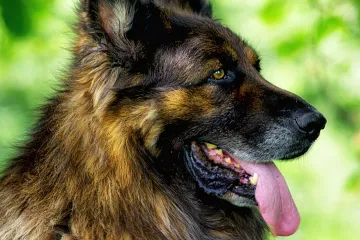
# Canid Family
Dropping down to the Family level, the dog belongs to Canidae. [8] This family is composed of carnivorous mammals that are generally characterized by their long muzzles, non-retractile claws, and excellent running capabilities. [1] Within Canidae, the dog is situated in the genus Canis. [9]
The genus Canis is particularly interesting because it encompasses several well-known extant (currently living) canids. [1] This includes not only the domestic dog but also coyotes, jackals, and, most significantly, the gray wolf (Canis lupus). [1] The commonality at the genus level underscores the close biological relationship between these animals, a fact that becomes critical when discussing the dog's origins.
It is fascinating to observe how the classification system immediately highlights the dog's wild relatives. While many might categorize breeds based on size or function—like classifying a Great Dane versus a Chihuahua—the taxonomic system groups them based on fundamental genetic and morphological evidence that ties them equally to the lineage of the wolf, irrespective of human-selected traits like coat color or skull shape. [1] This underscores the power of standardized biological classification over superficial diversity.
# Naming Details
The full scientific name, Canis lupus familiaris, is essential for precision. [1][7] It employs trinomial nomenclature, indicating that the dog is classified as a subspecies of the gray wolf (Canis lupus). [1] This formal structure explicitly recognizes that dogs descended from the wolf lineage, diverging through domestication, rather than being an entirely separate species. [1]
However, you may still encounter the binomial name Canis familiaris in older texts or some databases. [6] While C. familiaris was historically used to classify the dog as its own species, modern molecular and taxonomic consensus favors recognizing the dog as a subspecies of the wolf to accurately reflect their genetic closeness and shared ancestry. [1][7] A species classification, like C. familiaris, implies a complete reproductive barrier, which isn't the case as dogs and wolves can still produce fertile offspring. [1] Therefore, when aiming for current scientific authority, the trinomial designation is the preferred term to include in formal documentation. [7]

# Life Placement
Moving up the hierarchy reveals broader connections. The dog is a Mammal (Class Mammalia), meaning it is warm-blooded, possesses hair or fur, and nourishes its young with milk produced by mammary glands. [5][8] This places it alongside animals as varied as whales, bats, and humans. Its Order is Carnivora, which groups it with animals whose primary diet and specialized dentition are adapted for consuming meat, even though many modern dogs thrive on omnivorous diets. [5][8]
If you are ever attempting to understand the core physiological needs of a dog—for example, why certain nutrient profiles are recommended or how they metabolize specific compounds—looking at the Order Carnivora can provide an initial clue regarding their evolutionary adaptations. [5] While breed diets vary immensely, the foundational digestive biology ties back to this carnivorous heritage. The most inclusive ranks, like Kingdom Animalia and Phylum Chordata, simply confirm that the dog is a multicellular, heterotrophic organism possessing a spinal column. [5] This high-level placement confirms its fundamental biological similarity to nearly every pet reptile, bird, or even fish you might encounter, despite the vastly different characteristics at lower taxonomic levels.
This hierarchical arrangement, from Domain down to Subspecies, provides a complete, universally recognized identification tag for the dog, solidifying its identity as a domesticated descendant of the gray wolf, recognized across continents and scientific disciplines. [1][9]
Related Questions
#Citations
Dog - Wikipedia
Canis lupus familiaris Linnaeus, 1758 - dataZone
Taxonomy | Biology for Majors II - Lumen Learning
dog (domestic) (Canis lupus familiaris Linnaeus, 1758) - Invasive.Org
4.3: The Levels of Classification - Geosciences LibreTexts
Domestic dog (Canis familiaris) longevity, ageing, and life history
9615, Canis lupus familiaris (dog) - Taxonomy - PubChem
Canis familiaris (Domestic Dog) | Idaho Fish and Game Species ...
Canis lupus familiaris (Dog) | Taxonomy - UniProt