What is the smallest monkey in Panama?
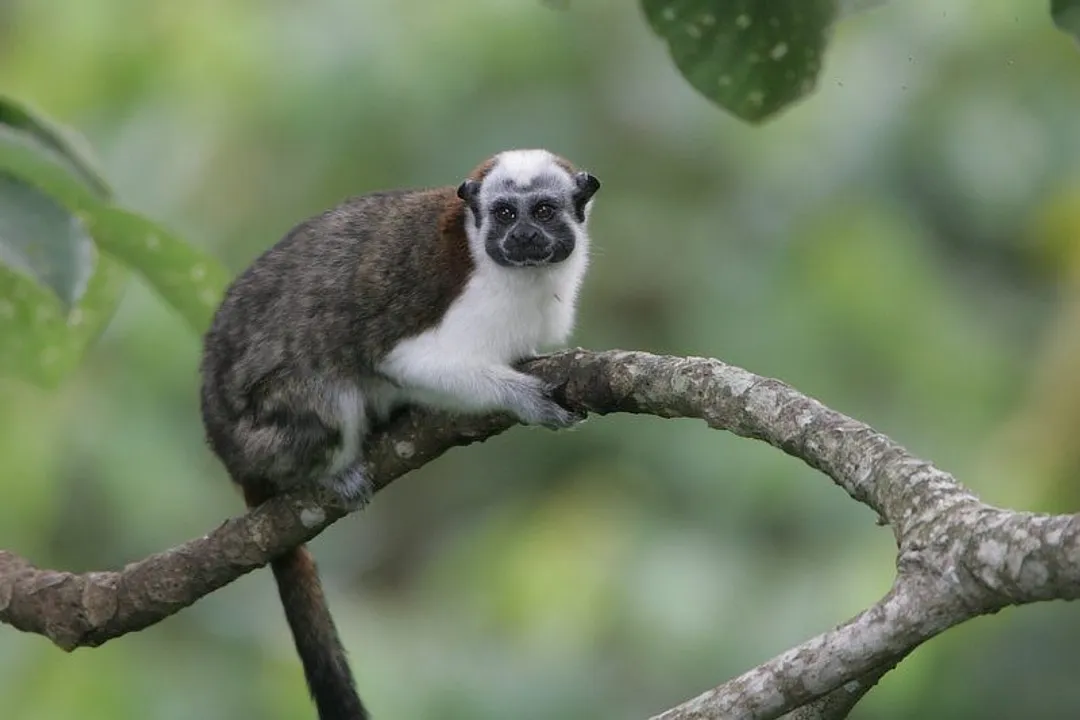
The title of the smallest monkey gracing the tropical forests of Panama belongs to the Geoffroy's Tamarin (Saguinus geoffroyi). These diminutive primates are striking figures in the Central American ecosystem, instantly recognizable by their distinctive white fur patches contrasted against darker body coloration. While Panama hosts several primate species, the tamarin stands out due to its remarkably small stature, making it a delicate and fascinating subject for naturalists and visitors alike. Its presence is a vibrant indicator of a relatively healthy, interconnected forest environment, as these monkeys require substantial contiguous canopy cover to thrive.
# Size Miniature
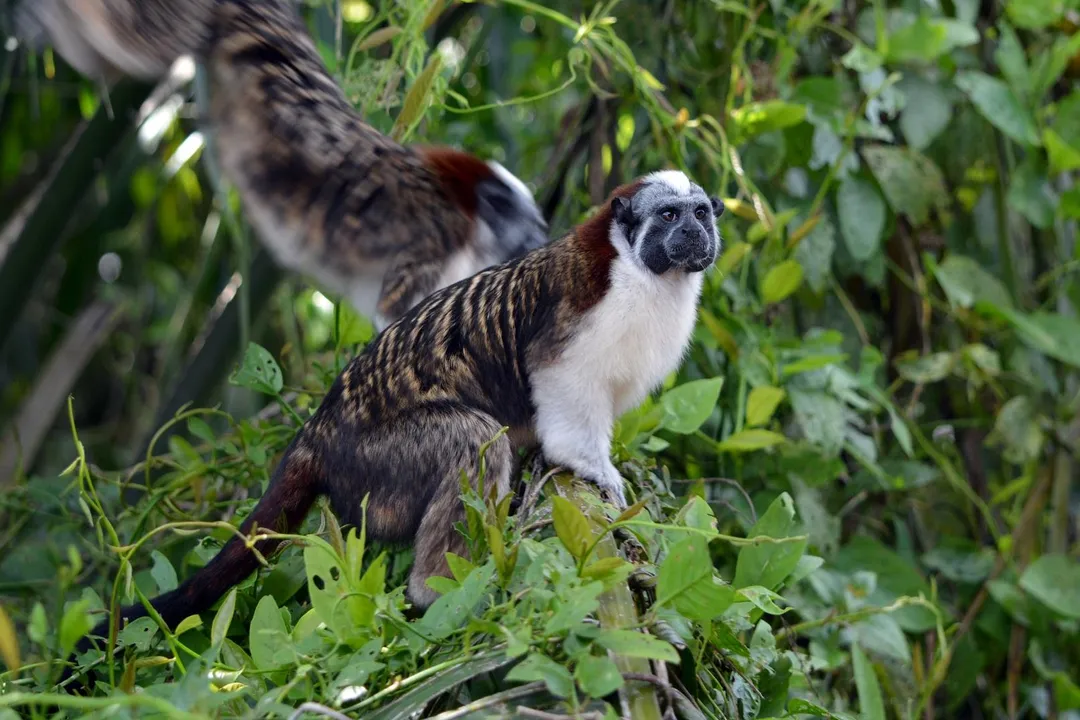
The sheer scale of the Geoffroy's Tamarin is what immediately captures attention. Adult tamarins typically weigh in at only about 350 to 450 grams. To put that into perspective, this is roughly the weight of a common can of soda, yet these active creatures navigate complex three-dimensional environments high above the forest floor. When compared to some of the larger primates that share Central American habitats—though perhaps not all of Panama's native species—the size difference is significant. Their small size is not just a matter of weight; their head and body length measures only about 20 to 25 centimeters, often with a tail adding another 30 to 40 centimeters. This extreme compactness allows them to maneuver through thin branches that could never support a larger primate, opening up access to different feeding niches.
It is worth noting that while photographs can sometimes distort the perception of scale, especially when these animals are captured close-up or perched on an observer's hand—which should never be encouraged for safety and ethical reasons—their inherent tininess remains constant. When you are lucky enough to spot one moving through the upper layers of the canopy, the visual impression is often that of a quick, bright streak rather than a substantial animal.
# Distinctive Look
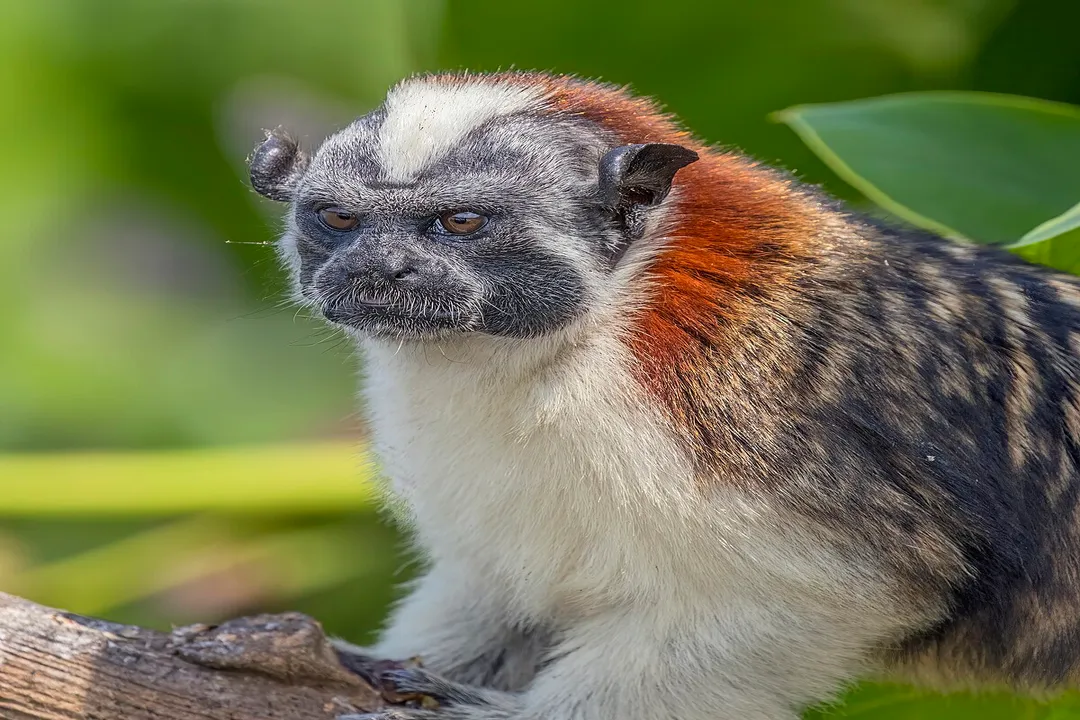
Beyond their size, the visual characteristics of Saguinus geoffroyi are highly specific, aiding in identification across their range. The most notable feature is the large, ear-tufted patch of white fur that contrasts sharply with their otherwise dark bodies, which can range from black to reddish-brown. The scientific name, geoffroyi, honors Étienne Geoffroy Saint-Hilaire, a renowned French naturalist. This distinct appearance often leads observers to mistake them for other small monkeys or even large squirrels at first glance, underscoring the need for careful observation.
The tail, while long, is not prehensile like that of some New World monkeys; instead, it serves primarily as a balancing rod during their characteristic leaping locomotion. They employ a unique quadrupedal movement combined with leaping, utilizing their sharp, claw-like nails—a feature shared by marmosets and tamarins—to grip vertical surfaces effectively, which is crucial when hunting insects or reaching small fruits on fragile twigs.
# Social Structure
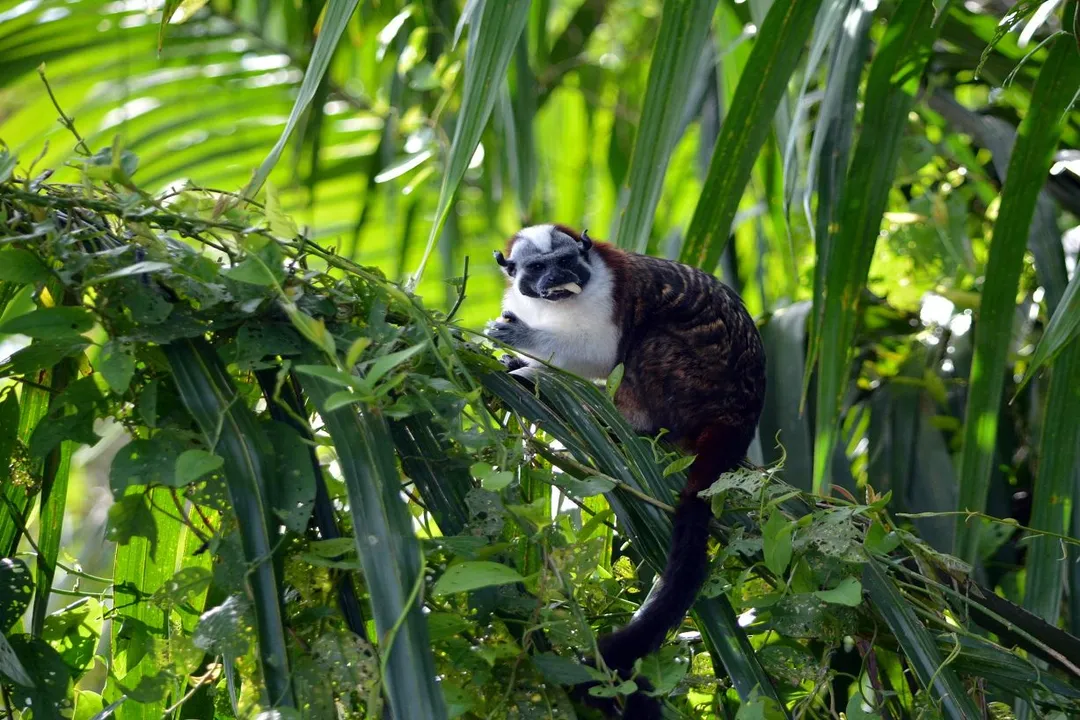
Geoffroy's Tamarins live in small, tight-knit family groups, typically consisting of a breeding pair and their offspring from various litters. Group sizes are generally small, often involving four to eight individuals. This tight social structure necessitates cooperation, especially when it comes to raising the young. Unlike many other primates, tamarins frequently give birth to twins, a high-energy investment for the mother.
This situation leads to a fascinating display of communal care. Once the babies are born, the father and older siblings take on substantial roles in carrying the infants, relieving the mother to forage and recover. This shared responsibility is a key adaptation to managing the high reproductive output of twin births. Observations within protected areas, such as the Gamboa Rainforest, reveal that these groups maintain constant vocal contact, using chirps and trills to stay connected while foraging across their established territory. This constant communication helps the group avoid predators and coordinate feeding efforts across the complex forest layers.
# Panama Range
While the Geoffroy's Tamarin has a broader distribution across Central America, its presence in Panama is significant, making it a focal point for wildlife viewing. They are often found in the lowland humid forests, particularly in the Pacific slope regions. Areas known for reliable sightings often include the lowland rainforests near the Panama Canal zone. For instance, observers in the Gamboa Rainforest area have frequently documented their presence.
However, their preferred habitat demands a certain level of forest maturity. They are not typically found in completely open agricultural land, preferring areas where there is sufficient tree density to support their diet and locomotion patterns. The density of the canopy is a major limiting factor; in fragmented or highly disturbed habitats, their populations struggle to persist because the required resources—nectar, fruit, insects, and small vertebrates—become too dispersed.
A point worth considering for anyone tracking these animals is the difference between their historical range and their current pockets of abundance. Due to habitat loss, finding them might require focusing on protected reserves or large, well-managed private forest tracts, rather than expecting them to appear in small urban parks, even if those parks border natural areas. Knowing the type of forest—mature secondary or primary growth—is often a better predictor of success than simply knowing the country.
# Feeding Habits
The diet of the Geoffroy's Tamarin is omnivorous and highly flexible, which contributes to its success in varying forest conditions. They spend a considerable amount of time searching for insects and other small animal prey, supplementing this protein with fruits and plant exudates like gum or nectar. This mixed diet is essential for meeting the high caloric needs of such an active, small-bodied animal.
Their specialized feeding technique involves using their long, thin fingers to probe crevices in bark or under leaves to extract arthropods. While they do consume fruit, they are not primarily frugivores; their reliance on insects gives them a competitive edge over species that depend solely on softer food sources. This adaptability allows a group to persist even when certain fruit crops fail for a season. For example, if the fruiting cycle dips, they can temporarily shift their foraging efforts heavily toward insect hunting without risking starvation, a trait that aids their survival in fragmented landscapes.
# Ethical Observation
For those fortunate enough to spot these tiny primates, maintaining proper viewing distance is essential for both the observer's experience and the tamarins' welfare. Because they are small and easily startled, approaching them too closely can cause them to flee rapidly, often leading to long searches before they are spotted again. Furthermore, habituation to human presence can be detrimental, especially if it leads to reliance on, or aggressive interaction for, human food sources.
A practical tip for photographers and nature lovers is to find a comfortable, stationary spot near a known fruiting tree or water source and remain quiet for an extended period, allowing the group to resume its normal activities. Using binoculars or a camera with a strong zoom lens is far superior to moving closer, as it prevents unnecessary disturbance to the family unit. Remember that the primary goal when encountering wildlife, especially small, vulnerable creatures like these tamarins, should always be to observe without leaving a trace of your presence.
# Species Context
Understanding the Geoffroy's Tamarin's status as the smallest requires looking at the broader context of Panamanian primates. Panama is home to several species, including howler monkeys, spider monkeys, and capuchins. Relative to these larger, louder, and often more conspicuous species, the tamarin’s small size and high-pitched vocalizations place it in a different ecological niche.
When surveying the list of native species, the tamarins and possibly some types of marmosets occupy the smallest end of the size spectrum. This size difference directly impacts their ecology: larger primates might defend territories based on sheer size and aggression, while tamarins rely more on agility, group cohesion, and exploiting food sources unavailable to their heavier relatives. This specialization is a classic evolutionary outcome where niche partitioning allows multiple primate species to coexist within the same geographic area without excessive direct competition for all resources. A good way to visualize this separation is by considering weight classes; if a howler monkey represents a heavyweight boxer, the Geoffroy's Tamarin is the featherweight, thriving in different arenas within the same gym.
Related Questions
#Citations
Geoffroy's tamarin
Geoffroy's Tamarin
Geoffroy's Tamarin, Ateles geoffroyi
Geoffroy's Tamarin is Central America's ...
Check out this gorgeous little monkey. The photos might ...
Geoffroy's Tamarins taken in the Gamboa Rainforest ...