What are the characteristics of a finger monkey?
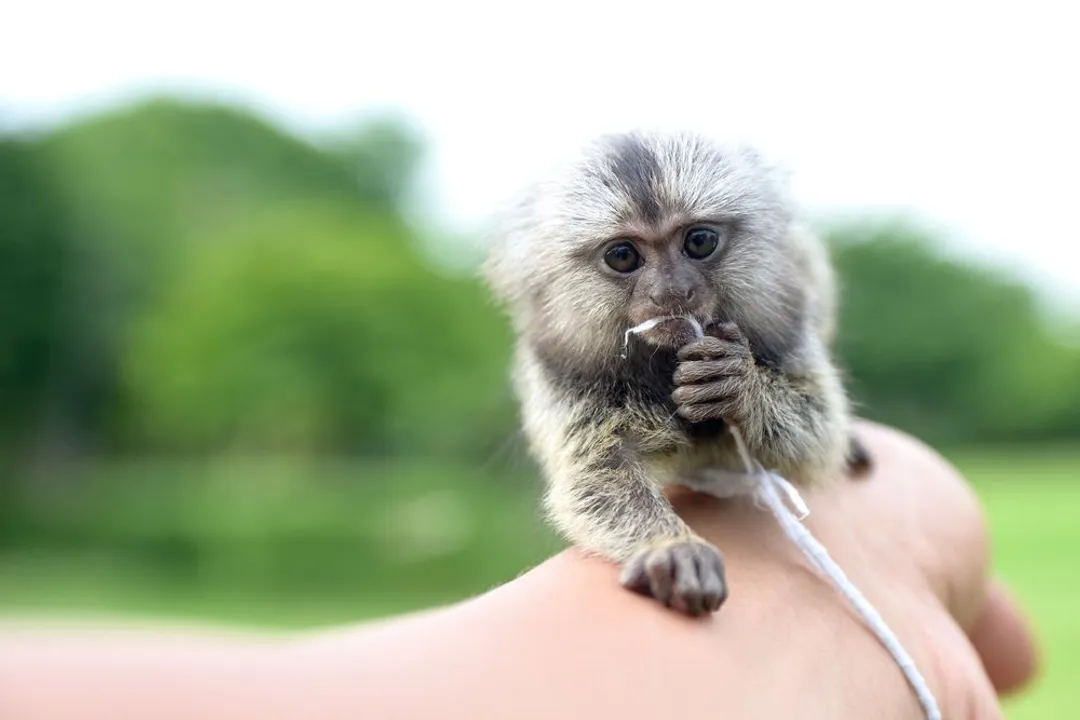
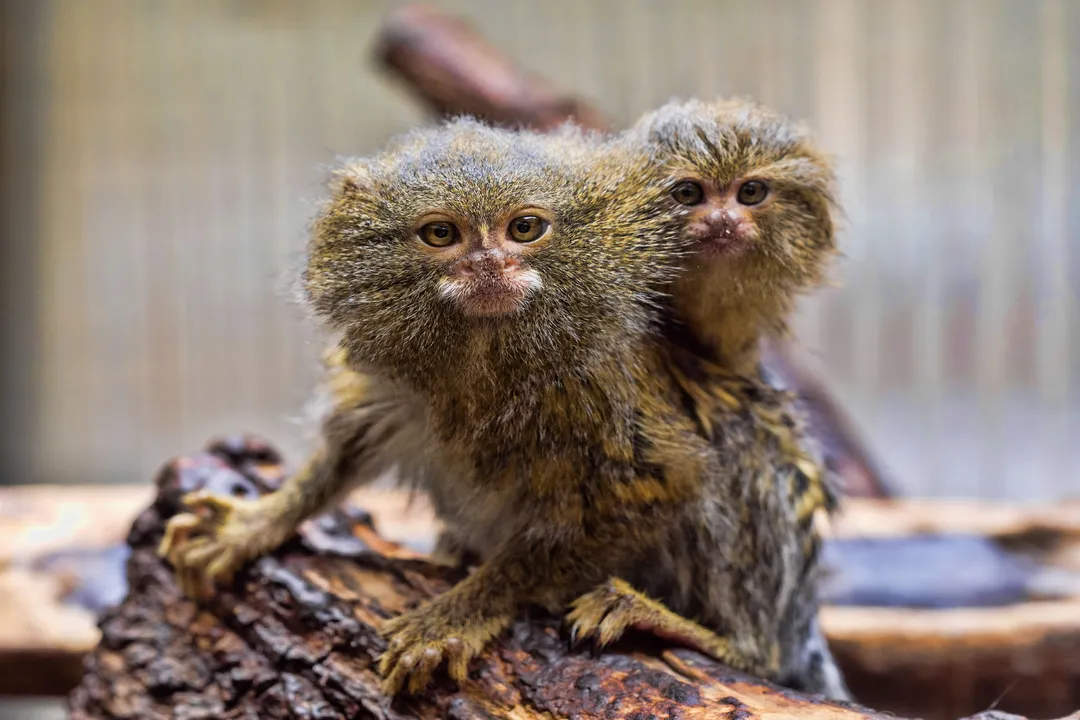
The smallest primates on Earth, often whimsically referred to as finger monkeys, are formally known as the Pygmy Marmoset (Cebuella pygmaea), and they possess a suite of specialized characteristics perfectly suited to their existence high in the Amazonian canopy. These miniature mammals are immediately striking due to their diminutive stature, living up to their common name by being capable of fitting easily onto a human hand.
# Tiny Dimensions
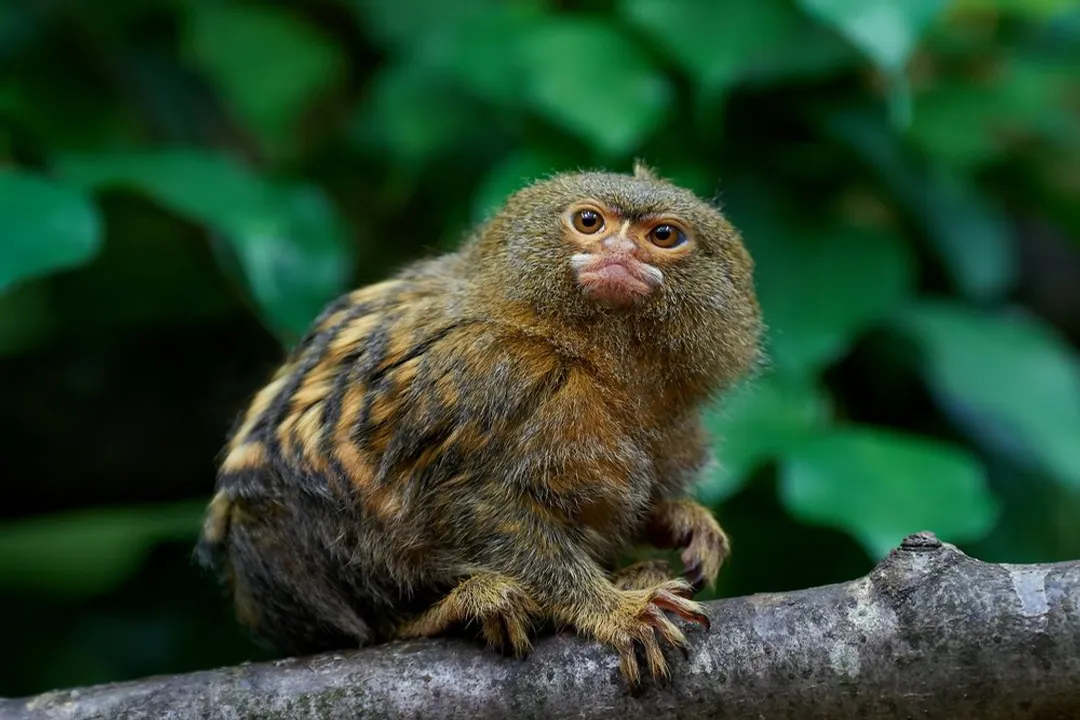
Measuring just 11 to 15 centimeters (about 4.5 to 6 inches) in head and body length, the Pygmy Marmoset holds the title of the world's smallest monkey. When considering weight, they are astonishingly light, typically tipping the scales at approximately 100 grams, or about 3.5 ounces. This small size allows them to maneuver through the dense foliage where larger primates cannot venture. It is interesting to note that while they are the smallest monkey, the true smallest primate belongs to the tarsier family, though Pygmy Marmosets are often grouped with the smallest primates generally.
# Distinctive Features
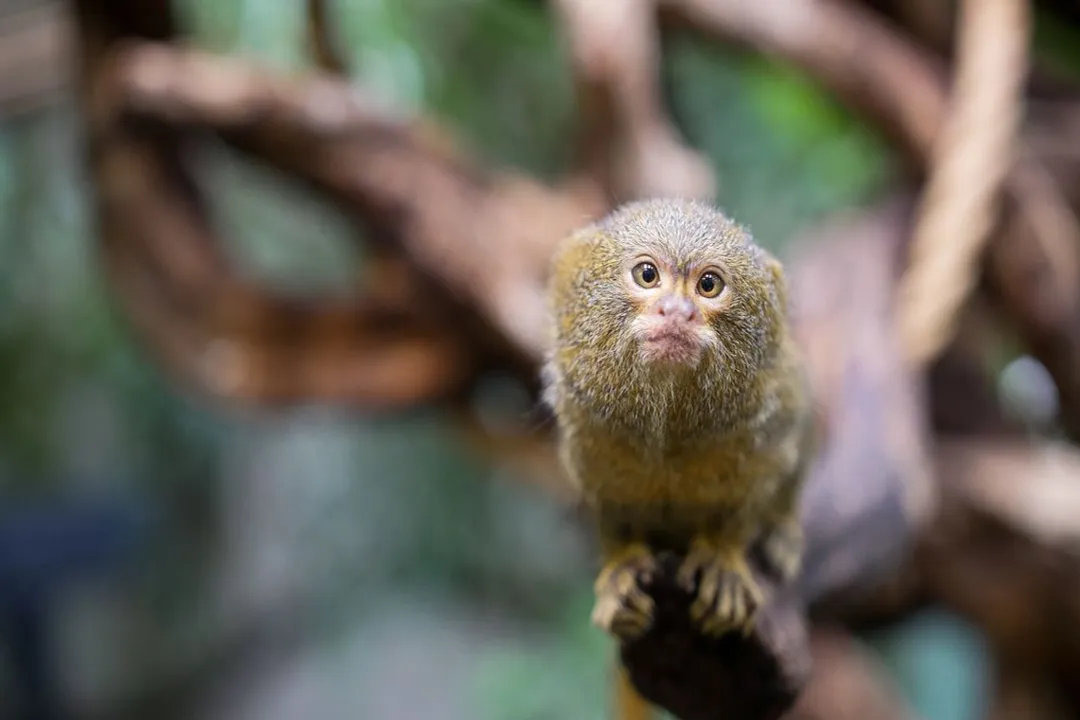
Beyond their size, several physical traits set the Pygmy Marmoset apart from other New World monkeys. Their coat is generally short and dense, sporting a mottled pattern combining shades of brown, black, and gray, which offers excellent camouflage against tree bark. Their eyes are large and prominent relative to their head size, suggesting a high reliance on visual acuity, especially given their diurnal nature.
A key identifier for this species involves their head ornamentation. Unlike some other marmosets, the Pygmy Marmoset frequently displays pointed ear tufts, sometimes referred to as ear tassels. While not always prominently displayed, these tufts contribute to their unique profile within the primate order.
Their hands and feet are another area of specialization, differing significantly from the flat nails found on most other primates, like humans. Instead, Pygmy Marmosets possess sharp, claw-like nails on all digits except for the hallux (big toe). This configuration is absolutely essential for their arboreal lifestyle, granting them superior traction for gripping bark and clinging vertically to tree trunks. This claw-like structure means they can move swiftly and secure a purchase on surfaces that would send a flatter-nailed primate sliding.
# Feeding Niche
The dietary strategy of the Pygmy Marmoset is perhaps its most remarkable adaptation. They are specialized gummivores, meaning their primary food source is tree exudate—the sap, gum, or resin that oozes from plant wounds. To access this vital nutrient source, they employ specialized, chisel-like lower incisors to deliberately gouge holes into the bark of host trees. After making the incision, they will return repeatedly to lap up the flowing sap. This method of securing a high-calorie, nutrient-rich, and generally reliable food source gives them a distinct competitive advantage in the dense rainforest environment, allowing them to utilize an ecological slot that many other, more generalized frugivores or insectivores cannot exploit as efficiently.
While sap forms the foundation of their diet, they are not exclusively reliant on it. They supplement their intake by consuming insects and small amounts of fruit when available. The precise balance between exudate consumption and invertebrate hunting dictates their daily foraging activity.
# Group Dynamics
Pygmy Marmosets are highly social creatures, typically living in small family units. These groups are usually structured around a single breeding pair, accompanied by their immediate offspring of various ages. Group sizes are relatively small, often ranging between two and fifteen individuals. This tight-knit social structure likely supports cooperative defense, shared territory defense, and alloparenting—where older siblings assist the parents with the care of the newest infants.
# Climbing Adaptations
Their movement through the complex, three-dimensional structure of the rainforest canopy demands specific physical attributes. As diurnal primates, they are active during the daytime hours. They move rapidly, using all four limbs (quadrupedal locomotion) along branches.
Their unique, curved claws play a significant role here, enabling them to cling securely to vertical trunks and branches, a necessity when feeding from wounds high up the trunk or descending rapidly. When considering their small mass—just a fraction of a pound—the power required to maintain a vice-like grip on bark while moving quickly is considerable. It is this claw-and-grip system, rather than the traditional grasping foot of Old World monkeys, that allows them to exploit the narrow, vertical pathways of the forest interior with such agility.
# Chatty Nature
Communication among Pygmy Marmosets is complex and constant, reflecting their need to maintain contact within their family group and signal territory to neighbors. They are known for being very vocal, producing an extensive repertoire of sounds. This vocal lexicon includes a variety of squeaks, trills, and chirps, which serve various functions from alarm calls to maintaining group cohesion during foraging expeditions. Their frequent vocalizations contribute to the characteristic ambient noise of the Amazonian understory.

# Life Cycle Facts
The reproductive cycle of the Pygmy Marmoset is relatively fast-paced, allowing the small groups to quickly replace losses or expand when resources are abundant. The gestation period is short, lasting approximately 140 days. Most frequently, the female gives birth to twins, which is an important reproductive strategy given the small body size.
In terms of longevity, the wild lifespan is generally estimated to be around 12 years. However, under the managed care of a zoological setting, they often live considerably longer, with some individuals reaching up to 20 years.
# Range and Conservation Context
Native to the western parts of the Amazon Basin, Pygmy Marmosets are found across areas of Brazil, Colombia, Ecuador, Peru, and Bolivia. They make their home high up in the forest canopy. Because their survival is so intrinsically linked to intact, mature rainforest ecosystems that provide both food sources (trees that produce exudates) and vertical structure, they are sensitive to habitat alteration. While general data on their precise conservation status varies, reliance on specific forest types always puts such specialized feeders at risk when deforestation occurs. Considering their small home range size, which is often critical for finding the right mix of exudate-producing trees, any fragmentation of their environment can severely impact the viability of small family groups, even if the immediate threat of poaching is low. This dependence on specific microhabitats emphasizes that the simple existence of trees is not enough; the right kind of trees, available year-round, must be present for a colony to thrive.
Related Questions
#Citations
Finger Monkeys - Pet Assure
Pygmy Marmoset | San Diego Zoo Animals & Plants
Pygmy marmoset - Wikipedia
World smallest monkey species. Pygmy Marmoset. - Facebook
Facts About Marmosets | Live Science
Finger Monkey The Smallest Monkey! - YouTube
Pygmy marmoset - Wisconsin National Primate Research Center
Marmoset | Definition, Attributes & Types - Study.com
Finger Monkeys: The Smallest Monkeys In The World Are Tiny ...