What is the scientific name for a gray fox?
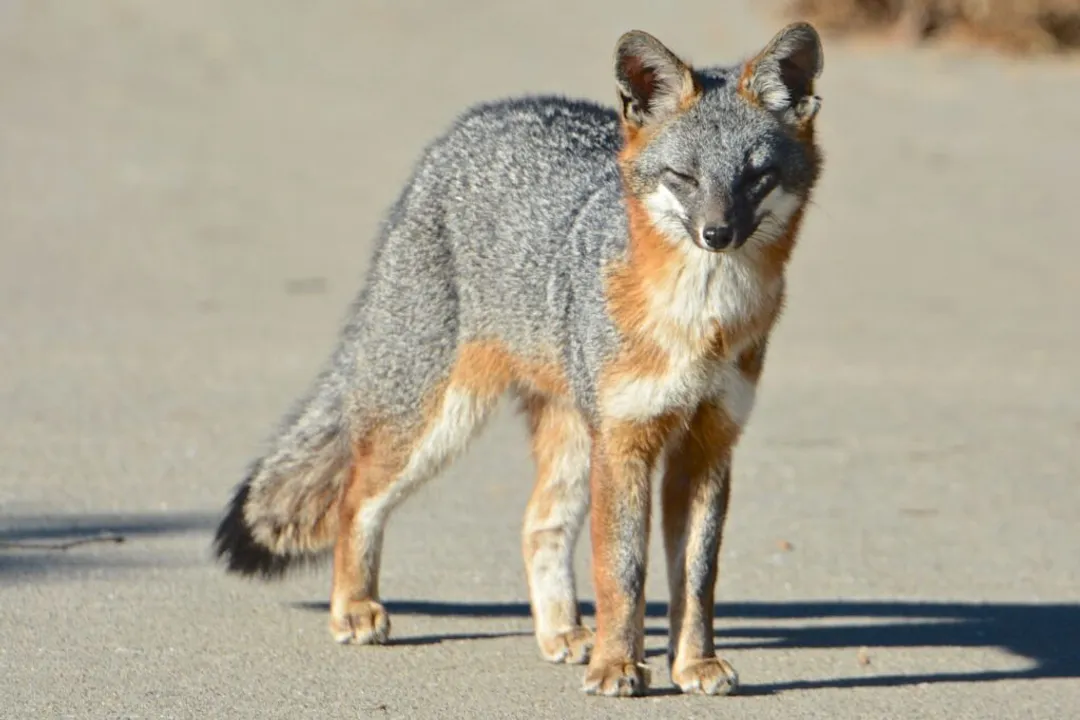
The formal designation recognized by the scientific community for the animal commonly known as the gray fox is Urocyon cinereoargenteus. This binomial nomenclature immediately places the creature within its own genus, Urocyon, setting it apart from the more commonly known red fox, which belongs to the genus Vulpes. The specific epithet, cinereoargenteus, is a Latin compound that literally translates to "ashy-silver," a descriptive nod to the grizzled, salt-and-pepper appearance of its coat. This classification system, developed by Thomas Say in 1823, has remained the standard identifier for this unique North American canid.
# Genus Placement
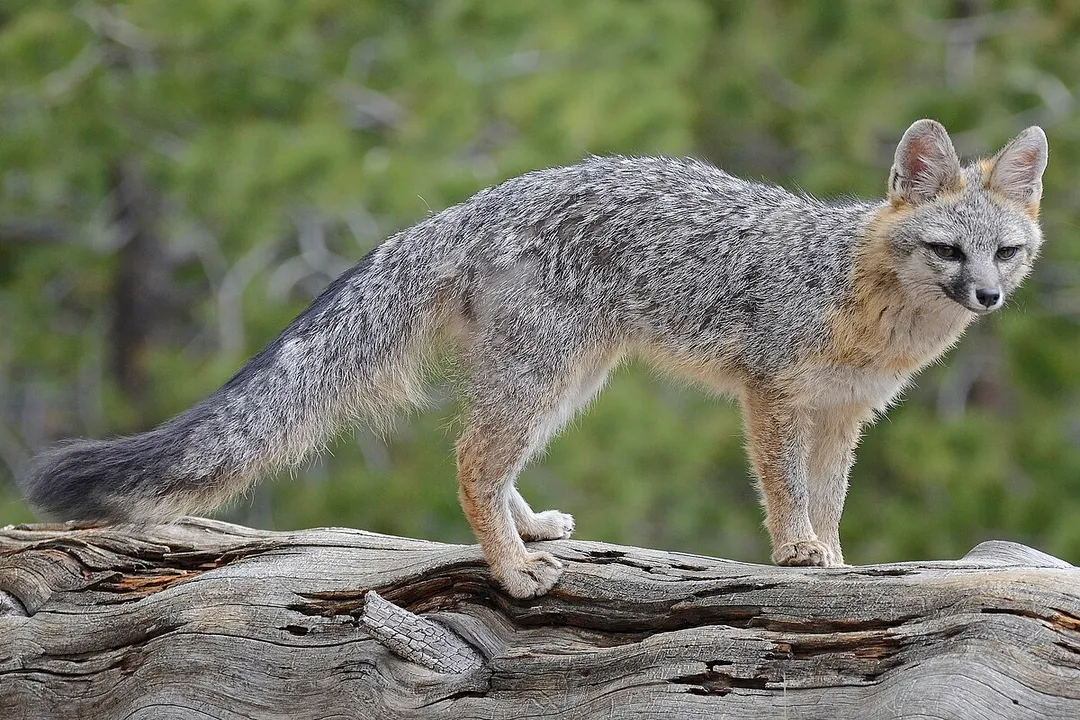
The genus Urocyon is considered basal within the Canidae family tree, meaning it branched off relatively early in the evolutionary history of foxes and dogs. This ancient lineage helps explain some of the gray fox's distinct physical and behavioral characteristics when compared to other fox species found across the globe. A close relative that shares this basal placement is the Channel Island fox (Urocyon littoralis), which is endemic to the Channel Islands off the coast of California. Genetic analysis suggests the island fox is a descendant of the widespread gray fox, likely arriving on the islands and subsequently evolving in isolation. While the island fox is smaller, both species retain the unique anatomical features characteristic of the Urocyon genus.
Thinking about this evolutionary split—the Urocyon lineage diverging early from the Vulpes lineage that includes the widespread red fox—helps explain their differing ecological niches across North America. Where red foxes (Vulpes vulpes) often dominate open habitats, the gray fox’s ability to utilize dense woodlands and, critically, scale trees allows it to occupy territory unavailable to its more terrestrial cousins. It’s a testament to specialized adaptation within a very old family group.
# Physical Markers
The gray fox is the smaller of the two common foxes found in many parts of the United States, slightly smaller than the red fox. Adults typically weigh between 7 and 11 pounds, though individuals can occasionally reach up to 14 pounds. Their overall length, from the nose to the tip of the tail, usually falls between 30 and 45 inches.
Coloration is key to identification. The dorsal fur, covering the back and sides, exhibits the characteristic grizzled or salt-and-pepper look hinted at in its scientific name, resulting from black, white, and reddish-brown hairs mixed together. The legs and neck often show more reddish or tawny coloration. A very distinctive feature is the black stripe that runs along the top of the tail, culminating in a black tip. This contrasts with the tail of the red fox, which typically has a white tip. Gray foxes also often feature a black stripe running from the inner corner of the eye toward the muzzle. The throat and belly are generally white or pale gray. Their eyes are typically yellowish-brown.
Here is a brief comparison of key identifiers:
| Feature | Gray Fox (Urocyon cinereoargenteus) | Red Fox (Vulpes vulpes) |
|---|---|---|
| Tail Tip Color | Black | White |
| General Build | Slightly smaller, more compact | Generally larger and leaner |
| Coloration | Grizzled gray/ashy-silver on back | Predominantly rusty red/orange |
| Habitat Preference | Dense woodland, good climber | More varied, often open areas [Implied by contrast] |
# Forest Acrobatics
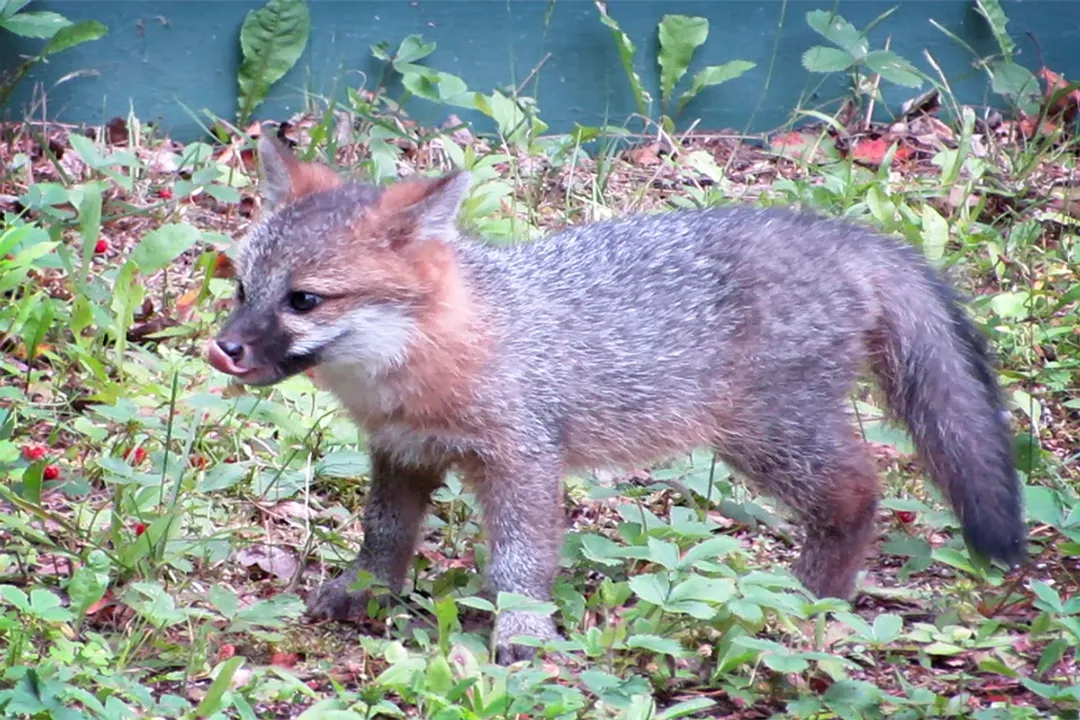
Perhaps the most remarkable trait setting the gray fox apart from nearly all other canids is its proficiency in climbing trees. Unlike other foxes, which rarely climb more than necessary to escape danger, the Urocyon genus possesses semi-retractable claws that provide exceptional grip on bark. They are adept at ascending trunks and even navigating branches. While they may not scale massive oaks effortlessly, they frequently climb to escape predators, survey their surroundings, or access food. This arboreal skill allows them to thrive in environments that are heavily forested, such as the Adirondacks region.
This climbing behavior is a critical survival advantage, especially where larger predators might roam. Being able to escape vertically into the canopy offers a safe refuge unavailable to other ground-dwelling carnivores in the ecosystem. Observing the higher branches of hardwood trees, particularly around fruiting seasons, can sometimes be an indirect way to track their presence in a given area, as they utilize those perches for resting or scouting the forest floor below.
# Range and Distribution
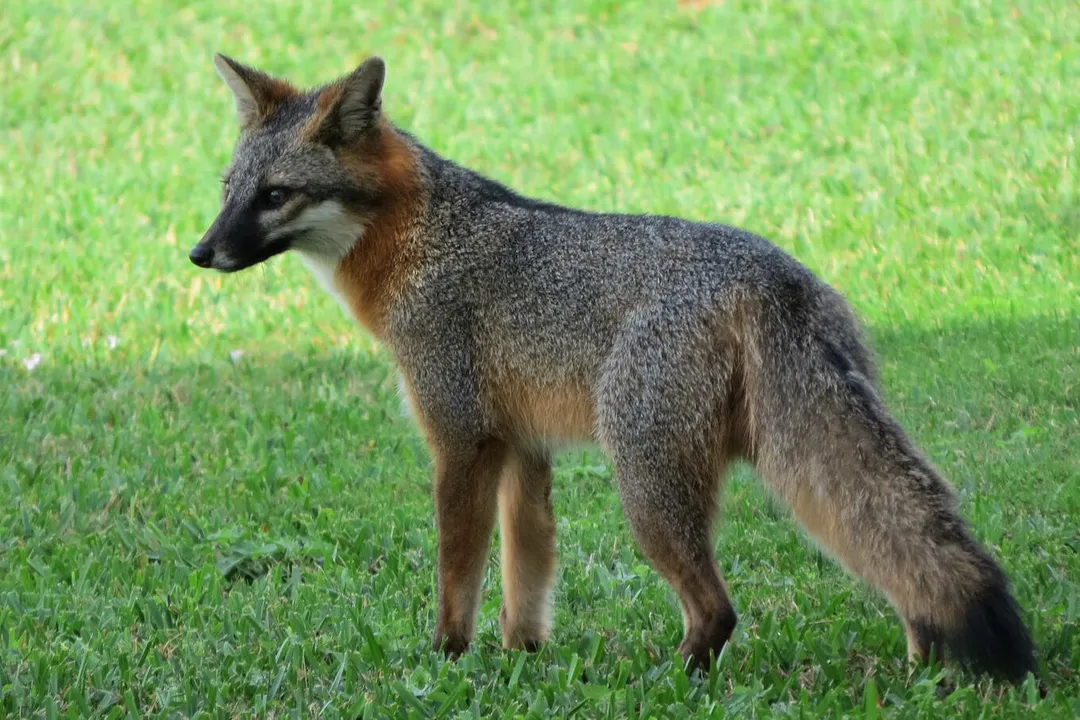
The gray fox has a broad distribution across North and Central America. In the United States, its range generally covers the southern half of the country, extending up the East Coast and into parts of the Midwest and Southwest. They are present in states like Colorado, North Carolina, Alabama, and historically in Illinois, though their presence there can be patchy. In New York, they are found throughout the state, including the mountainous Adirondack Park region. Their distribution often appears continuous across the southeastern United States but can be more fragmented further west and north.
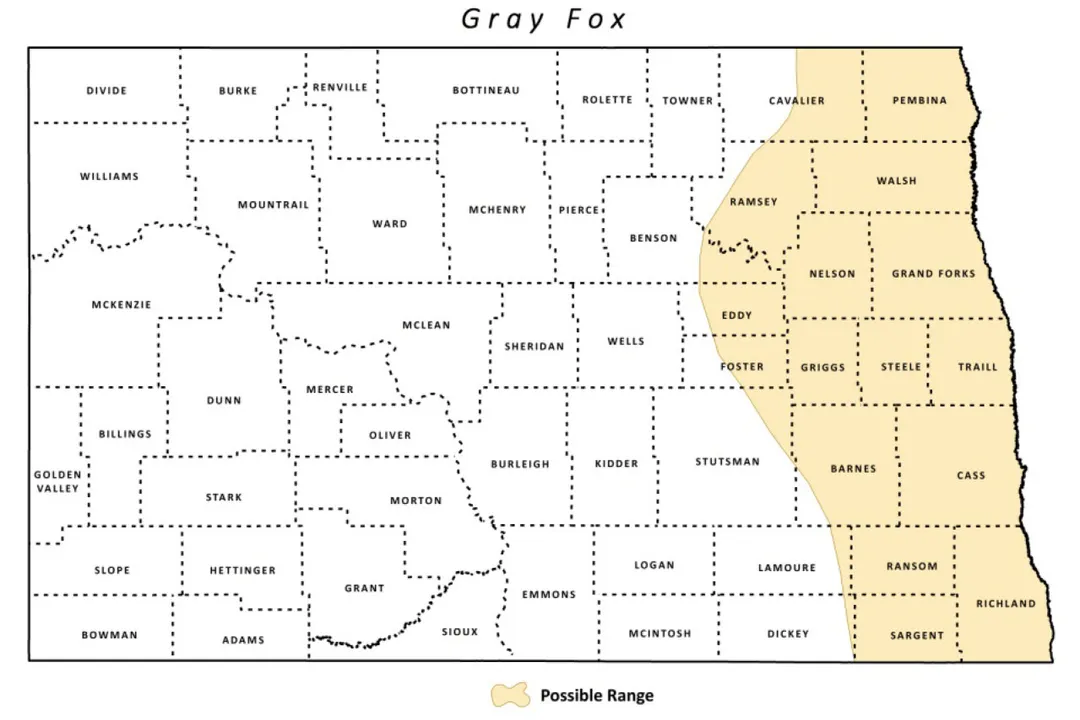
Despite their wide range, gray foxes generally prefer habitats that offer substantial cover, such as brushy areas, woodlands, and forests, over open plains. They are quite adaptable within these settings, utilizing everything from swamps to rocky hillsides. In areas like North Dakota, their presence is often noted in river breaks and timbered areas, avoiding the wide-open agricultural expanses.
# Daily Life and Sustenance
Gray foxes are largely considered nocturnal or crepuscular, meaning they are most active from dusk till dawn. This timing helps them avoid both human activity and the heat of the day, though occasional daytime sightings are not uncommon, especially when caring for young or if food is scarce.
Their diet is highly varied, classifying them as true omnivores. While they hunt smaller mammals, insects, and birds, a significant portion of their sustenance can come from plant matter depending on the season. They consume a wide array of fruits, berries, and nuts when available. Common prey items include mice, voles, rabbits, and birds. This dietary flexibility is another adaptation that supports their presence across diverse geographic regions. Their scat often reflects this varied diet, containing hair and bone fragments mixed with seed hulls or fruit remnants.
When searching for dens, gray foxes utilize a variety of locations, including hollow logs, brush piles, rock crevices, and even abandoned structures or burrows dug by other animals. They are known to use these sites for raising their young, called kits. Their solitary nature is typical outside of the breeding season, though breeding pairs will stay together while rearing their young.
It is interesting to note that unlike coyotes or wolves, which have seen significant range expansion in recent decades, the gray fox has maintained a relatively stable, though sometimes localized, presence, perhaps because its specialized habitat needs and climbing ability keep it buffered from competition in certain environments. This suggests that for local land managers trying to track or conserve them, focusing on mature woodland canopy cover might be a better indicator of suitable habitat than simply looking at broad land-use types. The reliance on arboreal escape routes underscores the importance of maintaining forest structure, even if it's patchy, rather than favoring completely cleared land.
Related Questions
#Citations
Gray fox - Wikipedia
Gray Fox (Urocyon cinereoargenteus) | U.S. Fish & Wildlife Service
Gray Fox - NC Wildlife
Gray Fox Season Closed in Response to Decline in Population
Gray Fox | Urocyon cinereoargenteus - Adirondack Nature
Gray Fox - Sierra Nevada Aquatic Research Laboratory
Gray Fox | North Dakota Game and Fish
Gray Fox - | Outdoor Alabama
Gray Fox - Urocyon cinereoargenteus - New Hampshire PBS
Gray Fox | Colorado Parks and Wildlife