What is the scientific name for Guadalupe bass?
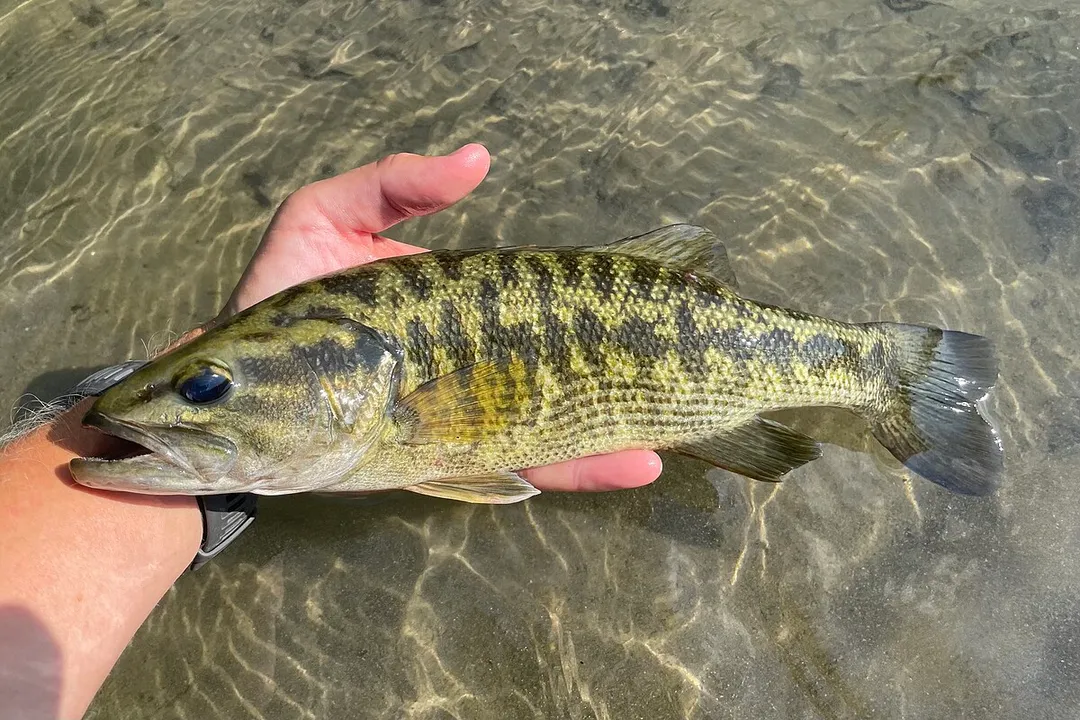
The formal designation for the Guadalupe bass is . [3][4][5][8] This binomial nomenclature, established by Vaillant and Bocourt in 1874, serves as the universal identifier for this unique fish, setting it apart from its close relatives in the genus Micropterus, which includes the more widely known smallmouth and largemouth basses. [5][9] The specific epithet, treculii, honors Auguste Adolphe Lucien Trécul, a French botanist who visited North America and was involved in obtaining the specimen used for the original description. [3][4] In contrast, the genus name, Micropterus, derives from Greek words meaning "small fin," which is noted as a slight misnomer resulting from an injured type specimen that made the posterior rays of the soft dorsal fin appear separate. [3][4]
# Taxonomy and Classification
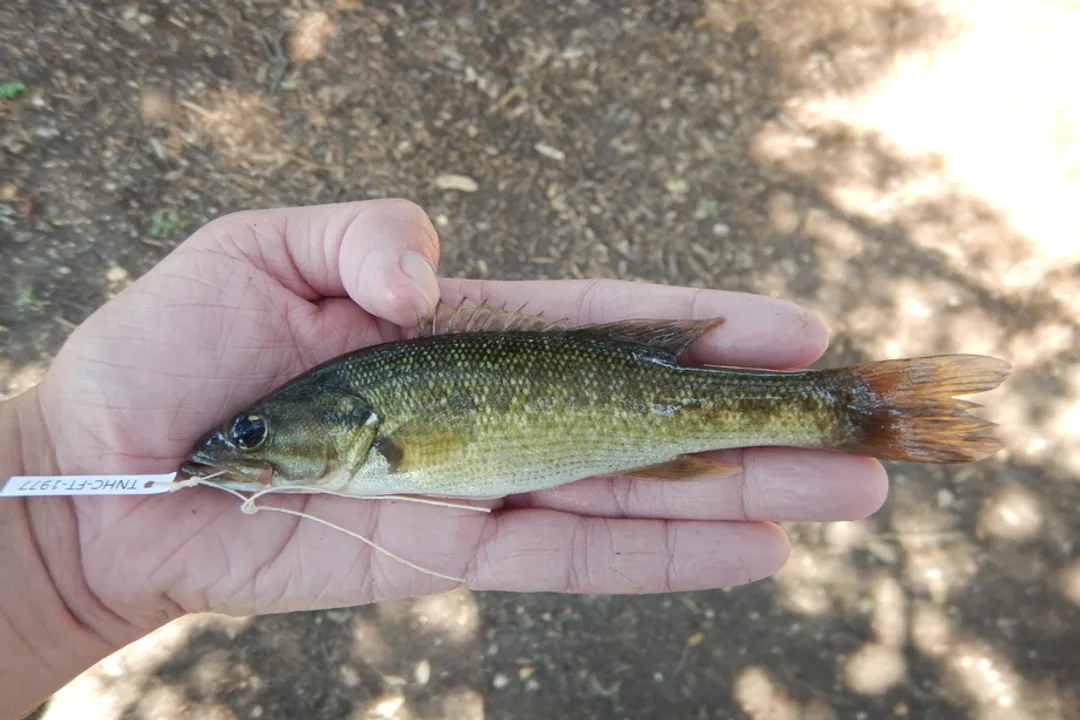
Understanding the scientific classification places the Guadalupe bass clearly within its biological context. It belongs to the Kingdom Animalia, Phylum Chordata, and Class Actinopterygii (ray-finned fishes). [5] More specifically, it resides in the Order Centrarchiformes and the Family Centrarchidae, which is the sunfish family. [3][5] Although commonly grouped with other "black bass" species—largemouth, smallmouth, and spotted bass—the Guadalupe bass is, biologically speaking, a sunfish, not a true bass. [4][6] This phylogenetic grouping is important because it highlights the close evolutionary ties that also lead to conservation challenges, particularly hybridization. Some taxonomic references even include it within the Spotted Bass () species complex.
The history of its scientific naming shows a period of confusion or lesser recognition. For a time, it was either misidentified or placed in synonymy with other Micropterus species. [9] It was recognized as a distinct subspecies of the spotted bass () by Hubbs and Bailey in 1942, before finally being elevated to full specific status by Jurgens and Hubbs in 1953 and Hubbs in 1954. [9] The initial formal description often references the original illustration by Vaillant and Bocourt in 1883 as Dioplites Treculi. [9]
# Naming Etymology Compared
The common name itself is tied directly to its endemic location, making it distinct from many widespread species. It is named for the Guadalupe River, one of its primary native habitats. [5] This ties the common name directly to the ecology of the species. [3] This contrasts with the specific epithet treculii, which references a person, and the genus Micropterus, which references a physical trait (small fin). [4][9]
When considering the other close relatives found in Texas:
- Largemouth Bass (): Distinguished by a jaw that extends past the eye. [4][6]
- Smallmouth Bass (): Known for distinct vertical bars, which the Guadalupe bass generally lacks. [4][6]
- Spotted Bass (): Has coloration that extends less low on the body compared to the Guadalupe bass. [4][6]
It is worth noting that while the official state fish title provides cultural importance, the scientific name Micropterus treculii is the only way to precisely differentiate it from these very similar-looking species across scientific literature and management efforts. [4][5]
# Habitat and Distribution Context
The scientific name Micropterus treculii describes a fish highly specialized to a particular region. This species is endemic to the U.S. state of Texas. [5] Its native range is heavily concentrated on the Edwards Plateau. [5][7] Within this region, it is primarily found in the headwaters and flowing streams of the Brazos, Colorado, Guadalupe, and San Antonio River drainages. [7][9]
This confinement to specific river systems—often characterized by clear, spring-fed waters and flowing currents—is crucial to its identity and its vulnerability. Unlike the largemouth bass, which thrives in quiet waters, the Guadalupe bass prefers the flowing water of creeks and small to medium rivers. [4][6] They seek refuge near large rocks, stumps, or cypress trees in fast currents, often near riffles or the heads of pools. [5] This preference for high-flow environments means that even within its native drainages, its presence is patchy and dependent on specific microhabitat features. [9]
A key piece of context derived from its native range is its conservation status. It is listed as Near Threatened globally by the IUCN, though NatureServe has ranked it as Vulnerable (G3 global rank). [5] This status is directly linked to the threats it faces in its limited native range.
# Conservation Implications of Identity
The scientific name M. treculii is inextricably linked to its conservation status, which is constantly challenged by introduced species. The primary threat is hybridization with the introduced smallmouth bass (). [5][6] Because both species share similar spawning sites, often favoring gravel nests in areas with higher flow rates, interbreeding occurs frequently, leading to a loss of genetic integrity for the pure Guadalupe bass. [4][9] This introgressive hybridization poses a significant danger to the species' long-term survival as a distinct entity. [9]
It is a fascinating point that while the smallmouth bass and spotted bass have wider distributions, the struggle to preserve M. treculii involves active management, including stocking purebred individuals to try and outcompete hybrid populations in certain areas, such as the Llano River. [5][6] The fate of this species, scientifically designated and named, rests on managing the overlap between its preferred habitat and the habitat of invasive congeners.
The differences in life history also reflect its specialized scientific designation. Guadalupe bass are adapted to smaller streams and thus do not grow to a large size; a "trophy" catch is often considered anything over 3.5 pounds, with the state record hovering just under 4 pounds. [4][6] Their fight is prized because they use the current to their advantage, making them popular, especially for fly fishermen who sometimes call them the "Texas brook trout" due to this fighting style and diet inclination. [5]
# Diet and Life Cycle Notes
Delving into the biology associated with Micropterus treculii further explains its ecological niche. Both males and females typically reach sexual maturity very early, at just one year old. [4][9] Spawning usually occurs from March through June, sometimes with a secondary spawn possible in the late summer or fall. [4][6][9] The male guards the gravel nest diligently, often foregoing eating to defend the eggs and fry. [4][5]
Dietarily, the species exhibits some variation based on age, a common pattern in fish, but one that distinguishes it somewhat from its cousins. While adults shift to a piscivorous diet including baitfish like shad and crayfish, juveniles and older adults show a strong inclination towards aquatic invertebrates. [5][9] In fact, larval insects, such as mayflies, are a main food source for the youngest fish. [9] This heavier reliance on insects, especially in flowing waters, is why they are sometimes compared to trout, reinforcing the value of their specific ecological classification. [5]
# Analyzing Distribution and Management
The fact that M. treculii is restricted to the Edwards Plateau and its associated drainages is a critical factor when evaluating conservation success. We can see a clear management divergence when comparing different river systems. For instance, hybridization with smallmouth bass is noted in the Guadalupe River basin, but NatureServe data suggests hybridization might not occur in Lake Travis, even though it occurs in Canyon Lake. This suggests that subtle differences in current speed, substrate, or the presence/absence of specific M. dolomieu populations create islands of genetic purity, even within relatively close geographic proximity. This localized difference—where management efforts focused on one reservoir might fail in another due to differing ecological pressures—is a valuable insight for fisheries biologists attempting to protect the species using stocking programs. [5]
Furthermore, while many centrarchids are known for broad tolerance, the Guadalupe bass shows specific sensitivities. For example, research has indicated it is somewhat less resistant to ammonia toxicity than many other warmwater species, though it tolerates nitrite well. [9] Such subtle physiological differences, though not captured in the primary species name, dictate where restoration efforts through stocking will be most effective, meaning conservation planning must account for water quality variables beyond just flow rate and temperature. [9] The scientific name Micropterus treculii encapsulates a species whose survival is entirely dependent on maintaining the integrity of the unique Texas Hill Country stream habitats it evolved to inhabit. The specific designation highlights its uniqueness, which simultaneously defines its conservation risk.
#Videos
Guadalupe Bass (Micropterus Treculii) - The State Fish of Texas
Related Questions
#Citations
Guadalupe Bass (Micropterus treculii) - Texas Parks and Wildlife
Guadalupe bass - Wikipedia
Micropterus treculii, Guadalupe bass : fisheries, gamefish - FishBase
Guadalupe Bass (Micropterus treculii) | U.S. Fish & Wildlife Service
Guadalupe Bass (Micropterus Treculii) - The State Fish of Texas
Guadalupe Bass Fish | Rare Bass Species Of The Official State Fish ...
Guadalupe Bass (Micropterus treculii) - Species Profile
Micropterus treculii | NatureServe Explorer
Guadalupe bass Micropterus treculii - Texas Freshwater Fishes