What is the scientific name for the giant fishing spider?
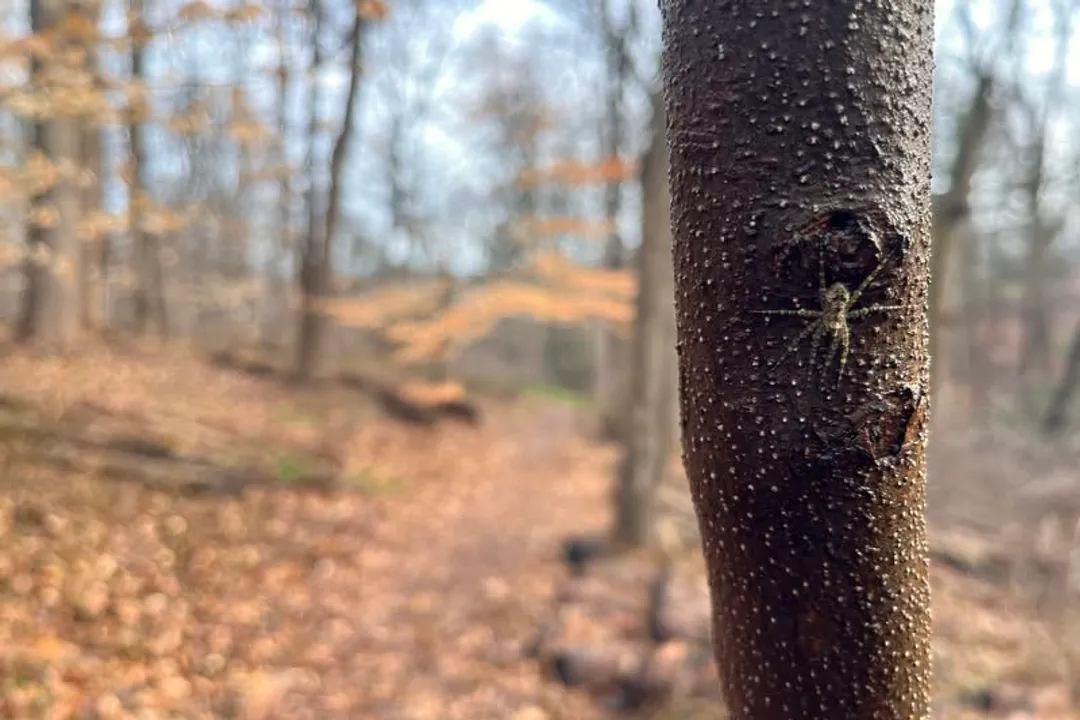
The creature often referred to as the giant fishing spider has a specific scientific designation that helps clarify its place in the arachnid world: Dolomedes tenebrosus. While the "fishing" part of the common name suggests an exclusively aquatic existence, which is true for some relatives, the tenebrosus species presents a fascinating divergence. They are among the largest spiders found in North America, commanding attention whether they are lurking near a pond or surprisingly, climbing the siding of a home. Their impressive size, with leg spans that can approach three inches, easily qualifies them for the "giant" moniker in a casual setting. Understanding this spider requires looking past the stereotype implied by its name and delving into the habits of this large, hairy hunter that often prefers the shaded, terrestrial environments of forests over the open water.
# Scientific Naming
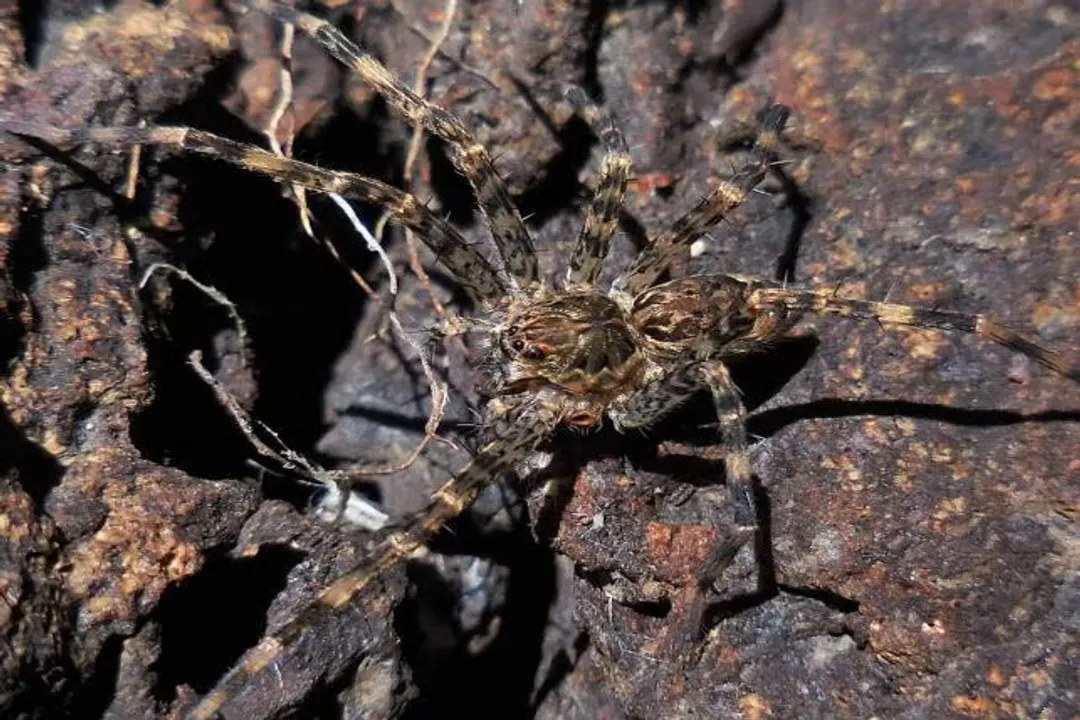
The genus Dolomedes unites these fascinating spiders, often called nursery web spiders or fishing spiders. Within this group, Dolomedes tenebrosus stands out, particularly in North America, due to its prevalence and tendency to inhabit darker, less overtly wet locales than its cousins. The genus name itself points toward their lifestyle, which often involves hunting near water surfaces. However, when one sees a truly enormous example of this group, especially one encountered far from a creek or lake, it is very likely this particular species. The specific epithet, tenebrosus, hints at its preferred dark environments, which can be tree hollows, crevices in rocks, or the shaded recesses of man-made structures.
# Physical Profile
These spiders are visually striking due to their sheer size and hairy appearance. Adult females are generally larger than males, contributing to the imposing presence often reported by observers. Their coloring is typically dark, ranging from brown to black, which helps them blend into the shadows of their woodland or structural habitats.
A critical aspect of identifying a true fishing spider, and separating it from other large, ground-dwelling hunters, lies in its eye arrangement. This is a point where careful observation is necessary, especially since D. tenebrosus is frequently confused with wolf spiders. Fishing spiders, belonging to the family Pisauridae, possess a distinct configuration of eight eyes. Specifically, they have two rows of four eyes each, with the back row featuring two very large eyes that sit somewhat lower than the pair next to them, giving them a somewhat flat-faced appearance from the front.
To illustrate this key difference, a quick comparison can be helpful. While both are active hunters, their visual setup differs significantly:
| Feature | Dolomedes tenebrosus (Fishing Spider) | Wolf Spider (Lycosidae) |
|---|---|---|
| Eye Arrangement | Two rows of four; back row has two large eyes that are comparatively low-set. | Two large eyes positioned high and prominently on the front of the cephalothorax. |
| Primary Hunting Style | Water surface stalking or terrestrial hunting. | Terrestrial, ground-level pursuit. |
| Typical Habitat | Near water, but often in wooded areas, sheds, or rock crevices. | Ground-dwelling, sometimes burrowing. |
This subtle difference in eye placement is an essential piece of expertise for anyone encountering a large, fast-moving spider and needing a quick identification without capture.
# Habitat Differences
The term "fishing spider" naturally conjures images of spiders perched on reeds or skimming across a still pond surface, waiting to snatch a hapless minnow or mosquito larva. While many Dolomedes species do indeed fit this description, D. tenebrosus often defies expectations. This species is frequently found away from significant bodies of water, thriving instead in wooded areas, under bark, in rock crevices, or even in dry locations like sheds and basements. In fact, they are often described as being semi-aquatic, but their reliance on water is less absolute than some of their relatives.
The preference for darker, perhaps drier, habitats is a significant ecological differentiator. If you live in an area with dense forests or many old, shaded structures, encountering a D. tenebrosus on a tree trunk or climbing the exterior wall of a house is not unusual. This broad habitat tolerance—spanning from the edges of water features to the deep woods and human structures—is part of what makes them seem so widespread across their range. It's worth noting that while they can be near water and utilize that ability, their presence indoors or deep in the woods is perfectly normal behavior for this specific species. Thinking about where you are most likely to see one might influence when you go looking; late spring through fall is generally the active season for these large spiders.
# Hunting and Diet
Dolomedes tenebrosus are active hunters, meaning they do not rely on a fixed, silken web to capture their prey; they are wanderers and ambushers. This contrasts sharply with orb-weavers, for example. Their large size dictates a diet that can include substantial prey.
When they are near water, they exhibit behavior worthy of their common name. They can walk directly on the water surface, using surface tension to support their weight, and can even submerge themselves for extended periods if necessary. This adaptation allows them to catch aquatic insects, tadpoles, and even small fish.
However, on land, their diet is broader. They are adept at pursuing and overpowering terrestrial invertebrates. This includes large insects like crickets and grasshoppers, and they are opportunistic enough to take down smaller arthropods they encounter while patrolling their territory. Given their size, they are highly effective predators in their immediate micro-environment, whether that is the forest floor or the damp corner of a garage. The sheer scale of this spider means that an encounter often results in the prey being overwhelmed quickly by the spider’s speed and powerful venom.
When observing one of these spiders outdoors, particularly around woodpiles, thick vegetation, or the foundation of a building, keep in mind that they are often hunting at dawn, dusk, or even at night, though they can certainly be active during the day if conditions are favorable. A practical consideration for homeowners managing yards near wooded areas is that clearing debris and tightly stacked wood that might offer prime daytime refuge can reduce the likelihood of a large specimen wandering into immediate living spaces.
# Safety and Interaction
For most general readers, the most pressing question after identifying a large spider is safety. The Dolomedes tenebrosus is not aggressive, but like any wild animal, it will defend itself if threatened or accidentally trapped, such as when someone puts on a shoe or glove it is hiding in.
The Dark Fishing Spider possesses venom, as all spiders (except the Uloboridae family) do, to subdue its prey. However, the venom of D. tenebrosus is generally not considered medically significant to humans. A bite might occur if the spider is cornered or roughly handled, and while painful—comparable to a bee or wasp sting—it is not known to cause serious systemic effects in healthy individuals. Local reactions, such as redness, swelling, or mild pain at the bite site, are the typical outcomes.
It is always prudent to avoid direct contact with any large, unknown spider. If one is found inside the home, the best course of action is not immediate extermination but relocation. Because they are non-web-building hunters that often wander in from the outside seeking shelter or prey, they usually do not establish permanent colonies indoors. A simple method for relocation involves gently coaxing the spider into a sturdy container, such as a jar or plastic tub, placing a piece of stiff cardboard over the opening, and then releasing it outdoors, preferably near a wooded area or water source away from the immediate entryway. This approach respects the creature's role in the local ecosystem while ensuring human safety inside the dwelling.
# Ecological Niche and Range
The range of the Dark Fishing Spider covers a significant portion of the eastern and central United States. Their ability to thrive in varied conditions—from humid riparian zones to drier, shady forest floors—contributes to their broad distribution. They occupy a unique niche because they bridge the gap between strictly aquatic spiders (like some Dolomedes species specializing in water hunting) and strictly terrestrial hunters (like many wolf spiders).
This adaptability is a major factor in their success. While they are certainly present near water bodies, their association with woodlands means they are not limited by the presence or absence of ponds or streams in the same way that highly specialized aquatic predators are. An interesting ecological implication of this flexibility is that D. tenebrosus may experience less population pressure from seasonal droughts compared to obligate aquatic arthropods, allowing their populations to remain relatively stable across different weather years, provided adequate shelter and terrestrial insect prey are available. When considering the diversity within the Dolomedes genus, D. tenebrosus serves as a prime example of how a group's adaptation can allow one species to exploit both semi-aquatic and drier, shaded habitats successfully.
#Videos
Dolomedes okefinokensis, Florida Fishing Spider Housing and care
Related Questions
#Citations
Dark Fishing Spider | Arthropod Museum - University of Arkansas
The dark fishing spider (Dolomedes tenebrosus) is semi-aquatic, as ...
Dolomedes okefinokensis, Florida Fishing Spider Housing and care
Fishing Spider - Penn State Extension
Fishing Spiders - Home and Garden IPM from Cooperative Extension
Fishing Spiders - Genus Dolomedes - BugGuide.Net
Dark Fishing Spider | Missouri Department of Conservation
Fishing Spiders and Wolf Spiders | NC State Extension Publications
Dark Fishing Spider, Vol. 8, No. 25 | Mississippi State University ...