What is the classification of a sweat bee?
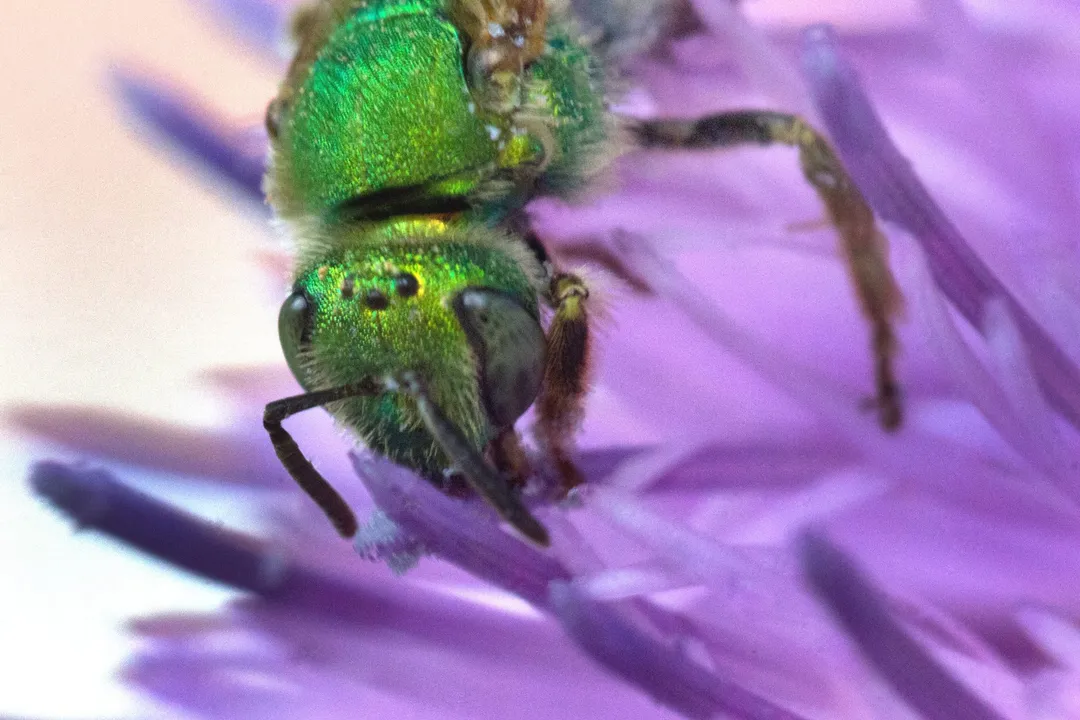
The common name "sweat bee" applies to numerous species belonging to the insect family Halictidae. [5][9] This group is incredibly widespread, found across the globe except in regions experiencing extreme cold. [1][9] While the term itself suggests a specific behavior—being attracted to perspiration—their classification reveals a much more complex and diverse lineage within the insect world, particularly among the bees. [5] Understanding their place in the system helps explain their varied appearances and behaviors.
# Taxonomic Rank
To precisely classify a sweat bee, we place it within the standard Linnaean hierarchy. Like all bees, they belong to the Order Hymenoptera, which also includes wasps and ants. [4] More specifically, they are part of the superfamily Apoidea, which encompasses all bees. [4] The defining characteristic that groups them together, separating them from other bee families like the Apidae (which includes honey bees and bumble bees) or the Megachilidae (leafcutter bees), is their placement within the family Halictidae. [1][4]
This family designation is the most critical piece of classification for identifying a sweat bee. [9] Within the scientific naming structure, the classification looks like this:
- Kingdom: Animalia
- Phylum: Arthropoda
- Class: Insecta
- Order: Hymenoptera
- Superfamily: Apoidea
- Family: Halictidae [1]
While this places them firmly within the bee lineage, the family Halictidae itself is quite large and is further organized into several distinct subfamilies. [1]
# Family Subdivisions
The classification doesn't stop at the family level; the internal structure of Halictidae reveals significant evolutionary divergence. This family is broken down into multiple recognized subfamilies, illustrating the breadth of characteristics found under the sweat bee umbrella. [1] These subdivisions include Rophitinae, Nývstinae, Halictinae, Melitturginae, Dasypodainae, and Allorhynchinae. [1]
The subfamily Halictinae is often the most commonly encountered group in many regions. [1] It is within this subfamily that we find many of the genera people associate with the common name, such as Halictus [3] or Lasioglossum. [6] The existence of multiple subfamilies confirms that "sweat bee" is a common name applied to a highly successful and ancient lineage, rather than a single, tightly knit genus. [9] The differences between these subfamilies can involve subtle anatomical features, the structure of their tongue, or their social organization. [1]
# Physical Markers
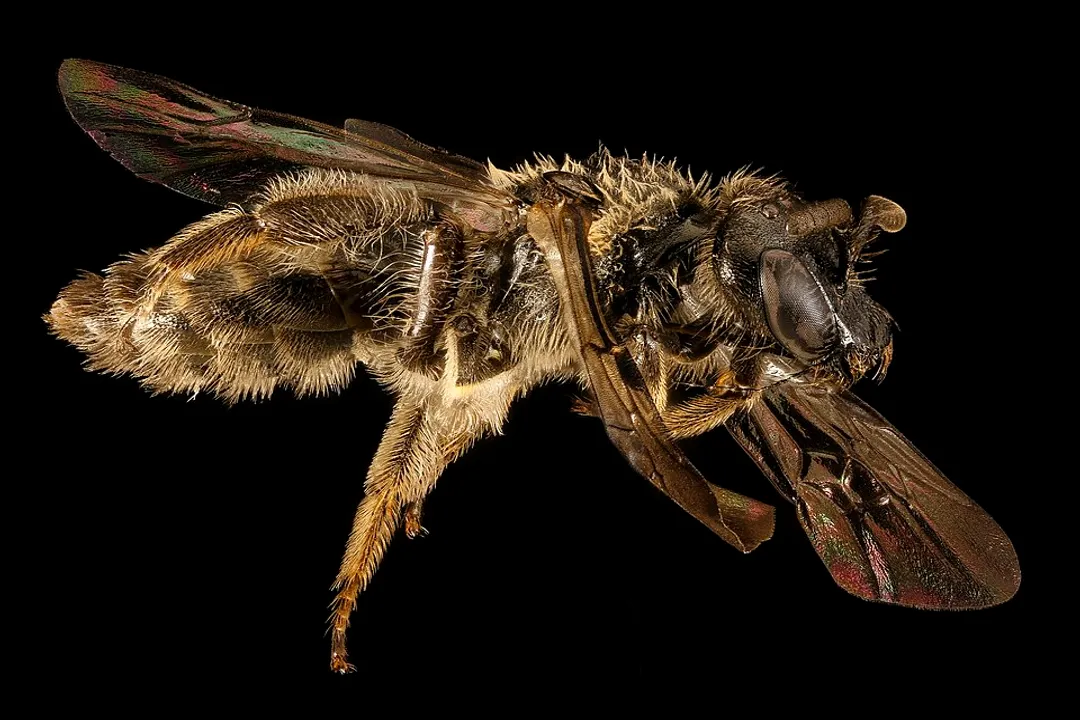
Despite the deep divisions within the family, there are recurring physical traits that help general observers identify members of the Halictidae family, even without a microscope. [2][8] Most sweat bees are relatively small to medium-sized insects. [4][8] Their typical length often ranges from about one-eighth of an inch up to half an inch. [2]
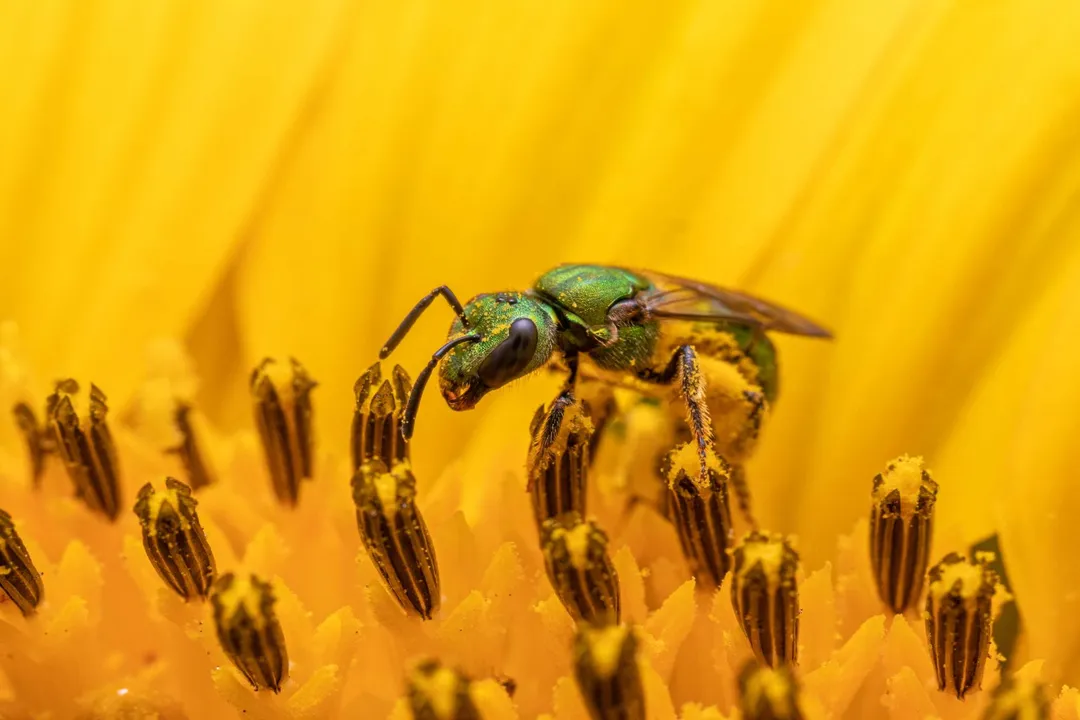
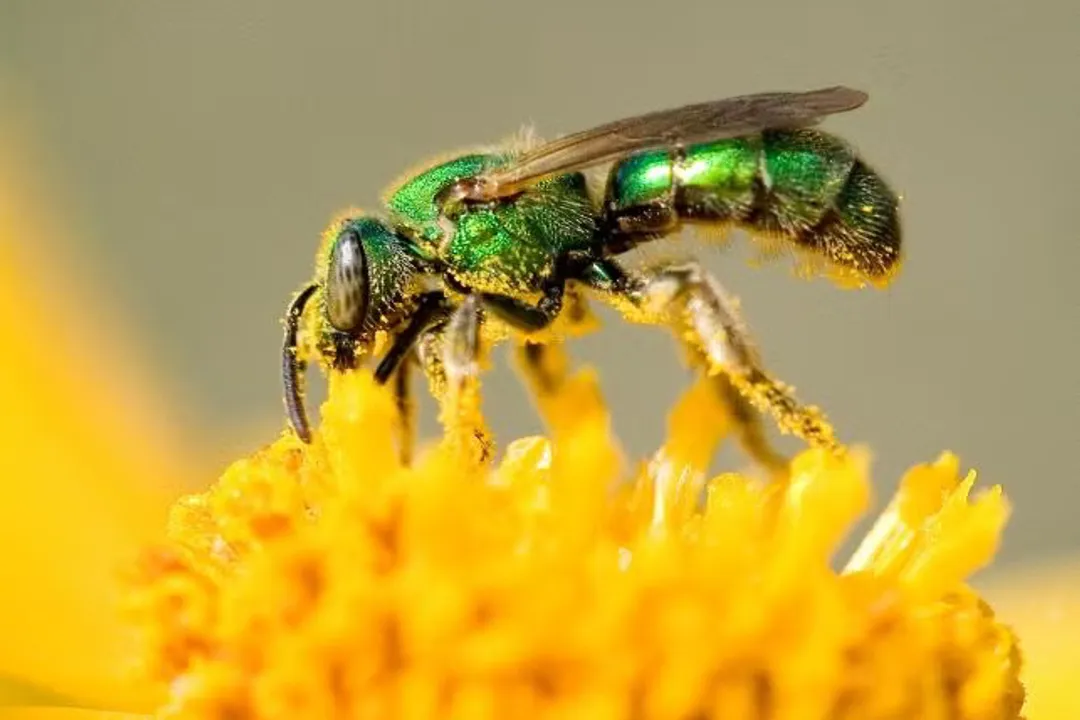
Coloration is a major variable. Many sweat bees possess a dark, almost black body color. [3][8] However, one of the most distinguishing features, particularly in the more well-known groups, is the presence of metallic sheens—often metallic green or bronze—on their bodies. [2][4][8] Another frequent characteristic involves patterns on the abdomen, where pale or whitish bands contrast against the darker body segments. [2][3][8] For instance, the genus Halictus is frequently described as dark with these pale abdominal stripes. [3] It is interesting to note how often field guides emphasize these contrasting bands, perhaps because many people assume all bees should be yellow and black like the familiar honey bee, making the black-and-white banding a useful distinguishing feature for the casual observer. [2][8] This visual variability, from matte dark brown to brilliant metallic green, is a direct reflection of the genetic diversity contained within the Halictidae family structure.
# Genus Examples
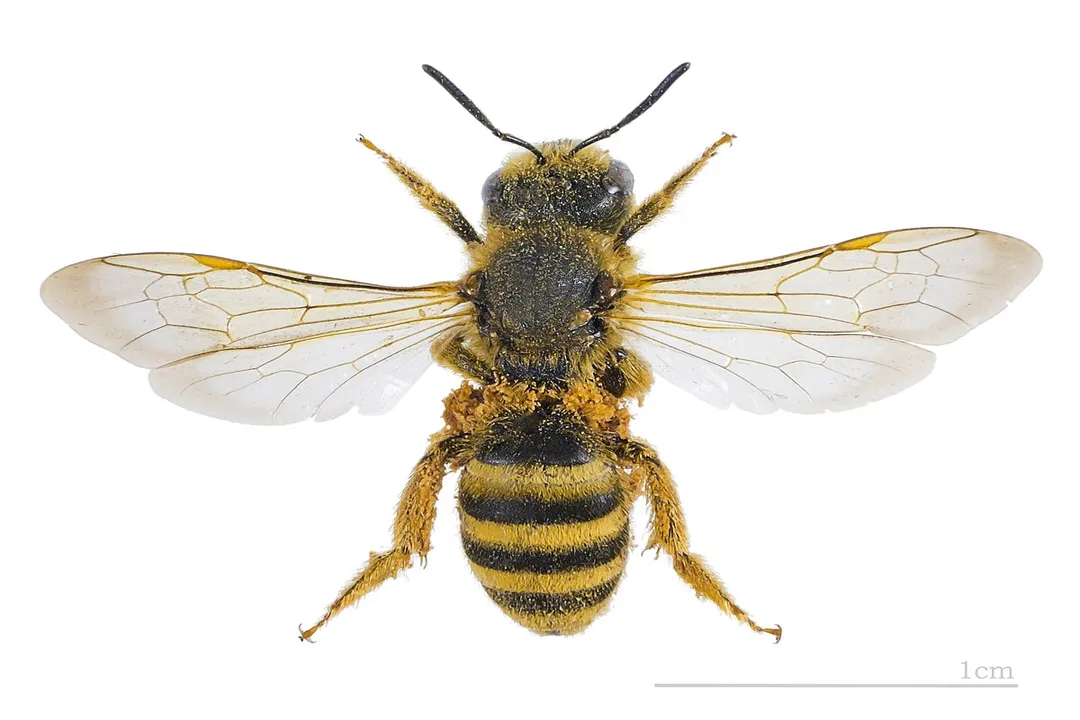
Drilling down past the subfamilies, the next level of classification is the genus, which groups together species that share even closer characteristics. Two prominent examples illustrate the breadth of the family:
- Halictus: Bees belonging to the genus Halictus are classic examples of dark sweat bees, often displaying those characteristic pale markings on the abdomen. [3]
- Lasioglossum: This genus is home to many species referred to as "dark sweat bees," further emphasizing that "dark" is a common, though not universal, appearance trait within the family. [6]
When encountering an unidentified bee that appears small, dark, and possibly possesses faint abdominal banding or a slight metallic reflection, a researcher would correctly narrow the classification search down to the family Halictidae before proceeding to genus-level keys. [8]
# Nesting Habits
One area where the classification is reflected behaviorally, rather than purely morphologically, is in their nesting habits. [1][5] Halictid bees exhibit a wide spectrum of social behavior, which is unusual in bees, as most are solitary. [5] Their classification encompasses solitary, communal, primitively social, and even eusocial forms. [1]
The majority of sweat bees, however, are ground nesters. [2] They excavate tunnels in the soil to create individual cells for their larvae. [2] This ground-nesting tendency is a crucial ecological trait shared by many members across different subfamilies. If you are examining disturbed soil in your yard or garden, noticing small, perfectly circular entrance holes with no accompanying large mound of dirt often points toward a Halictid resident rather than a larger bumble bee or a paper wasp. [2] Observing these nests can provide a non-invasive way to appreciate their life cycle, as the female bees are generally not aggressive unless directly handled or their nest entrance is severely obstructed. [5] Unlike honey bees which overwinter as a colony, many solitary sweat bees overwinter as a mature larva or pupa within the ground cell. [2] Learning to recognize these ground nests—perhaps by noticing sparse vegetation where the ground has been repeatedly disturbed by digging—can help gardeners avoid accidentally disturbing a developing brood later in the season. This shared ground-nesting strategy, despite the evolutionary distance suggested by the various subfamilies, highlights an ecological specialization that is remarkably common within the Halictidae family structure.
Related Questions
#Citations
Halictidae - Wikipedia
Native Animal Profile: Sweat Bees - Maryland News
Genus Halictus (Sweat Bees) | The Great Sunflower Project
Sweat Bees, Halictid Bees, Halictidae (Insecta: Hymenoptera
Sweat Bees: 7 Quick Facts and More
Sweat bees - NATIVE BEES
Sweat bees | Xerces Society
Halictid Bees (Sweat Bees) - Missouri Department of Conservation
Sweat bee | Description, Types, Nest, Sting, & Facts | Britannica