What is the difference between Alpine Dachsbracke and Dachshund?
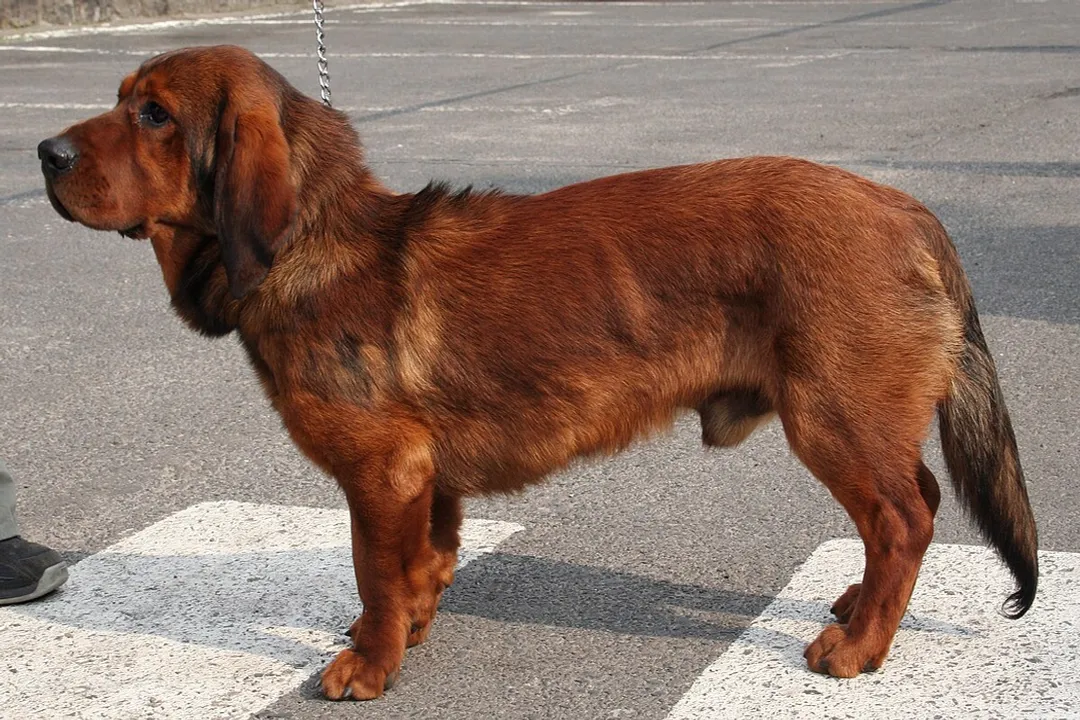
The lineage and purpose behind two stout, short-legged hounds—the well-known Dachshund and its less common cousin, the Alpine Dachsbracke—reveal distinct paths in canine development, even though they share a common ancestor and hunting heritage. While the Dachshund, often affectionately nicknamed the "sausage dog" or "wiener dog," is instantly recognizable worldwide, the Alpine Dachsbracke remains relatively obscure outside of specific European hunting circles. [1][3] To truly differentiate them, one must look past their shared low-slung silhouette and into their distinct geographical origins and the selection pressures that shaped their bodies and temperaments.
# Origin Stories
The story of the Dachshund is deeply rooted in Germany, where it was developed primarily as the Teckel, or badger dog, meant for burrowing and tackling quarry underground. [1][5] Its name literally translates to "badger dog". [5] While the breed's history includes various types, the show ring eventually favored a pronounced elongation of the spine and reduction of limb length, traits associated with achondroplasia, a recessive genetic condition. [5] The working or "sporting" Dachshund, or Teckel, has a history tested by rigorous standards, including tracking, underground work, and scent trailing. [5]
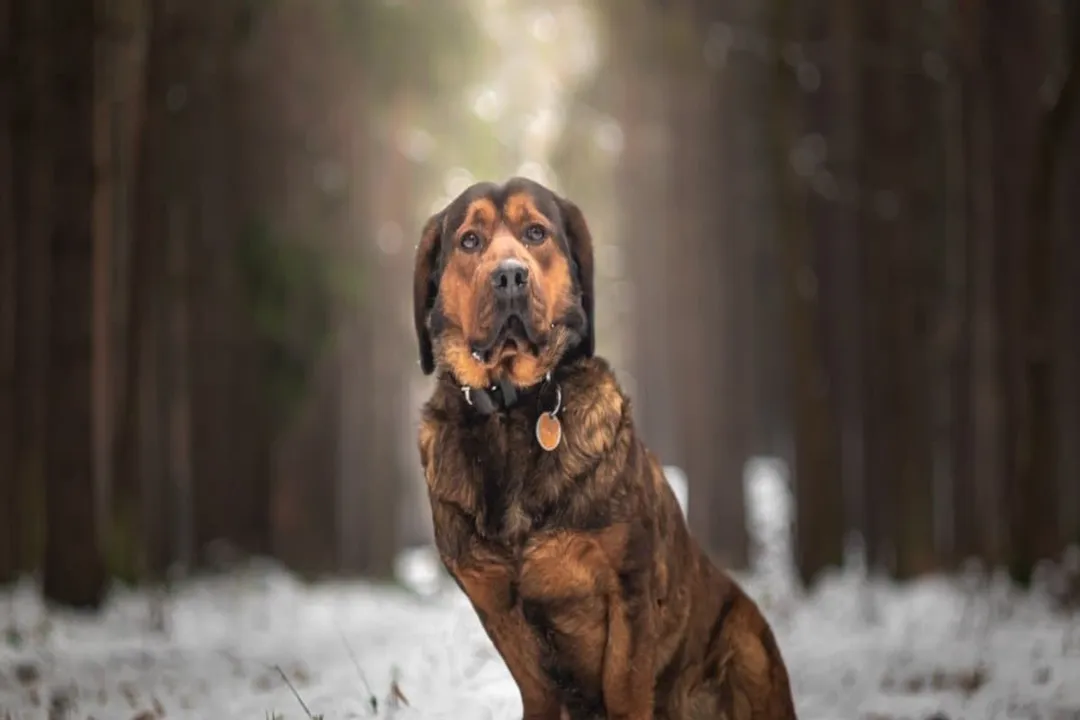
The Alpine Dachsbracke, conversely, hails from the Alpine regions of Austria, with its development dating to the mid-19th century. [3][4] This breed was intentionally created by crossing the existing Dachshunds with larger scent hounds, notably the Austrian Black and Tan Hound. [3][4] The goal was not solely underground work, but the creation of a versatile hound capable of trailing wounded game like deer and boar across the challenging, steep terrain of the Alps. [3][4] This crucial outcrossing resulted in a dog that retained the low profile but boasted a different structural balance for mountainous pursuit. [5] The Dachsbracke was highly regarded by royalty; Crown Prince Rudolf of Habsburg famously took these dogs on hunting expeditions to places as far-flung as Egypt and Turkey. [3][4]
# Physical Structure
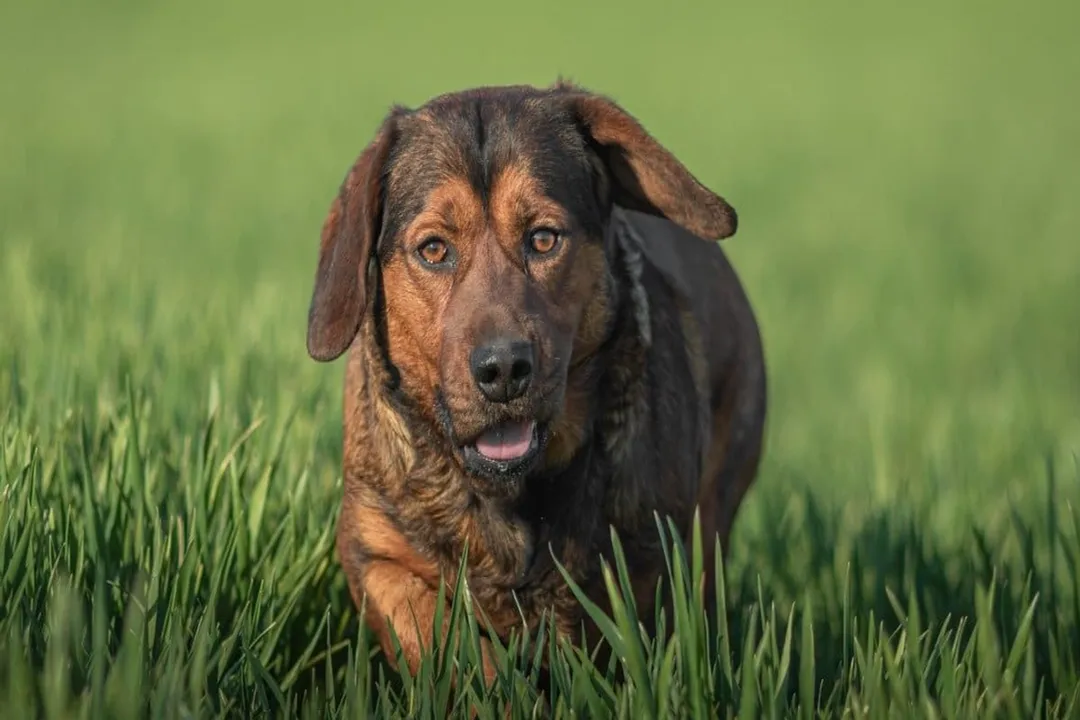
A quick visual comparison often leads to immediate confusion, as both breeds share the chondrodysplastic characteristic of short legs and a long body. [4] However, subtle yet significant structural differences define their physical capabilities.
The Alpine Dachsbracke is classified as a small dog but leans toward the larger, heavier end of that spectrum, typically weighing between 33 to 40 pounds (15 to 18 kg) and standing 13 to 16.5 inches high at the withers. [1][4] Its build is described as sturdy, big-boned, and visibly robust. [4] Critically, while its legs are short, they are generally longer and straighter than those of the modern show Dachshund, allowing it to cover ground effectively over rough, demanding terrain. [3][4] The ideal Dachsbracke height should measure roughly two-thirds of its total body length. [3]
Dachshunds, on the other hand, are split into three size categories: Toy, Miniature, and Standard. [1] A Standard Dachshund is generally lighter, weighing between 16 to 32 pounds, and is often shorter in height than the Dachsbracke. [1] The intense focus on extreme shortening of the forehand bones in show specimens leads to a conformation that, according to some experts, places undue strain on the spine, predisposing them to Intervertebral Disc Disease (IVDD). [5] While the Dachshund’s anatomy is specialized for maneuvering in burrows, the Dachsbracke’s slightly more substantial bone structure and relatively longer limbs speak to its function as a trailing hound on mountain slopes rather than an earth-dog. [5]
# Coat and Grooming Needs
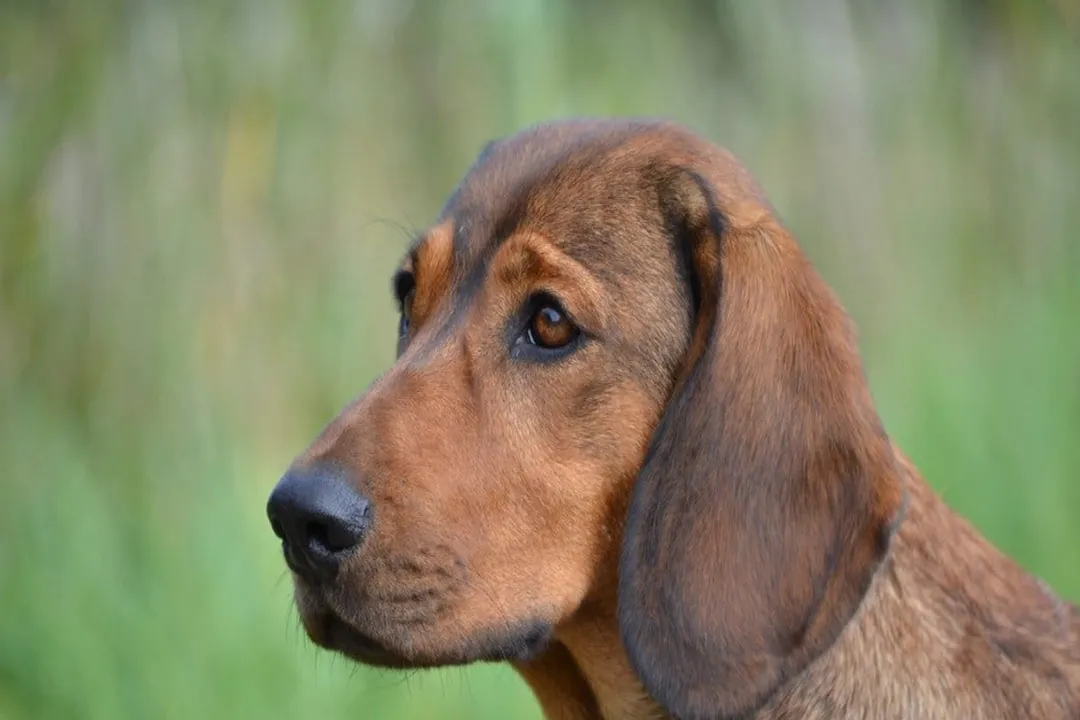
When examining their coats, the variation within the Dachshund breed becomes apparent, creating a difference in maintenance compared to the consistently coated Alpine Dachsbracke.
The Alpine Dachsbracke consistently possesses a dense, thick, and smooth topcoat, accompanied by a dense undercoat to protect it from cold Alpine weather. [3][4] The preferred color is dark deer red, sometimes interspersed with black hairs, though black with red-brown markings is also permitted. [3][4] They shed an average amount and require weekly brushing to manage this, typically needing a bath every six to eight weeks. [3][1]
Dachshunds come in three coat types: smooth, wire-haired, and long-haired [1] (though the provided source only mentions a "Fine" coat type and acknowledges wire-hair development aided by Dandie Dinmont blood). [5] The different textures naturally imply varying grooming needs. For instance, the smoother coats are generally easy to groom, but one source suggests that Dachshunds with longer coats might need bathing more often, possibly every three to four weeks. [1] Sporting Dachshund varieties have recognized colors including black and tan, chocolate and tan, red, brindle, and dapple. [5]
If we consider the working lines, the Dachsbracke's double coat is specifically weatherproof for the mountains, which might imply better inherent tolerance to cold than the smooth-coated Dachshund, which prefers warmer weather. [3][1] It is interesting to note that the Dachsbracke’s coat is generally less likely to necessitate frequent bathing than the smoother-coated Dachshund, according to one comparison. [1]
# Temperament and Drive
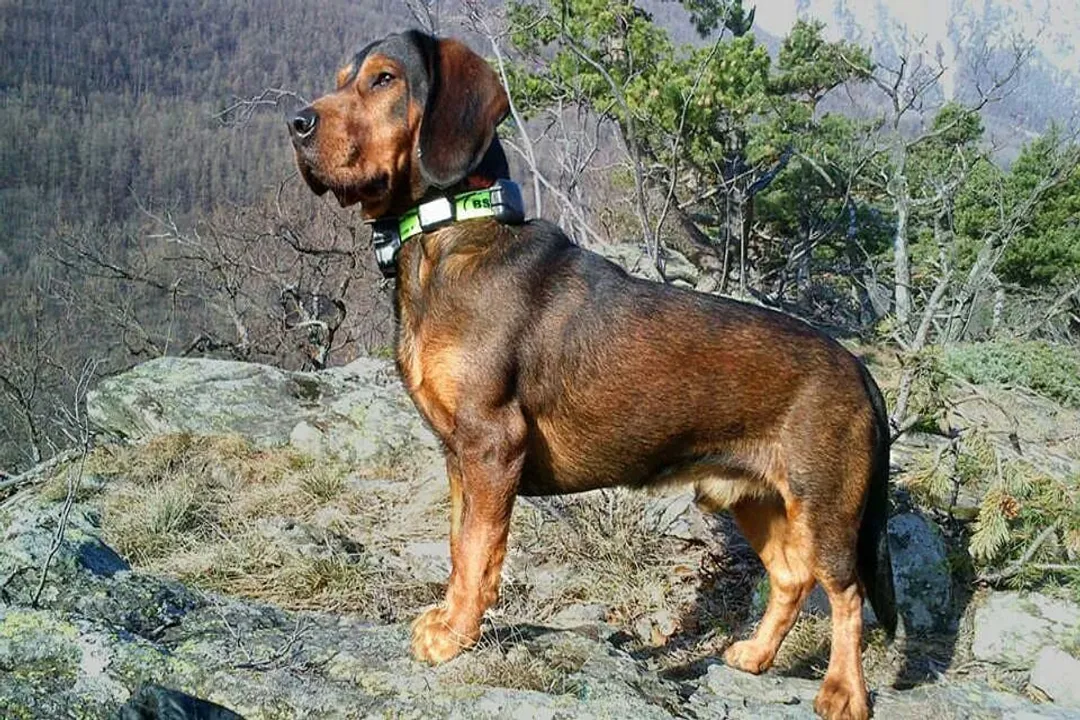
Both breeds are classified within the Hound Group and share core hound characteristics: intelligence, loyalty, and a strong scenting drive. [1][3] They are both described as social, generally good with other dogs, and capable of being affectionate family companions. [1][3] They are also both noted for having a high impulse to chase and catch prey. [1]
However, their expression of these traits differs in domestic settings. The Dachshund is often cited as barking "a lot," making it a particularly vocal breed. [1] Furthermore, the Dachshund has a high potential for wanderlust, suggesting a strong desire to follow a scent trail and explore beyond safe boundaries. [1] The Alpine Dachsbracke, while determined once on a scent, is reported to bark only "occasionally" and has only average wanderlust potential. [1] While both breeds are deemed good for first-time owners due to their "easy-going personality," their working instincts necessitate careful management. [1]
This intense drive leads to a practical consideration for owners of either breed: given their exceptional scenting ability—the Dachsbracke being known as a "cold-nose hound" that can follow an old trail—security is paramount. [3][4] If you are considering either breed, especially if you live near open fields or woods, you must create a scent-safe zone in your yard. This means double-checking fences and ensuring gates are latch-secure, as an interesting rabbit scent can override any recall training command in the moment, irrespective of the breed's general obedience rating. [1][3] Their shared hound nature means they are easily distracted when training outdoors near compelling scents. [3]

# Working Function and Trainability
Their shared history as hunting dogs is where their differences truly emerge based on their specialized tasks. The Alpine Dachsbracke is celebrated for its capacity to track wounded game over difficult, high-altitude terrain. [3][4] It is a tenacious tracker, often kept by hunters because of this specific skillset. [4]
The Dachshund’s primary historical role was the earth-dog—going to ground to flush or bay badgers. [5] While both are listed as having an "average exercise need," the Dachsbracke is described as a high-energy dog that requires about an hour and a half of exercise daily and is best suited for country living rather than apartments. [1][3] This aligns with its development for covering large distances in the mountains. [3] The Dachshund, conversely, is often rated as apartment-friendly, despite its high wanderlust. [1]
In terms of training, both breeds are surprisingly rated as "easy to train". [1] However, the Dachsbracke is labeled as having "Smart" intelligence, while the Dachshund is rated as "Average," suggesting the Dachsbracke might pick up new commands more readily, provided its scent-hound nature doesn't distract it. [1] Both breeds are noted as having low bite risk and average territorial protection instincts. [1] While neither is typically used for service work, the Dachshund is considered a good candidate for therapy work, while the Dachsbracke is not generally utilized in that capacity. [1]
# Size, Health, and Longevity
A key distinguishing factor is the size and weight disparity, especially when comparing the Standard Dachshund to the Alpine Dachsbracke.
| Feature | Dachshund (Standard) | Alpine Dachsbracke |
|---|---|---|
| Average Weight | ~24 pounds (11 kg) [1] | ~36.5 pounds (16.5 kg) [1] |
| Average Height | ~9.5 inches (23.5 cm) [1] | ~14.75 inches (38 cm) [1] |
| Lifespan | 11–15 years (Avg. 13) [1] | 11–13 years (Avg. 12) [1] |
| Common Health Issue | IVDD, Cancer, Bloat [1] | Hip Dysplasia, IVDD, Obesity [3] |
Both breeds share the risk of Intervertebral Disc Disease (IVDD) due to their long backs. [1][3] However, this is where the subtle structural differences hint at potential welfare advantages. The critique of the show-type Dachshund strongly points out the inherent spinal strain caused by extreme conformation, leading some veterinarians to believe the spine is only "good for five years" of normal life before disc trouble sets in. [5] While the Dachsbracke also carries this risk because of its shape, its sturdier, big-boned structure and the fact that its legs are longer relative to its body length might suggest a slightly different distribution of stress during movement compared to the most exaggerated Dachshunds. [4][5]
Obesity is a high-risk factor for both breeds, as excess weight places severe pressure on their delicate spines and short legs. [1][3] The Alpine Dachsbracke, being heavier on average, requires diligent weight management. [3] Regarding climate, the Dachshund prefers warmth, while the Dachsbracke is better adapted to colder conditions, fitting its mountain heritage. [1] In terms of lifespan, the Dachshund generally has a slightly longer average, though both breeds fall within a similar 11-to-15-year window. [1]
# Recognition and Rarity
The difference in recognition status explains why one breed is a household name and the other is comparatively rare in many countries. The Dachshund has high popularity, ranking 13th in one comparison, and has been recognized by the American Kennel Club (AKC) since 1885 as a Hound breed. [1]
The Alpine Dachsbracke, while recognized by the FCI (Fédération Cynologique Internationale) in the Scenthound Group, is not recognized by the AKC. [1][4] This lack of recognition by major English-speaking kennel clubs keeps its profile low, though it is recognized by the United Kennel Club (US) and various minor registries. [4] This difference in recognition correlates with their availability; the Dachshund is described as "very frequent," while the Dachsbracke is listed as only "commonly available". [1]
# Compatibility Factors
For families considering these breeds, temperament compatibility is important. Both breeds are considered not the most kid-friendly, though properly socialized Dachsbrackes are reported to be good with children. [1][3] Similarly, neither breed is highlighted as being particularly friendly toward strangers. [1]
Both dogs are classified as social breeds that do best when they have company during the day, indicating that neither is well-suited to being left alone for extended periods. [1] Interestingly, despite the Dachshund’s reputation as a tough earth-dog, one source suggests it makes a perfect therapy dog, while the Dachsbracke does not typically serve in that role. [1] While both can get along with other household pets with socialization, potential owners of either should remain cautious, given their ingrained high prey drive. [1][3]
Ultimately, whether you seek the tenacious burrow-worker with a distinct spectrum of coat styles and sizes in the Dachshund, or the slightly larger, mountain-proven trailer in the Alpine Dachsbracke, you are choosing a dog with an undeniable nose and a devoted spirit. The choice often comes down to whether your lifestyle aligns better with the smaller, more varied Dachshund or the stockier, cold-weather-adapted Dachsbracke, keeping in mind the structural considerations inherent to their shared, low-to-the-ground design. [1][5]
Related Questions
#Citations
If You Love Dachshunds, You've Got to Meet the Dachsbracke
Dachshund vs Alpine Dachsbracke Comparison – Which dog is ...
Alpine Dachsbracke - Dogs - A-Z Animals
Alpine Dachsbracke - Wikipedia
772 teckels