What is the difference between a blackbird and a bobolink?
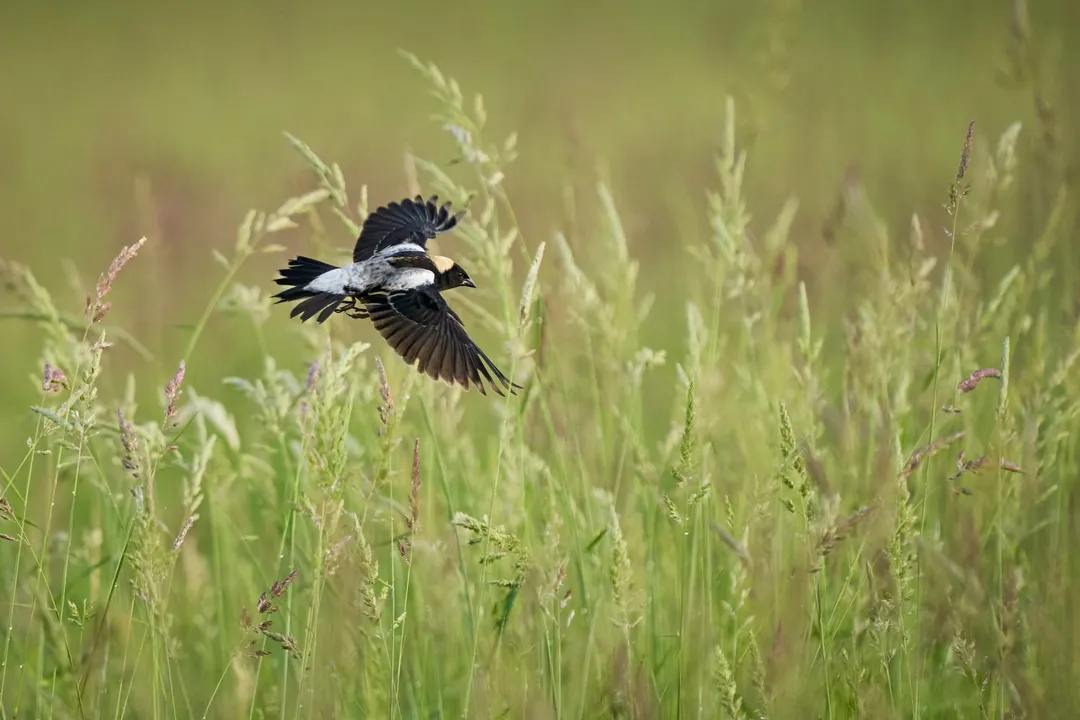
The confusion between a blackbird and a Bobolink is quite understandable, especially when you consider the variety within the avian world. While many people picture a sleek, uniformly dark bird when they hear the word "blackbird," the reality is more nuanced. The key to separating these two lies in classification: the Bobolink is actually a member of the blackbird family, but it looks and sounds radically different from its more common cousins like the Red-winged Blackbird or the Common Grackle.
To properly distinguish them, we must first acknowledge that "blackbird" is a broad common name applied to several species within the Icteridae family, often called the New World Blackbirds. The Bobolink, scientifically known as Dolichonyx oryzivorus, shares this taxonomic grouping. This means the question isn't strictly "Blackbird versus Bobolink," but rather, "How does the Bobolink differ from the typical blackbird species we commonly encounter?"
# Family Lineage

All Bobolinks belong to the Icteridae family, which also houses grackles, orioles, cowbirds, and meadowlarks. This places the Bobolink firmly within the lineage of North American blackbirds, which are distinct from the European blackbirds (Turdus merula). Within the Icteridae, many North American members are recognized for their dark, often glossy plumage, such as the Rusty Blackbird or the Red-winged Blackbird. The Bobolink, however, seems to have taken a sharp detour in its evolutionary fashion sense, particularly the males during the breeding season.
# Male Appearance
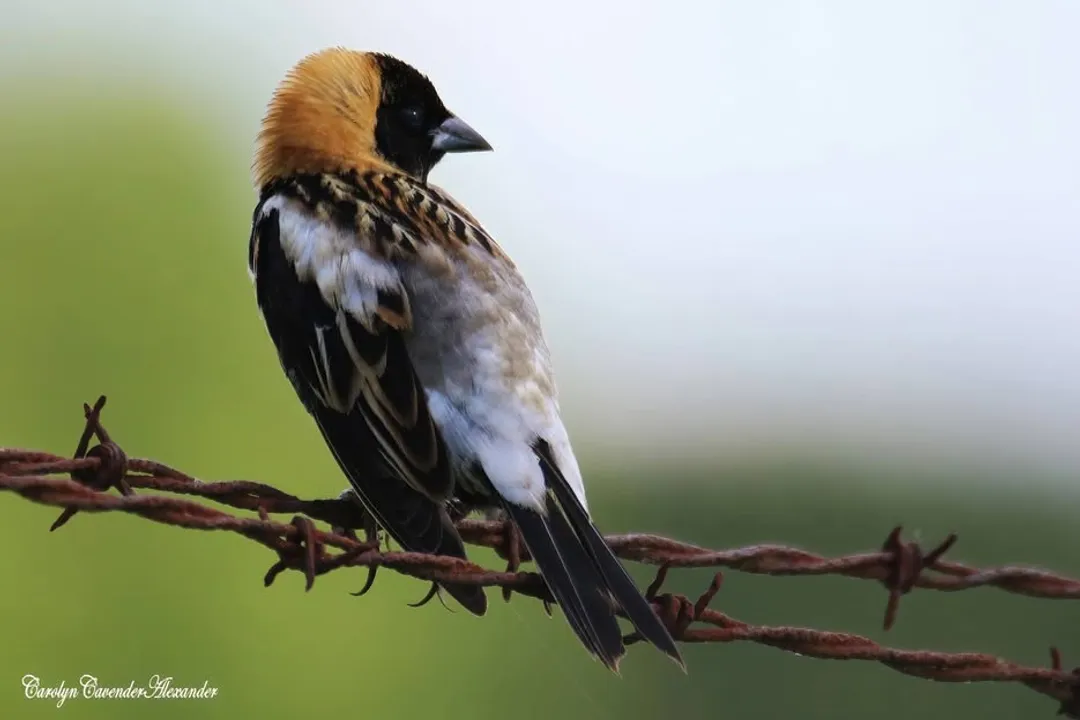
The most striking difference emerges when observing the breeding male Bobolink. While a male Red-winged Blackbird is largely glossy black save for those recognizable red and yellow shoulder patches (epaulets), the male Bobolink in his summer attire is strikingly patterned and multi-colored. He sports a black body, but this is offset by a prominent white rump, buffy or yellowish feathers on the nape (the back of the neck), and often a pale, almost creamy cap. This patchwork look makes him one of the most visually unusual members of the blackbird family. If you spot a bird in an open field that appears black, white, and yellow all at once, you are almost certainly looking at a male Bobolink in breeding dress.
# Female Coloring
When you look past the flashy males, the distinction becomes less about color difference and more about general shape and context. Female Bobolinks, as well as males in their non-breeding winter plumage, are a streaky brown and buff color. This appearance causes them to be frequently mistaken for large sparrows. A typical, non-breeding blackbird species, such as a female Red-winged Blackbird, will also appear brownish and streaked, but the Bobolink's streaking often retains a slightly paler, buffier tone overall compared to some other Icteridae females.
# Distinctive Song
If the appearance causes confusion, the vocalizations will clear it up immediately. Blackbirds, generally speaking, produce loud, often harsh calls, whistles, or complex, metallic-sounding songs. For instance, the Common Grackle is known for its rusty hinge-like squeaks, and the Red-winged Blackbird’s call is a sharp conk-la-ree.
The Bobolink’s song is legendary for its complete departure from these tones. It is a cheerful, bubbly, and effervescent melody often described as tinkling or spilling out of the bird, sometimes sounding like a cascade of water or liquid notes. The name "Bobolink" itself is derived directly from this distinctive call, which sounds like "bob-o-link" or "bobolink". Hearing that bright, exuberant, skylark-like performance in a hayfield is the surest sign you have found a Bobolink, regardless of the time of year or plumage.
# Habitat and Range
Both groups of birds are found across North America, but their preferred breeding habitats show significant variation. Many common blackbirds thrive near water, often seen in marshes, wet fields, or agricultural areas. The Red-winged Blackbird, for example, is almost synonymous with cattails and swampy edges.
The Bobolink, conversely, strongly favors extensive, open grasslands, prairies, and hayfields for nesting during the breeding season. This preference for upland, grassy areas dictates where birders should focus their search during the summer months.
This habitat specialization presents an interesting contrast when thinking about land management. If you are a landowner in the upper Midwest or Northeast who maintains large tracts of uncut meadow, you are providing ideal habitat for the Bobolink, which nests directly on the ground. Since Bobolinks migrate vast distances—from North America down to the pampas of South America—their continued presence is reliant on maintaining these specific, large, undisturbed open spaces along their entire migratory path. It is fascinating to consider that a bird singing in an Iowa hayfield in July will spend its winter months foraging in Argentina or Chile.
# Comparison Summary Table
To visually organize these key differences, especially for the breeding male which is the most distinct form, a direct comparison is helpful:
| Feature | Typical Dark Blackbird (e.g., Grackle/Red-wing Male) | Bobolink Male (Breeding) |
|---|---|---|
| Overall Color | Primarily glossy black or dark brown | Patchy mix: Black body, white rump, buffy nape |
| Distinctive Markings | Shoulder patches (epaulets) on Red-wings; iridescent sheens on Grackles | Yellowish cap, bright white patches visible in flight or perch |
| Song Type | Harsh, squeaky, metallic, or sharp calls | Bubbly, effervescent, liquid notes; sounds like "bobolink" |
| Preferred Breeding Habitat | Often near water, marshes, or scattered trees | Extensive, open hayfields and grasslands |

# Field Identification Strategies
When trying to identify a bird in the field, relying on just one characteristic can lead to errors, particularly since female Bobolinks mimic sparrows. Therefore, combining observational clues is essential.
If you are in a large, grassy field during the summer and hear a wild, cheerful warble, the song immediately points toward the Bobolink over any common blackbird species. If you see a bird flying up from that field, watch its flight pattern. A Bobolink in flight reveals that white rump patch clearly, contrasting sharply with its dark wings and body—a view that is unique among the locally common Icteridae.
For those who observe birds in agricultural areas, understanding the nesting vulnerability is important. Since the Bobolink nests right on the ground in dense vegetation, it is particularly susceptible to nest failure if fields are mowed early in the season before the young have fledged. A proactive birder or concerned conservationist might look for evidence of nesting activity—like persistent singing pairs—and perhaps advocate for delaying the first hay cutting until later in the summer to give the ground-nesting species a chance to successfully raise its young. This is a tangible way to apply knowledge about the Bobolink's specific ecological niche compared to the more robust nesting sites favored by other blackbirds.
Ultimately, while the Bobolink shares ancestry with the Red-winged Blackbird and the Grackle, it stands out as the family's colorful, long-distance traveler whose appearance and song defy the typical dark coloration associated with the name "blackbird".
Related Questions
#Citations
Bobolink: Another (sorta) colorful blackbird - Brattleboro Reformer
Bobolink Identification, All About Birds, Cornell Lab of Ornithology
Bobolink Bird Characteristics and Migration Patterns in North America
The Prairie Home Companion - National Zoo
Bobolink - Wikipedia
Bobolink is our most unusual blackbird - Fort Frances Times
Bobolink - Nevada Department of Wildlife
All About Bobolinks - Bird Watcher's General Store
5 Types of Blackbirds You Should Know - Birds and Blooms