What is the difference between Chinese paddlefish and American paddlefish?
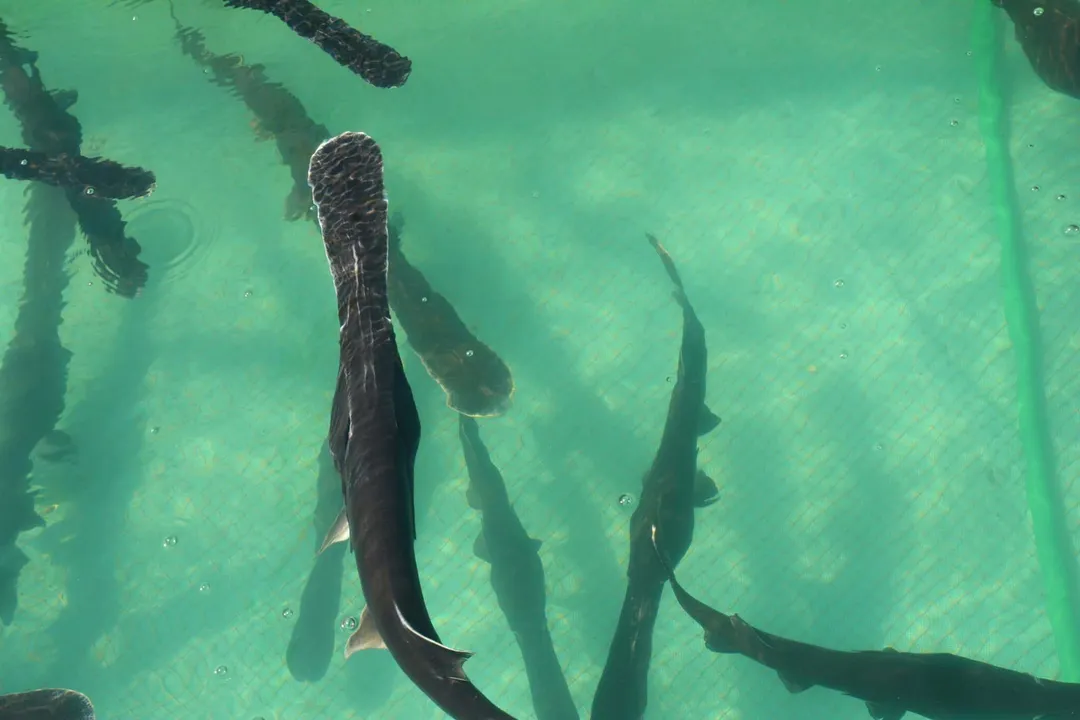
The paddlefish—ancient, distinct, and easily recognizable by their elongated rostrums—represent a fascinating branch of ancient fish evolution. While both the Chinese Paddlefish (Psephurus gladius) and the American Paddlefish (Polyodon spathula) share the common name and the characteristic flattened snout, their stories are now dramatically divergent: one relegated to history, the other fighting for a future. Understanding the biological and ecological distinctions between these two sturgeon relatives is essential, especially when one species has vanished from the planet while the other sustains significant, albeit controversial, economic interest. [3][4][6]
# Ancient Lineage
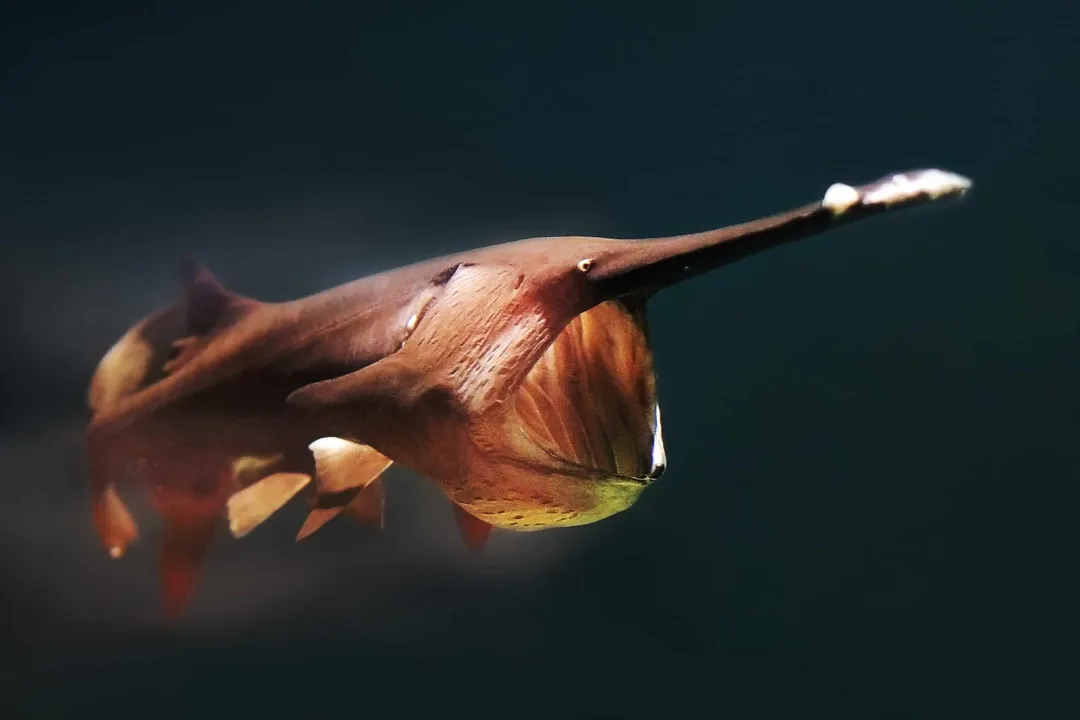
Both species belong to the family Polyodontidae, earning them a place among the more primitive and ancient fossil fishes found across the globe. [5] They are effectively living fossils, having navigated immense environmental shifts over millions of years. Despite this shared ancient heritage, their evolutionary paths separated, leading to two species perfectly adapted to their vastly different major river systems: the Yangtze in Asia and the Mississippi River basin in North America. [2][6] The Chinese Paddlefish was historically recognized as the largest freshwater fish in China, while the American Paddlefish holds the title for the largest strictly freshwater fish in North America. [2][6]
# Snout Structure
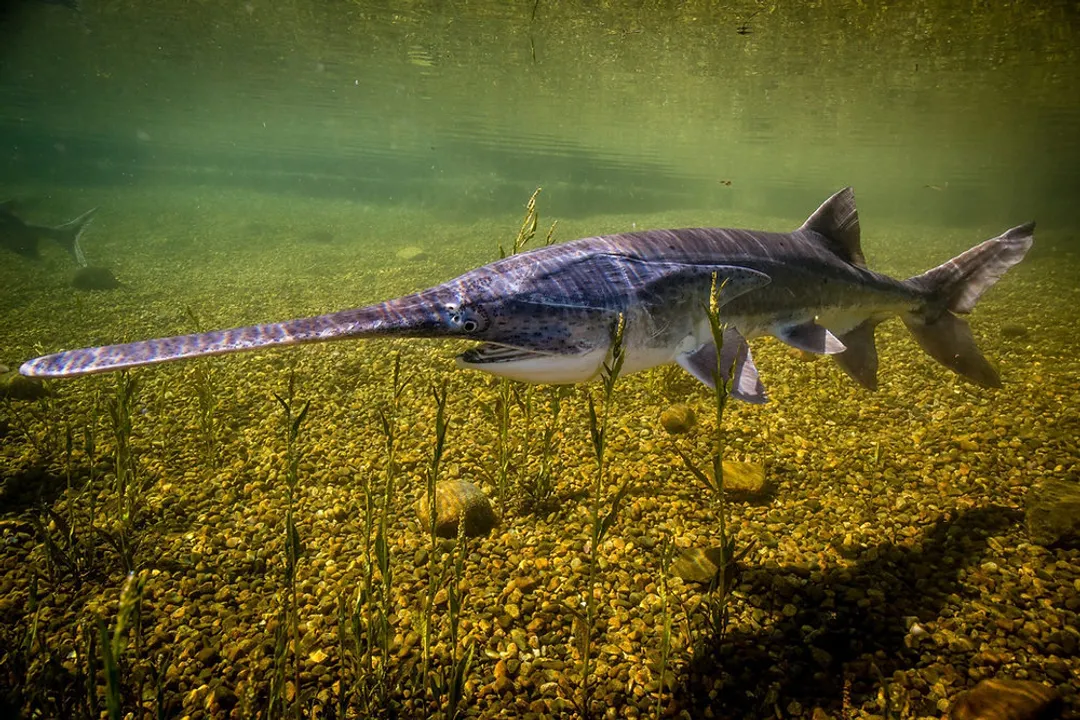
The most defining feature for both fish is, naturally, the paddle or rostrum, yet the shape and function varied notably between the two giants. The American Paddlefish possesses a broad, somewhat flattened, paddle-shaped snout. [2] What makes this snout particularly remarkable is its sensory capability; it is covered with thousands of ampullary organs, specialized electroreceptors that help the fish detect the faint electrical fields produced by its planktonic prey in murky waters. [7]
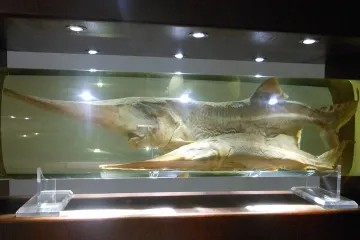
In contrast, the Chinese Paddlefish featured a rostrum described as long and quite slender, sometimes likened to a sword. [6] While it was also a filter feeder, the morphological description suggests a difference in snout architecture compared to its American counterpart, likely affecting how it navigated and sensed its environment within the Yangtze drainage. [6] If one were to see them side-by-side, the American species generally appears stockier and broader in the head region, whereas the Chinese species was noted for its more attenuated body profile overall. [1]
# Feeding Ecology

Both paddlefish species occupy a similar ecological niche as filter feeders, relying almost entirely on microscopic life for sustenance, rather than hunting larger fish or bottom-dwelling invertebrates. [6][7] Their entire feeding apparatus is designed to sieve the water column.
The American Paddlefish grazes through the water, opening its massive mouth to strain out vast quantities of zooplankton using fine, comb-like structures in its gills called rakers. [2][7] This specialized diet means that water quality and the health of the plankton community directly dictate the survival and growth of the American Paddlefish population. [7]
Similarly, the Chinese Paddlefish also subsisted on zooplankton. [6] The shared reliance on plankton across continents suggests an evolutionary convergence: where large river systems provide abundant, low-visibility environments rich in floating microscopic food, filtering becomes the optimal survival strategy for a giant fish, rendering teeth unnecessary. [5] It is a testament to how environmental pressures can shape vastly separated lineages toward the same solution.
# Geographic Separation
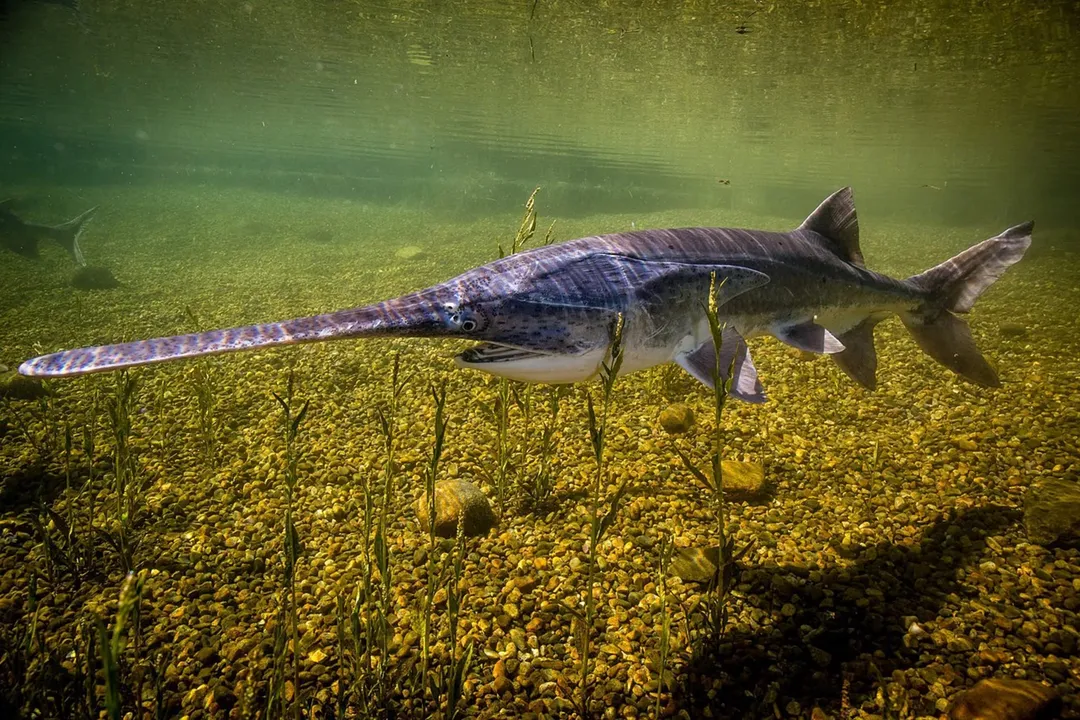
The divide between these two species is continental, marking their distinct evolutionary histories in isolation. The American Paddlefish is endemic to the Mississippi River basin, a massive watershed spanning much of the central United States. [2] Its historical range included waters from Montana down to the Gulf of Mexico. [2]
The Chinese Paddlefish, however, was confined entirely to the waters of China, specifically the Yangtze River system. [6] This massive river system, the longest in Asia, sustained the species until human activity made survival impossible. [6] The sheer scale of the Mississippi basin allowed the American species to persist, albeit often in fragmented or stressed populations, while the Chinese species succumbed to pressures localized within the Yangtze. [2][6]
# Conservation Status Contrast
This is where the two species diverge most tragically. The Chinese Paddlefish is officially considered extinct. [4][6] The final confirmed sighting was in 2003, and the species was declared extinct in 2020, a grim testament to the impact of unchecked habitat destruction, dam construction, and overfishing in the Yangtze. [4][6] Its disappearance highlights the speed with which even giants of the river systems can vanish when their environment is drastically altered. [4]
The American Paddlefish, while not facing immediate extinction, exists under different pressures. It is often listed as a species of concern, vulnerable, or threatened across various states, but it survives. [2] Its primary modern threat is the high demand for its eggs, which are processed into caviar. [3] While historical overfishing devastated populations, contemporary management often involves strict catch-and-release regulations for wild fish, alongside the development of aquaculture operations specifically to harvest the roe sustainably. [3] The continued existence of the American species means that resource managers must constantly balance conservation against commercial interest, a decision that is now purely academic for the Chinese species. [3] This stark contrast underscores the necessity of timely conservation action; the fate of the American species serves as a perpetual warning about the consequences of inaction faced by its Chinese relative. [1]
# Management Insights
Because the American Paddlefish has a valuable commodity attached to it (its roe), effective management is critically important. A key challenge for regulators and fisheries biologists is the need to accurately assess wild populations without resorting to harmful netting or capturing reproductive adults. This situation demands highly refined visual identification skills in the field, even for non-experts, to distinguish between different life stages or perhaps even to ensure that only legally harvested aquaculture specimens are entering the market, preventing illegal fishing of vulnerable wild stocks. While visual guides exist, the subtle differences in body profile that separate the two species—even if only conceptually today—reinforce the importance of detailed anatomical knowledge in successful species management. [1] When dealing with species sharing such an ancient, specialized morphology, even slight differences in gill structure or head shape become vital identifiers for population health assessments. [5]

# A Lesson in River Scale
Considering the differing fates, one can draw an insight regarding the sheer scale and connectivity of river basins. The American Paddlefish benefitted from the expansive, relatively interconnected nature of the Mississippi system, which, despite fragmentation from dams, allowed populations to persist across a wider geographic area, offering some buffer against localized collapse. [2] Conversely, the Yangtze, while massive, saw its fisheries collapse more definitively under intense human development pressure, leading to the terminal loss of Psephurus gladius. [6] The sheer hydraulic connectivity of the Mississippi system, even when stressed, seems to have bought the American species crucial time that the Chinese species perhaps lacked in the face of concentrated threats within its own primary drainage. [2][6] This historical difference in ecological resilience, or perhaps simply the timing and intensity of human impact, is a sobering factor in comparing their outcomes. [4]
Related Questions
#Citations
A cool guide to differentiating American and Chinese paddlefish
Paddlefish - Missouri Department of Conservation
An ancient fish with a bright future | The Fish Site
Chinese paddlefish | IGB
Fossil Butte National Monument - Facebook
Paddlefish | A Comprehensive Species Guide - Wired2Fish
Chinese paddlefish - Wikipedia
Consider: the American Paddlefish
Paddlefish vs. Spoonbill: Are They Different? - A-Z Animals