What is the classification of a mountain gorilla?
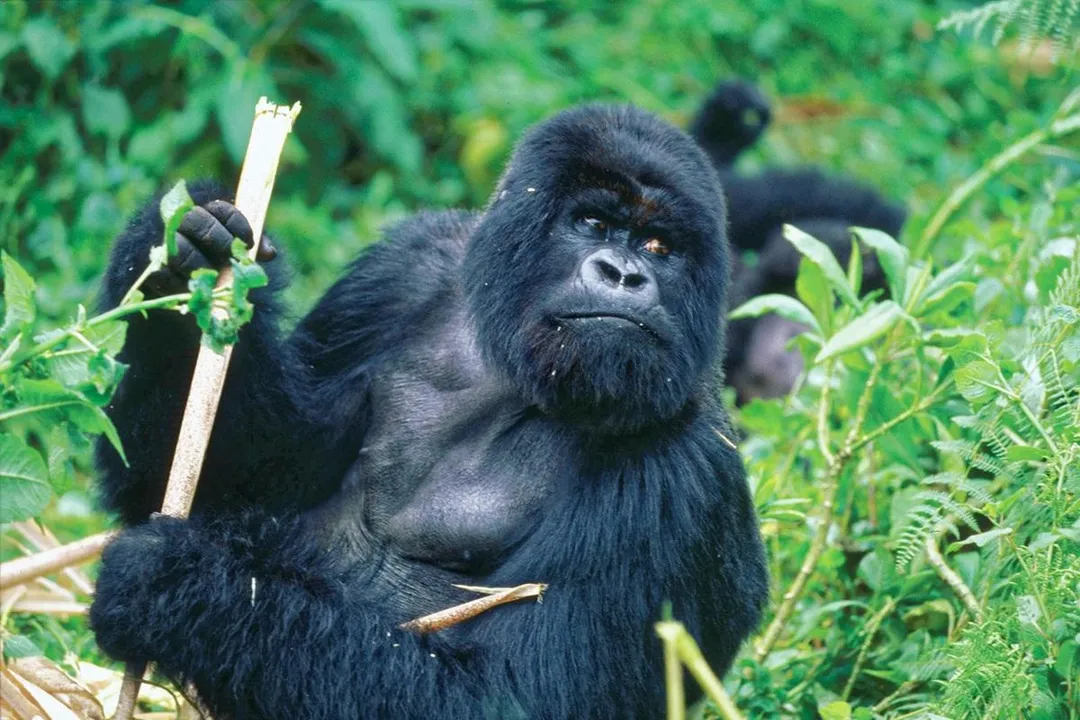
The mountain gorilla, Gorilla beringei beringei, occupies a very specific and cherished place within the biological classification system, marking it as one of our closest living relatives in the animal kingdom. [1] Recognizing its precise taxonomic placement is the first step in understanding its unique biology, evolutionary history, and the specific conservation efforts required to protect it. [5][8] This fascinating great ape belongs to the order Primates, placing it in the company of monkeys, lemurs, and humans. [4][10]
# Primate Order
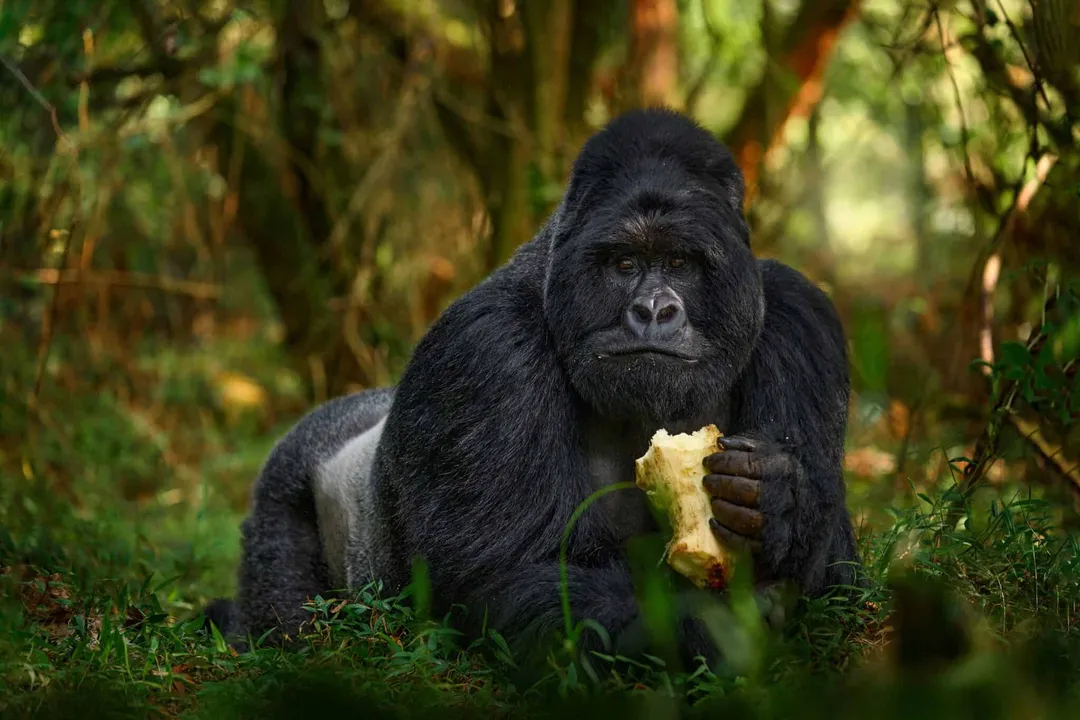
As a primate, the mountain gorilla shares fundamental characteristics with other members of this order, such as possessing forward-facing eyes that allow for stereoscopic vision, grasping hands and feet, and larger relative brain sizes compared to many other mammals. [4][10] These traits reflect an evolutionary history tied to arboreal (tree-dwelling) life, although gorillas, particularly the mountain subspecies, spend the vast majority of their time on the ground. [1] Within Primates, gorillas fall under the suborder Haplorhini (dry-nosed primates), which includes tarsiers, monkeys, and apes. [1]
# Family Hominidae
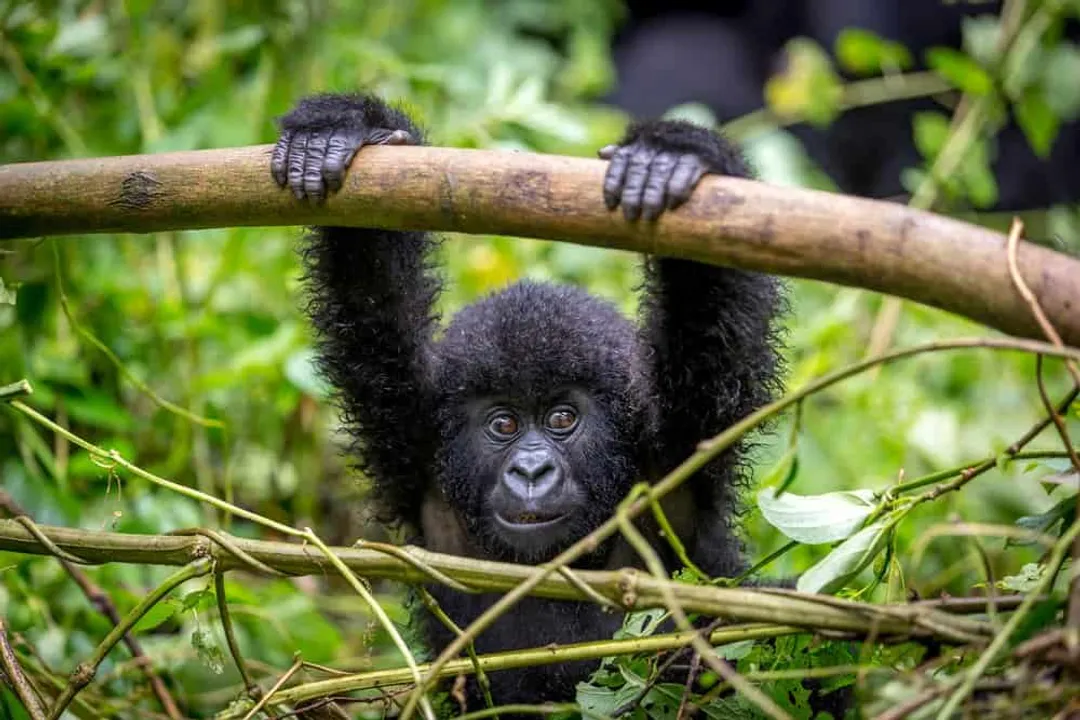
The classification narrows significantly as we move down the hierarchy. Gorillas are classified within the family Hominidae, often referred to as the great apes. [3][10] This family is momentous because it includes humanity and the other great apes: orangutans, chimpanzees, and bonobos. [1][3] This grouping signifies a very recent shared ancestry relative to other primate groups. [4]
The Hominidae family is divided into subfamilies, and gorillas are part of Homininae, which also contains the tribes Hominini (humans and chimpanzees/bonobos) and Gorillini (gorillas). [1][7] Being placed in the same family as humans emphasizes the profound genetic and morphological similarities that scientists continue to uncover. [10]
# Gorilla Genus
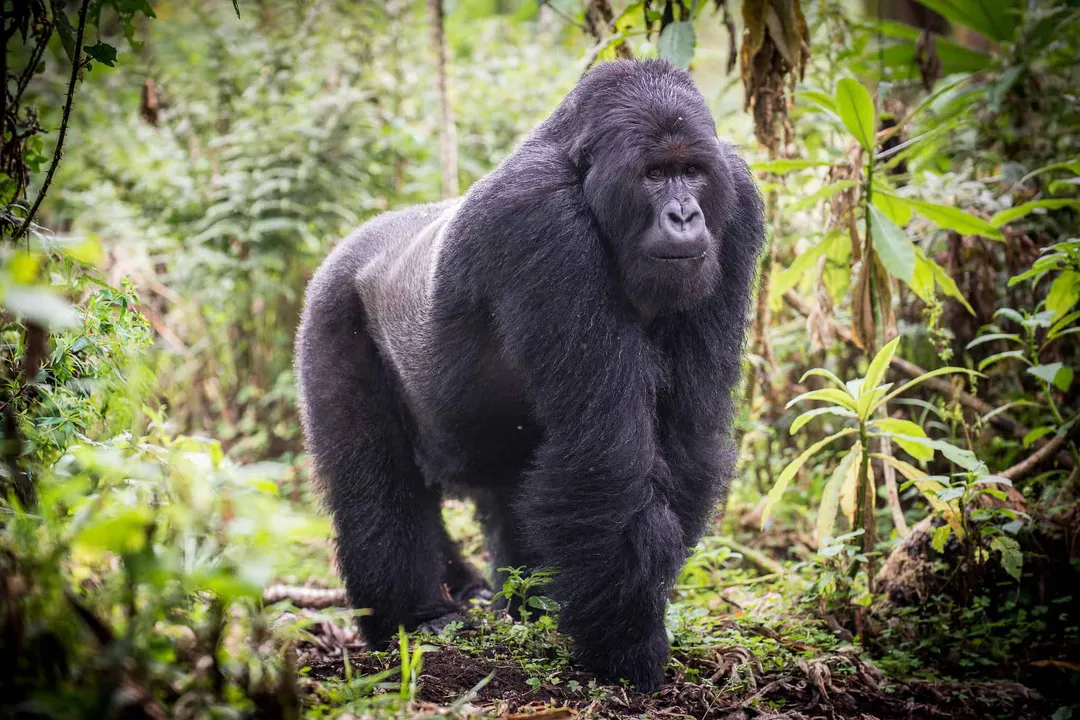
The next defining level is the genus, which groups the most closely related species. For the mountain gorilla, this is the genus Gorilla. [1][3] Currently, the genus Gorilla is recognized as containing two main species: the Western Gorilla (Gorilla gorilla) and the Eastern Gorilla (Gorilla beringei). [1][7]
Interestingly, older taxonomic views sometimes recognized three species of gorilla, but modern consensus, supported by genetic evidence, primarily recognizes these two species, each containing subspecies. [7] When we look at the general characteristics defining the Gorilla genus, we see large, robust bodies, dark hair, and pronounced sexual dimorphism, meaning males are significantly larger than females. [2]
# Species Distinction
This is where the mountain gorilla’s classification becomes specific. It belongs to the species Gorilla beringei, the Eastern Gorilla. [1][5][7] This species is distinct from the Western Gorilla (Gorilla gorilla) in several key ways, including genetic differences and geographical separation. [7] The Eastern Gorilla group generally exhibits slightly longer faces and brow ridges than their western counterparts. [1]
The two species of the genus Gorilla occupy different geographical regions in central Africa. [7] The Western Gorilla species is found west of the Congo River, while the Eastern Gorilla species is found in the eastern part of the continent. [1] This geographical separation has acted as a strong barrier, maintaining the distinct evolutionary paths of these two major groups. [7]
# Subspecies Naming
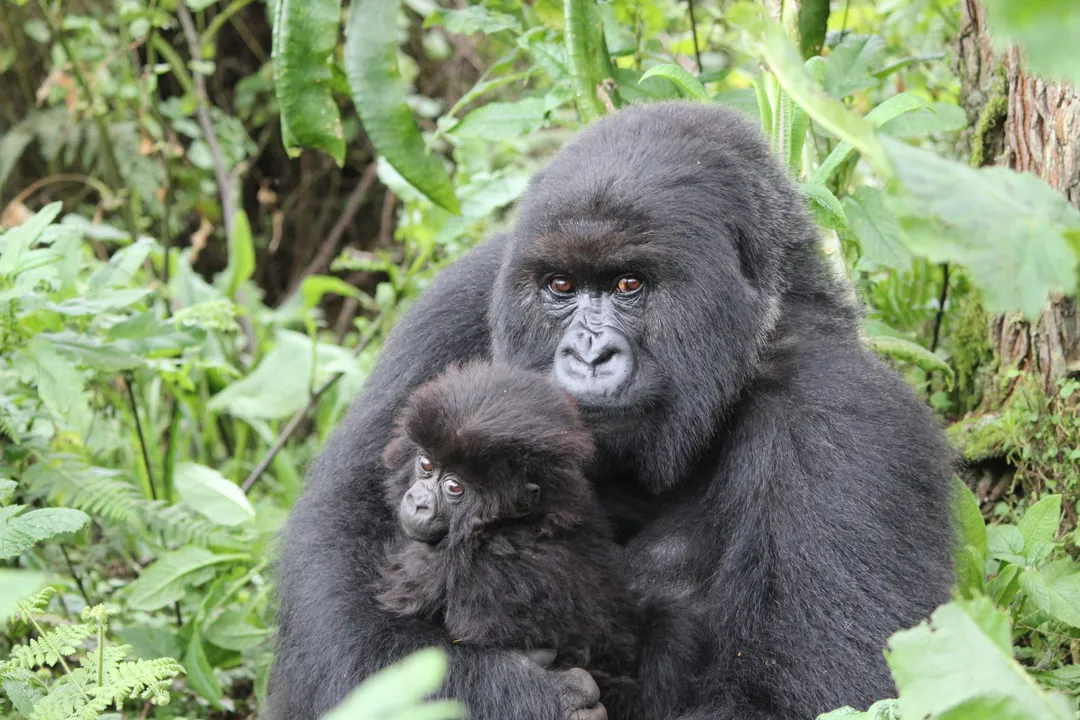
The deepest level of specific classification for this magnificent animal is its subspecies designation: Gorilla beringei beringei. [1][5]
The Gorilla beringei species is currently divided into two recognized subspecies:
- The Mountain Gorilla (G. b. beringei): This is the subject of our discussion, famous for its high-altitude habitat. [1][5]
- The Eastern Lowland Gorilla (G. b. graueri), also known as Grauer's Gorilla. [1][7]
The distinction between these two subspecies is crucial for conservationists because it dictates which specific populations require management. [8] While both belong to the Eastern Gorilla species, the mountain gorillas live at much higher elevations, primarily in the Virunga volcanic mountains and Bwindi Impenetrable National Park, spanning parts of Rwanda, Uganda, and the Democratic Republic of Congo. [1][5][8] Grauer's Gorillas, in contrast, inhabit the lowland tropical forests further east in the Democratic Republic of Congo. [1][7]
The defining physical characteristic used to classify the mountain gorilla at the subspecies level, beyond geography, is its adaptation to colder, cloud forest environments. Mountain gorillas possess thicker, longer fur compared to any other gorilla subspecies, providing necessary insulation at higher altitudes, often above sea level at altitudes up to $4,200$ meters. [1][2] This physical trait is a direct result of the specific ecological niche its classification places it within.
| Taxonomic Rank | Classification | Shared Traits |
|---|---|---|
| Order | Primates | Grasping hands, forward-facing eyes [4] |
| Family | Hominidae | Great ape status, close relation to humans [3] |
| Genus | Gorilla | Large size, robust build [2] |
| Species | Gorilla beringei | Eastern group lineage [7] |
| Subspecies | Gorilla beringei beringei | Thickest fur, highest altitude adaptation [1] |
It is a fascinating outcome of the ongoing study of primatology that the current classification system splits the Gorilla beringei species into two subspecies, beringei and graueri, even though they share a recent common ancestor within the Eastern Gorilla clade. [7] If one were to chart the population splits, it appears the divergence between G. b. beringei and G. b. graueri occurred relatively recently in evolutionary time, perhaps within the last few hundred thousand years, driven primarily by geographical isolation between the Virunga/Bwindi populations and the eastern DRC populations. [1][7] This close relationship means their genetic differences are less pronounced than the differences between, say, a mountain gorilla and a western lowland gorilla.
# Conservation Context
The classification Gorilla beringei beringei currently holds the conservation status of Endangered on the IUCN Red List, a crucial piece of information tied directly to its scientific identification. [5] While this is an improvement from their previous status of Critically Endangered, the fact remains that their restricted habitat range, spanning only a few protected areas, makes their survival inherently precarious. [5][6] The very existence of the subspecies classification helps focus international conservation funding and anti-poaching efforts on the specific, geographically isolated populations that constitute the mountain gorillas. [8] Without this clear scientific designation, efforts could be diluted across the broader Gorilla genus.
Thinking about population management, the small, highly concentrated population of G. b. beringei in the Virunga Massif and Bwindi necessitates a specific management protocol that differs from the needs of the more widely distributed Western Lowland Gorillas (Gorilla gorilla gorilla), which are classified separately. [9] For example, the risk of disease transmission or localized conflict having an immediate, catastrophic impact is far higher for the mountain gorilla population due to their relatively small numbers (estimated to be over 1,000 individuals) and their confined distribution across the borders of three nations. [5][6]
# Evolutionary Insights
One notable point arises when comparing the taxonomy of the mountain gorilla to that of the Western Lowland Gorilla, which is classified under Gorilla gorilla. [9] Despite both being gorillas, the split between the Gorilla beringei (Eastern) and Gorilla gorilla (Western) lineages is deep enough to warrant separate species designation. [7] This distinction reflects millions of years of evolutionary divergence, likely influenced by ancient geological barriers. When conservationists discuss the broader health of the Gorilla genus, they must manage two distinct species whose needs—dietary, habitat, and disease resistance—may vary subtly because of these ancient separations.
Furthermore, while the initial sources differentiate the subspecies based on habitat and fur thickness, an interesting, less-discussed aspect of their classification relates to their social structure observation. While both subspecies are highly social, field observations often note the pronounced degree of silverback authority and troop cohesion in the often harsh, high-altitude environment of the mountain gorilla G. b. beringei. [2] Although social structure is behavioral and not strictly taxonomic, the selection pressures of their high-altitude classification appear to have reinforced particularly tight-knit, cohesive family units, which might subtly differentiate them behaviorally from their lowland cousins, even within the beringei species. [1] This highlights how classification, while based on morphology and genetics, is inextricably linked to the ecological pressures of their defined environment.
# Summary of Naming
The complete scientific name, Gorilla beringei beringei, essentially tells a story of increasing specificity. [1] It starts with the large, ground-dwelling ape (Gorilla), narrows to the Eastern lineage (beringei), and finally specifies the particular high-altitude population with the thickest coat (beringei). [2][7] This tiered naming convention is indispensable; it prevents confusion with the numerous other great apes and ensures that when researchers discuss conservation outcomes, they are focused on the correct, specific grouping of animals facing unique threats in their unique home range. [8]
Every aspect of their scientific identity, from being a Hominid to a specific subspecies, guides how science studies and protects them, underscoring the importance of accurate taxonomic placement in modern biology. [3]
Related Questions
#Citations
Mountain gorilla - Wikipedia
Mountain Gorilla - A-Z Animals
All About the Gorilla - Scientific Classification | United Parks & Resorts
Mountain Gorilla, Gorilla beringei beringei - New England Primate ...
Mountain Gorillas: Rising From the Brink of Extinction
[PDF] mountain gorilla - WWF-UK
Gorilla beringei - Animal Diversity Web
Mountain Gorillas - International Gorilla Conservation Programme
Taxonomy & History - Western Lowland Gorilla (Gorilla ... - LibGuides
About Gorillas - Gorilla SSP