What is special about tiger swallowtails?
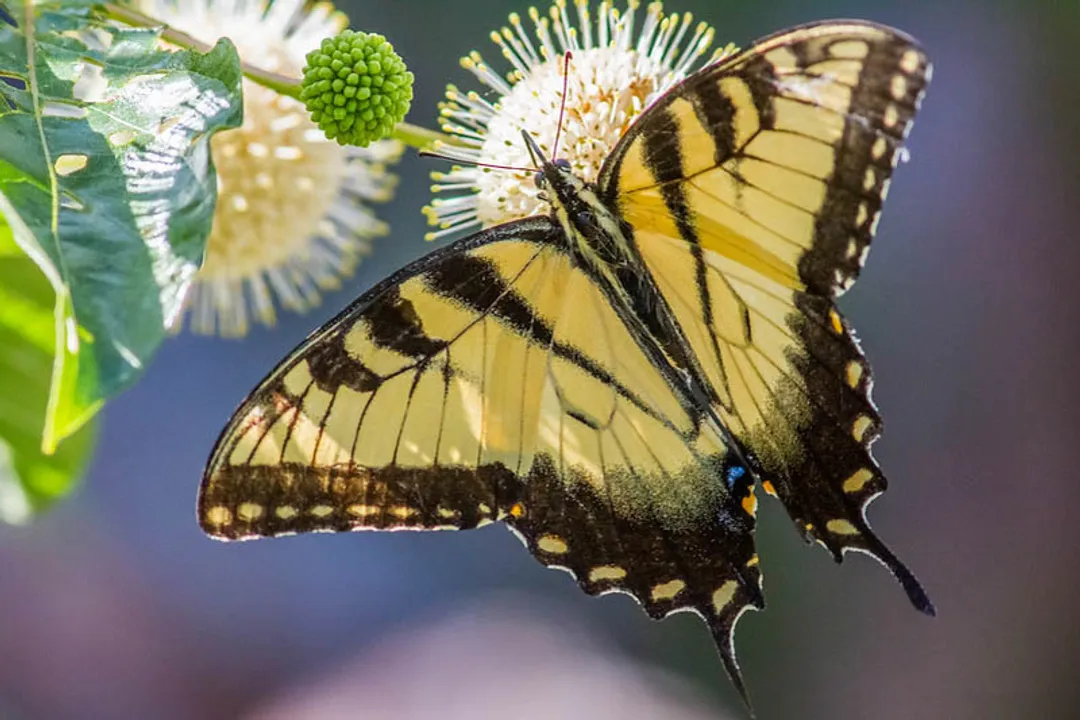
The sight of a large, bright yellow butterfly with bold black stripes gliding through the air immediately brings the Tiger Swallowtail to mind. These magnificent insects, particularly the Papilio glaucus species, often known as the Eastern Tiger Swallowtail, are among the most recognizable and abundant butterflies across much of North America. [1][3] Yet, what makes them truly special goes far beyond their initial striking appearance. They exhibit fascinating variations in form, display impressive survival strategies, and are deeply connected to the hardwood forests of their extensive native range. [1][7]
# Large Wings
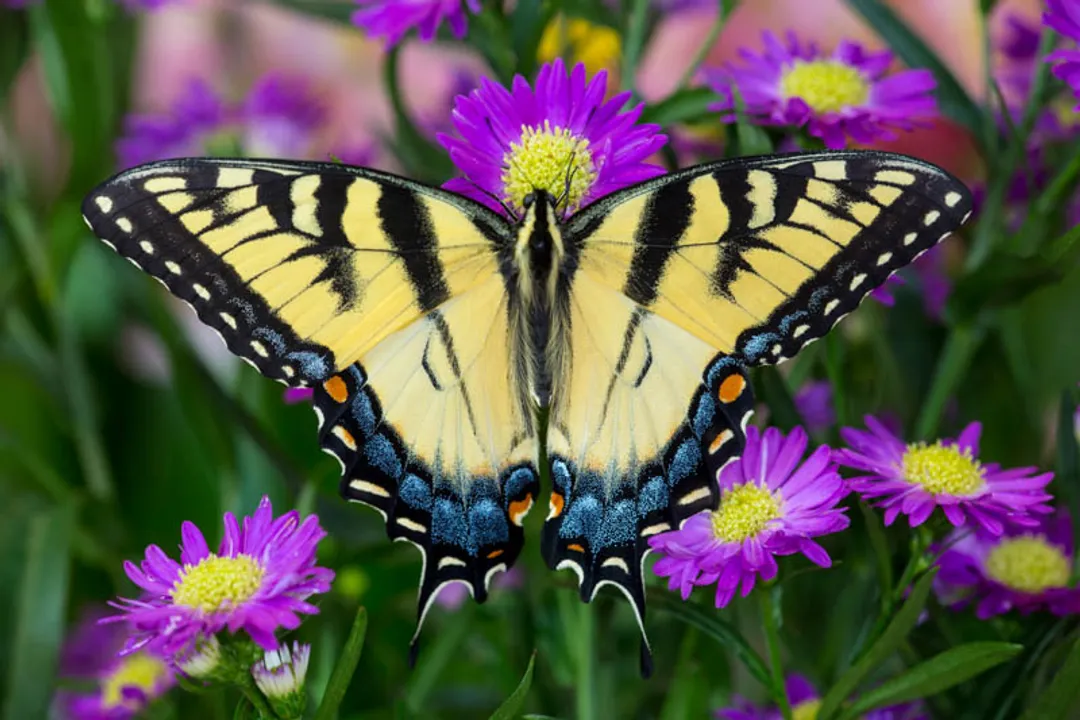
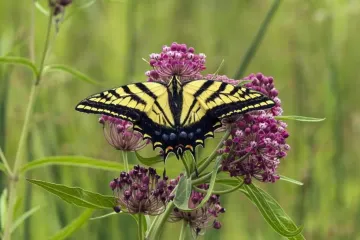
Tiger Swallowtails are impressive simply due to their size. They rank among the larger butterflies you are likely to encounter. [2] With a wingspan that can reach up to five inches, their flight pattern is strong and swift, which often makes them difficult for predators to catch. [2] The basic, namesake coloration involves a base color of bright yellow, heavily accented with black stripes running across the wings, resembling a tiger’s markings. [1][4]
While this yellow-and-black pattern is the classic look, it is incomplete without noting the dramatic differences between the sexes, which introduces one of their most compelling characteristics. [1]
# Female Form

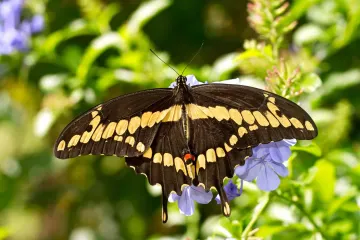
For male Tiger Swallowtails, life is visually simple: they are always the bright, striped yellow morph. [1] Females, however, present a remarkable example of sexual dimorphism, appearing in two distinct forms. [1] Approximately half of the females exhibit the same bright yellow, striped pattern as the males. [1][4] The other half display a dark, almost entirely black coloration. [1]
This dark form is particularly special because it serves as a case of Batesian mimicry. [1][4] The dark female imitates the appearance of the Pipevine Swallowtail (Battus philenor), a butterfly that is unpalatable or toxic to birds. [1][4] By looking like a bad meal, the dark female gains protection from predators who learn to avoid the similar-looking Pipevine Swallowtail. [1]
It is quite interesting to consider the evolutionary push and pull at work here. The males require high visibility for long-distance mating displays, favoring the bright yellow. [1] Meanwhile, the females face a direct threat from predators while laying eggs, favoring the camouflage provided by the dark mimicry. [1][4] This means that successful reproduction requires two highly different survival strategies to coexist within the same local population, suggesting that the predators in the Eastern Tiger Swallowtail's range are sufficiently deterred by the Pipevine mimicry to keep the dark morph viable, despite the male's need for conspicuousness. [1]
# Life Cycle Notes
Like all butterflies, the Tiger Swallowtail undergoes complete metamorphosis, passing through four distinct stages: egg, larva (caterpillar), pupa (chrysalis), and adult. [7] The process begins when the female lays tiny, spherical eggs, usually singly, on the leaves of specific host plants. [7][2]
The resulting caterpillar is often greenish or yellowish with prominent black banding and distinctive blue spots near the rear end, which can help orient a predator to strike the less vital rear portion of the body. [7] The caterpillar's primary function is eating, and it grows rapidly, shedding its skin multiple times before forming the chrysalis, where the transformation to the winged adult takes place. [7] The timing of these life stages is critical, as many populations produce multiple generations, or broods, each season. [2]
# Nectar Sources
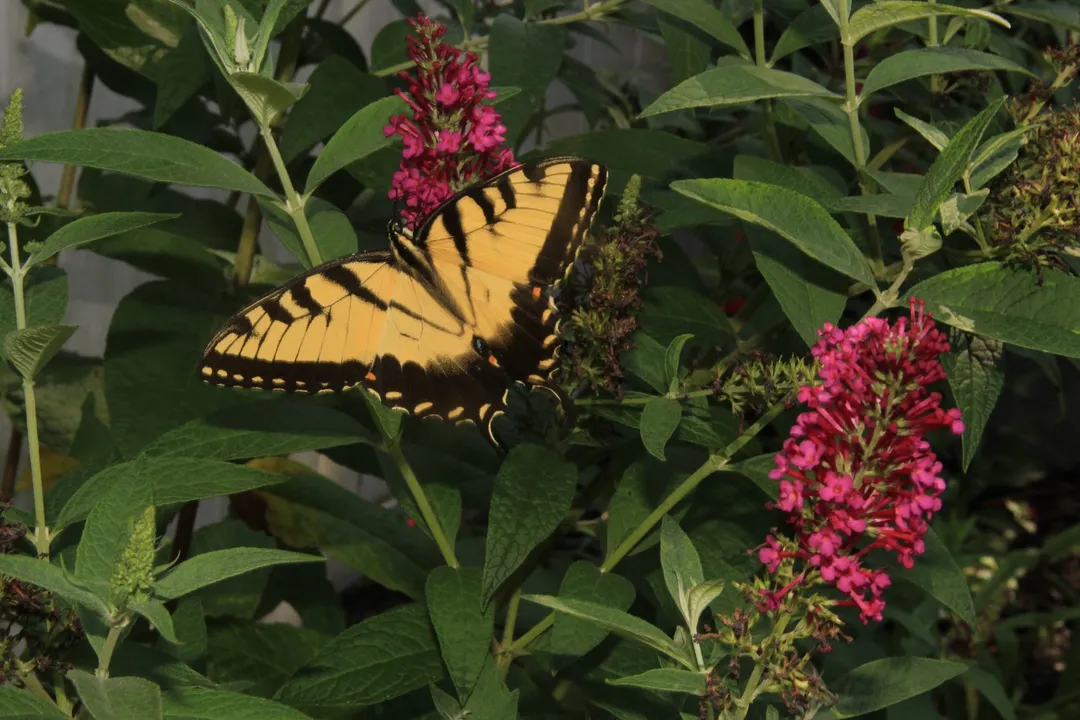
Once emerged, the adult butterflies require fuel for their vigorous flight, which they obtain by feeding on nectar from a wide variety of flowers. [3][5] They are not overly picky when it comes to flower shape, as long as the blossom provides easily accessible nectar. [3]
Gardening enthusiasts aiming to attract these butterflies should focus on planting species known to be favorites. Common nectar sources include lilac, milkweed, phlox, butterfly bush, zinnia, and bee balm. [3][5] An observation made in many eastern regions is that the bright yellow color of the swallowtail makes them highly visible when they visit flowers, especially those with clustered blooms like lilac or elderberry. [3]
# Host Trees
While the adults draw attention visiting gardens, the continuity of the species rests entirely on the availability of specific host plants for their larvae. [2][7] This dependency is what truly defines their ecological niche. The caterpillars are generalist feeders when it comes to trees, though they show strong preferences for certain species native to Eastern North America. [2][7]
Key host trees that support the larval development include:
- Tulip Tree (also called Yellow Poplar) [2][7]
- Sweetbay Magnolia [2][7]
- Wild Cherry [2][7]
- Ash, Birch, and Basswood [2][7]
For those looking to support local populations beyond simply providing nectar, understanding this host requirement is paramount. Simply planting flowers may attract the adults, but without the appropriate host trees—even if they are mature trees in a nearby woodlot—the next generation cannot successfully complete its cycle in that immediate area. [3][7] This dependency means that local habitat fragmentation, particularly the removal of native hardwoods, directly impacts the breeding success of the local Tiger Swallowtail population. [3]
# Geographic Range
The distribution of the Eastern Tiger Swallowtail is wide, stretching across the eastern half of the United States and extending north into southern Canada. [1][3] Its western boundary generally follows the Great Plains, reaching eastward to the Atlantic coast. [1]
Their habitat preference leans toward open, deciduous woodlands, forest edges, parks, and suburban gardens where both the necessary host trees and abundant nectar sources coexist. [3][5] When considering their range, it is important to remember that while the eastern subspecies is the most common, other very similar species exist further west. [1] For example, the Western Tiger Swallowtail (Papilio rutulus) occupies the western states and provinces, and while closely related, they are distinct species with potentially slightly different host plant preferences in their specific locales. [1]
# Maintaining Populations
Supporting these butterflies involves a slightly more nuanced approach than just putting out a feeder. Since the adults can fly significant distances, planting a diverse array of nectar plants ensures continuous food supply from the first spring brood through the late-summer broods. [3][5] However, successful long-term habitation requires providing the nesting grounds, too. If you live in an area where large native hardwoods like Tulip Poplar are common, you are already providing essential infrastructure for this species. [2][7] A good practice, especially in developing areas, is to prioritize the planting of at least one known host tree species—like a native cherry or magnolia—even if you cannot accommodate a full-sized forest canopy, as smaller, younger trees can still serve the first instar larvae. [7] The availability of these trees directly dictates the carrying capacity of the local environment for breeding swallowtails. [3] Observing the timing of the first spring emergence, which can vary based on local microclimates, often correlates with the leaf-out of the early host plants, emphasizing the synchronization between the insect and its food source. [2]
Related Questions
#Citations
Papilio glaucus - Wikipedia
Eastern Tiger Swallowtail Butterfly - Gardenia.net
The Ultimate Tiger Swallowtail Butterfly Guide - Birds and Blooms
Eastern tiger swallowtail butterfly facts - Facebook
Eastern Tiger Swallowtail - Bee City Asheville
Eastern Tiger Swallowtail - USDA Forest Service
Tiger Swallowtail, Eastern Tiger Swallowtail, Papilio glaucus ...
Tiger Swallowtails (I believe) in a big group. Why do they do this?
Six Fun Fascinating Facts of the Eastern Tiger Swallowtail You Didn ...