What does a tiger swallowtail caterpillar turn into?
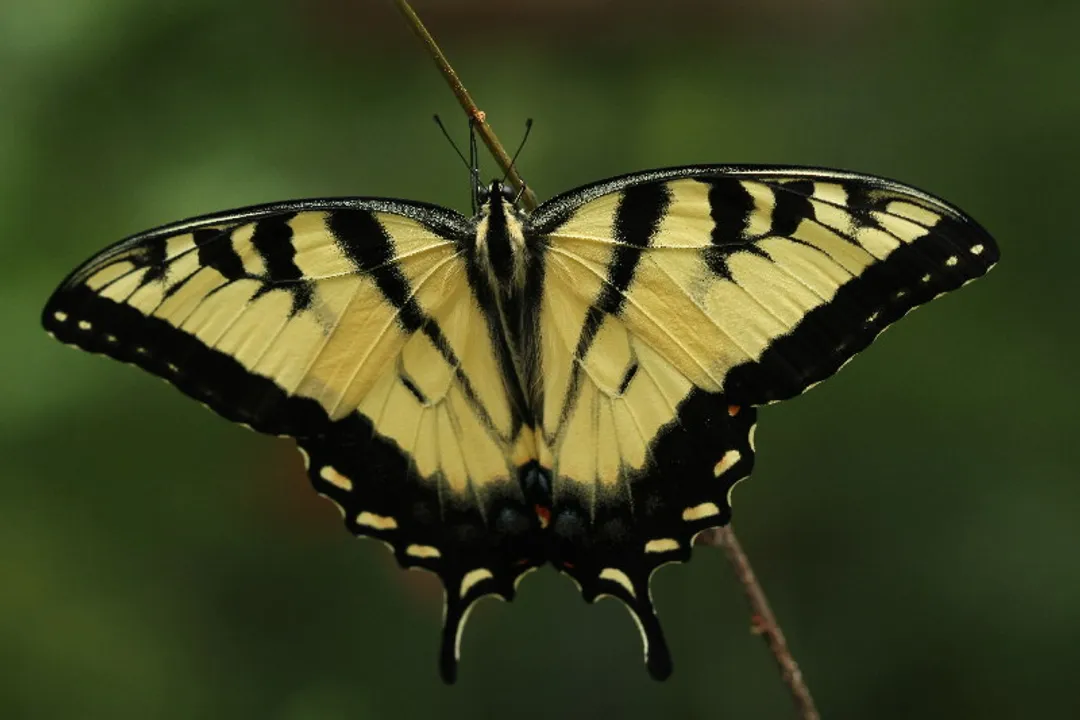
The fascinating transformation of a Tiger Swallowtail caterpillar culminates in one of North America's most recognizable and striking butterflies. The process involves several distinct, highly organized stages, beginning long after the larval creature has finished its primary job: eating. [1] This journey from a segmented, crawling larva to a winged adult is an example of complete metamorphosis, a biological wonder that often goes unseen by the casual observer unless they know exactly what to look for and when.
# Larval Look

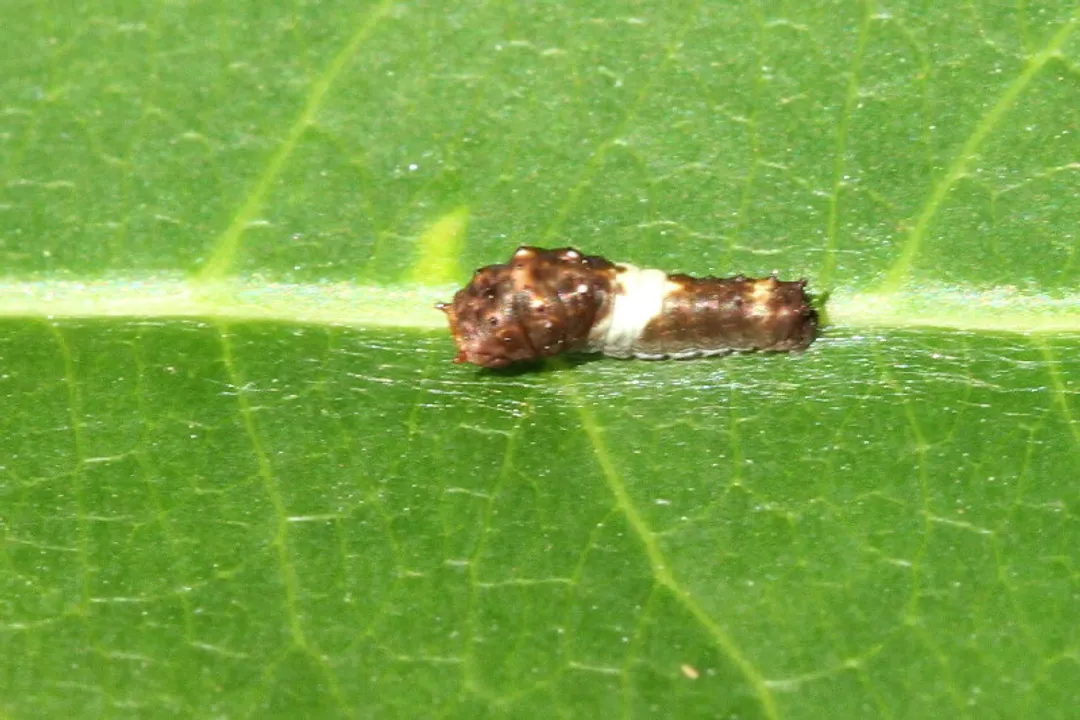
The appearance of the Tiger Swallowtail caterpillar changes significantly as it matures through its instars, or stages between molts. Early instars often exhibit a drab, mottled brown appearance, sometimes closely resembling bird droppings, which serves as excellent camouflage against bark or twigs. [1] As the caterpillar grows larger and nears its final transformation, its coloration shifts dramatically. The mature larva develops a prominent, bright green body, segmented with dark black bands that are further accented by conspicuous yellow spots. [1][2] While the overall goal of the transformation is to become the yellow-and-black striped butterfly we recognize, the caterpillar stage itself showcases impressive mimicry and defensive strategies. It is worth noting that in the Eastern Tiger Swallowtail (Papilio glaucus), the mature female caterpillars can sometimes develop an almost entirely dark, black coloration, which helps distinguish them from the males and may offer a different type of protection. [5]
# Preparation Stages
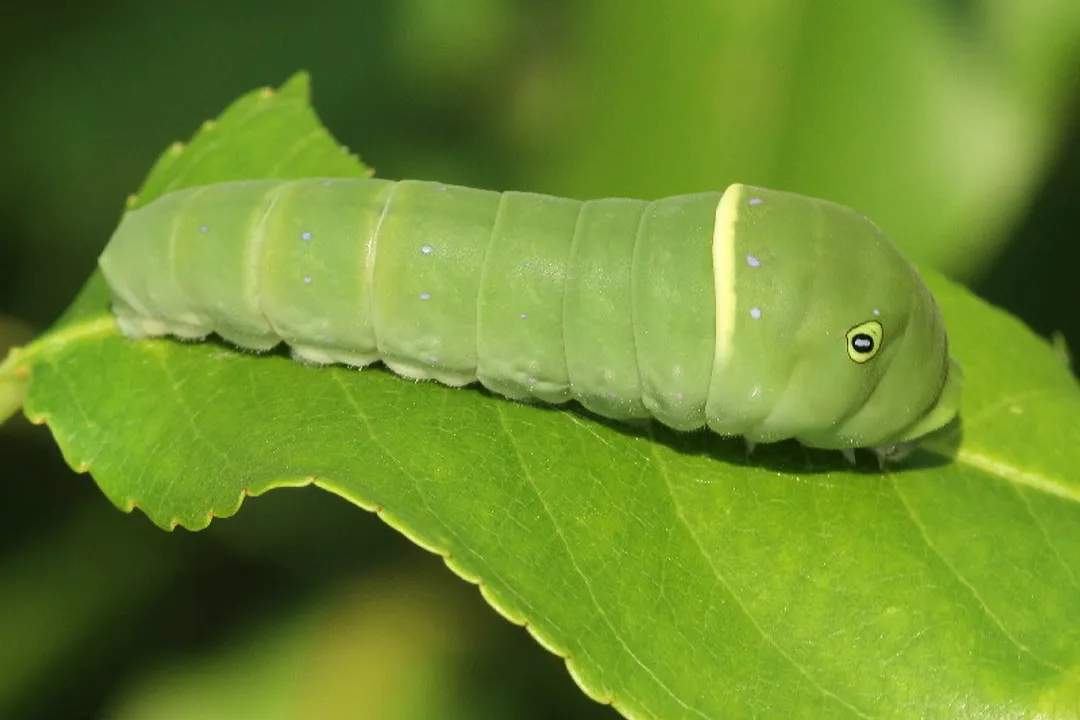
Before the dramatic chrysalis stage begins, the caterpillar must cease feeding entirely. [1] This cessation of eating signals that it has reached its final instar and has accumulated all the necessary energy reserves for the upcoming overhaul. The creature then begins actively searching for a secure location to complete its pupation. [1]
This searching phase is critical for survival. The caterpillar needs a spot that offers protection from predators and the elements during its vulnerable, immobile period. Once a suitable spot is chosen—perhaps a sturdy twig or the underside of a leaf—the caterpillar anchors itself firmly. It spins a small silk button or pad onto the substrate. [1] Then, it attaches itself securely to this silk pad using a small silk girdle looped around its middle segments. [1] This allows the creature to hang, often with its body curled into a distinctive "J" shape, poised for the final larval molt. [1][2] This preparatory hanging posture is a universal signpost for observers that the butterfly transformation is imminent.
# The Pupa Unveiled
The moment the caterpillar hangs in that characteristic "J" shape, it is ready for the final, irreversible step of metamorphosis. The caterpillar sheds its outer larval skin one last time. [1] Unlike previous molts, this final shedding reveals not another larval stage, but the hardened shell of the pupa, which we commonly call the chrysalis. [1]
The chrysalis itself is a masterpiece of natural engineering and camouflage. The appearance varies depending on the species and, critically, the time of year it is formed. For the Eastern Tiger Swallowtail, the pupa usually takes on a cryptic coloration, appearing either dull brown or pale green, allowing it to blend in with woody stems or foliage, respectively. [1] This is a high-stakes appearance choice: if the caterpillar pupates in the fall, the chrysalis will likely be brown to mimic a dead leaf or twig, preparing for winter survival. [1] If it pupates in the warmer months, the green form allows it to disappear among summer leaves. [1] Understanding this dichotomy in pupal color based on the season is key to appreciating the complexity of their survival mechanisms; it’s not just about becoming a butterfly, but about predicting the conditions that will prevail after the butterfly emerges or during overwintering. [1]
If you are tracking local populations, an interesting observation emerges regarding host plant availability. In areas where preferred host plants, like wild cherry or tulip tree, are sparse, you might find caterpillars traveling further to find a suitable, sheltered spot for pupation, potentially increasing their exposure risk before they even form the chrysalis. [1][2] A dense, healthy habitat rich in native plants inherently reduces the necessary travel distance for the final preparation phase.
# Diapause Survival
The resulting chrysalis is the protective casing where the actual internal transformation—the radical reorganization of tissues—occurs. [1] This stage can last anywhere from a few weeks to many months, depending on environmental triggers, most notably temperature. [1]
When the pupa is formed in the late summer or fall, it enters a state of dormancy known as diapause. [1] This is the survival mechanism that allows the species to weather the freezing temperatures and lack of nectar resources associated with winter. The insect remains perfectly still, disguised as a piece of debris, until the lengthening days and warming temperatures of spring signal that it is time to complete the cycle. [1]
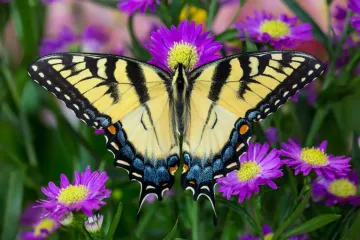
# Adult Emergence
The final stage is the emergence of the imago, or the adult butterfly. [9] When conditions are correct—warm enough, typically after sufficient overwintering time—the shell of the chrysalis splits along specific lines of weakness, usually along the back. [1] The adult butterfly slowly and carefully pushes its way out of the casing. [1]
Initially, the newly emerged butterfly appears soft, crumpled, and somewhat awkward. Its wings are small, wet, and tightly folded against its body. [1] The insect must immediately find a place where it can hang freely, allowing gravity to help it pump hemolymph (insect blood) into the veins of its wings, causing them to expand to their full, glorious size. [1][2] This process of wing inflation and hardening can take several hours, during which the butterfly is completely defenseless. [9] Once the wings are dry and rigid, usually by midday following the emergence, the butterfly is ready for its brief, nectar-gathering life in the sun. [9]
# Species Identification
While the process described generally applies to Tiger Swallowtails, it is helpful to recognize the main variations, as subtle differences in host plants or climate might influence the exact timing of the transformation. The Eastern Tiger Swallowtail (Papilio glaucus) is widespread across the East, utilizing plants like wild cherry, tulip tree, and sweet bay magnolia as larval food sources. [1][2] In the West, you find the Western Tiger Swallowtail (Papilio rutulus), which inhabits various forested and riparian areas. [6] Although their adult markings are similar—large, yellow, and striped—the specific caterpillars rely on local flora, meaning an observer in California might see a transformation cycle initiated by different host plant availability than one in Georgia. [2][6][8] Both, however, rely on that critical pupal stage to bridge the gap between summer feeding and adult flight.
The adult life itself is surprisingly short compared to the time spent as a larva or pupa. For instance, the Eastern Tiger Swallowtail butterfly may only live for a period of about two weeks to a month. [9] This ephemeral existence underscores why the caterpillar stage—the period of rapid growth and successful transformation—is so essential to the species' continuity. Observing where a caterpillar chooses to hang—on a branch high up versus low to the ground—can offer a subtle clue as to whether it anticipates emerging quickly or needs to enter the long winter diapause. [1]
#Videos
A Tiger Swallowtail Butterfly Caterpillar transitions to the Cocoon ...
Related Questions
#Citations
Eastern Tiger Swallowtail Butterfly Life Cycle Photos
Eastern Tiger Swallowtail Butterfly - Delaware Nature Society
Life cycle of a Tiger Swallowtail! Found eggs and raised them for my ...
Tiger Swallowtail (Papilio glaucus) Life Cycle - Performance Vision
Papilio glaucus - Wikipedia
The Western Tiger Swallowtail (Papilio rutulus) - Queen Bee Farms
A Tiger Swallowtail Butterfly Caterpillar transitions to the Cocoon ...
Eastern Tiger Swallowtail - USDA Forest Service
Out My Backdoor: For This Butterfly, Beauty Is Fragile and Short-lived