What does a tiger swallowtail eat?
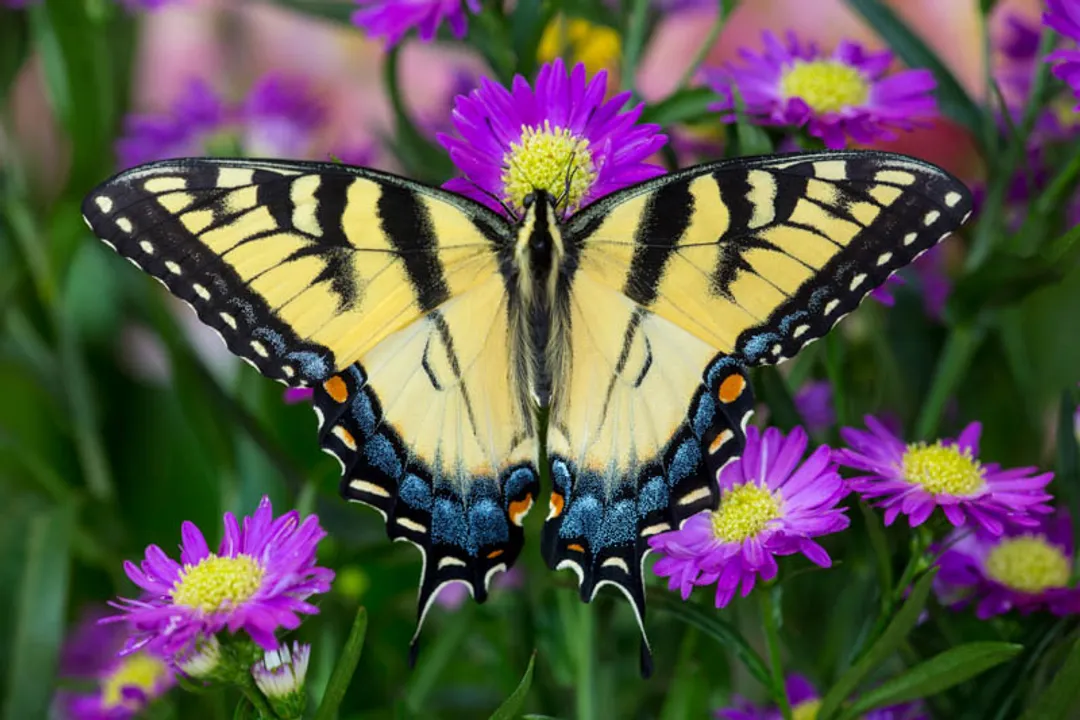
The Tiger Swallowtail, a magnificent and common sight across North America, has a diet that shifts dramatically depending on its life stage. Whether you are observing the large, striking adults fluttering on a summer breeze or tracking the less conspicuous larvae munching away, understanding their specific nutritional needs is key to appreciating their role in the ecosystem. It is important to remember that "Tiger Swallowtail" often refers to several species, most notably the Eastern Tiger Swallowtail (Papilio glaucus) and the Western Tiger Swallowtail (Papilio rutulus), and while their adult diets overlap, their required host plants for the young are distinctly different. [2][4]
# Larval Host Plants

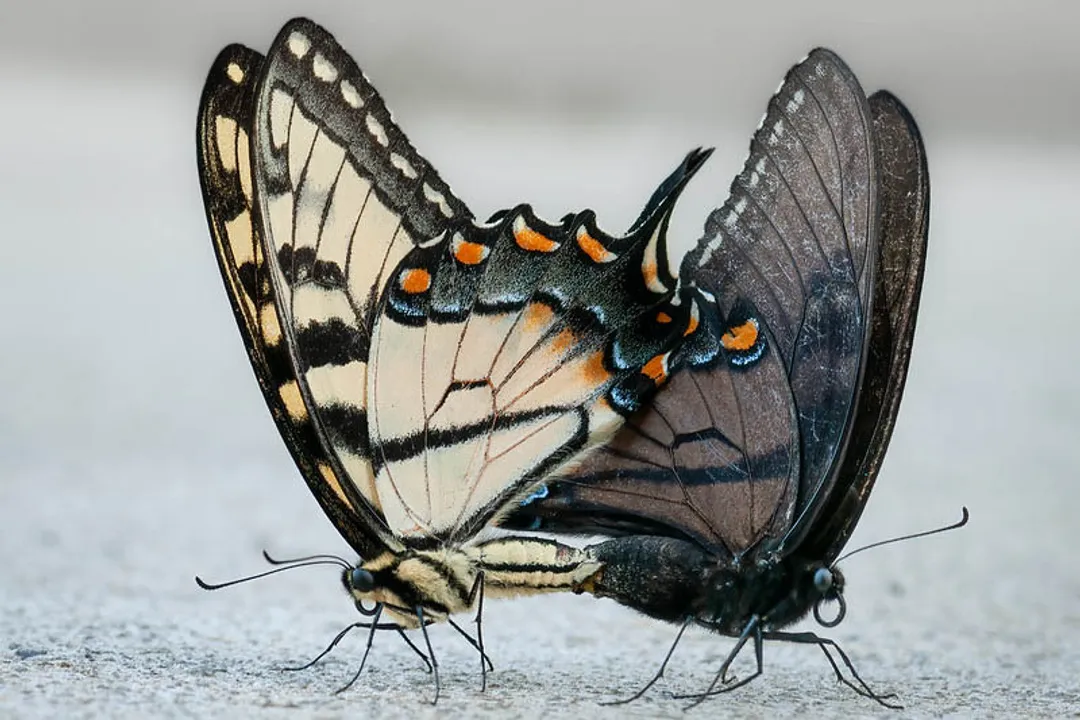
The initial, crucial stage of the butterfly's life—the caterpillar—is characterized by non-stop eating. Caterpillars are specialists; they are adapted to consume the leaves of very specific plants, known as host plants, which provide the necessary nutrients for growth and metamorphosis. [6][9] If the female butterfly lays her eggs on the wrong plant, the resulting caterpillar will starve. [1]
# Eastern Species' Green Diet
For the Eastern Tiger Swallowtail, the diet is heavily focused on the foliage of various trees common to eastern deciduous forests. [10] A significant number of host trees belong to specific families. For instance, they frequently rely on species like Tulip Tree (also called Yellow Poplar). [6][9][10] Other favored trees include various species of Wild Cherry or Black Cherry, [6][9][10] and Sweetbay Magnolia. [6][9][10] Furthermore, the larvae can be found feeding on Ash, Basswood, Birch, Poplar, Papaw, and Sweet Gum. [9][10] There is also a specific note that Eastern Tiger Swallowtail caterpillars have an affinity for plants in the carrot family, citing Dill, Parsley, and Fennel as acceptable food sources, alongside trees like Sweet Cherry and Tulip Poplar. [1]
# Western Species' Foliage
The Western Tiger Swallowtail, found in the western part of the continent, utilizes a different but equally specific set of host trees, often favoring those found in riparian areas or mountain environments. [4][7] Their menu primarily consists of leaves from Aspen, Birch, Cottonwood, Ash, Willow, and Poplar. [4][7] Noticeably, the foundational trees for the Eastern species, such as Tulip Tree or Sweetbay Magnolia, do not appear in the common host lists for the Western counterpart. [4][7][10]
One interesting observation when comparing the host plant requirements is the ecological distinction they imply. The Eastern species relies heavily on a range of trees that characterize the diverse canopy of eastern woodlands, from magnolias to cherry trees. [10] In contrast, the Western species’ listed hosts like Aspen, Cottonwood, and Willow often thrive near water sources or in drier montane settings, suggesting the two species have adapted to the dominant tree communities in their respective territories. [4][7] For a gardener in the Eastern range hoping to support the next generation, planting a mix of a small Wild Cherry shrub and a Tulip Poplar sapling offers a broad base, whereas a Western gardener might focus on native Willow or Cottonwood varieties if they can accommodate such large plants. [1][4]
# Adult Energy Sources

Once the butterfly emerges from its chrysalis, its dietary needs completely change. The primary focus shifts from building mass (caterpillars need protein and fiber from leaves) to generating immediate, high-octane fuel for flight, mating, and egg-laying (adults need sugar-rich nectar). [2] Adult Tiger Swallowtails are generalist nectar feeders, meaning they are not restricted to one or two plant species, which is a fantastic benefit for backyard enthusiasts.
# Preferred Nectaring Flowers
The list of flowers that both Eastern and Western Tiger Swallowtails frequent is extensive, providing gardeners with many options to attract these beautiful insects. [2][4] The sheer number of suitable flowers available is perhaps why they are seen so often in gardens and open areas.
Commonly cited flowers that attract these butterflies include:
- Bright Red/Orange Blooms: Butterfly Weed (a type of Milkweed) and Trumpet Creeper (or Trumpet Vine) are repeatedly mentioned as favorites. [2][3][8][10]
- Purple/Blue Spikes: Liatris (Blazing Star) and Bee Balm (Monarda) consistently appear on expert lists. [2][3][9][10]
- Cluster Blooms: Plants like Joe Pye Weed and Buttonbush produce large heads of small flowers, offering an easy landing platform and a high reward for the effort. [2][3][10]
- Shrubs and Trees: Early in the season, they readily visit spring bloomers like Lilac and Honeysuckle. [2][3][9] They are also known to feed on the nectar of Wild Rose and Buckwheat. [4]
Other highly recommended nectar sources include Phlox, Zinnia, Verbena, general Milkweed, Black-eyed Susan, Thistle, and Ironweed. [2][3][9][10] For those in the West, Clover is also noted as a feeding source. [4]
# Gardening for Continuous Fuel
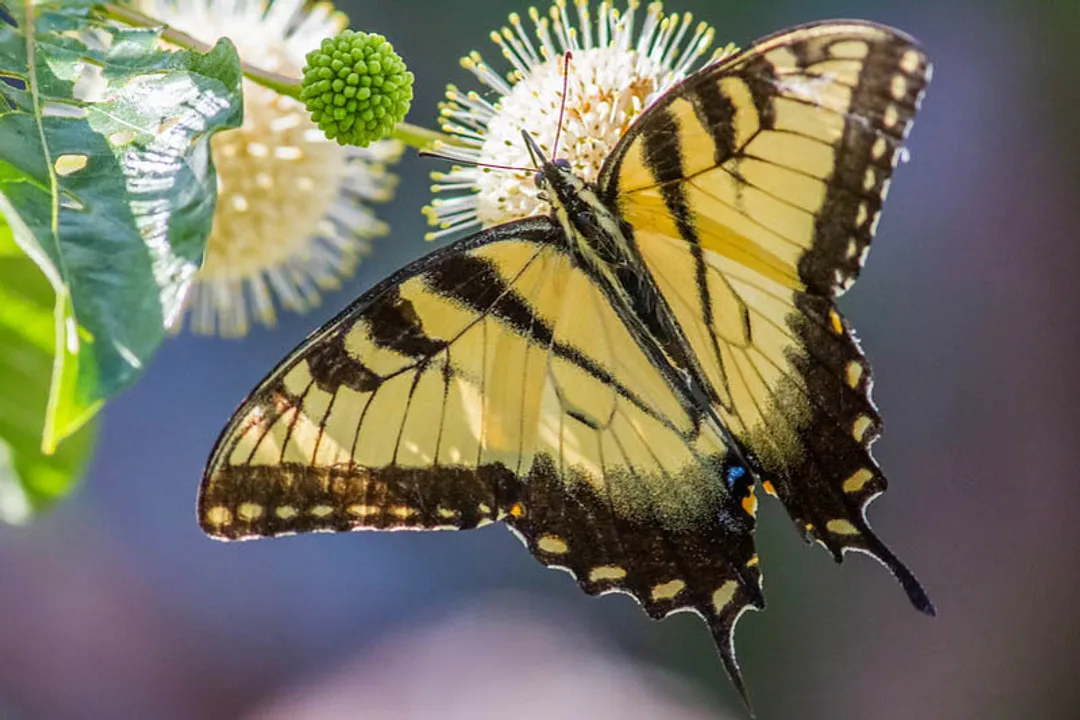
The adult lifespan is relatively short—often just a few weeks—during which they must feed constantly to maintain their energy levels for long flights. [8] This need for consistent, high-sugar input suggests a tactical approach for gardeners aiming to support local populations. A significant benefit of the Tiger Swallowtail's varied palate is that you do not need to grow every single plant listed; rather, you need a mix that spans their flight season.
If we look at the common favorites, we can group them to manage garden planning. Early arrivals will find Lilac and Honeysuckle blooming. [9] Mid-summer, the garden should be bursting with Butterfly Weed, Bee Balm, and Phlox. [2] As late summer turns to fall, plants like Liatris and Joe Pye Weed become essential refueling stations. [10] By ensuring you have something blooming in each of these windows—early, mid, and late—you provide a continuous supply of high-quality nectar, which can significantly impact the reproductive success of the females who need energy to find suitable host plants for the next generation. [8] Planting native Butterfly Weed is especially beneficial, as it serves the dual purpose of providing nectar for the adults while being part of the Milkweed family, which is vital for many other Lepidoptera, even if the Swallowtail itself prefers tree leaves for its young. [2]
The fundamental contrast in nutrition remains clear: the immature stage requires specific leaf tissue for structural development, demanding allegiance to a select few trees or herbs. [1][4][6] The mature stage demands readily available liquid energy, allowing them the flexibility to visit a wide array of brightly colored, nectar-rich flowers across the landscape. [2][3][9] Recognizing this difference helps both conservationists and casual observers understand why a thriving forest edge might support the caterpillars, while a vibrant flower patch supports the adults passing through. [10]
#Videos
Insect Information : What Do Tiger Swallowtail Butterflies Eat?
Related Questions
#Citations
What should I feed Eastern Tiger Swallowtails? : r/Butterflies - Reddit
The Ultimate Tiger Swallowtail Butterfly Guide - Birds and Blooms
Eastern Tiger Swallowtail - Papilio glaucus - New Hampshire PBS
The Western Tiger Swallowtail (Papilio rutulus) - Queen Bee Farms
Insect Information : What Do Tiger Swallowtail Butterflies Eat?
Eastern Tiger Swallowtail Butterfly Life Cycle Photos
Western Tiger Swallowtail | - The Evergreen State College
Out My Backdoor: For This Butterfly, Beauty Is Fragile and Short-lived
Eastern Tiger Swallowtail Butterfly - Gardenia.net
Eastern Tiger Swallowtail Butterfly - Delaware Nature Society