How could you describe a tiger?
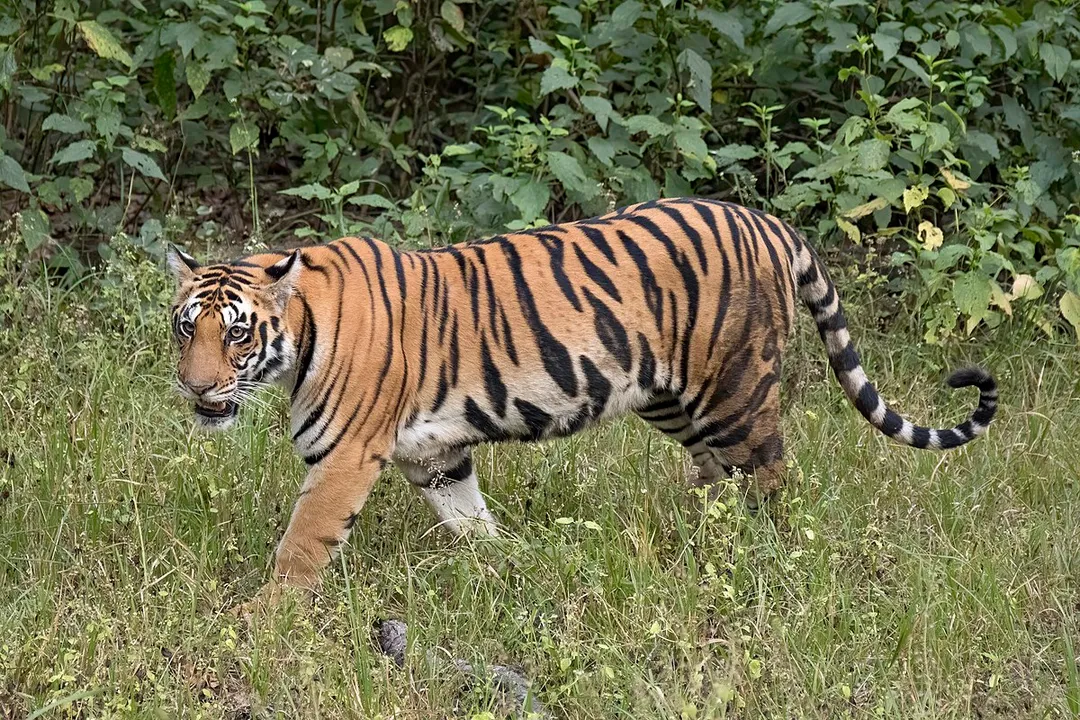
The tiger, Panthera tigris, is immediately recognizable, a creature defined by its immense power and striking visual markings. Describing it involves capturing its sheer size, the intensity of its gaze, and the perfect adaptation of its patterned coat to the shadows of its Asian home. [1][6][9] It stands as the largest of all living cat species. [2][4]
# Physical Form

The most defining characteristic is, without question, the coat. The base color typically ranges from a deep reddish-orange to tawny yellow, boldly interrupted by dark, vertical stripes that wrap around the body. [1][2][3] These stripes are not merely superficial markings; they are deeply pigmented fur that penetrates down to the skin, and crucially, no two tigers possess the exact same pattern, acting as a unique identifier much like a human fingerprint. [1][2] Below the striking colors, the underparts—the belly, chest, and insides of the limbs—are usually white or creamy. [3]
In terms of sheer scale, tigers exhibit significant variation depending on their subspecies and native climate. For instance, the Siberian or Amur tiger tends to be the largest among them. [1] The difference in size between the largest and smallest recognized populations reflects a subtle environmental adaptation; generally, cats residing in colder regions carry more mass, which aids in retaining body heat during harsh winters, a pattern often seen across mammalian species inhabiting temperate zones. [1] Males are considerably larger than females, possessing a more pronounced ruff of fur around their necks. [4] Their bodies are built for explosive strength, heavily muscled, giving them the capability to take down prey much heavier than themselves. [3][6]
# Sensory Details

Describing a tiger also means noting the details that aid its function. The eyes, often amber or green, convey a focused, predatory intelligence. [6] While the orange and black stripes are obvious in clear light, when a tiger moves through the dappled sunlight of a dense forest or tall grassland, these vertical lines break up the outline of its body perfectly, rendering it nearly invisible to unwary prey. [8] This camouflage is a masterclass in natural deception. [6] Furthermore, the broad, white patches located above the eyes and on the back of their ears provide an interesting visual contrast. While the main stripes aid concealment, these lighter areas might serve a purpose in close-range communication with other tigers or even act as false eye spots when observed from the rear. [3][8]

# Hunting Style
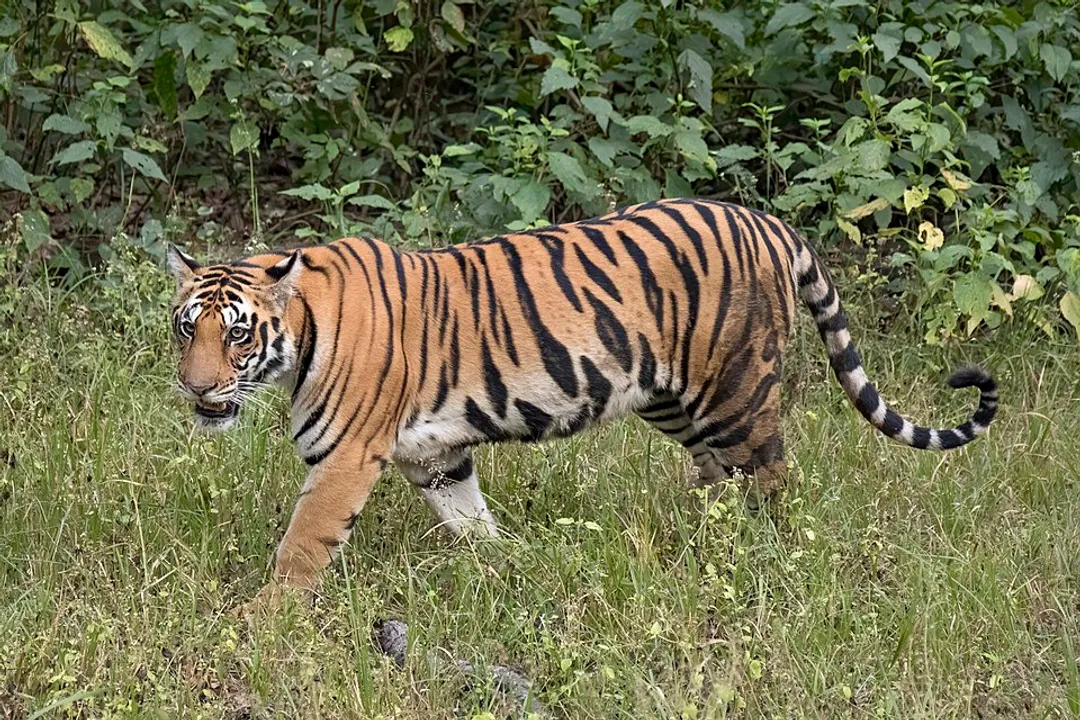
Tigers are obligate carnivores, meaning their diet consists entirely of meat. [2] Behaviorally, they are predominantly solitary animals, preferring to patrol and hunt alone rather than in prides. [6][7] Their strategy relies heavily on stealth. They do not typically chase prey over long distances; instead, they use their silent padding gait to get as close as possible before initiating a short, incredibly fast final rush to ambush the target. [6] Common prey items include large ungulates such as various deer species and wild pigs, though their diet is opportunistic and can include smaller animals if necessary. [2][6]
# Subspecies Range
To fully describe a tiger is to acknowledge its geographic diversity. The scientific classification Panthera tigris covers several recognized subspecies, each adapted to a specific range across Asia. [1][9] Historically, the distribution was much wider, but sadly, several subspecies, such as the Bali, Javan, and Caspian tigers, have been declared extinct in the wild. [1] Today, remaining populations include the Bengal, Indochinese, Malayan, Sumatran, and the aforementioned Siberian (Amur) tiger. [1] These variations mean that the visual characteristics—the shade of the orange, the width of the stripes, and overall size—can shift noticeably from one region to the next. [1]

# Habitat and Movement
The habitat occupied by tigers is surprisingly varied. While many people immediately picture dense tropical jungles, tigers are quite adaptable. [3] They can thrive in swampy areas, tall grasslands, and even the colder coniferous and temperate forests of the Russian Far East. [1][6] This adaptability is part of what makes them so fascinating, yet it also means their survival depends on large, intact tracts of land supporting sufficient prey numbers. [1]
A lesser-known, yet important, characteristic is their affinity for water. Unlike many feline counterparts who actively avoid getting wet, tigers are strong and capable swimmers, often using water to cool down in hot weather or to cross rivers during hunting or territorial movements. [2][3]
# Conservation Status
Any description of the modern tiger must include a note on its precarious existence. Despite its apex predator status, the species faces severe threats across its remaining range. [1] Habitat loss and fragmentation, driven by human expansion, severely restrict their territories and access to prey. [1] Coupled with this is the devastating impact of illegal poaching, driven by demand for traditional medicine and skins. [1] This combination of pressures means that the tiger remains classified as an endangered species across the board, demanding focused conservation efforts to ensure future generations can witness this magnificent animal in its natural setting. [1]
Related Questions
#Citations
Tiger - Wikipedia
Tiger | National Geographic Kids
All About Tigers - Physical Characteristics | United Parks & Resorts
tiger - Kids | Britannica Kids | Homework Help
Adjectives for TIGERS - Merriam-Webster
Tiger Facts | Mammals - BBC Earth
What are some characteristics of tigers? - Quora
Describing a Tiger | Best Descriptive Writing Sites
Panthera tigris (tiger) | INFORMATION - Animal Diversity Web