What are some facts about emerald green boas for kids?
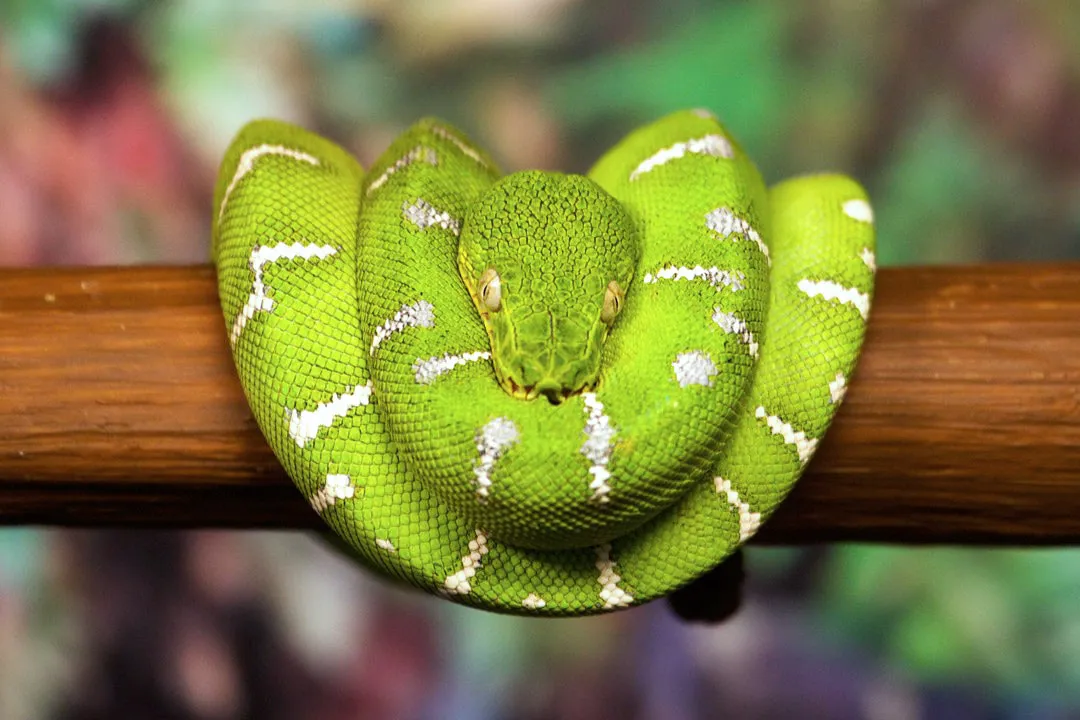
The Emerald Tree Boa is one of the most stunning snakes you might ever see, famous for its incredible bright green coat that helps it blend right into the leafy canopy of its home. Imagine a snake that looks like a long, living jewel hanging silently among the green leaves—that’s this amazing creature. It’s no wonder kids and adults alike are fascinated by them!
# Color Bright
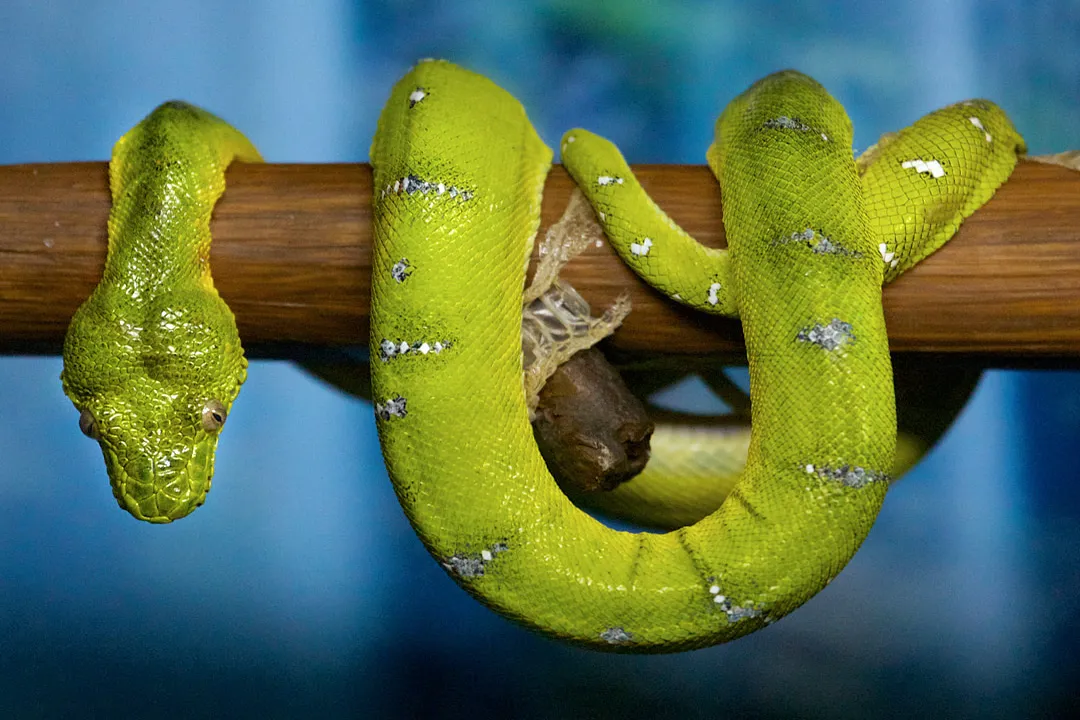
These snakes are famous for being an intense, vibrant green, which is why they earned their popular name. However, their color isn't always a simple solid green. Sometimes, they might have little dots or specks of other colors mixed in, such as blue or yellow speckles decorating their scales. A really striking feature many of them possess is a thin, pale stripe running down their back, which can look white or sometimes yellow, often appearing as a jagged line or a series of connected diamonds. Their eyes are also quite beautiful, usually appearing light in color.
What’s really surprising about the Emerald Tree Boa is that not all babies are green when they hatch! In fact, some are born a completely different color, like a bright red or a sunshine yellow. Over time, as they grow older and move up into the trees where the green leaves are, their color changes to that famous emerald shade. This color shift is an amazing natural trick for staying hidden as they mature. Think about how important that change must be: a newborn on the forest floor might need to hide from different things than a snake high up in the branches! It’s a built-in wardrobe change as they grow!
# Home Rainforest
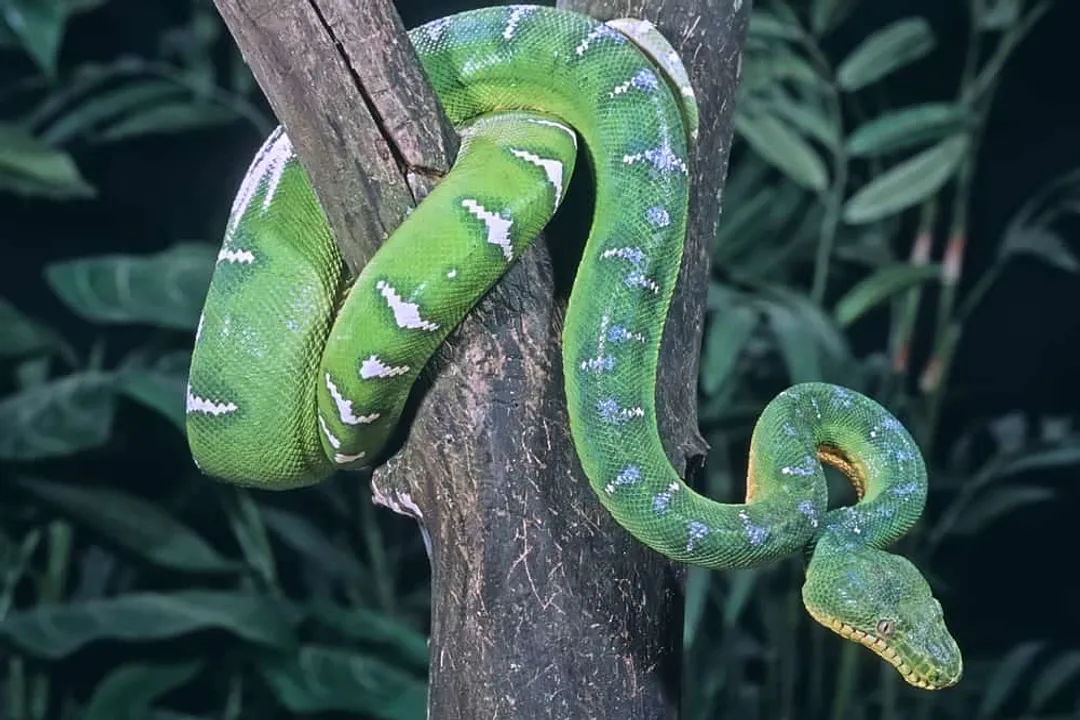
Emerald Tree Boas live high up in the trees, which means they are what we call arboreal. They spend almost their entire lives coiled around branches in the tropical rainforests of South America. You can find them in the Amazon Basin, in countries like Brazil, Colombia, Ecuador, Peru, Venezuela, Guyana, Suriname, and French Guiana. These rainforests are wet, warm places perfect for reptiles that need humidity to thrive.
Because they live up in the trees, they need special ways to hold on tightly. They have a prehensile tail, which is a long, strong tail that they can wrap and grip branches with, almost like an extra set of hands. This tail grip is super important for keeping them safe from falling while they sleep or wait for a meal. While they have this incredible tail for gripping, their bodies are built for resting and waiting rather than constantly moving around like a monkey might. When they are resting, they often wrap their coils tightly around a branch and hang their head down in a distinctive S-shape, keeping it ready for action.
If you look at how big they get, adult Emerald Tree Boas typically stretch out to be between 4 to 6 feet long, though some might get a bit longer or shorter. In terms of weight, they are generally quite slender snakes, usually weighing around 3 to 5 pounds. Interestingly, just like in many animal families, the females tend to be a little bit larger than the males.
# Catching Food
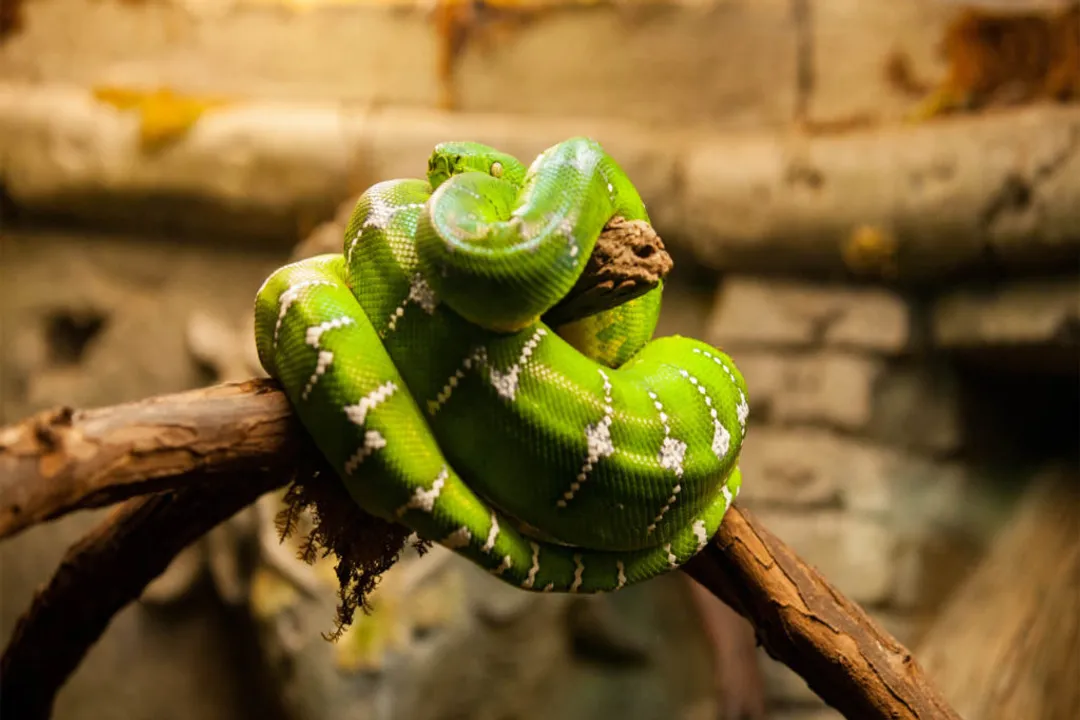
These beautiful green snakes are nocturnal, which means they do most of their hunting when the sun goes down. Since they are ambush predators, they rely on patience rather than chasing their dinner down. Remember that coiled-up resting pose with the head hanging down? That’s often how they wait for an unsuspecting meal to come by.
What’s on the menu for an Emerald Tree Boa? They primarily eat small animals that also live in the trees, like small birds and little mammals such as rodents. When they spot their prey, they strike quickly! They use their sharp teeth to hold onto the meal and then constrict it by wrapping their strong body around it until it stops moving.
Now, here is something neat that scientists sometimes discuss about snakes: how they sense their environment. Some sources suggest that the Emerald Tree Boa has special heat-sensing pits located on its snout, which help it find warm-blooded animals in the dark. However, other information points out that they do not have the same kind of heat-sensing pits that pit vipers possess. It seems there might be a slight difference in how exactly they detect heat, but either way, they have amazing senses that allow them to be very successful hunters when the moon is up. Considering how effective they are at surviving in a competitive jungle, their hunting senses are clearly working well!
# Baby Snakes
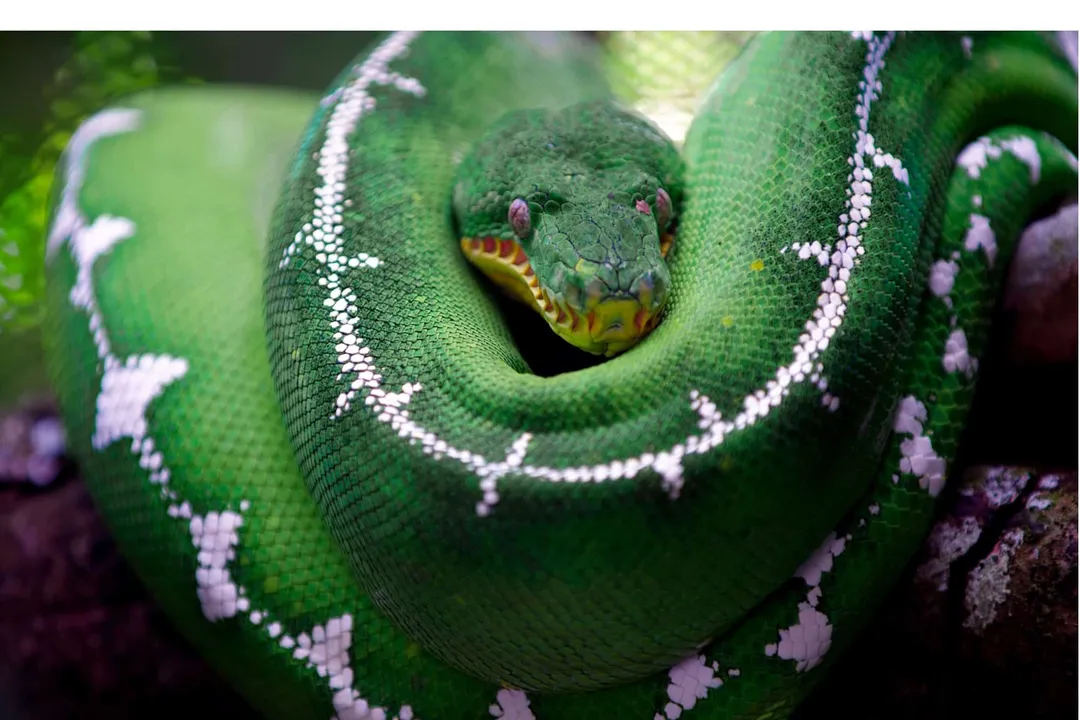
The way Emerald Tree Boas have babies is quite different from how mammals give birth. They are classified as ovoviviparous. What does that sound complicated word mean for a kid? It means that the mother keeps the eggs inside her body until they are ready to hatch. Unlike many other snakes that lay eggs and leave them, the babies develop fully inside the mother and are born live, without ever needing to break out of an actual shell.
This process usually lasts for about five months. When the babies are born, they are already fully equipped to survive in the trees, even if they start out red or yellow. A mother usually has a small group of babies in one birth, typically between 2 and 12 little ones. Because they are born ready-to-go, they don’t need their mother to care for them after birth; they are independent right away, which is a common trait for reptiles.
When thinking about their grip, it is interesting to compare how they hold onto branches versus how a primate, like a monkey, uses its hands. A monkey has fingers that can grasp objects individually, offering flexibility. The boa, instead, uses its entire body, wrapping its strong coils and specialized prehensile tail around the branch for a secure, three-point or multi-point hold. This coiled grip distributes its weight evenly and locks it onto the wood, which is perfect for an animal that needs to stay put for hours while waiting for prey.
# Python Mixup
If you hear someone talking about an Emerald Tree Boa and a Green Tree Python, you might think they are the same snake because they look so similar and both live in trees. They both have that bright green color and a similar arboreal lifestyle. However, they are actually two different species that evolved separately. It's a classic case of convergent evolution, where unrelated animals develop similar features because they live in similar environments!
Here’s a simple way to tell the difference if you see them side-by-side, focusing on their scales and body shape:
| Feature | Emerald Tree Boa (South America) | Green Tree Python (Australia/New Guinea) |
|---|---|---|
| Snout Shape | More rounded, less pointed | More pointed |
| Scales | Smooth scales | Keel scales (they feel slightly ridged) |
| Body Shape | Generally thicker body | Generally more slender body |
Knowing this difference is important because if someone is talking about a snake from South America, they are talking about the boa, while one from Australia or New Guinea is the python.
# Status Concern
For now, the Emerald Tree Boa is not officially listed as an endangered species, which is good news. They are widespread across their South American range. However, like many beautiful animals that live in specific types of wild places, they do face threats. The biggest problem for them is the changing environment, particularly habitat loss due to human activity in the rainforests. Since they rely completely on the trees to live, eat, and hide, any clearing of the forest makes their homes smaller and more dangerous for them. Keeping their rainforest homes safe is the best way to help these stunning green snakes thrive for many years to come.
#Videos
EMERALD TREE BOAS! (Everything you've always wanted to know)
Related Questions
#Citations
Emerald tree boa Facts for Kids
Emerald tree boa - The Living Rainforest
Emerald Tree Boa - Facts, Diet, Habitat & Pictures on Animalia.bio
Emerald Tree Boa - National Aquarium
EMERALD TREE BOAS! (Everything you've always wanted to know)
Emerald Tree Boa - Connecticut's Beardsley Zoo
Emerald Tree Boa - A-Z Animals
Emerald Boa Constrictor Characteristics and Habitat - Facebook
Emerald Tree Boa Attraction | Central Florida Zoo Animals