What do Green Mambas eat?
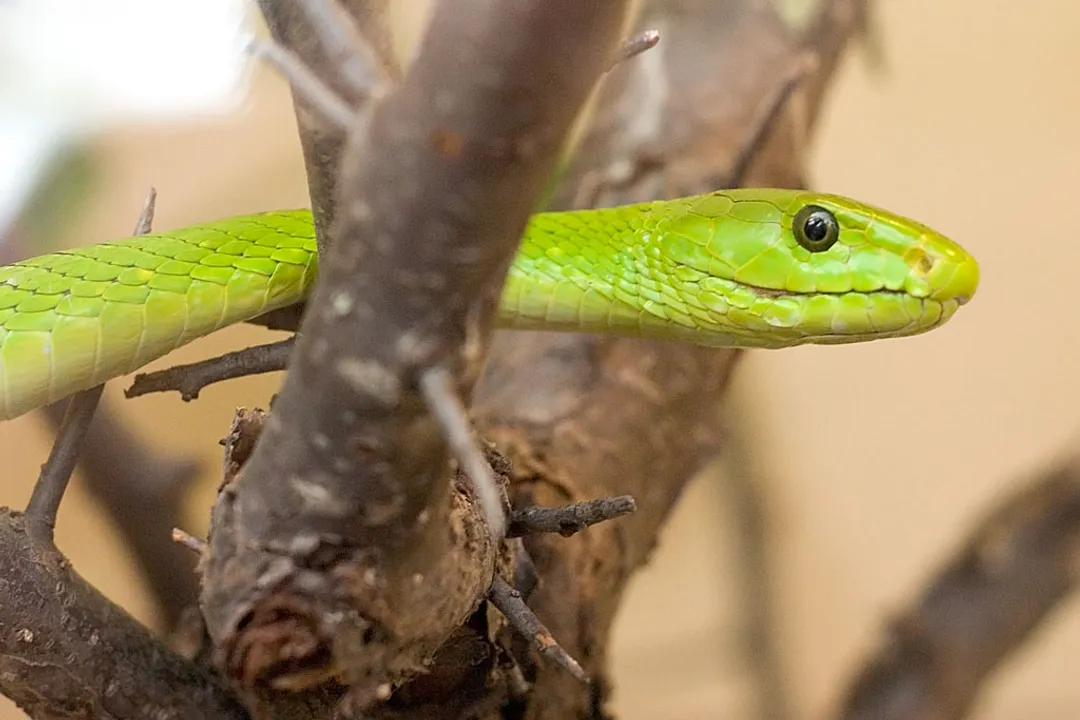
The sight of a vibrant, emerald-green snake gliding through the canopy immediately brings to mind the formidable Green Mambas, a group of highly venomous elapids native to Africa. While their striking coloration often dominates discussions, understanding what sustains these magnificent reptiles reveals much about their ecological niche and behavior within the dense forests they inhabit. These snakes are arboreal hunters, meaning their diet is heavily influenced by the creatures available to them high above the forest floor, resulting in a menu that leans heavily towards warm-blooded prey.
# Tree Dweller Diet
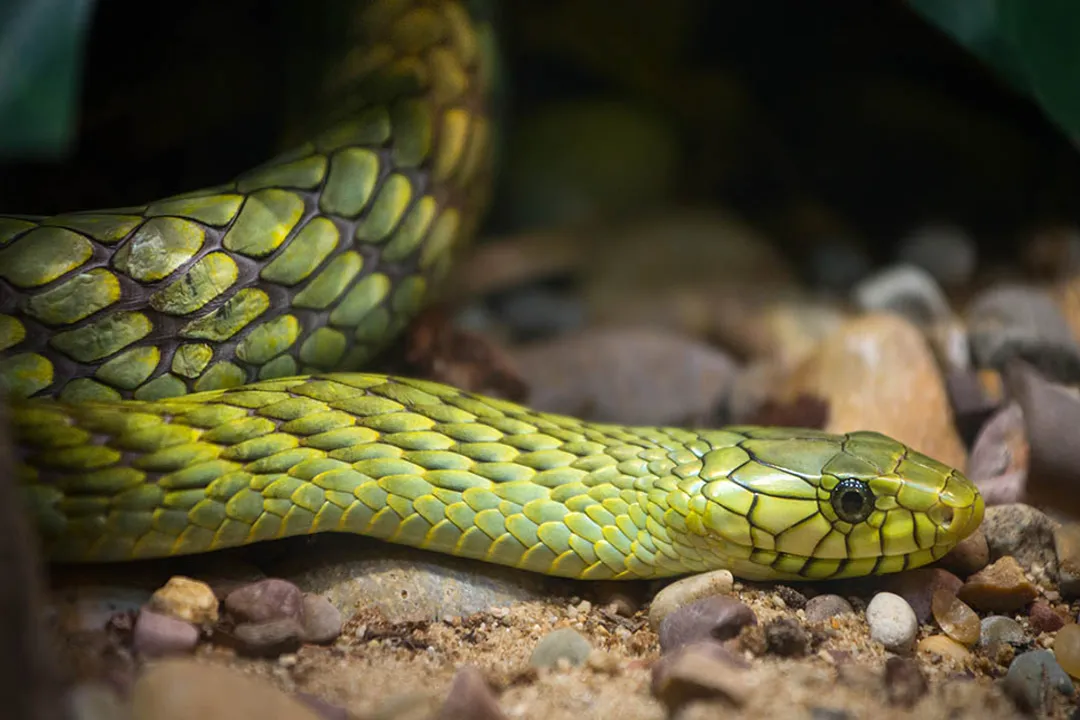
Green mambas, encompassing species like the Western Green Mamba (Dendroaspis viridis) and the Eastern Green Mamba (Dendroaspis angusticeps), are generally considered opportunistic feeders, but their lifestyle restricts their options significantly. As agile climbers, they spend the vast majority of their lives in trees, which means their prey must also reside or pass through the branches and foliage. This arboreal nature differentiates their diets somewhat from their terrestrial cousins, the Black Mambas, whose prey spectrum often includes more ground-dwelling animals.
# Eastern Foraging
The Eastern Green Mamba, found in the coastal forests stretching from southern Somalia down through Kenya and Tanzania into Mozambique, has a diet well-documented by researchers observing its natural habitat. Birds are a staple component of the Eastern Green Mamba's intake, providing the necessary energy and nutrients for a fast-moving, arboreal predator. They frequently target nesting birds or roosting adults, relying on stealth and speed to secure a meal before the victim can escape.
Beyond avians, small mammals form another significant part of the Eastern species' diet. This category often includes tree shrews, small rodents that inhabit the canopy, and possibly small primates or bats, depending on the specific location and elevation. In some instances, especially when foraging lower in the canopy or at the forest edge, they may also consume bird eggs, which offer a high-calorie, relatively immobile meal source. The sheer availability of nesting sites in their preferred habitat makes eggs a convenient supplement to their primary diet of live animals.
# Western Habits
The Western Green Mamba shares a similar general dietary profile but exhibits subtle variations, likely due to differences in the regional ecosystems it occupies, spanning from Guinea-Bissau to Ghana. Like its eastern counterpart, the Western Green Mamba prioritizes birds and small mammals in its diet. The specific species of rodents or birds available in West African forests dictate the exact balance, but the general structure—warm-blooded canopy dwellers—remains consistent.
When comparing the two, it’s interesting to note that while both species rely on birds, the specific composition of the mammal prey might reflect local biodiversity differences. For instance, if a region has a higher density of specific canopy-dwelling rodents favored by the Western species over the Eastern, that difference will be reflected in long-term dietary analysis. This pattern of habitat-specific prey selection is a common theme among many wide-ranging snake species, showcasing adaptation at a finer scale than just the species level.
# Ontogenetic Dietary Shift
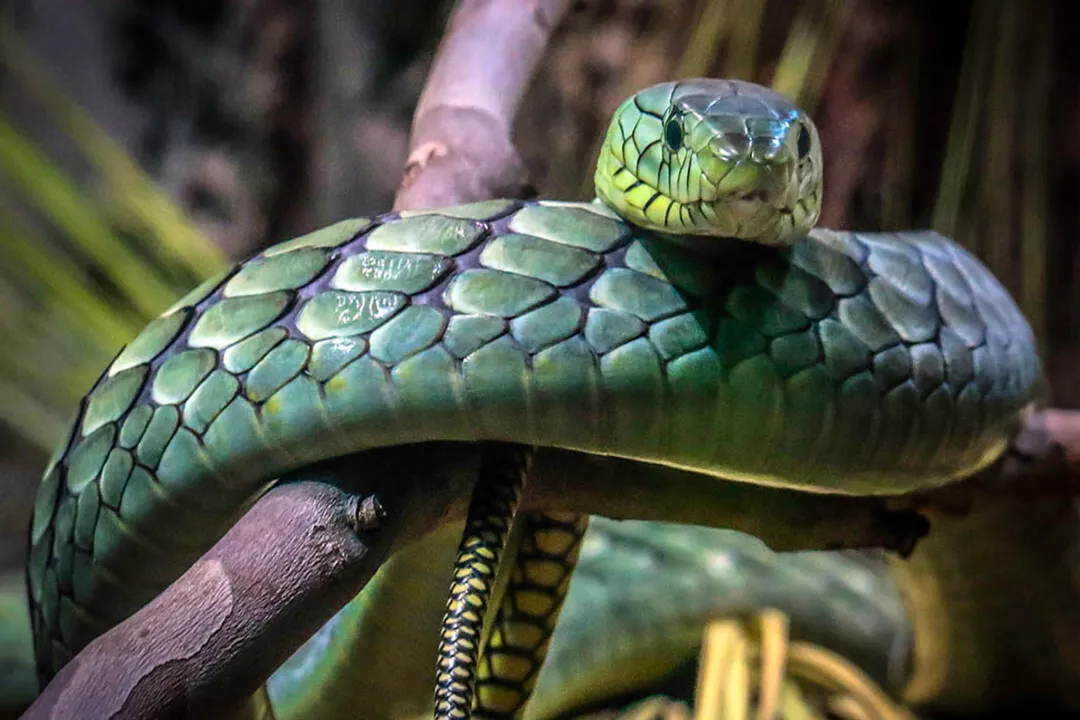
A crucial aspect of any snake's life history is the shift in diet that occurs as the animal grows from a hatchling to a full-sized adult, known as ontogenetic dietary change. Green Mambas are no exception to this biological rule.
Newly hatched or very young Green Mambas cannot easily overpower or consume large prey items like adult birds or sizable rodents. Consequently, their initial diet is scaled down significantly to match their size and hunting capability. Juveniles often focus on smaller prey types, which might include smaller lizards, frogs, or even very small nestlings. This early diet is vital for building the necessary strength and size to take on the more substantial meals required by mature mambas.
As the snake grows, its metabolic demand increases, and its physical strength allows it to tackle larger, more rewarding prey. The transition point often involves shifting from smaller lizards or frogs to consistently targeting small birds and rodents. An adult mamba requires much more caloric input than a juvenile, making the larger, energy-dense meals of adult birds or mammals more necessary for maintenance and growth.
# Predation Technique
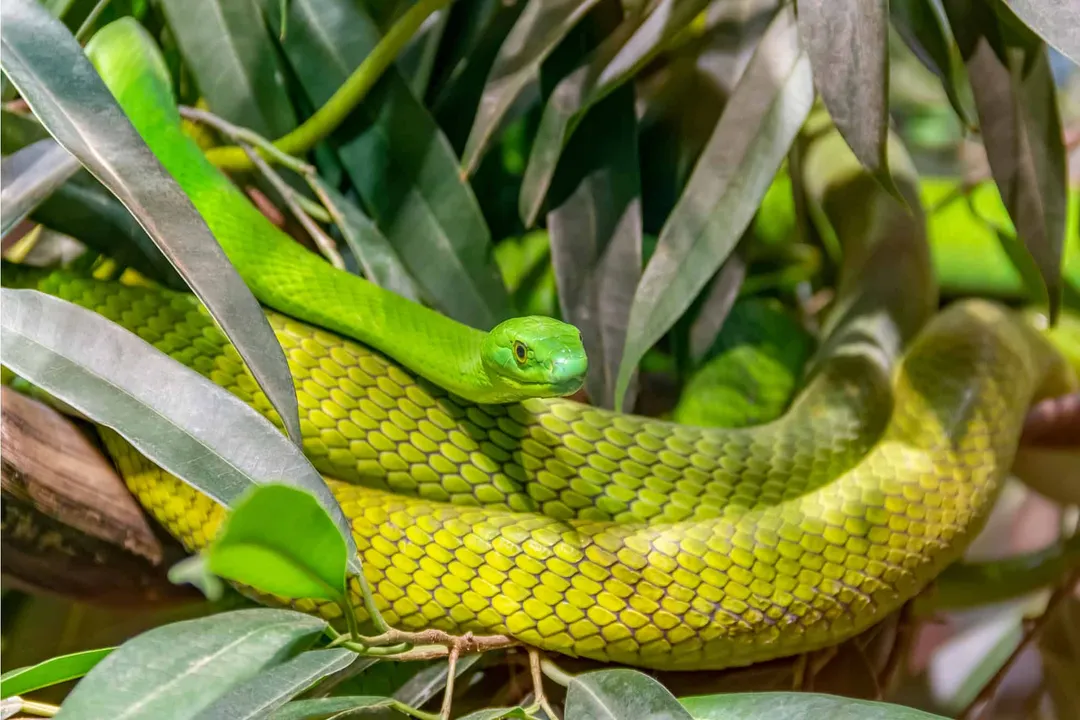
The effectiveness of the Green Mamba as a predator is a combination of its stealth, agility, and its potent neurotoxic venom. Green mambas are active foragers rather than ambush hunters that wait in one spot for an extended period, though they are certainly capable of waiting patiently near known bird nests or water sources.
When a target is spotted, the strike is incredibly rapid. Their excellent eyesight, paired with their adaptation to the complex visual environment of the forest canopy, allows them to track movement accurately. Once they strike, they inject their venom, which acts quickly on the nervous system of the prey. Unlike some constrictors that hold onto their prey immediately after biting, mambas typically deliver a quick bite and then release, allowing the venom to work its magic before approaching to swallow the immobilized victim whole.
Observing captive Green Mambas can provide clues into this process, often revealing feeding routines that mimic their wild behavior, though the prey items are, of course, provided by caregivers. Caregivers must replicate the feeding frequency and prey type to maintain the snake's health and discourage behavioral issues stemming from improper diet or husbandry. For example, a zoo environment might focus on providing appropriately sized poultry chicks or pre-killed rodents, ensuring the snake receives a balanced intake of feathers, fur, and meat.
# Ecological Niche Distinction
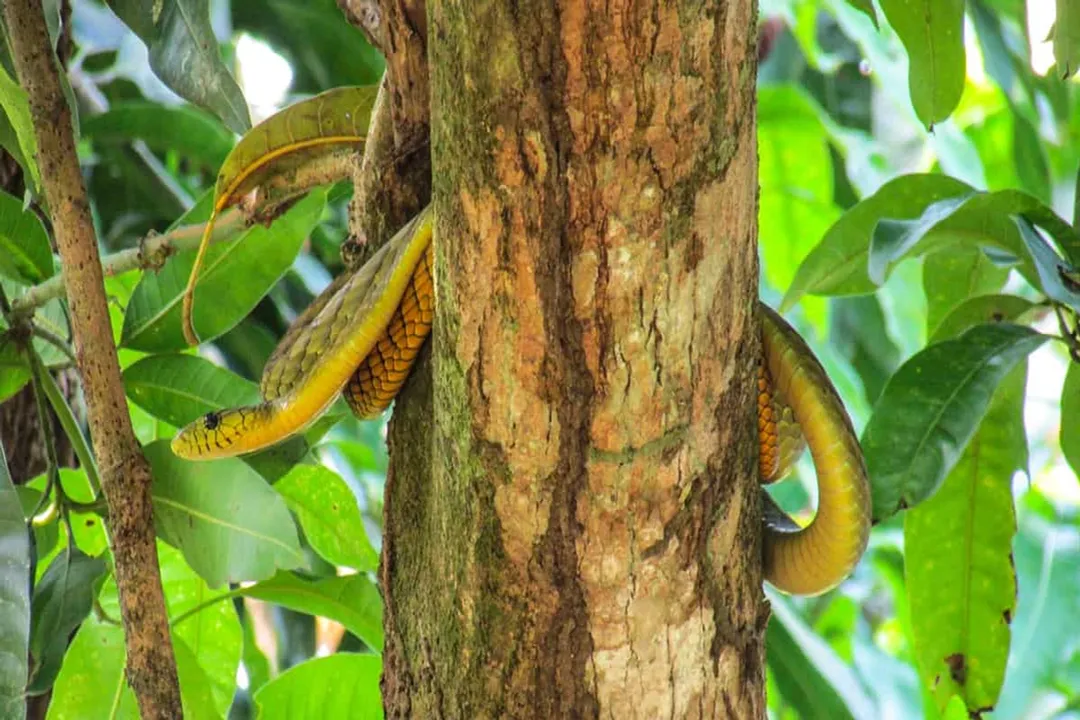
It is fascinating to consider how the two main Green Mamba species coexist in areas where their ranges might overlap, such as coastal regions in East Africa. Since both rely heavily on arboreal prey, their continued presence in the same general area suggests a degree of niche partitioning related to their feeding habits. While sources indicate both eat birds and small mammals, one species might show a stronger preference for diurnal birds nesting higher in the canopy, while the other might concentrate on nocturnal, tree-dwelling rodents. This subtle difference in prey preference or foraging time could be the key mechanism preventing direct, sustained competition between the Eastern and Western species.
Thinking about the energetic cost versus reward in the canopy offers a practical viewpoint. A large, fast-flying bird requires a significant expenditure of energy to capture successfully, even with potent venom. Conversely, a slow-moving mammal like a tree shrew offers a more reliable, albeit potentially smaller, caloric return. A snake that can successfully regulate its diet by favoring the most predictable and energetic meals available in its specific microhabitat will inherently have a survival advantage.
# Replicating the Wild Diet in Captivity
For those involved in the care and captive breeding of these beautiful serpents, understanding the natural diet is paramount to providing enrichment and proper nutrition. A general rule often applied in responsible reptile husbandry, applicable here, is to offer prey that is suitably sized—not too large to cause regurgitation or injury during swallowing, and not so small that the snake must consume excessive amounts to meet its caloric needs.
When structuring a captive diet for an adult Green Mamba, one should aim for a blend that reflects the wild profile: primarily avian and rodent material. If the facility is replicating the Eastern species' diet, emphasizing appropriately sized chicks or small quail might be suitable. For a Western Green Mamba, the choice might lean toward rodents that better match the size profile of their West African counterparts. A common best practice involves feeding less frequently but offering a larger meal when feeding does occur, which better mimics the infrequent, large kills characteristic of active predators. It is important to monitor body condition; a snake that is too thin or excessively obese signals that the frequency or size of the meals needs adjustment.
It is worth noting that while frogs and lizards form part of the juvenile diet, they should generally constitute a very minor component, if any, for a healthy adult Green Mamba, as their physiology is better suited for the fat and protein content of endotherms (warm-blooded animals). Providing a diet too heavy in ectotherms (cold-blooded animals) could potentially lead to nutritional imbalances over the long term, underscoring why expertise in mimicking the natural food web is essential for their welfare. The visual experience of feeding, whether it is a pre-killed bird or rodent, is usually sufficient to trigger the snake's predatory sequence, provided the presentation is correct.
#Videos
FEEDING CRAZY GREEN MAMBAS!!! - YouTube
Related Questions
#Citations
Western Green Mamba - Facts, Diet, Habitat & Pictures on ... - Animalia
Green Mamba Animal Facts
Eastern green mamba - Wikipedia
Green Mamba: Predator-Prey Interactions, Fights, and Aggressive ...
FEEDING CRAZY GREEN MAMBAS!!! - YouTube
Green Mamba - Los Angeles Zoo and Botanical Gardens
Eastern Green Mamba | Creatures of the World Wikia - Fandom
Western Green Mamba Facts & Photos | Wowzerful
Green Mamba - Reptiles Magazine