What are some interesting facts about the Scissortail bird?
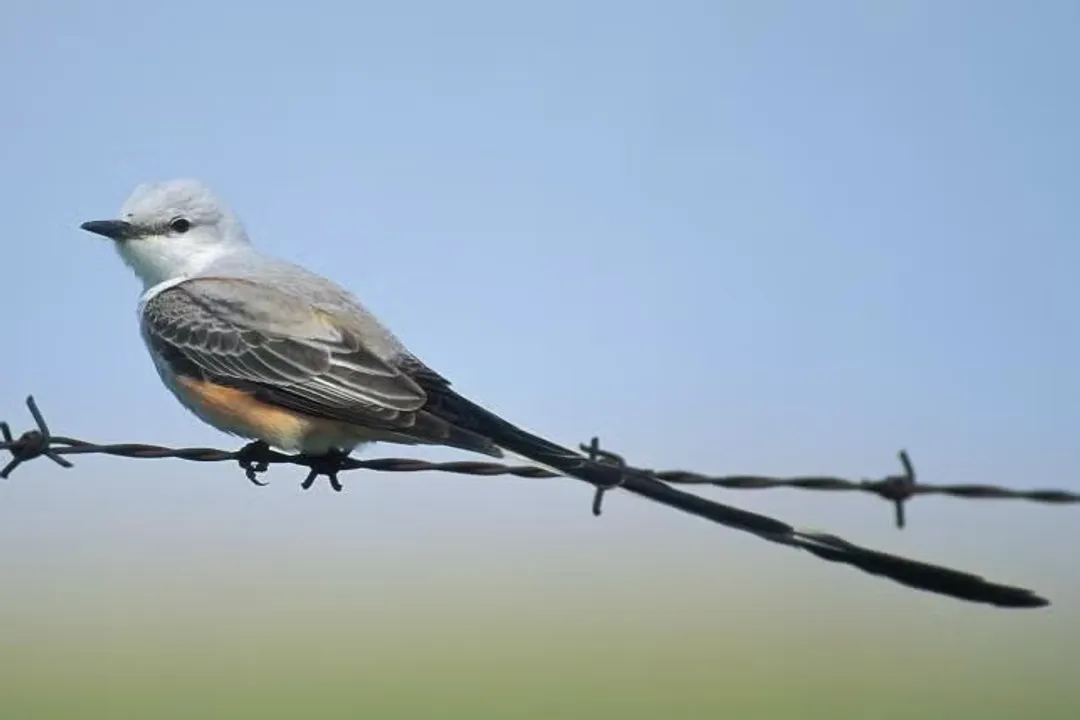
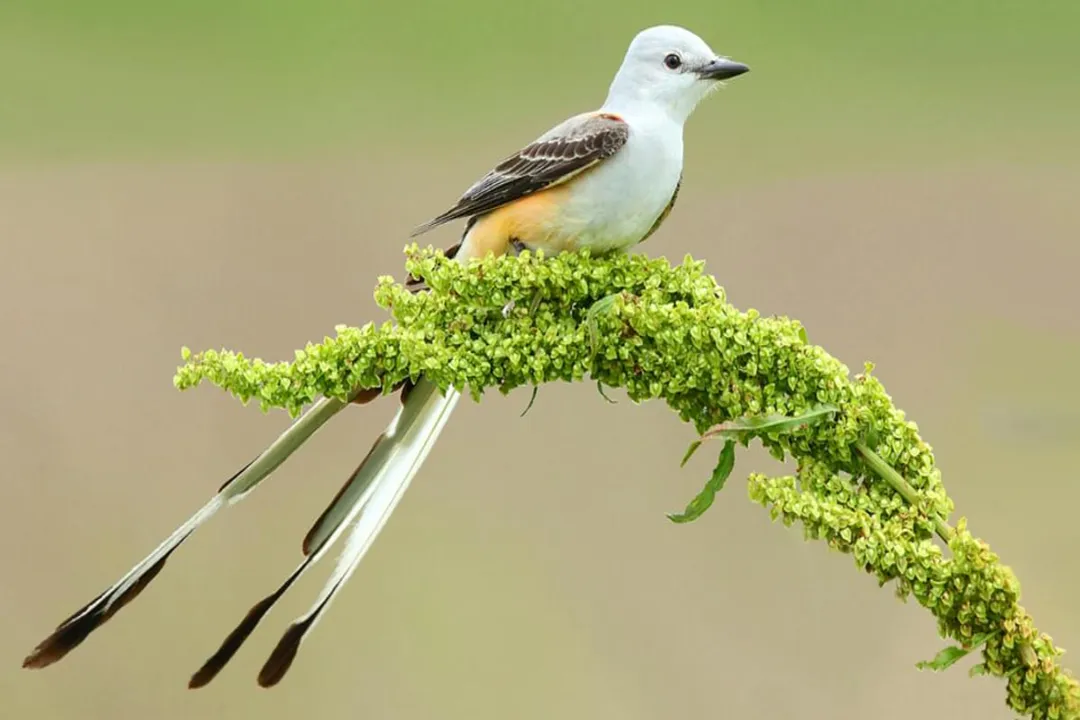
The Scissor-tailed Flycatcher, officially known as Tyrannus forficatus, presents a breathtaking sight across its range, a true spectacle of avian elegance defined by one overwhelming feature: its tail. [4] While many birds boast long feathers, few possess the sheer, flowing length of this particular flycatcher. When observed resting along a fencerow or utility wire in the south-central United States, it is already conspicuous, but it is only when the bird takes flight that its namesake feature truly comes alive. [4]
# Tail Streamers
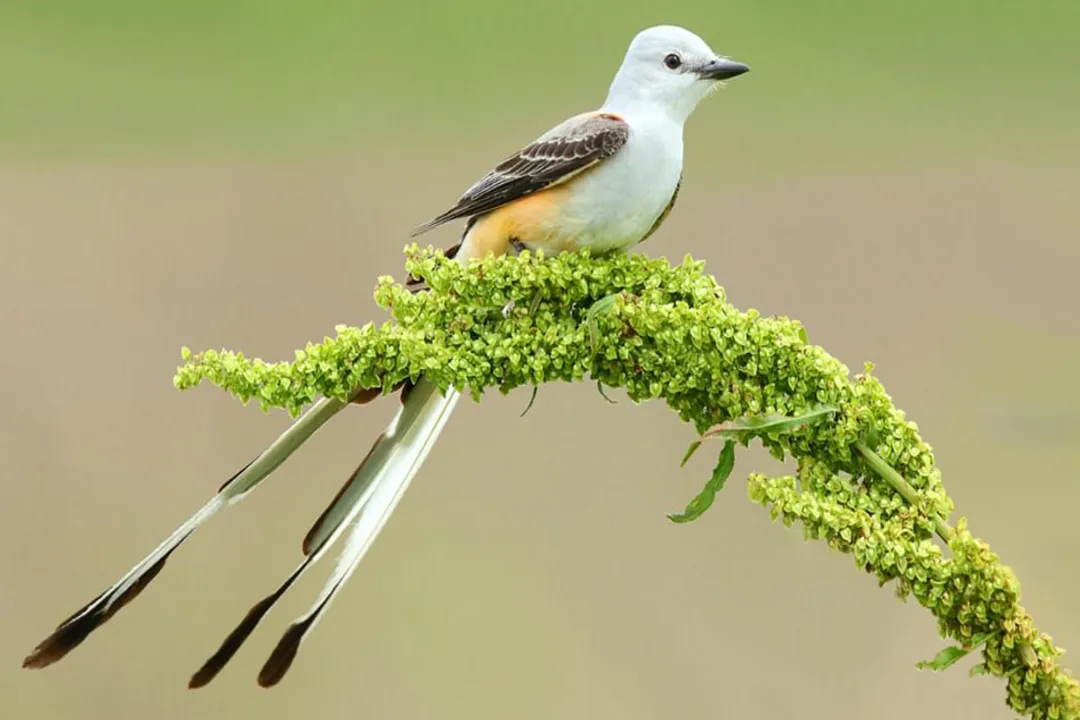
The most famous characteristic is the incredibly long, deeply forked tail streamers. [5] For the adult male, this structure can be so elongated that it makes up more than half of the bird's total length, which averages between 14 and 15 inches. [5] These streamers are distinctly black on the upper side and white underneath, creating a dramatic, fluttering effect as the bird maneuvers. [1] It is fascinating to consider how this extreme physical trait, so central to its common and scientific naming—forficata meaning "scissors"—translates into its life cycle. While the males display this extreme plumage, the female's tail is noticeably shorter, and the young birds, just fledged, have tails that are shorter and only slightly forked, resembling those of a Western Kingbird. [5][7] This difference highlights how the most dramatic visual aspect of the species is primarily a feature of the breeding male, yet it is this male's display that firmly anchors the bird's identity as the state bird of Oklahoma. [3]
# Appearance Details
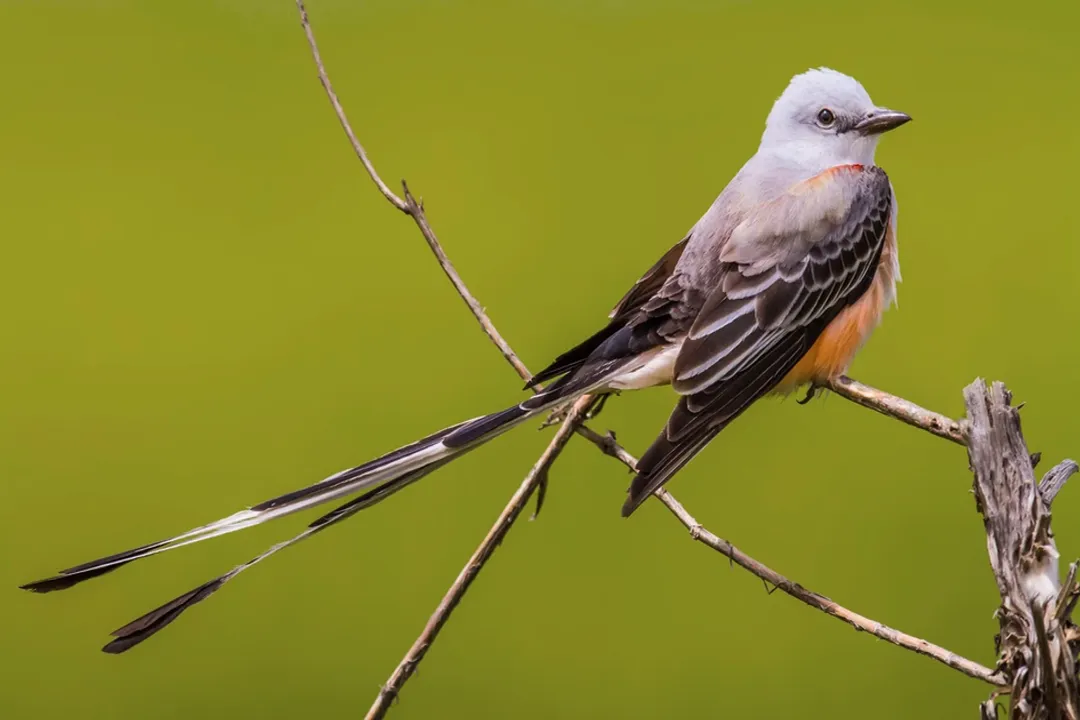
Beyond the tail, the rest of the Scissor-tailed Flycatcher is deceptively pale, making it sometimes difficult to spot against a bright sky, as noted by observers. [4] The adult bird exhibits pale gray coloration on its head and upper parts, contrasting with light underparts. [1] A striking splash of color appears on the flanks and undertail coverts, which are a distinctive salmon-pink or orange-pink. [5] The wings are dark gray, but closer inspection reveals a flash of scarlet at the shoulders and red in the axillaries (the feathers under the wing). [1] Juveniles, while bearing the general shape, lack this bright pink and appear paler overall. The bird's general silhouette when perched might cause confusion with a slim, long-tailed Mockingbird until it moves. [6]
# Kingbird Lineage
Belonging to the family Tyrannidae, the Scissor-tailed Flycatcher is part of the Tyrannus genus, commonly referred to as kingbirds. [3][6] This grouping is significant because, like its relatives, the Scissor-tailed Flycatcher is known for its aggressive temperament, especially when defending its nesting territory. [3][7] They will fearlessly attack much larger birds that encroach, including Turkey Vultures, crows, hawks, and even Mourning Doves. [1][6]
For those interested in nomenclature, its previous scientific name, Muscivora forficata, gives insight into its primary activity: Muscivora combining Latin words for "fly" and "devour," perfectly describing its feeding strategy. [3]
# Flight Foraging
As its name suggests, the Scissor-tailed Flycatcher is an insectivore that specializes in capturing prey on the wing. [3][6] Its primary foraging technique involves waiting patiently on an exposed perch, often a fence post or wire in an open area, and then darting out in pursuit of flying insects. [6][7] They are described as executing flights in straight lines with fast wingbeats, often hovering with the tail spread, or making sharp, acrobatic turns midair to snatch a meal. [1][6] Once the insect is secured, the bird typically returns to the same perch to consume it. [7] Small prey items may be swallowed during the return flight, but larger, tougher catches are often beaten repeatedly against the perch before consumption. [1] The diet heavily favors large insects like grasshoppers, crickets, and beetles, which can make up a significant portion of their sustenance, sometimes exceeding 50 percent of their intake in areas like Oklahoma. [5] They also consume various other flying insects such as dragonflies, wasps, and moths. [6] While primarily insectivorous, they will occasionally supplement their diet with small fruits and berries, particularly during their wintering months in the tropics. [1][3]
# Habitat Needs
The ideal setting for the Scissor-tailed Flycatcher during the breeding season is a semi-open environment that offers a mix of feeding opportunities and suitable nesting locations. [1][6] This translates to savannas, open prairies dotted with isolated trees or shrubs, pastures, and agricultural fields. [1][5] They thrive near roadsides where they have easy access to perches like fence wires and utility poles, which offer excellent vantage points for spotting insects. [5][7] These birds are highly adaptable to human-modified landscapes, being common sightings in towns, parks, and even on golf courses, provided there is sufficient open space. [1]
# Nest Building
Nesting duties fall primarily to the female, though the male remains nearby, often escorting her during the search for a site. [1] The nest itself is a bulky, cup-shaped structure constructed from coarse materials, often situated on a horizontal limb or fork of an isolated tree, or sometimes on man-made structures like utility poles or windmill towers, generally between 7 and 30 feet off the ground. [5][6][7] The outer shell is a rough collection of plant stems, cotton, paper, string, and even fibers from objects like cigarette filters or carpet fuzz. [1][4] The inner cup, which is smaller and deeper, is lined meticulously with finer materials like hair, rootlets, and plant down. [5][7] The inclusion of human-made refuse is noteworthy; one study conducted in an urban Texas area found that artificial materials constituted about 30% of the nest’s total weight. [4] Females may take a few days or several weeks to complete this construction. [1]
# Courtship Dance
The male’s courtship is an unmissable event in the spring and early summer landscape. [5] He performs a spectacular aerial display known to observers as the "sky dance". [5] The performance begins with the male climbing high into the air, perhaps up to 100 feet, before plunging downward in an erratic, zig-zag course. [5] This dramatic plunge is accented by sharp calls and the full, streaming display of his long tail feathers. [5] It has been described as an "aerial ballet of incomparable grace," and males may even incorporate backward somersaults during these flights to attract a mate. [5][6]
Reproductively, these flycatchers practice serial monogamy, meaning a pair bond is formed only for the duration of a single breeding season. [3] Females lay a clutch of 3 to 6 creamy eggs, typically spotted with brown or reddish-brown markings. [1][7] Incubation, lasting between 13 and 23 days, is managed solely by the female, who develops a bare brood patch to aid heat transfer. [1][5][7] The young hatch as altricial chicks—helpless, with sparse down, and requiring feeding from both parents for about 14 to 17 days until they fledge. [1][3] In favorable conditions, the female may begin building a second nest for a second brood shortly after the first brood leaves, while the male continues to care for the older fledglings. [5]
# Winter Home
As summer wanes, these birds congregate in preparation for a long journey south. [4] They form large, noisy roosts in late summer and early fall, sometimes numbering up to 1,000 individuals, often choosing mature trees near towns. [4][5] This habit of communal roosting is not just seasonal; some of these roost sites have been known to be reused by flocks for over two decades. [5] Migration typically begins in October, with the birds traveling south to spend the non-breeding season in southern Mexico and Central America, generally staying below 5,000 feet elevation, though they can be found up to 7,500 feet occasionally. [1][5] They are known to wander widely during migration, meaning a bird spotted in, say, eastern Colorado or even parts of Canada during spring or fall migration is not entirely out of the question. [4]
# Population Trends
While the Scissor-tailed Flycatcher is currently listed as Least Concern (LC) by the IUCN, its population history shows some concern. [4][6] Data from the North American Breeding Bird Survey indicates a decline of roughly 31% between 1966 and 2014. [1] Estimates suggest a global breeding population of about 9.5 million, with the majority, 92%, breeding in the U.S.. [1] A significant historical impact came from market hunting in the 1800s, where birds were killed for their decorative plumes, a crisis that ultimately spurred early conservation efforts. [7]
Observing these birds today involves understanding their schedule. If you are hoping to catch a glimpse of them displaying their full migratory spectacle, the key is timing. While they are present in core areas like Texas and Oklahoma from April through October, the large pre-migratory roosts that form in late summer and early fall offer a higher density viewing opportunity than the solitary pairs seen earlier in the breeding season. [5] Paying attention to open country near towns in late August and September provides the best chance to witness the congregation of hundreds of these magnificent flyers before they depart for the tropics. [5]
# Conservation Notes
The species faces threats primarily from environmental forces within its breeding range. [5] Severe weather events, particularly strong thunderstorms or tornadoes, can prove devastating by destroying numerous nests during the critical breeding season. [1] On the other hand, habitat modification has a complex relationship with the species. While urbanization eliminates some suitable areas, past habitat changes like the planting of shelterbelt trees might have actually provided more nesting sites in some regions. [6] Researchers suggest a simple action for landowners and land managers to help safeguard the species: when clearing brush or applying herbicides, leaving behind strips or patches of brush intact can preserve necessary perch and nest sites. [1] In their wintering grounds, where they consume more fruit, they likely assist in seed dispersal, indicating their ecological role extends beyond insect control in their northern range. [7]
Related Questions
#Citations
Scissor-tailed Flycatcher - All About Birds
Scissor-tailed Flycatcher | Oklahoma Department of Wildlife ...
Scissor-Tailed Flycatcher - Facts, Diet, Habitat & Pictures ... - Animalia
Scissor-tailed Flycatcher | Audubon Field Guide
Scissor-Tailed Flycatcher - Missouri Department of Conservation
Scissor-tailed Flycatcher (Tyrannus forficatus)