What are some interesting facts about terror birds?
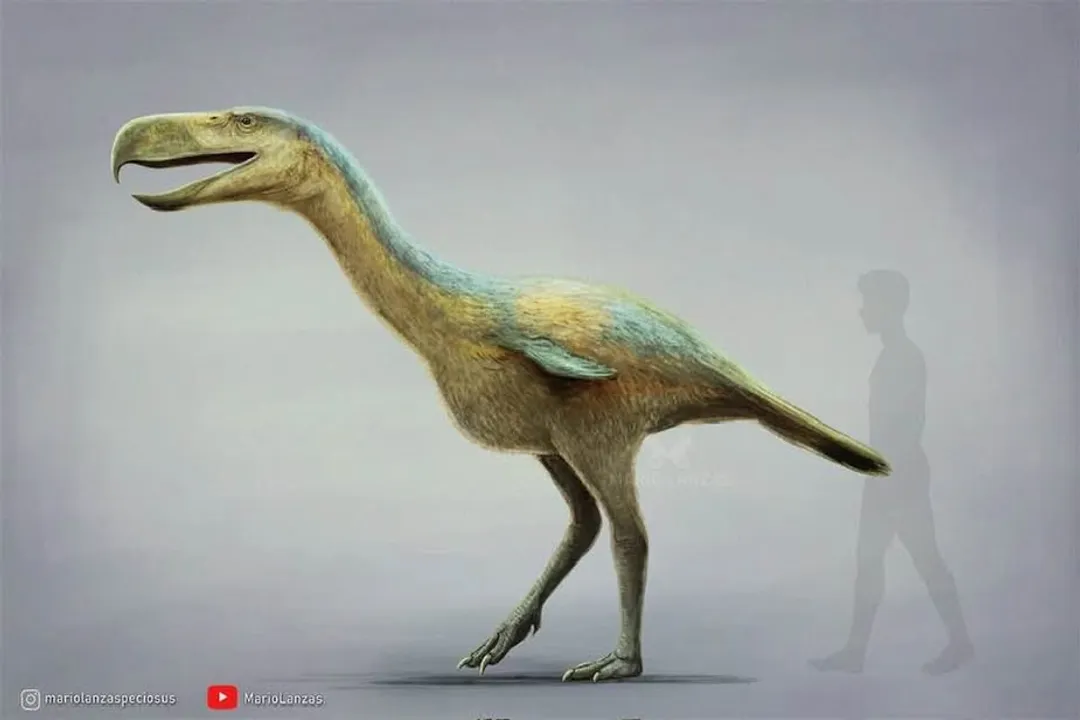
The thunderous echoes of prehistoric South America once belonged to the Phorusrhacidae, more commonly known as terror birds. These magnificent, imposing creatures, which stalked the ancient landscape for millions of years, capture the imagination with their massive size and formidable appearance. [2][4][5] They were not dinosaurs, a common misconception given their intimidating profile, but rather highly evolved, flightless birds that successfully occupied the role of apex terrestrial predator in their native continent. [2][5]
# Naming and Lineage
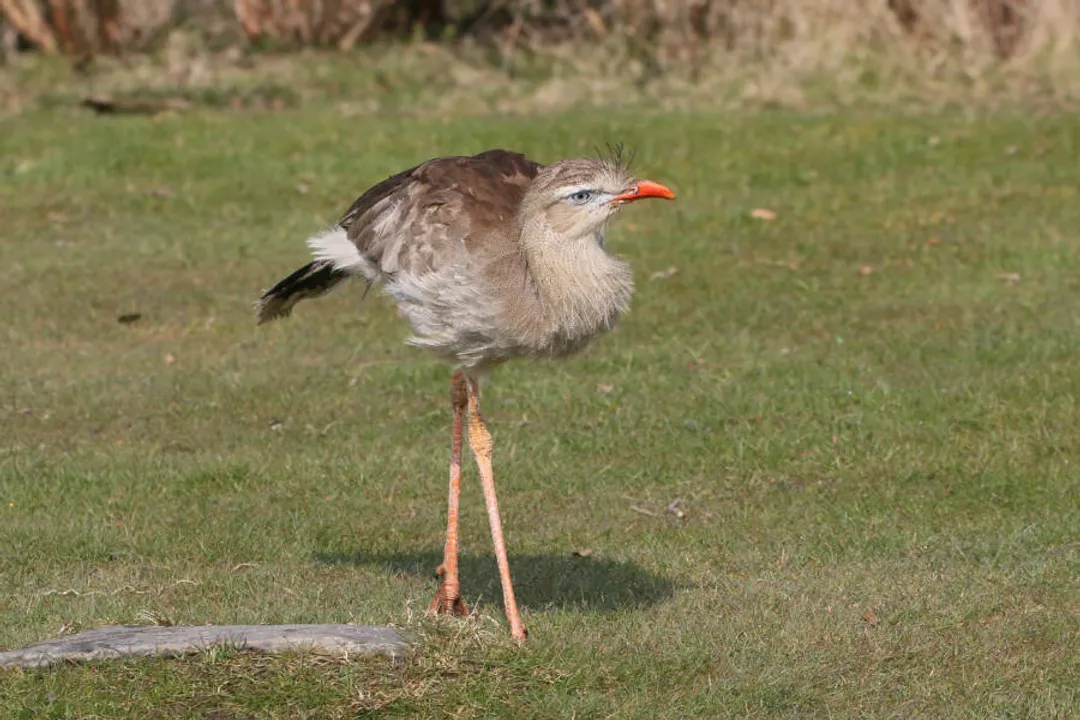
The family name, Phorusrhacidae, itself hints at their striking features, translating roughly to "bearing a beak". [4] The common moniker, "terror bird," perfectly captures the impression they must have made on any creature unfortunate enough to cross their path, emphasizing their size and fierce nature. [5] Despite their terrifying presence, modern science classifies them within the Neornithes—the group containing all modern birds—indicating that they share ancestry with familiar species alive today. [2] Specifically, evidence points toward a distant kinship with the order Gruiformes, which includes cranes and rails. [2][9] This means a modern-day sandhill crane, though vastly different in stature and diet, shares a deeper evolutionary connection with the giant, ground-running terror bird than one might initially suspect. [9] It is important to differentiate them clearly from contemporary mammalian predators like the saber-toothed cat, a comparison sometimes drawn solely because both held top-tier predatory positions in their respective eras. [5]
# Immense Proportions
Terror birds were true giants among avian life. While the family contained species of varying sizes, the largest representatives achieved truly staggering dimensions. [4] Some estimates place the height of the largest species at around 10 feet. [1] The sheer scale meant that for much of the Cenozoic Era in South America, they stood unchallenged as the continent's dominant land carnivores. [2][4]
One of the most impressive, and perhaps best-known, of these giants is Kelenken guillermoi, an exceptionally large species discovered in Argentina. [1] This bird sported a skull that measured nearly 29 inches in length, a size that dwarfs the heads of most predatory mammals of the same era. [1] In comparison to this behemoth, other genera like Mesembriornis were comparatively modest, standing perhaps only 3 feet tall. [4] However, even the smaller terror birds represented significant avian predators. [4]
The weight estimates also paint a picture of formidable bulk. A large terror bird like Paraphysornis brasiliensis might have approached 500 pounds. [4] When considering their body structure, it's clear their anatomy was specialized for terrestrial dominance. Their legs were long and robust, clearly adapted for running down prey, while their wings had become vestigial, incapable of supporting flight. [4][2]
| Genus Example | Estimated Height (Approx.) | Noteworthy Feature |
|---|---|---|
| Kelenken | Up to 7 feet (potentially taller) | Largest known skull size [1] |
| Mesembriornis | Around 3 feet | Represented the smaller end of the spectrum [4] |
| Paraphysornis | Large/Tall | A significant South American form [4] |

# Predatory Mechanics
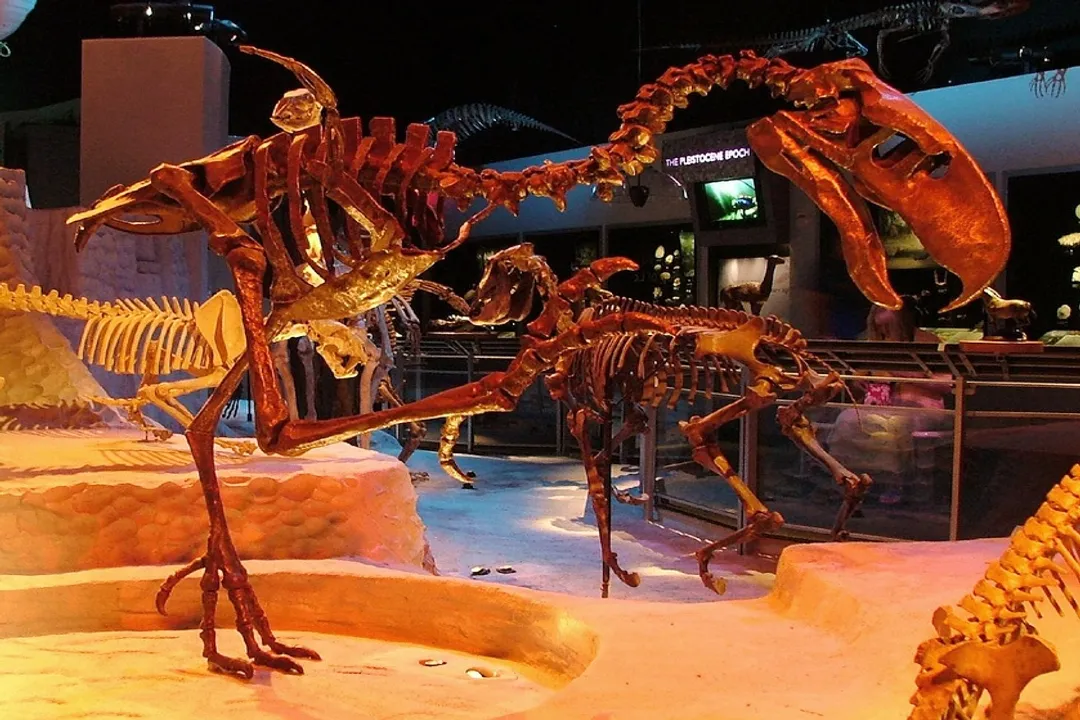
The most defining characteristic of the terror bird was undeniably its head. Their beaks were massive, deep, and armed with a sharp, downward-curving hook at the tip. [1][4] This was not a delicate instrument for nibbling seeds; it was a specialized weapon built for dispatching large prey. [4]
Researchers believe the primary method of attack involved using this massive bill like a gigantic hatchet or cleaver. [1] The force generated by a creature of that size and mass, delivered via a skull that was disproportionately large relative to its body, would have been devastating. [1] While the exact mechanics are still subject to study, the design strongly suggests that they were not simply swallowing smaller prey whole, but rather using the beak to inflict severe, incapacitating wounds on larger animals. [4] Considering the prey available in isolated prehistoric South America—which included ancient camelids, large rodents, and other endemic megafauna—a predator capable of delivering quick, lethal blows would have held a distinct advantage. [4] This hunting strategy separates them ecologically from many modern birds of prey that rely on talons for capture and killing, placing them in a unique predatory niche defined by bone-crushing leverage rather than pure grasping power.
# Isolation and Reign
The rise and success of the terror birds are intrinsically linked to the geological history of their primary home: South America. [2][4] For a significant span of the Cenozoic Era, South America existed as an island continent, separated from North America by vast expanses of ocean. [4] This isolation created unique evolutionary pressures. Without the constant influx of large mammalian carnivores that would later arrive, native fauna evolved in a world where terrestrial apex predation was reserved almost exclusively for birds. [4]
This long period of ecological stability allowed the Phorusrhacids to diversify and specialize, leading to the evolution of giants like Kelenken and others that filled various predatory roles across the continent. [2][4] Their reign was extensive, covering millions of years where their evolutionary path was unimpeded by direct competition from contemporary, highly specialized mammalian hunters found elsewhere in the world. [4]

# End of the Line
The dominance of the terror birds eventually came to an abrupt end. Around 2 million years ago, the evolutionary timeline for the Phorusrhacidae reached its final chapter. [6] This extinction event correlates closely with a monumental geological shift: the formation of the Isthmus of Panama, which reconnected North and South America. [6] This event initiated the Great American Interchange, allowing species from both continents to migrate across the newly formed land bridge. [6]
The arrival of highly mobile, specialized mammalian predators—such as saber-toothed cats (Smilodon being a famous example) and early ground sloths—introduced a level of direct, intense competition that the terror birds, adapted to an environment with far less mammalian predation pressure, could not withstand. [6] While the exact cause is likely complex, including potential climate shifts, the sheer competitive pressure from new arrivals that were arguably more flexible in diet and hunting technique seems to have been the final blow against these avian rulers. [6]
# Avian Relatives Today
It is fascinating to reflect on the descendants of these magnificent predators. While no modern bird approaches their sheer size or predatory role, understanding their closest living relatives helps situate them within the avian family tree. [2][9] The general consensus places them near the Gruiformes—the crane and rail group. [2][9] Examining the sheer size difference between a 10-foot terror bird and a common crane highlights the dramatic evolutionary paths taken within a single order of birds over time. The evolutionary trade-off was absolute: flight and the specialized killing tools of the crane were exchanged for terrestrial speed and the crushing power of the beak in the Phorusrhacids. [9] This stark contrast underscores how different environmental niches can sculpt drastically different body plans, even within closely related lineages. [9]
Related Questions
#Citations
Terror Bird (Phorusrhacos) - Facts and Figures - ThoughtCo
Phorusrhacidae - Wikipedia
Phorusrhacidae Facts for Kids
The menacing reign of the terror birds | Earth Archives
Awesome Animal - Terror Bird - Stan C. Smith
On terror birds and their extinction, and the idea of “outcompetition.”
Devincenzia terror bird species description - Facebook
Meet The Terror Bird, The Prehistoric Predator Of Your Nightmares
Terror Bird Vs. Modern Bird - National Audubon Society