What are the characteristics of the emerald tree boa?
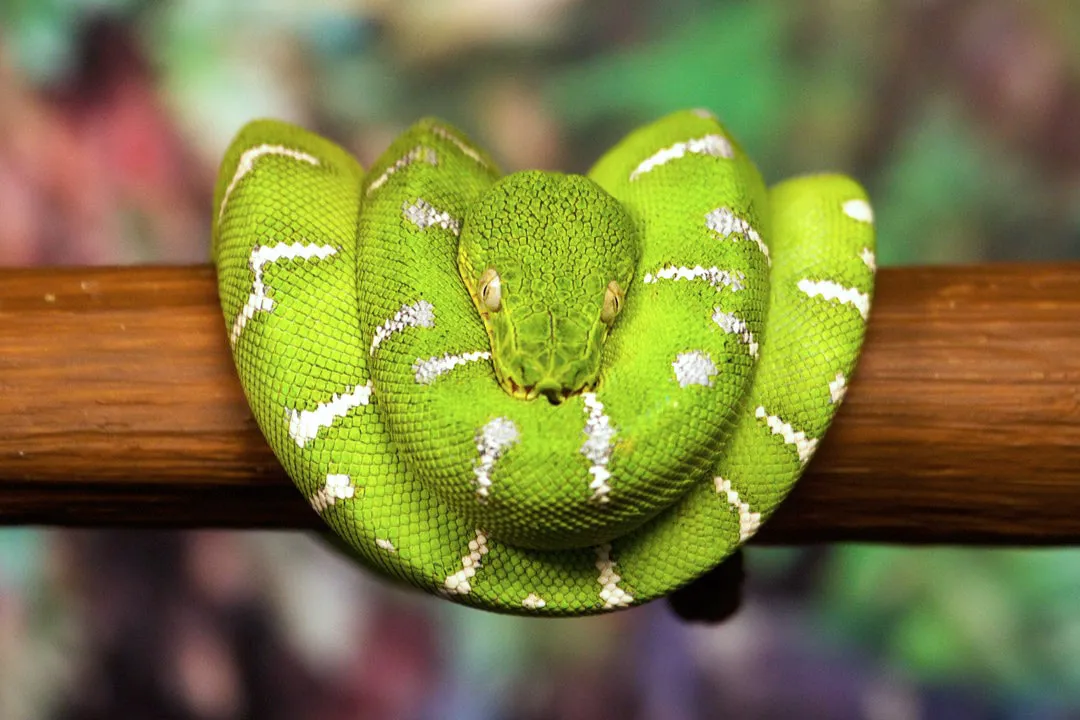
The emerald tree boa, Corallus caninus, is instantly recognizable, possessing an almost mythical appearance that captures the attention of herpetology enthusiasts and casual observers alike. Its striking coloration and unique adaptation to life high above the forest floor make it a subject of considerable fascination within its native South American range. [1][2] This snake is fundamentally structured for an arboreal existence, rarely descending to the ground except perhaps to move between trees or, occasionally, for defecation. [2][6]
# Vivid Skin
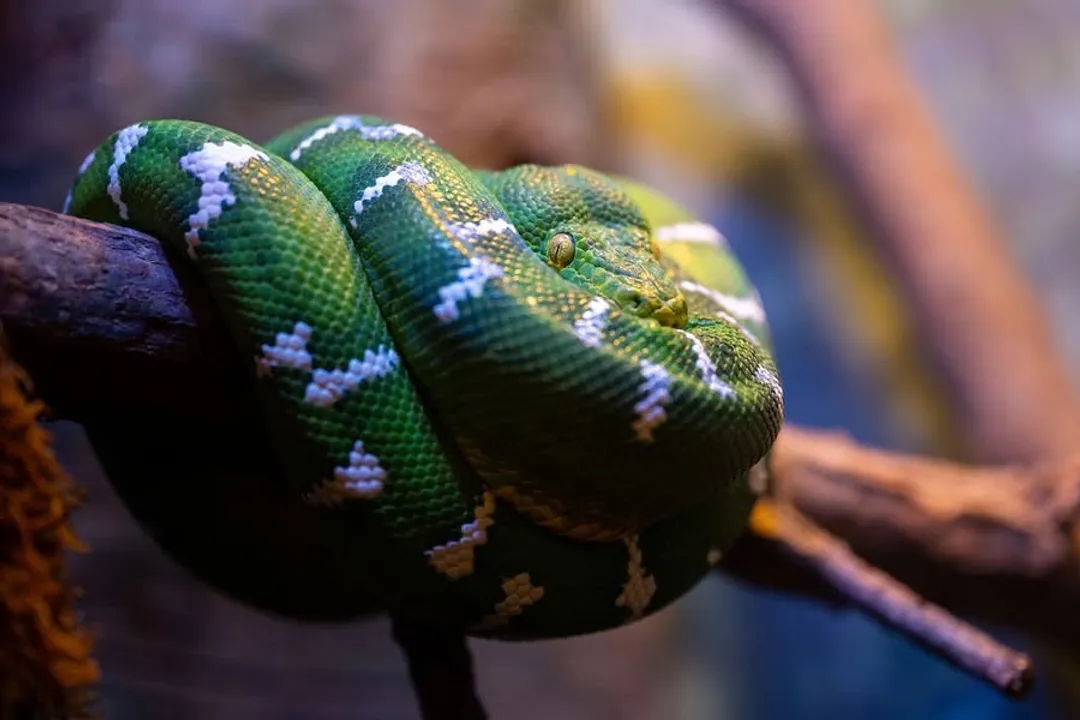
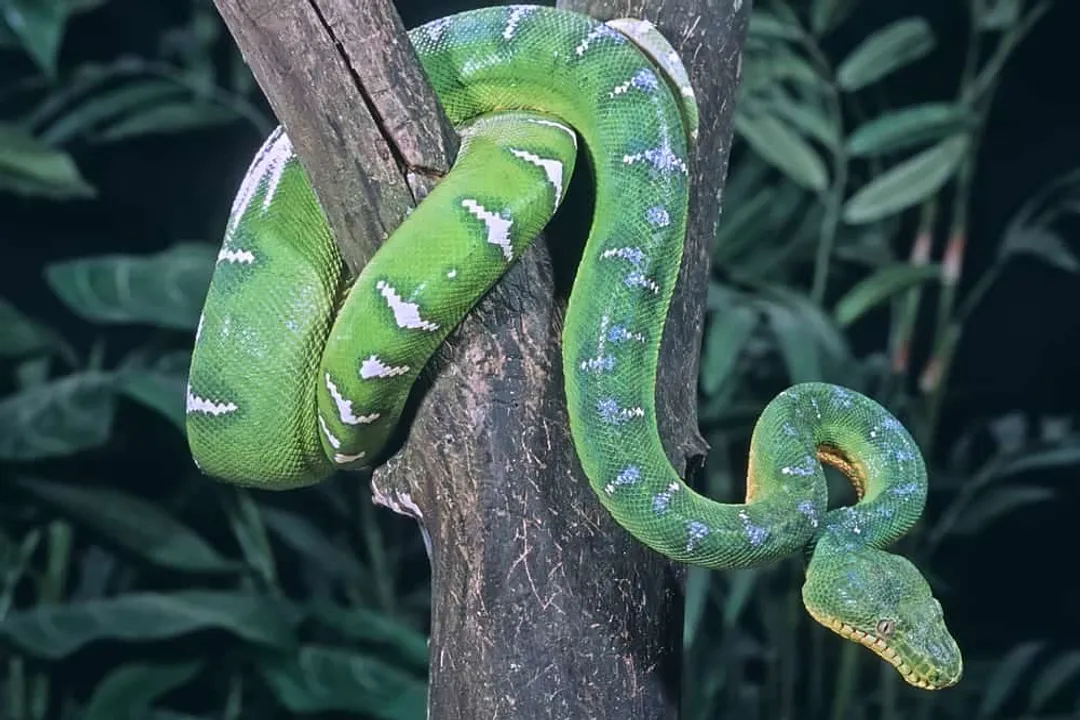
The most immediate characteristic defining this species is its brilliant coloration. Emerald tree boas are typically a vivid, bright green, which provides excellent camouflage among the sun-dappled foliage of the rainforest canopy. [1][5] While green is standard, some individuals can exhibit blue or yellow phases, though these are less common. [1] Overlaying this primary color are distinctive white or yellowish markings that often form patterns such as jagged lines, spots, or a pale vertebral stripe that runs along the length of the body. [2][4] These markings break up the snake’s outline, enhancing its concealment from both prey and potential predators. [6]
# Size Metrics
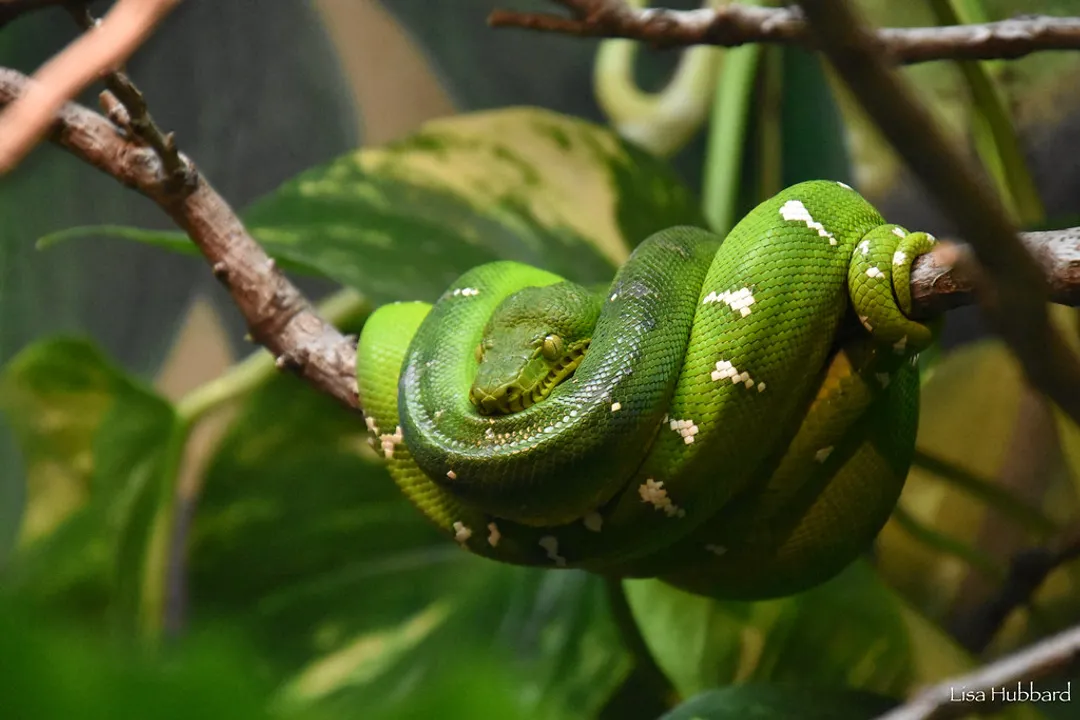
In terms of physical dimensions, the emerald tree boa is not one of the world’s largest snakes, but it is substantial enough to be a formidable predator in its niche. [1] Adults generally reach lengths of about 4 to 6 feet. [6] Females tend to be slightly longer and heavier than males. [1] Despite their length, they maintain a relatively slender build compared to terrestrial constrictors of similar size, a trait consistent with an animal requiring agility in the branches. [2]
# Arboreal Life
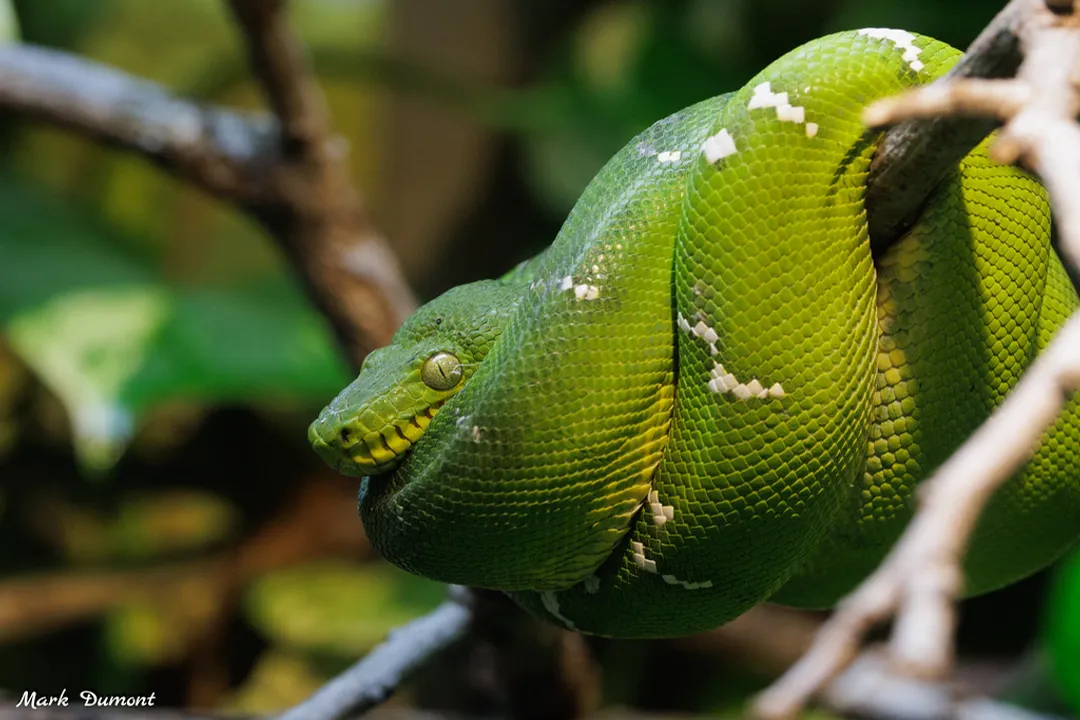
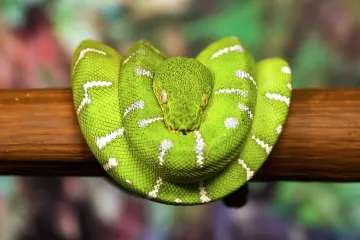
Its dedication to an arboreal lifestyle is perhaps its most significant behavioral characteristic. The emerald tree boa is perfectly designed for perching. [5] It possesses a highly prehensile tail, which it wraps securely around branches to anchor itself while hunting or resting. [2] When resting, the snake adopts a very specific, signature posture: it coils its body tightly around a branch, allowing its head to rest centrally within the coil, often just above its own coils. [6][5] This specific configuration is not just for stability; keeping the head centered ensures that the snake can quickly strike in any direction without having to expend significant energy reorienting its entire body, which is a highly efficient method for an animal that conserves energy between infrequent, major feeding events. [2]
# Dental Marvel
One of the most astonishing, yet often unseen, characteristics of the emerald tree boa is its dentition. Unlike many other snakes, Corallus caninus possesses the longest teeth relative to its body size of any non-venomous snake. [8] These teeth are extremely long, particularly the four prominent fangs located on the upper jaw, which curve backward slightly. [2][8] Importantly, these snakes are not venomous. [8] The purpose of these elongated teeth is purely mechanical: to ensure a secure grip on slippery, fast-moving prey, such as birds or small mammals, preventing escape once a strike is initiated. [8][2]
# Predator Diet
As a nocturnal hunter, the emerald tree boa waits patiently for prey to pass within striking distance. [4] Its diet primarily consists of small mammals, like rodents, and various species of birds that roost near its chosen perch. [2][4] This reliance on specific prey types highlights its specialization within the ecosystem. Because it is an ambush predator, its success is directly tied to its camouflage and its ability to remain motionless for long periods, waiting for the perfect moment to launch a swift attack. [4]
# Egg Laying
Reproduction in the emerald tree boa is notable because, unlike some of its close relatives in the boa family which give birth to live young (viviparous), the emerald tree boa is oviparous. [2][5] This means the female snake deposits a clutch of eggs, which she will then guard until they hatch. [2] This maternal behavior in guarding the nest is a necessary investment in the survival of her offspring in the competitive forest environment. [5]

# Habitat Specifics
The species is endemic to the humid, lowland tropical rainforests across a wide swath of northern South America, with populations reported across countries like Brazil, Venezuela, Guyana, and Suriname. [1][3] Their survival is intrinsically linked to the health of these dense, continuous forest canopies. [3] The presence of suitable, stable perching structures—mature trees with robust branches—is a key requirement for their sustained presence in any given area. [4] Observing their specific habitat needs underscores how specialized they are; any significant fragmentation or disturbance to the upper forest strata could severely impact their local populations more dramatically than it might affect ground-dwelling reptiles. [1] While commonly found in zoos and aquariums globally, such as those in Cincinnati and St. Louis, their captive success relies on replicating the high humidity and temperature profiles of their native jungle home. [6][9][7]
Related Questions
#Citations
Emerald tree boa - San Francisco Zoo & Gardens
Emerald tree boa - Wikipedia
Corallus caninus (Emerald Tree Boa) - Animal Diversity Web
Emerald tree boa - The Living Rainforest
Emerald Tree Boa - Shedd Aquarium
Emerald Tree Boa - Connecticut's Beardsley Zoo
Emerald Tree Boa - A-Z Animals
Did you know? The Emerald Tree Boa features the longest teeth of ...
Emerald Tree Boa - Cincinnati Zoo & Botanical Garden