Do emerald tree boas change color?
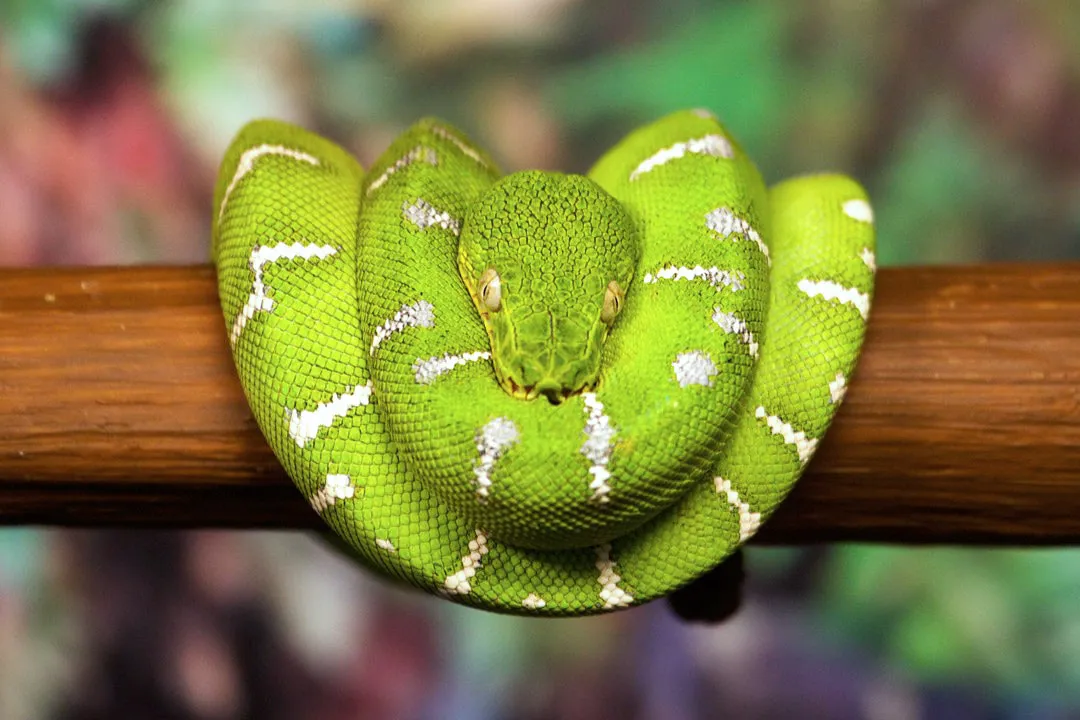
The Emerald Tree Boa is instantly recognizable, a vision of vibrant, almost impossibly bright green draped across the branches of its rainforest home. This vivid coloration, often accented by patterns of white or pale markings, is what makes the snake a favorite among herpetology enthusiasts and captive keepers alike. When people ask about these snakes and their coloring, the question often centers on fluctuation—do these jewels of the canopy shift hues like some other famous reptiles? The answer, while seeming simple, involves a fascinating developmental process that is more about a lifespan transformation than a moment-to-moment mood ring.
# Iconic Green
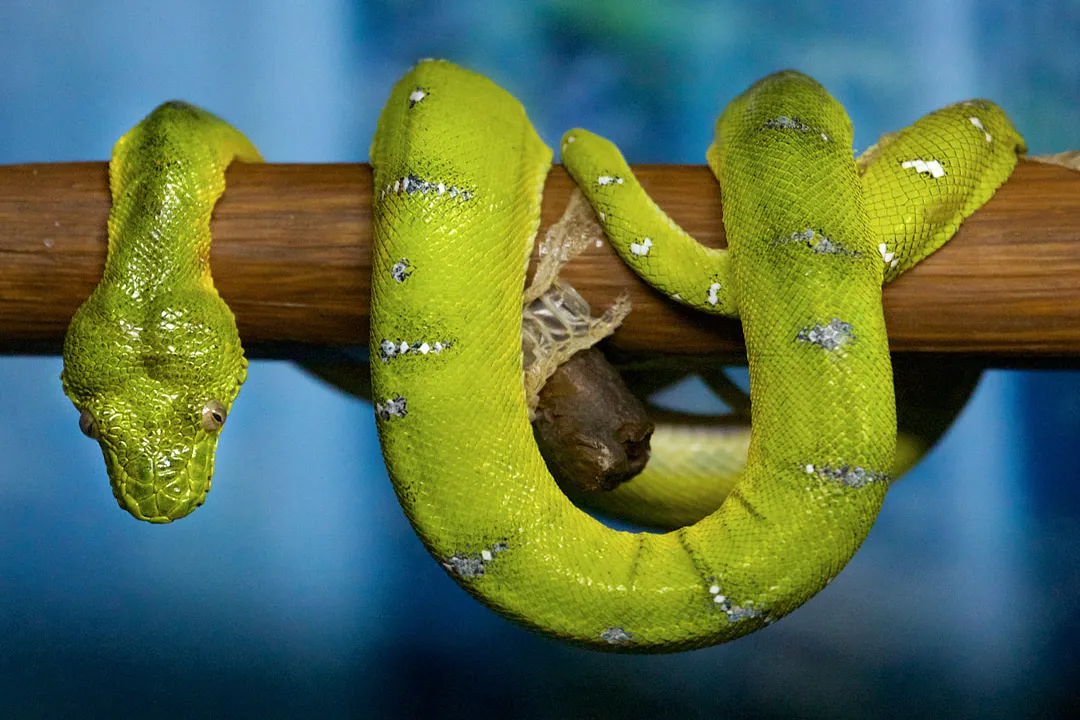
The adult Emerald Tree Boa, Corallus caninus, presents a striking portrait of arboreal camouflage. Their primary coloring is dominated by that intense green, which serves as excellent visual blending against the dense, sun-dappled foliage where they spend the majority of their lives. This background color is not uniform; it is often punctuated by distinct white markings, sometimes appearing as chevrons or spots along the dorsal ridge. These markings, while white, help break up the snake's silhouette further in the dappled light filtering through the upper canopy.
These snakes are native to the rainforests of South America, where they prefer an existence high above the forest floor, coiled securely around branches. Their entire morphology, from their robust build to their grasping feet, is specialized for this life aloft. In captivity, maintaining this brilliant green hue is a key focus for keepers, as a dull or stressed snake might indicate husbandry issues, though the primary determinant of their color is, in fact, age.
# Developmental Shift

The most significant color change an Emerald Tree Boa undergoes is not a rapid reaction to emotion or immediate temperature spikes, but rather a profound transformation that occurs as the snake matures from hatchling to adult. This process is known as ontogenetic color change.
When these stunning snakes first emerge from the egg, they rarely sport the famous emerald shade right away. Instead, baby Emerald Tree Boas frequently exhibit entirely different starting colors. In many documented cases, neonates are born either a distinct red or a bright yellow. This initial coloration is a biological strategy, though the exact purpose for the drastically different starting palettes between individuals hatching from the same clutch or across different regions is complex.
Over the course of their development, as they grow and begin to hunt and shed their juvenile skin, this initial fiery or sunny coloration gradually gives way to the signature green of adulthood. This change is gradual, involving several shed cycles where the green starts to bleed into the original color, eventually resulting in the snake achieving its mature, cryptic coloration. For a keeper observing a new arrival, seeing a red or yellow snake is not a sign that they have the wrong species, but rather that they possess a young specimen actively undergoing this biological wardrobe change.
# Color Line Variations
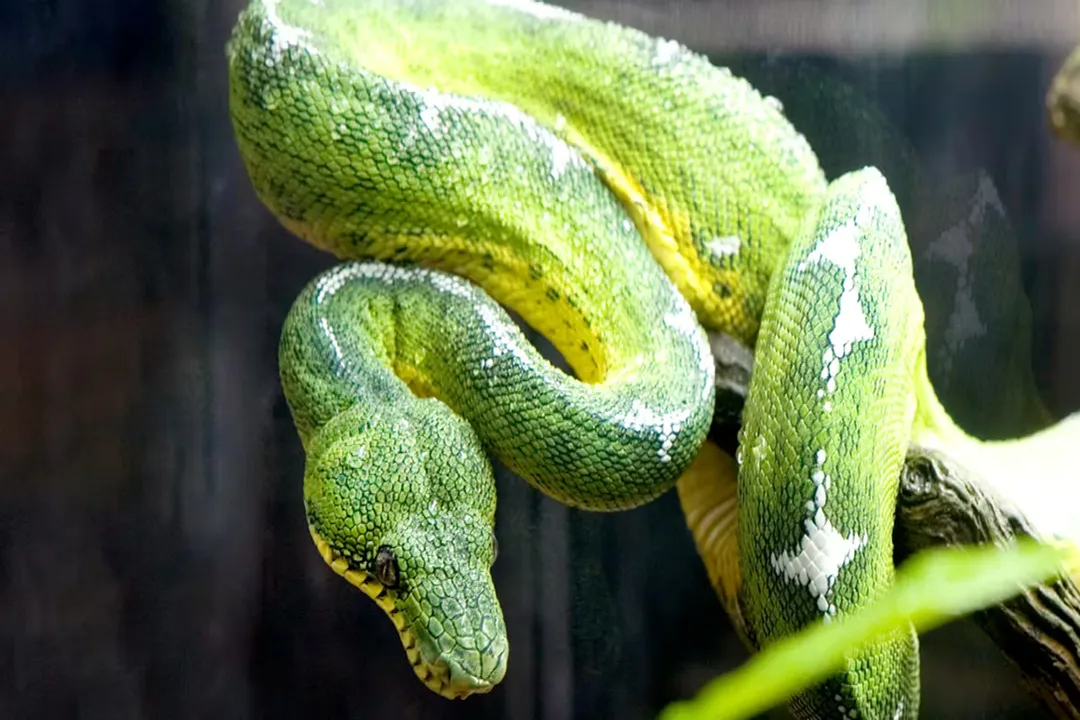
While the progression from red/yellow to green is the most common pathway, the story of the Emerald Tree Boa's color is not completely standardized across all populations. Like many wide-ranging species, different geographical localities or genetic strains can exhibit differences in their mature coloration.
Some individuals or lines might complete their transition but retain significant amounts of their juvenile color, resulting in an adult that is more lime-green or even a yellowish-green rather than deep emerald. There are also reports suggesting that certain genetic lines might express color in ways that result in adults that are almost entirely yellow, although the majority of breeders and facilities aim for the classic green phenotype. This variation highlights that while the species standard is green, the underlying genetics allow for a spectrum of expression, which adds an extra layer of fascination for those studying or keeping them.
It is helpful to think of the green coloration as the species goal, but the path to reach it, and the final shade achieved, can be influenced by geography and inheritance. This contrasts with some other snakes that might slightly darken or lighten based on ambient temperature or recent shedding, which tends to be a more subtle, reversible shift rather than the major developmental overhaul seen here.
# Camouflage Context
The green color is paramount for survival, linking directly to the snake's primary defense mechanism: remaining unseen. In the humid, shadowed environment of the Amazonian canopy, being the exact shade of the surrounding leaves is an evolutionary advantage, both for ambushing prey and avoiding potential predators.
Imagine a snake coiled in the classic "basking loop" pose, perfectly matching the foliage—it becomes functionally invisible. The stark white markings, while appearing obvious in a sterile enclosure, actually serve a purpose in the complex lighting of the wild. This effect is where a seasoned keeper can derive some practical insight. When establishing an enclosure, paying attention to lighting quality, not just intensity, can matter. Replicating the dappled, somewhat broken light patterns of a natural canopy, perhaps through strategic placement of branches and leaf litter above the snake, might encourage the animal to feel more secure in displaying its natural posture, which in turn showcases its camouflage most effectively. While we can't change the snake's genetic color, we can optimize the visual environment it perceives.

# Observing the Transformation Speed
A keen observer might wonder about the pace of the color shift from baby to adult. While the sources confirm the change happens over time, it is important to appreciate that this is a slow maturation process spanning months, perhaps years, depending on the individual's growth rate and diet. This drawn-out transformation contrasts sharply with the rapid dermal responses seen in some chameleons or anoles, where color change can occur within minutes or hours due to thermoregulation or social signaling. For the Emerald Tree Boa, the color change is tied deeply to the foundational changes in its body structure and lifestyle—it is shedding its juvenile identity for its adult role in the ecosystem. Understanding this timescale is crucial for anyone acquiring a young snake; expecting that tell-tale green within the first few weeks is setting oneself up for disappointment, as the full transition is a marathon, not a sprint.
# Hatchling Interpretation Tip
For those new to breeding or acquiring very young boas, correctly interpreting the initial hue is important for accurate record-keeping, which contributes to our broader understanding of the species' genetic diversity. If a keeper is tracking the lineage of a red hatchling versus a yellow one, they should establish a baseline. Document the exact shade—is it a true primary red, or more orange? Is the yellow bright lemon or a pale cream? Taking high-quality, consistent photographs under standardized lighting when the snake is still small and brightly colored allows for a clear, comparative record of its progression. This meticulous documentation, repeated over the first year or two, helps to objectively track how much green is replacing the original color in that specific animal, providing invaluable data that moves beyond simple anecdotal observation about "color lines". It turns a casual observation into reliable data contributing to the collective expertise on this species.

# Adult Hue Stability
Once an Emerald Tree Boa has successfully completed its developmental color change and achieved its adult green phase, the coloration tends to be quite stable. Unlike species known for significant daily or seasonal chromatic shifts, the adult ETB remains consistently green. Any noticeable deviation from this established green in a mature animal often warrants attention from a husbandry standpoint. A healthy, well-adjusted adult should hold its vibrant color consistently, with only the typical dullness that precedes a shed, which resolves once the old skin is removed. If a normally green adult appears significantly duller, browner, or paler for an extended period when not in a pre-shed cycle, it might suggest underlying stress, dehydration, or inadequate environmental parameters rather than a normal color modulation. The stability of the adult color confirms its primary function as long-term, fixed camouflage.
Related Questions
#Citations
Emerald Tree Boa Color Progression - Darren Hamill Reptiles
Emerald Tree Boa - Connecticut's Beardsley Zoo
question about amazon tree boas : r/snakes - Reddit
Emerald Tree Boa - National Aquarium
Emerald Tree Boa Care Sheet - Imperial Reptiles & Exotics
Welcome back to Wildlife Wednesday! Do you know your snakes ...
Baby emerald tree boas are generally brown/red or yellow/orange in ...
Emerald Tree Boa - Shedd Aquarium
Emerald Tree Boa | Creatures of the World Wikia - Fandom