What are the characteristics of the Chinese cobra?
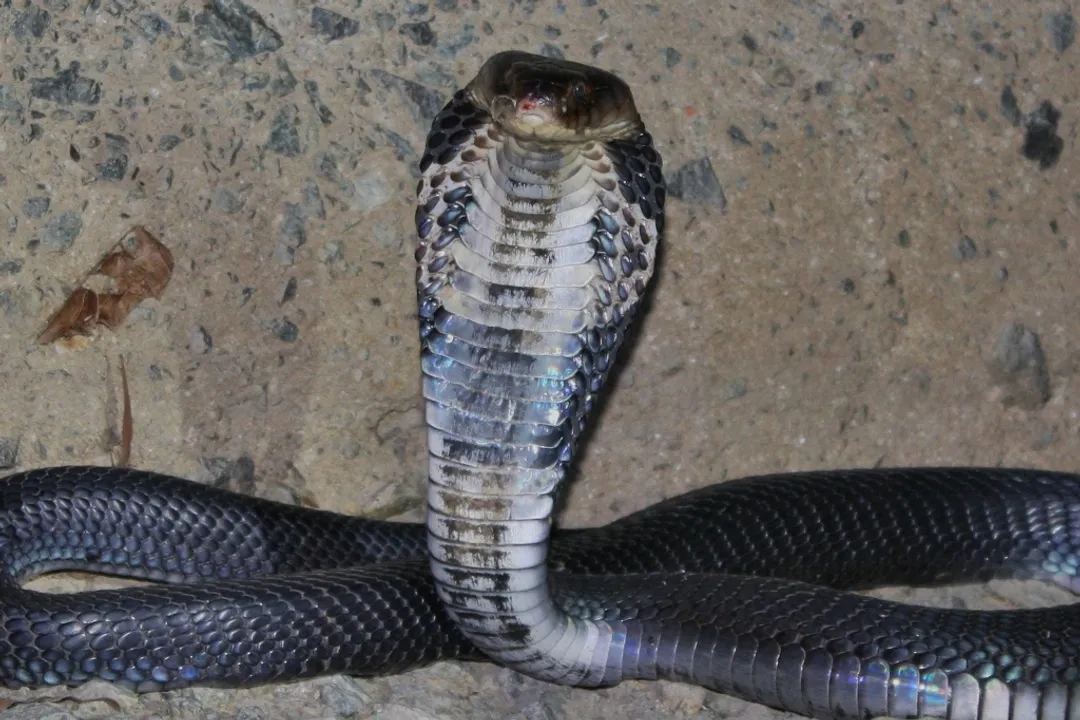
The Naja atra, more commonly recognized as the Chinese cobra or Taiwan cobra, is a species that commands respect across its Asian range due to its potent venom and adaptability. This member of the Elapidae family holds a significant place in the region’s natural history, though its prevalence has unfortunately led to numerous human encounters. [4][5] Understanding its specific characteristics—from the pattern on its hood to the chemical makeup of its bite—is key to appreciating this distinctive reptile.
# Identity and Names
The scientific classification places this snake as Naja atra, a name first formally assigned by Theodore Edward Cantor in the year 1842. [4][7] The genus name Naja itself is a Latinization tracing back to the Sanskrit word nāgá, meaning simply "cobra". [4][7] The specific epithet, atra, is Latin for "dark," "black," or "gloomy," a fitting descriptor for many adult specimens. [4][7] Locally, the snake is known by several evocative names. In Mandarin Chinese, it is often referred to as Zhōnghuá yǎnjìngshé, translating to "Chinese spectacled snake," which directly references the markings on its hood. [4][7] In Cantonese, it is sometimes known as faahnchaántàuh, meaning "rice paddle head". [4] This regional variation in naming highlights its importance and familiarity across its native lands. [7]
# Physical Presence
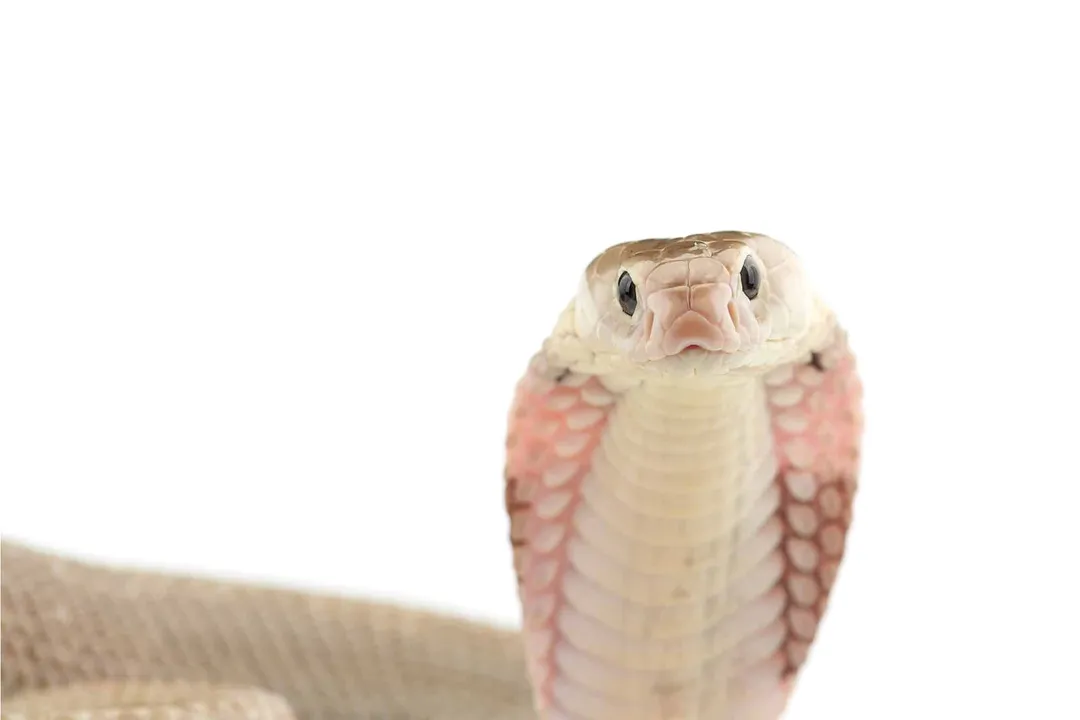
The Chinese cobra is classified as a medium-sized snake, generally measuring between 1.2 and 1.5 meters, or roughly 3.9 to 4.9 feet, in length. [4][5] While this is the typical range, rare individuals have been documented reaching up to 2 meters (6.6 feet). [4] In terms of build, it is described as having a heavy body that can appear slightly flattened. [5] When it feels threatened, this flattening becomes more pronounced as it prepares its defense. [5] Unlike some of its larger relatives, its tail is comparatively short. [5] As an elapid, it possesses short, fixed fangs located at the front of the upper jaw, making its venom delivery efficient. [4]
# Coloration Markings
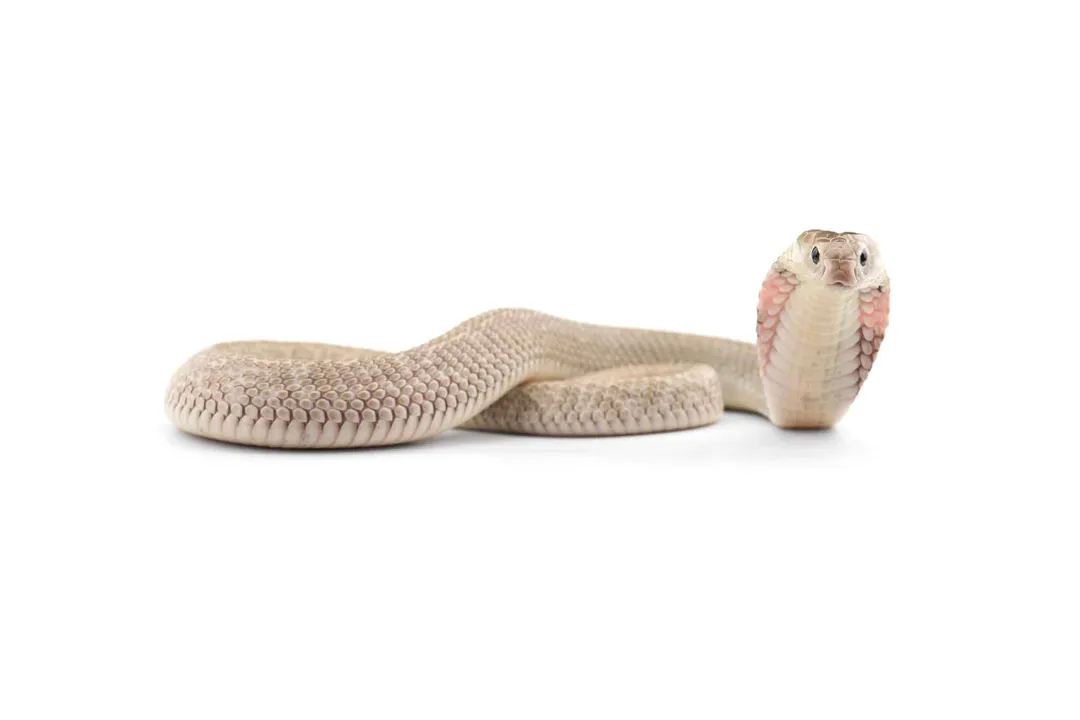
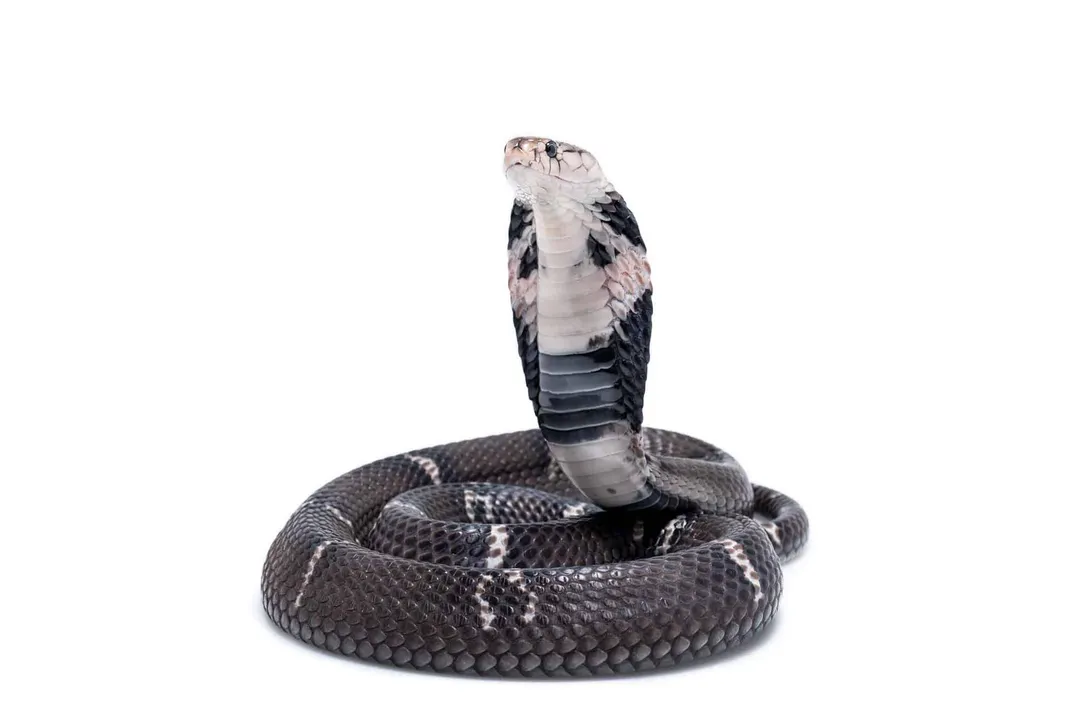
The overall coloration of Naja atra is quite variable but tends to feature a dorsal surface that is brown, gray, or black. [3][4] The underside, or abdominal surface, is typically lighter, often described as pearl, slaty, or light yellow. [3][5] A defining characteristic is the pattern displayed on the back of the hood when it is spread wide; this can range from a spectacle or mask to a horseshoe or O-shape. [4][5] These markings are often linked to a lighter area on the throat. [4] While adults are often dark, juveniles usually exhibit more prominent light transverse bands across their bodies, though these may fade with age. [4][5] Interestingly, variations do exist, with some specimens displaying white, yellow, or brown dorsal coloring, and color patterns can even differ significantly across regions, such as the typically blackish cobras from eastern Taiwan versus the white-gray ones from central and southern Taiwan. [5]
# Range and Dwelling
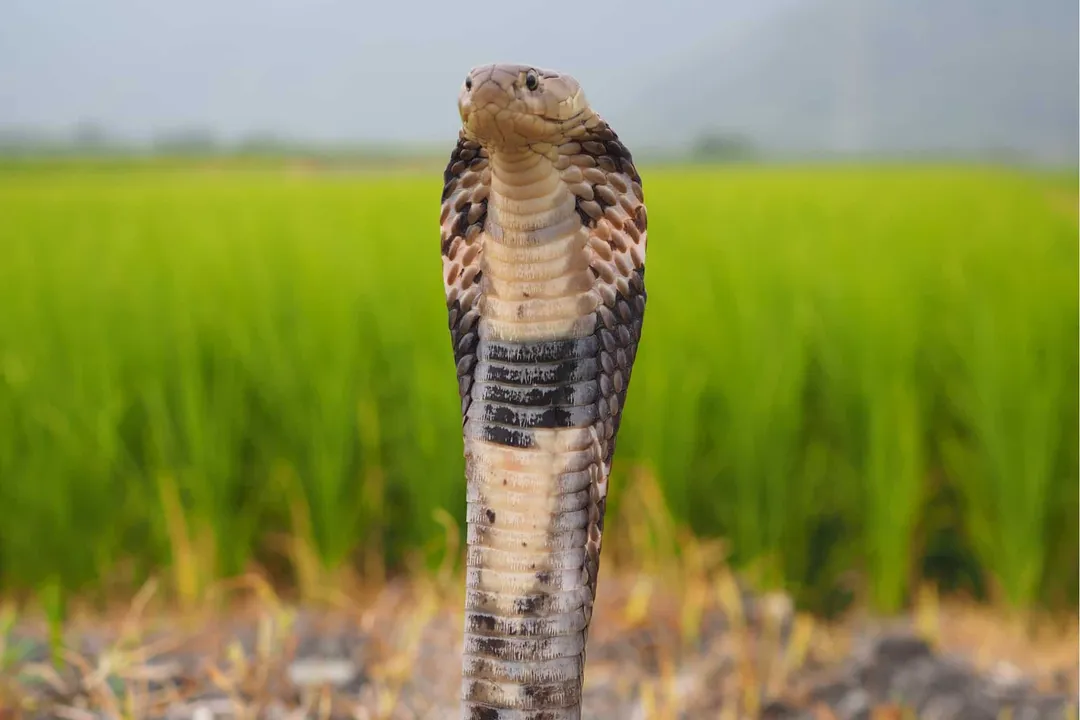
Geographically, the Chinese cobra's distribution centers on southeastern China, extending into the island province of Hainan, and also encompassing northern Laos, northern Vietnam, and Taiwan. [4][5] This adaptability allows it to inhabit a wide spectrum of terrain, from lowland plains to montane forests, with documented sightings reaching elevations over 2,000 meters or 6,500 feet. [5] Woodlands, shrublands, grasslands, and mangrove swamps are all considered typical habitats. [3][5] It often seeks refuge under leaf litter, sticks, and rocks. [5] An important consideration for local populations is that the species persists in areas close to human activity, including agricultural lands and rice fields. [5] If you live in or near these environments, it stands to reason that simple habitat management—like keeping property edges clear of dense brush piles that provide ideal daytime hiding spots—can significantly reduce the likelihood of accidental encounters by removing preferred cover near dwellings. [5] This species generally avoids very dark forests with a closed canopy. [5]
# Daily Rhythm Behavior
The Chinese cobra is generally terrestrial, spending its time on the ground, and exhibits activity patterns that span both day and night, classifying it as diurnal and crepuscular. [5] Hunting often occurs throughout daylight hours and can continue for several hours after sunset, particularly between March and October when temperatures are warmer (around 20–32°C). [5] They are known to be very alert creatures, usually preferring to retreat and escape confrontation when they sense a human presence. [4][5] However, if cornered or directly threatened, the snake will adopt its classic defensive posture: raising the forebody, spreading the hood, and hissing. [3][5] While adults can exhibit aggression, younger individuals are frequently noted as being more nervous and potentially more readily aggressive when disturbed. [4] Intriguingly, despite not being strictly classified as a spitting cobra like some relatives, certain populations, particularly those from Guizhou Province, have been observed ejecting venom towards threats up to 2 meters away, specifically aiming for the eyes. [5]
# Hunting Diet
Naja atra is a carnivore with a varied diet that shifts depending on its age. [3][5] The early life stage is strongly geared toward smaller prey; juveniles primarily consume amphibians, such as various frogs and toads. [5] As the snake matures into an adult, its dietary focus shifts toward small mammals, like rodents, as well as birds and sometimes other reptiles. [5] An interesting ecological note is that even adults will revert to preying heavily on frogs during peak amphibian breeding seasons. [5] Like other snakes, the Chinese cobra relies on its excellent sense of smell, using its flicking tongue to gather chemical cues from the air to locate its next meal. [3]
# Reproductive Cycle
The Chinese cobra is oviparous, meaning it lays eggs rather than giving birth to live young. [4] The period for mating and egg-laying is quite extended throughout the year. [5] In mountainous regions of Vietnam, mating activity has been observed occurring between March and May. [5] Gravid females typically deposit their clutch of eggs sometime between May and the end of July. [5] The number of eggs laid can range from a minimum of six up to twenty-three. [5] The incubation period for these eggs lasts for approximately two months. [5]
# Venomous Effects
As a true cobra, Naja atra possesses a highly toxic venom. [5] Unlike species whose venom is predominantly neurotoxic, the Chinese cobra’s venom has a more complex, dual-action profile, consisting mainly of postsynaptic neurotoxins and cardiotoxins. [5] The cardiotoxin analogues alone can account for over half the dry weight of the crude venom and carry significant cytotoxic properties. [5] This combination is what makes the bite medically significant in its native range. Local effects following a bite are severe, often including wound darkening, localized redness, pain, swelling, and invariably, the development of blisters and necrosis (tissue death). [3][5] This necrosis is a particular concern, as it may persist for many years even after the general systemic symptoms have resolved. [3][5] Systemic symptoms can include chest discomfort, fever, difficulty swallowing or loss of voice, general aches, lockjaw, and trouble breathing. [3][5] While historical fatality rates were notable (up to 15% in one older study from Taiwan), [5] the wide availability of effective antivenom has thankfully made deaths much rarer in contemporary times. [3][5] It is important to recognize that the presence of cardiotoxins means the venom attacks both the nervous system and the heart muscle, distinguishing it from relatives that rely solely on neurotoxicity. [6] This complex venom mechanism suggests that even a small injection could lead to profound systemic failure quickly, making the speed of treatment paramount for preventing lasting tissue damage. [5]
# Status in World
Despite its commonality throughout much of its range, the Chinese cobra is listed as Vulnerable on the IUCN Red List, indicating that its populations are decreasing. [3] Several substantial threats contribute to this decline. Habitat destruction is a major factor, driven by housing and urban development as well as agricultural expansion. [3] Furthermore, the snake faces heavy hunting pressure due to its historical use in traditional Chinese medicine, as a culinary delicacy, and its capture for the international pet trade. [3] Road mortality and general persecution when encountered near human habitation also play a role. [3] To mitigate the strain on wild numbers, conservation measures include protecting habitat within reserves and encouraging regulated farming, often for the purpose of venom extraction, to reduce the need to harvest from wild populations. The species is also listed under CITES Appendix II, signifying that trade in the species is monitored and regulated to prevent overexploitation. [4]
Related Questions
#Citations
Chinese cobra - Wikipedia
Chinese Cobra Animal Facts - Naja atra
Chinese Cobra - Facts, Diet, Habitat & Pictures on Animalia.bio
Chinese cobra Facts for Kids
Chinese cobra - Grokipedia
Indian cobra vs Chinese cobra: Know the key differences on the ...
Chinese Cobra Facts & Photos | Wowzerful