What are the characteristics of a Polish Lowland Sheepdog?

The Polish Lowland Sheepdog, often known by its native name Polski Owczarek Nizinny or the abbreviation PON, presents a charming paradox: a shaggy, unassuming appearance belying a sharp, agile mind honed over centuries of demanding farm work. [4][8] These dogs are not merely fluffy companions; they possess a distinct set of characteristics rooted in their history as versatile herders and guardians of the Polish lowlands. [5] Understanding these traits—from their unique coat to their spirited temperament—is key to appreciating and properly caring for this engaging breed. [1]
# Ancient Lineage

The history of the PON stretches back centuries in Poland, where they were developed primarily to herd sheep and guard flocks on the country's vast, often marshy plains. [8][5] Their exact origins are somewhat debated, but historical accounts suggest they may share ancestry with Tibetan dogs, perhaps introduced to Poland via trade routes hundreds of years ago. [4][2] During the Middle Ages, they were highly valued, even featuring in Polish literature, such as in a 1595 poem by Adam Czahrowski, highlighting their long-standing importance in the region. [4] Their role was essential: to keep the flock together and alert their masters to danger. [1] This working heritage means that even the modern pet PON retains a deep-seated desire to be observant and engaged with its surroundings. [4] They were officially recognized by the Polish Kennel Club in 1964, and the breed began gaining international recognition later, though they remain relatively uncommon outside of Europe. [2]
# Physical Stature

The Polish Lowland Sheepdog is considered a medium-sized dog, built to be sturdy and agile rather than massive. [1][2] Males typically stand between 18 and 20 inches at the shoulder, with females slightly smaller, usually ranging from 17 to 19 inches. [1] This height gives them enough presence to command respect from livestock but keeps them compact enough to navigate rough terrain without undue strain. [4] Their weight generally falls in the 29 to 50-pound range, making them substantial enough for work but manageable indoors. [1][3] The body should be slightly longer than it is tall, giving a rectangular profile. [8] They possess strong bone structure and a level topline, indicative of the stamina required for long days spent on the move. [8] Their eyes, which are usually dark brown, are often partially obscured by the fall of hair from the forehead, adding to their distinctive, somewhat mysterious look. [1]
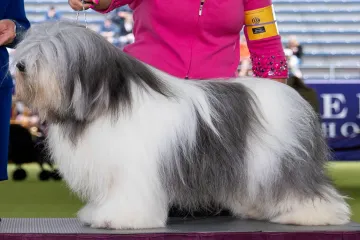
# Defining Texture

Perhaps the most immediately recognizable characteristic of the PON is its dense, abundant coat. [5] This double coat evolved to provide insulation against the cold, damp weather common in the Polish lowlands and protection from predators. [4][1] The outer coat is long, thick, and shaggy, capable of lying flat or being slightly wavy. [4] Beneath this lies a softer, dense undercoat. [5] The hair covers the eyes, though discerning owners often keep the hair around the eyes trimmed or tied back to ensure clear vision. [1]
The coloration of the PON is quite varied, which speaks to their history as working farm dogs where precise color matching was not a priority. [8] Common colors include shades of white, gray, black, or brown, often appearing as solid colors or with distinct patches or spots. [4][5] While the coat provides natural insulation, it demands commitment from the owner. [3] It is important to note that while the appearance might suggest a shedding nightmare, the PON does not generally "blow" its coat seasonally like some double-coated breeds; rather, it sheds consistently year-round, requiring diligent management to prevent matting. [1][9]
| Trait Category | Characteristic Detail | Measurement/Range |
|---|---|---|
| Height (Male) | Medium build | 18–20 inches [1] |
| Weight | Sturdy working weight | 29–50 pounds [1][3] |
| Coat Type | Double coat, long, shaggy | Protects against harsh weather [4] |
| Temperament Index | Alertness/Guarding | High; barks to alert [1][4] |
| Exercise Profile | Energy Level | Moderate, requires mental engagement [1][3] |
# Personality Profile
The temperament of the Polish Lowland Sheepdog is a blend of the dutiful worker and the devoted companion. [4] They are described as lively, intelligent, and highly trainable. [1][4] Bred to work independently but respond to subtle commands, they possess a sharp intellect that requires consistent mental exercise as much as physical activity. [3] Because of their history guarding flocks, they are naturally observant and can be reserved or aloof with strangers. [5][4] This is not necessarily aggression, but rather a cautious assessment of newcomers—a hallmark of a good watchdog. [1]
When properly socialized from a young age, PONs generally integrate well into family life. [5] They bond deeply with their primary family unit and can be playful and affectionate with children they know well. [4] However, their herding instinct remains strong; younger dogs might try to "herd" running children or other pets by circling or nipping at heels, a behavior that requires early redirection. [1] They thrive when given a job, whether it’s obedience training, agility, or simply managing the household routine. [3] A bored PON, left to its own devices, might find self-appointed jobs that the owner does not appreciate, such as rearranging the garden furniture or conducting extensive (and possibly loud) surveillance of the neighborhood. [10]
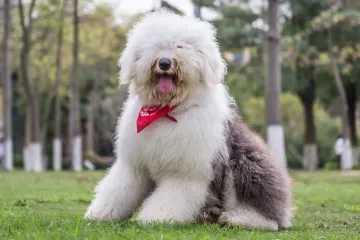
# Activity Requirements
While not the hyperactive breed that requires marathon running daily, the Polish Lowland Sheepdog definitely needs consistent, moderate activity to remain happy and well-adjusted. [4] A short walk around the block will not suffice for a dog bred to traverse rolling fields all day. [1] They require daily exercise that challenges both their body and mind. [3] Think about activities that engage their problem-solving skills: advanced obedience routines, scent work, or navigating an agility course can satisfy their innate desire to work alongside their human partner. [1]
If kept only as a house pet without an outlet, this energy can manifest as restlessness or destructive tendencies. [3] Owners living in apartments can successfully keep a PON, provided they commit to providing adequate structured outdoor time and dedicated indoor training sessions. For example, substituting a simple walk with a vigorous game of fetch or a structured 30-minute training session helps burn off mental energy that often contributes more to satisfaction than sheer mileage alone.
# Grooming Commitment
The beautiful, profuse double coat of the PON is a significant characteristic that translates directly into a significant grooming commitment. [3] This is not a low-maintenance breed in terms of coat care. [4] Daily or near-daily brushing is essential to prevent the long, thick hair from forming tight mats, especially in high-friction areas like behind the ears, in the "armpits," and where the collar sits. [3] If mats are allowed to form, they can become painfully tight against the skin, leading to skin irritation and infection. [9]
Many owners opt for a professional groomer to maintain a shorter "pet trim" during warmer months, which reduces the maintenance burden while still preserving the natural look of the breed, though even this shorter coat requires regular attention. [1] Bathing needs to be done thoroughly, ensuring that both the dense undercoat and the longer outer coat are completely rinsed and dried; dampness trapped near the skin is a recipe for hot spots and fungal issues. [9] Furthermore, owners must remember that the hair covering the eyes needs regular attention to prevent irritation and obstruction of vision. [1]

# Health Considerations
The Polish Lowland Sheepdog is generally considered a hardy breed with a decent lifespan, often living between 12 and 15 years. [5] As with many purebred dogs, however, there are specific health concerns that potential owners should be aware of. [3] Responsible breeders screen their dogs for these conditions to help ensure healthier puppies. [1]
Common areas of concern for the breed include hip dysplasia, a common skeletal issue in medium-to-large dogs where the hip joint does not form correctly. [1] Eye problems, such as progressive retinal atrophy (PRA), which can lead to blindness, are also noted within the breed standard discussions. [8][1] While the sources indicate a generally healthy profile, understanding these potential hereditary issues is part of the responsible ownership equation. [3] Finding a veterinarian who understands the breed's specific needs, especially regarding coat health and orthopedic soundness, adds another layer of care quality.
# Owner Fit Analysis
When considering a Polish Lowland Sheepdog, it is crucial to move beyond the initial impression of a cute, shaggy mop and assess lifestyle alignment. [4] Their intelligence and herding background mean they are highly responsive to positive, reward-based training methods but can become stubborn or willful if subjected to harsh correction. [8][1] They are happiest when integrated into family activities and given clear, consistent leadership. [5]
The key differentiator for the PON compared to some other herding breeds is their slightly lower overall drive coupled with a very strong desire for companionship. [4] While they need exercise, their need for mental connection and feeling like part of the "pack" often outweighs the physical miles logged. A person working from home or someone who can incorporate the dog into daily chores or training sessions will see a much more satisfied animal than someone who simply lets the dog out in the yard for hours alone. This dog needs to participate in your life, not just exist in your home. [3]
# Training Foundation
Establishing a solid training foundation early is vital for the PON. Their intelligence means they pick up commands quickly, but they also learn undesirable habits just as fast. [1] Early socialization is paramount, exposing the puppy to a wide variety of sights, sounds, people, and non-aggressive dogs during their critical development period. [5] This exposure mitigates their natural tendency toward reservedness with strangers, helping them grow into confident, appropriately cautious adults rather than overtly suspicious ones. [4]
Consistency in expectations is another area where PON owners must be diligent. Because they are so smart, they will test boundaries frequently, often in subtle ways. [10] A command given one day and ignored the next sends a confusing message. A practical approach involves incorporating short, frequent training bursts—five to ten minutes, several times a day—rather than one long, tedious session. This method keeps the dog engaged, satisfies their desire for interaction, and reinforces learning without causing burnout, a technique that works exceptionally well for breeds accustomed to constant, varied work. [1]
Related Questions
#Citations
Polish Lowland Sheepdog Dog Breed Information
Polish Lowland Sheepdog - The Westminster Kennel Club
What to Know About Polish Lowland Sheepdogs - WebMD
Polish Lowland Sheepdog (PON): Breed Characteristics & Care
Polish Lowland Sheepdog Dog Breed Information | Purina UK
Polish Lowland Sheepdog - Breed Info - Horizon Pet Care
Polish Lowland Sheepdog characteristics and needs - Facebook
Polish Lowland Sheepdog | Breed Standards - The Kennel Club
Polish Lowland Sheepdog | Ownership & Breed Guide - Lolahemp
[Breed] Polish Lowland Sheepdogs : r/dogs - Reddit