What are the characteristics of the blue iguana?
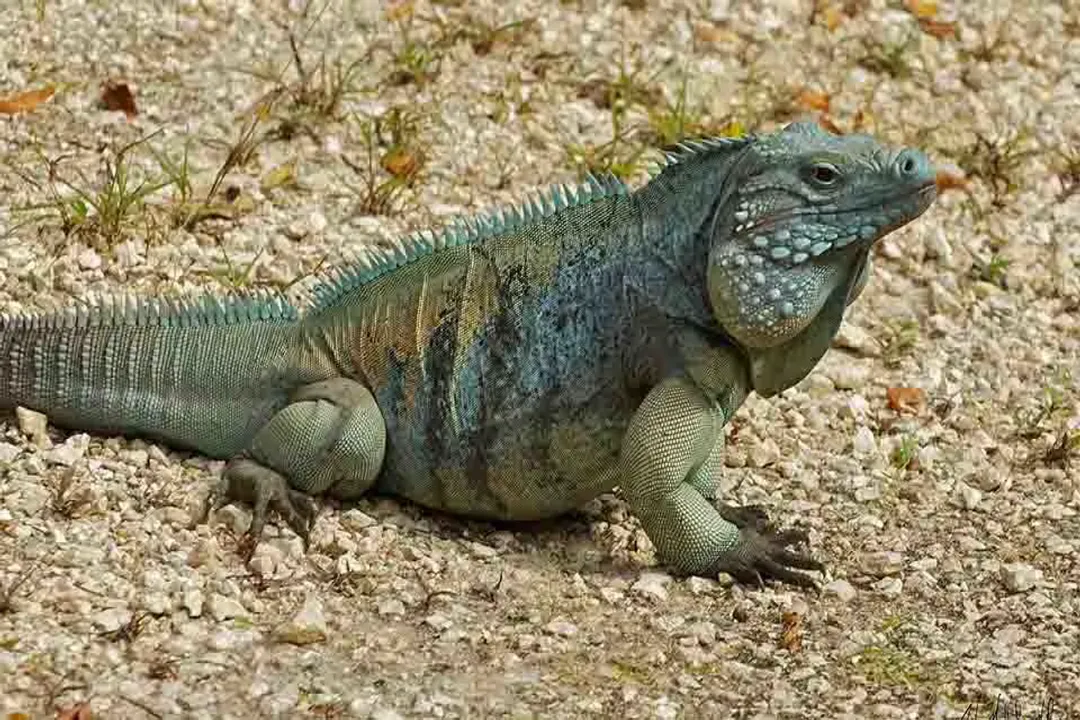
The blue iguana, an impressive reptile native only to the Caribbean island of Grand Cayman, represents one of the most endangered lizards on Earth. These magnificent creatures, often called the Grand Cayman Blue Iguana, possess a suite of striking characteristics that set them apart from their mainland relatives, making them a genuine biological treasure of the West Indies. Understanding these traits—from their imposing size to their vibrant coloration—is key to appreciating the gravity of their ongoing survival efforts.
# Classification Basis

The scientific designation for this species is Cyclura lewisi. Being a member of the Cyclura genus, it belongs to the rock iguanas group, renowned for their large size and terrestrial nature across the Caribbean islands. The specific evolutionary path of the blue iguana has led to its unique adaptation solely to the dry scrub and limestone regions of Grand Cayman, establishing it as an endemic species to that single island territory. This extreme geographic isolation is a double-edged sword; it allowed for unique evolutionary specialization but concurrently made the entire species population extremely vulnerable to habitat disturbance or invasive predators.
# Physical Attributes
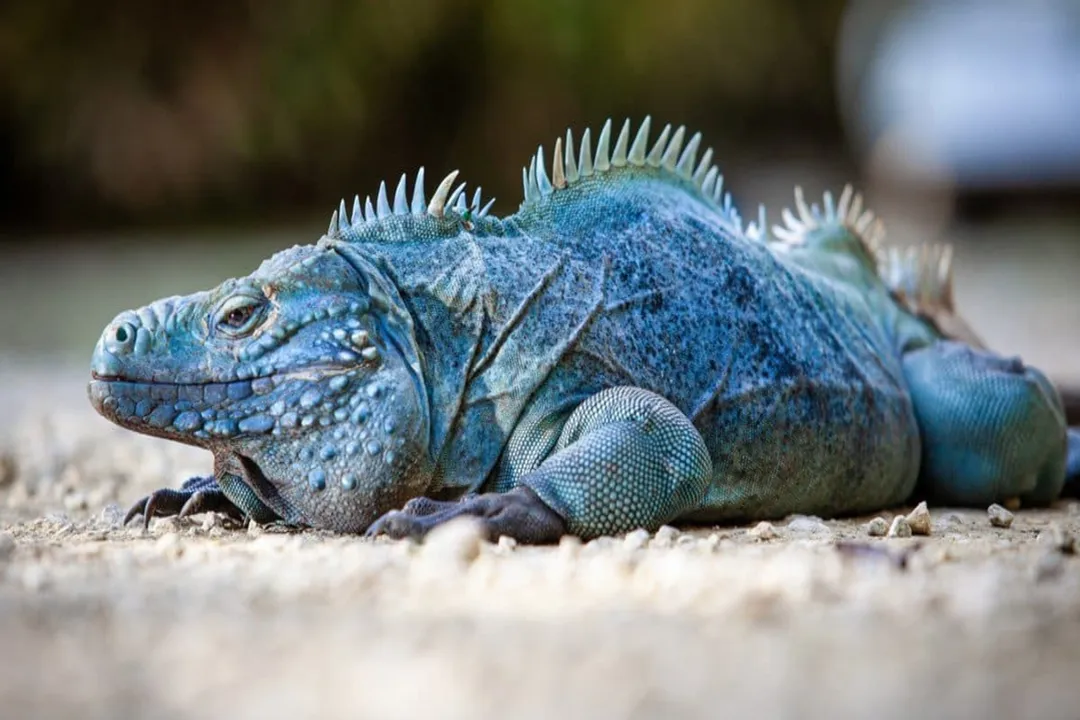
Blue iguanas are characterized by their substantial size, particularly the males, which are undeniably the more visually dramatic sex. An adult male can reach a length of up to five feet from snout to tail tip. While they are large, their build is robust and powerful, supported by strong limbs suited for climbing and digging. Body weight can vary, but mature males commonly tip the scales in the range of 10 to 15 pounds. Females are generally smaller and less bulky than the males, providing a clear example of sexual dimorphism within the species.
Coloration is perhaps their most famous feature, although it is highly dependent on the iguana's age and sex. While the common name suggests a uniform blue, only mature males frequently display a brilliant, rich blue hue, often concentrated along their flanks. Juvenile iguanas typically exhibit a grayish-brown or olive-green base color with darker barring across their bodies, a camouflage pattern that serves them well in the scrubland. As they age, the blue tones begin to emerge in the males. The intensity of the blue color can fluctuate depending on the iguana's mood, health, and ambient temperature—a phenomenon observed in many reptiles where pigment display signals dominance or readiness to mate. A notable physical feature includes the dewlap, a flap of skin under the throat, which males utilize in threat displays. Their scales are large, and a prominent crest of spines runs down the back, which is more pronounced in the males.
| Characteristic | Adult Male | Adult Female / Juvenile | Notes |
|---|---|---|---|
| Maximum Length | Up to 5 feet (1.5 meters) | Generally smaller | Includes tail length |
| Primary Color | Bright blue to slate gray | Grayish-brown to olive-green | Color intensity varies with age/mood |
| Weight Range | 10–15 pounds | Lighter build | Reflects sexual dimorphism |
| Habitat | Dry scrub forest, rocky areas | Same, often lower to ground | Endemic to Grand Cayman |
One interesting consideration regarding their physical structure relates to their scale patterns. Researchers observing populations often note subtle variations in the arrangement or number of scales around the head or chin shields, which can sometimes be used to track individuals, providing a form of non-invasive identification for conservationists working in the field. It is remarkable how much the overall appearance can shift from a rather drab juvenile to a spectacular, deep azure adult male over several years.
# Sustenance Habits

The blue iguana’s diet places it firmly in the herbivorous category. In their native habitat, they consume a variety of local vegetation. This primarily consists of leaves, flowers, and fruits from native and naturalized plants. They are known to feed on species like the sea grape, several types of acacia, and various flowering plants.
Unlike some omnivorous lizards, the blue iguana does not typically consume insects or other animal matter as a regular part of its adult diet. This strict herbivory means that their health and survival are directly tied to the availability and diversity of local, palatable plant life. For conservationists managing captive breeding programs, replicating this precise dietary requirement—ensuring the correct balance of fiber, calcium, and nutrients found in their natural forage—is a complex but necessary task to ensure offspring are robust enough for reintroduction. Their reliance on specific flora underscores the interconnectedness of their island ecosystem; the loss of a key plant species can have disproportionate consequences for the iguanas.
# Behavioral Ecology

Blue iguanas are diurnal, meaning they are active during the day. They spend a significant portion of their time basking in the sun to regulate their body temperature, a necessity for all ectothermic reptiles. They seek out sun-exposed rocks or logs for this purpose, often returning to the shade of dense scrub when the midday heat becomes too intense.
These are primarily terrestrial animals, though they are capable of climbing when foraging or seeking refuge. Their temperament is generally described as wary and shy, especially the wilder populations, though those raised in controlled environments or habituated to human presence can become noticeably calmer. Males establish territories, which they will defend, often through visual displays involving head-bobbing and inflating their dewlaps when confronting rivals. The structure of their social organization appears to be centered around these territorial disputes and mating rights, especially during the breeding season. For someone observing a wild population for the first time, the slow, deliberate movements punctuated by sudden bursts of activity (like fleeing a perceived threat) are characteristic signs of their cautious nature.
# Conservation Status
The prognosis for the blue iguana has historically been grim. It is classified as Critically Endangered on the IUCN Red List. At one point, the wild population was estimated to be critically low, perhaps numbering only a few dozen mature individuals, pushing the species to the brink of extinction in the wild.
Several factors converged to create this crisis. The primary threats have been habitat destruction due to development and agriculture, which fragments and reduces the available dry scrubland they require. Furthermore, invasive, non-native predators introduced by human activity—such as feral cats, dogs, and mongooses—have decimated hatchlings and juveniles, preventing population replenishment. Even in areas where habitat remains, the accidental roadkill of slow-moving adults poses a continuous threat to the small breeding base.
# Protection Efforts
In response to the severe decline, extensive, coordinated conservation programs were put into place, showcasing a significant commitment to saving the species. These efforts have centered around two major strategies: ex-situ (off-site) management and in-situ (on-site) protection.
The ex-situ work involves captive breeding programs, which are vital for sustaining the genetic pool until threats in the wild can be mitigated. These programs aim to produce genetically diverse offspring for future release. Simultaneously, the in-situ efforts focus on protecting the remaining wild habitat and actively managing invasive species. This predator control, often involving trapping and removal programs, is crucial for allowing hatchlings to survive their most vulnerable early months.
One tangible measure of success for these programs has been the establishment of protected areas and the careful reintroduction of captive-bred iguanas into secure, predator-managed zones on Grand Cayman. Monitoring these released individuals is essential, often involving tracking devices, to ensure they adapt successfully to foraging and reproducing in the wild. The long-term viability of the blue iguana now relies on the continued success of these dual-pronged conservation attacks, balancing the immediate need to boost numbers with the foundational need to secure and restore their natural environment. The dedication required to manage a population so dependent on active human intervention highlights a case study in endangered species recovery that many other island endemics might look toward for guidance.
#Videos
Why The Blue Iguana Is The Rarest Large Lizard On Earth - YouTube
Related Questions
#Citations
Blue iguana - Wikipedia
The Blue Iguana: A Rare and Fascinating Species - GoSharpener
Blue iguana facts, distribution & population - BioDB
Blue Iguana (Cyclura lewisi) ~ also known as the Grand Cayman ...
Wildlife Blue Iguana - WCS One Health
Blue Iguana - Cyclura lewisi - A-Z Animals
Grand Cayman Blue Iguana – reptile conservation
Blue Iguana - Facts, Diet, Habitat & Pictures on Animalia.bio
Why The Blue Iguana Is The Rarest Large Lizard On Earth - YouTube