What are the characteristics of swordtail fish?
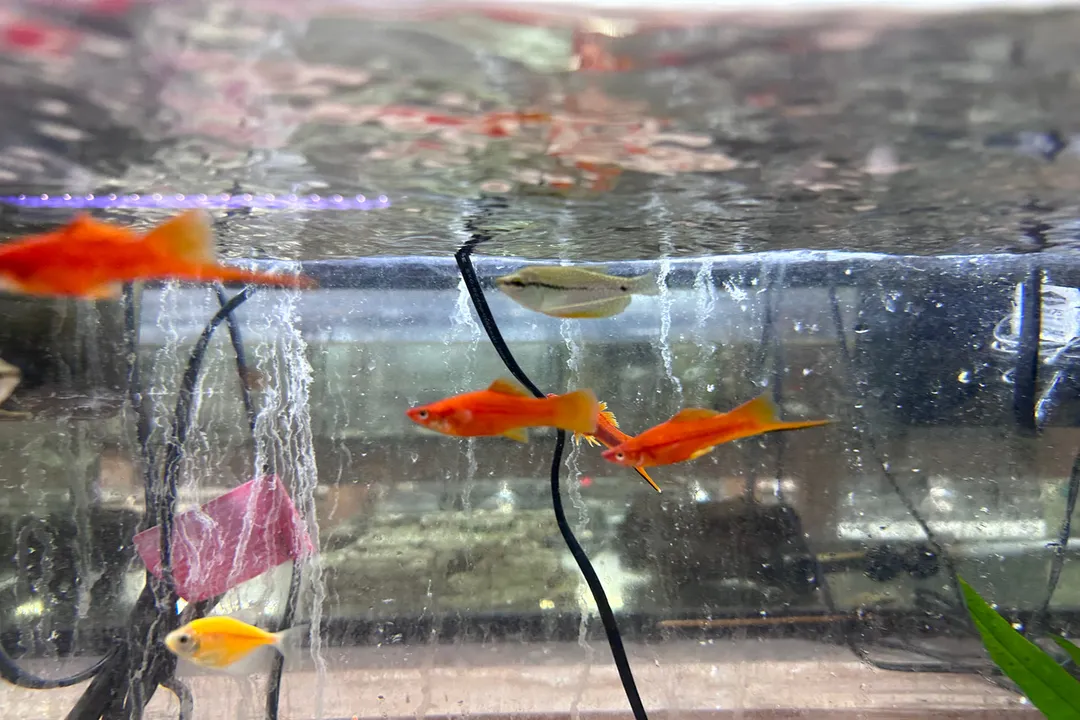
The swordtail fish, scientifically known as Xiphophorus hellerii when discussing the original wild type, presents a fascinating profile for freshwater aquarists due to its hardiness, active nature, and the striking visual differences between males and females. [1][3][5] These popular livebearers trace their origins to the freshwaters of Central America, specifically thriving in areas extending from Southern Mexico through Guatemala and Belize down to Honduras. [3][6] They are known for being active swimmers, typically occupying the top to middle levels of the aquarium. [1][5] When considering bringing these fish home, understanding their fundamental physical traits, social dynamics, and environmental needs is key to ensuring their long-term well-being. [2]
# Physical Traits

The most defining characteristic separating the sexes in swordtails is the presence of the namesake "sword" on the male. [1][5] This extension is a lengthened, sword-like lower ray on the caudal fin. [3][6] While the wild-type Green Swordtail is predominantly olive-green, often featuring a reddish lateral stripe running along its body, the sword itself typically mirrors the body color or may have a contrasting darker edge. [3][6] Females, in contrast, lack this appendage entirely. [1][5]
Size varies between the sexes, with females generally achieving a slightly larger maximum length than their male counterparts. [5] Mature males can reach up to about $5.6$ inches (), whereas females can grow to around $6.3$ inches () in length. [5] Beyond the tail ornamentation, another critical sexual distinction lies in the anal fin: males possess a modified, pointed anal fin called a gonopodium, which is used for internal fertilization, while the female's anal fin is fan-shaped. [1][2][5] A swordtail's typical lifespan in a well-maintained aquarium setting generally falls between three and five years. [1][5]
# Color Strains

The swordtail available in the aquarium trade today is often a far cry from the modest olive-green of its Central American ancestor. [3][6] Extensive selective breeding over many generations has resulted in a dazzling array of color variations and fin shapes. [1][5][9] Common color morphs include solid red, black, albino, gold, and more complex patterns such as the tuxedo or pineapple varieties. [1][5][9] Ornamental Fish International notes that the extensive hybridization has produced these vibrant specimens, which contrast sharply with the more subdued natural coloration. [9]
When choosing between these highly developed ornamental strains and the wild-type Green Swordtail, it is worth noting that the intensely colored, often artificially selected fish can sometimes inherit reduced hardiness compared to their ancestors. [3] The Green Swordtail, having evolved under natural pressures, retains a robust constitution that sometimes makes it the more forgiving choice for less experienced aquarists, even if it lacks the vibrant flair of a deep red or blue variety. [6]
# Temperament Profile
Generally speaking, swordtails are regarded as relatively peaceful and gregarious community fish. [1][5][9] They are energetic and enjoy swimming throughout the tank, spending most of their time near the surface or in the mid-water column. [1][5] However, their peaceful disposition comes with a few important caveats, particularly concerning sex ratios and tank size. [2]
Males can exhibit slightly aggressive or territorial behaviors, especially toward other males, often engaging in fin-flaring contests to establish dominance. [1][2] To mitigate this potential for harassment, it is often recommended to keep swordtails in groups, but careful consideration of the tank environment is necessary. [1][5] If the tank is too small, stress levels will rise regardless of the stocking density. [2] While they generally get along with similarly sized, peaceful tank mates, their active nature means they should not be housed with timid species that prefer to hide constantly. [5]
If you are maintaining a community tank, an important consideration when introducing these lively fish is ensuring adequate horizontal swimming space. While many beginner guides focus on the required volume (gallons), swordtails benefit immensely from the surface area of the tank bottom, as they are constantly on the move across the tank’s length. [2] A shallow, long tank is often better suited to their behavior than a tall, narrow one of the same volume. [2]
# Aquarium Needs
As tropical freshwater fish, swordtails possess admirable adaptability, which contributes significantly to their popularity. [1][5] They thrive within a temperature range of approximately $70$ to ($21$ to ). [1][5] Water chemistry preferences lean toward neutral to slightly alkaline conditions. [1][5]
While they can tolerate a range of conditions, maintaining stable water parameters is always beneficial. [1] For a small group of swordtails, a tank of at least $20$ gallons is a reasonable starting point, though larger is always better to accommodate their activity levels and potential growth. [2] These fish appreciate decoration that mimics their natural riverine habitats, favoring areas with dense planting, especially floating vegetation, which offers them cover and a sense of security. [1][5] Plants like water sprite or Java moss are excellent choices, as they provide shaded areas without impeding their enthusiastic swimming. [5]
# Dietary Habits
Swordtails are true omnivores. [1][5] In the wild, their diet consists of a mix of plant matter and small invertebrates. [5] In an aquarium setting, they are not overly difficult to feed, readily accepting most standard commercial fish foods. [1][5] High-quality flake or pellet foods form a solid base for their nutrition. [1]
To ensure optimal health and coloration—especially for the vibrant ornamental strains—their diet should be supplemented with protein-rich options. [5] Live or frozen foods such as bloodworms, brine shrimp, and daphnia are highly recommended. [1][5] Offering a varied diet not only encourages natural feeding behaviors but also supports robust immune systems, a practical benefit when dealing with any fish that might be descended from hybridized lines. [9]
# Reproduction Cycle
Swordtails belong to the group of fish known as livebearers, meaning they give birth to fully formed, free-swimming young rather than laying eggs. [1][5][10] The fertilization process involves the male using his gonopodium to transfer sperm to the female. [1] The gestation period is relatively short, usually lasting about four weeks. [5]
Once born, the fry are immediately independent, though they are small enough to be eaten by larger tank inhabitants, including their own parents. [1][5] A healthy female can deliver a large brood, sometimes yielding over $100$ fry in a single birth, though a more common number might range between $20$ and $50$. [1][5] If you intend to raise the young, providing dense, fine-leaved plants or using a breeder box is necessary to protect them from predation until they grow large enough to mix safely with the adults. [5]
# Wild Origins Contrasted
It is interesting to observe the distinction between the native Xiphophorus hellerii and the aquarium strains beloved today. [6] The native fish, found in warm, slow-moving waters, is primarily structured for survival, displaying that characteristic olive coloration for camouflage. [3] The ornamental varieties, while stunning, represent decades of human selection for aesthetic traits like exaggerated fins or solid blocks of unnatural color. [9] This selective pressure sometimes inadvertently results in fish that need slightly more pristine, stable conditions to thrive than their wild ancestors, who were genetically equipped to handle minor fluctuations in their native Central American streams. [3][6] A fishkeeper who manages to source and maintain a pure strain of the wild Green Swordtail might find themselves with a slightly more resilient fish overall, capable of adapting to minor inconsistencies in water quality that might stress a highly inbred color variant. [9]
# Hardy Care Checklist
Because of their reputation as hardy fish, many new hobbyists start with swordtails, and they can certainly be forgiving when minor mistakes are made. [1][5] However, their constant activity and tendency towards slight aggression require proactive tank management. [2] When setting up their environment, remember these core needs:
- Temperature Stability: Keep the water consistently between and ( and ). [1][5]
- Water Parameters: Aim for a neutral to slightly alkaline pH, around $7.0$ to $8.0$. [5]
- Space: Prioritize horizontal length; a $20$-gallon tank is a minimum for a small trio. [2]
- Cover: Include floating plants to break the surface light and provide security zones. [1]
- Social Grouping: Keep males in groups only if space allows for territory definition, or keep only one male with several females to minimize fighting. [2]
By respecting their active swimming habits and ensuring they have proper space and security, the swordtail remains one of the most rewarding and lively inhabitants for the freshwater aquarium. [1][5]
Related Questions
#Citations
Swordtail Fish Species Profile
Swordtail Fish Care, Diet, and Traits
Green swordtail
Swordtail Fish Care (Xiphophorus helleri)
Green Swordtail - Montana Field Guide
Green Swordtail - Florida Museum of Natural History
Swordtail Fish
Tropical Freshwater Fish How to care for platies & swordtails
Swordtail fish • Together we will find the solution!
Swordtails!