What are the characteristics of a Tawny Frogmouth?
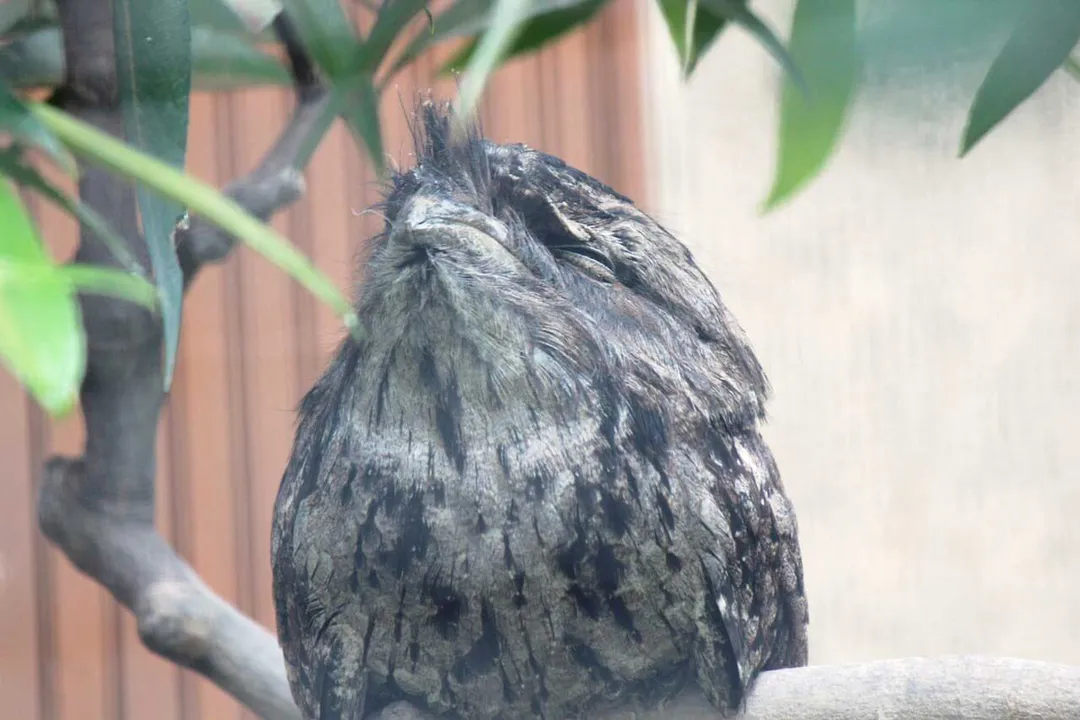
The Tawny Frogmouth is often mistaken for an owl, a common error stemming from its nocturnal habits and general shape, but these birds occupy a distinct evolutionary path [cite 2][cite 3]. While they share some superficial similarities, they belong to a different order entirely, placing them closer to nightjars than to true owls [cite 3]. Measuring about 30 to 50 centimetres in length, the Tawny Frogmouth is a medium-sized bird, with males typically being slightly larger than females [cite 2][cite 5][cite 8]. Their overall appearance is dominated by their exceptional ability to blend into their surroundings, a skill that is essential for their survival strategy [cite 7].
# Plumage Camouflage

The feathering of the Tawny Frogmouth is a masterclass in cryptic coloration, providing unparalleled protection against predators during daylight hours [cite 3][cite 7]. Their plumage varies widely, ranging from pale grey to rufous-brown, often intricately mottled or streaked with black, white, and dark brown markings [cite 1][cite 3]. This complex patterning mimics the texture and colours of tree bark, dead leaves, or broken branches with remarkable accuracy [cite 7]. This camouflage is so effective that when the bird adopts its characteristic 'broken branch' posture, it can become virtually invisible to the casual observer [cite 3]. The underside is generally paler than the upper parts, helping to minimize shadows when viewed from below, a natural adaptation that aids in breaking up their outline against the sky [cite 1]. Interestingly, while the overall impression is one of dullness, the subtle variations in colouration—such as streaks of chestnut or buff—allow individuals to match the specific type of tree bark in their home territory, whether it's smooth gum bark or rougher ironbark [cite 1][cite 3]. This suggests that local environmental pressures fine-tune the specific shade of grey or brown an individual adopts over time, leading to regional variations in appearance that might not be immediately obvious unless comparing birds from vastly different Australian habitats.
# Head Features
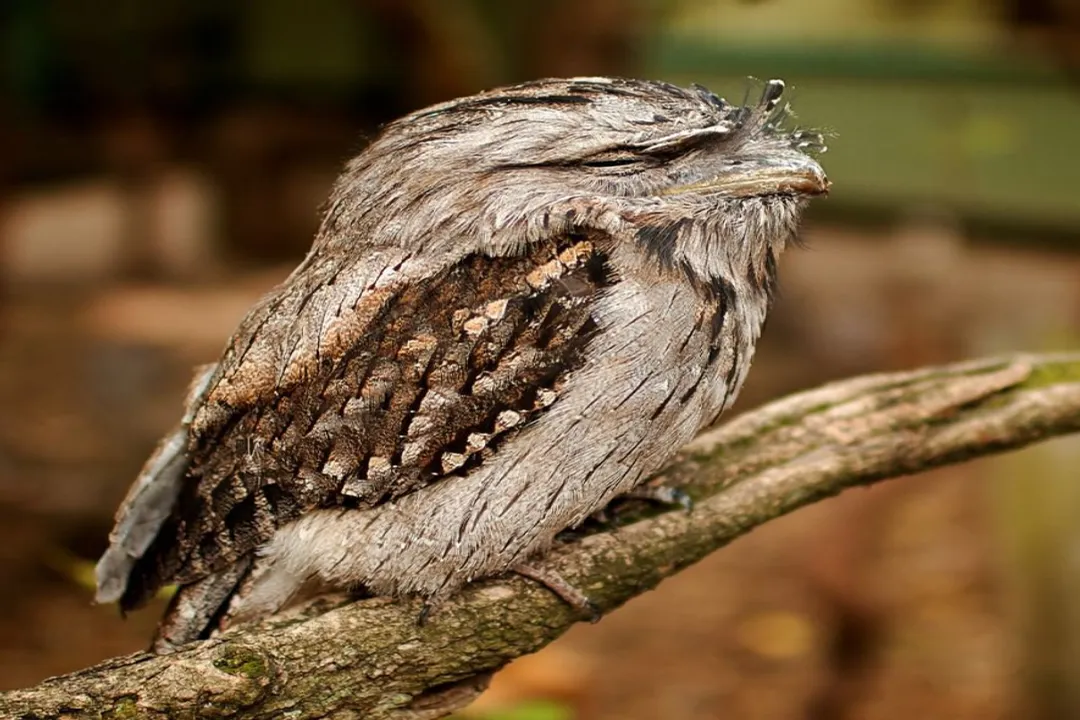
The head structure is perhaps the most defining feature that separates the Tawny Frogmouth from owls, particularly the massive, almost comically wide mouth from which it derives its name [cite 1][cite 2]. Despite the large gape, the bird has relatively small, forward-facing eyes, which are bright yellow and seem quite large for its head size, but not as massive or forward-facing as a true owl’s [cite 1][cite 3]. Owls possess a facial disc designed to funnel sound, but the Tawny Frogmouth lacks this distinct structure [cite 3]. Instead of a hooked beak designed for tearing flesh, their bill is broad, flat, and stout, resembling that of a frog or a large insectivore, hence the "frogmouth" descriptor [cite 2][cite 8]. When perched, they often hold their head low, giving them a somewhat bulky, almost slumped appearance [cite 1].

# Posture Behavior
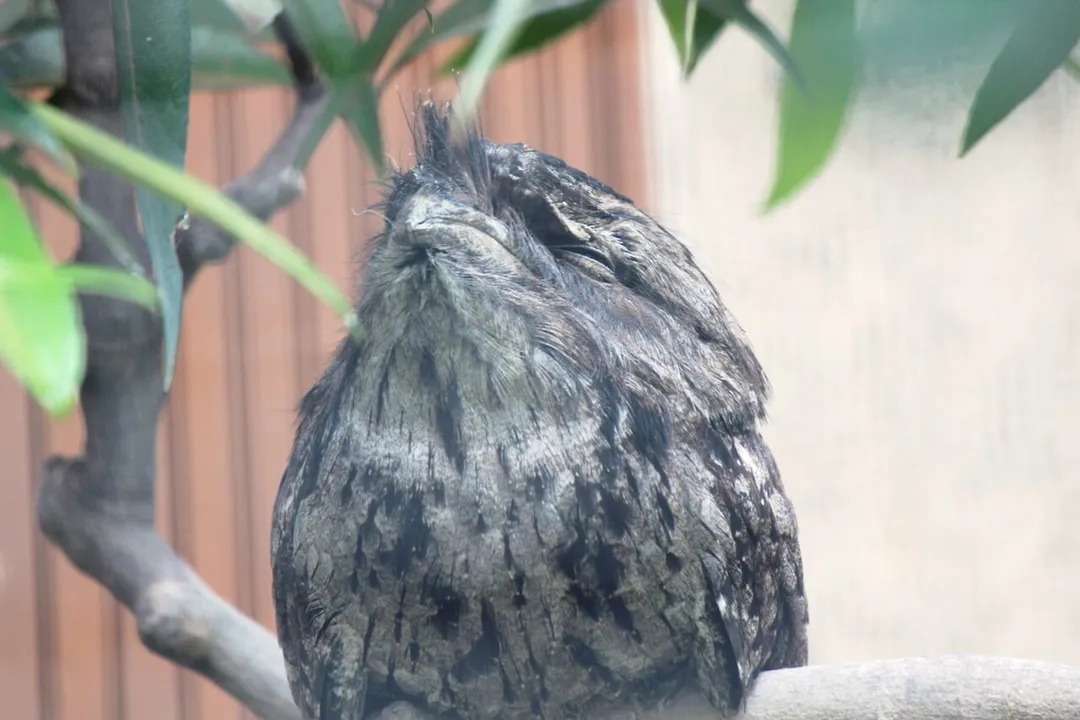
The bird’s behaviour when resting is intrinsically linked to its physical characteristics, forming a defensive strategy known as thanatosis or feigning death, though its primary daytime strategy is immobility [cite 3]. During the day, Tawny Frogmouths perch vertically on a broken tree stump or branch, pulling their feathers tight against their body, stretching their head and beak upwards, and closing their eyes to slits [cite 7]. This rigid, upright stance, combined with their bark-like plumage, makes them look precisely like a broken limb dangling from the tree [cite 3]. They are creatures of habit, often choosing the same daytime roost for extended periods [cite 8]. This extreme stillness is key; even a slight movement can break the illusion and alert potential threats like crows or diurnal raptors [cite 7]. An interesting note for anyone spotting one during the day is that while they are masters of camouflage, they are surprisingly tolerant of being observed closely once they are secure in their posture. They rely on the observer believing they are part of the tree, sometimes allowing close approach before finally deciding flight is necessary [cite 3]. This patient reliance on camouflage, as opposed to immediate flight, is a key behavioural trait differentiating them from many other forest birds.
# Vocalizations Sound
Unlike the distinctive hooting associated with many owl species, the Tawny Frogmouth has a much quieter and more guttural vocal repertoire [cite 2][cite 3]. Their most common call is a soft, low, repetitive croaking sound, often described as a gentle hoo-hoo-hoo or a rhythmic goo-goo-goo [cite 3]. This soft call is used for communication between partners or over short distances [cite 8]. When threatened or agitated, they can produce a much harsher sound, often a hissing or snarling noise, accompanied by opening that large mouth widely to display the bright pink interior [cite 1][cite 2]. In moments of severe alarm, they might also utter a sharp, snapping sound produced by clapping their mandibles together [cite 3]. The general quietness of their communication contributes to their generally secretive, nocturnal reputation.
# Nightly Foraging
Tawny Frogmouths are strictly nocturnal hunters, becoming active around dusk and remaining so until dawn [cite 1][cite 8]. Their diet consists primarily of large invertebrates, though they will consume small vertebrates when the opportunity arises [cite 2]. A significant portion of their menu includes insects such as moths, crickets, beetles, and spiders [cite 1][cite 3]. They are generally adept ambush predators, often perching quietly on a low branch overlooking open ground or a path, waiting patiently for prey to pass below [cite 2]. When a suitable meal is spotted, the bird executes a short, silent flight, often gliding just above the ground, to snatch the prey directly with its wide mouth—a technique known as 'sallying' [cite 3]. They do not typically catch prey in flight like a swift or actively pursue it like a hawk; instead, they wait for the prey to come within easy reach [cite 2]. While they are capable of consuming quite large insects, they sometimes consume their catch on the ground before returning to a perch, or they may swallow small prey whole [cite 3].
# Habitat Niche
These fascinating birds are native to mainland Australia and Tasmania, though they are absent from the driest interior regions [cite 3][cite 7]. Their habitat preferences are quite broad, which contributes to their relatively stable population compared to more specialized species [cite 7]. They thrive in open woodlands, forests, scrub, and denser coastal scrublands [cite 1][cite 8]. Critically, they are adaptable enough to be found in parks, gardens, and suburban environments, provided there are sufficient mature trees for roosting and nesting sites [cite 7]. Their success in proximity to human settlement is a testament to their camouflage and nocturnal habits, which allow them to largely avoid detection and conflict with humans [cite 3]. The presence of suitable roosting spots—trees with many broken, dead branches or sufficiently rough bark—is likely a more determining factor for occupancy than the density of the surrounding forest [cite 7].
# Reproduction Cycle
The breeding season for Tawny Frogmouths generally occurs between August and December, timed to coincide with warmer months and increased insect availability [cite 1][cite 3]. Courtship involves bowing displays and soft calls between the pair [cite 8]. Unlike birds that build elaborate nests, the Tawny Frogmouth constructs a very simple, sparse platform—often just a shallow depression lined with a few twigs and grasses—placed on a horizontal tree fork or a broken branch stub [cite 1][cite 3]. The female typically lays one or two eggs, which are white and unmarked [cite 2][cite 8]. Both parents share the duties of incubation, which lasts for about 22 days, and the subsequent care of the nestlings [cite 3]. Once hatched, the chicks are heavily dependent on their parents for food and protection [cite 8]. Fledging occurs around 30 days after hatching, but the young birds often remain dependent on their parents for several weeks longer, sometimes even until the next breeding season begins [cite 3].
# Distinguishing Features Comparison Table
To clarify the common misidentification, it is useful to contrast the Tawny Frogmouth with a typical owl, such as the Southern Boobook, a common Australian counterpart. This comparison highlights the anatomical and behavioural divergence despite shared ecological roles [cite 3].
| Feature | Tawny Frogmouth | True Owl (e.g., Boobook) |
|---|---|---|
| Order | Caprimulgiformes (Nightjars) | Strigiformes (Owls) |
| Mouth/Beak | Very wide, frog-like gape; short bill | Hooked, sharp beak for tearing flesh |
| Eyes | Large, yellow, but less forward-facing | Very large, fixed, highly forward-facing |
| Facial Disc | Absent | Present and well-defined |
| Hunting Style | "Sallies" from a perch, snatches prey | Often swoops silently, powerful talons |
| Camouflage | Mimics broken branch or bark stub | Mimics bark texture, often relies on shape |
This structural difference is key to understanding their feeding mechanism: the Frogmouth is built for catching large insects and small prey in its mouth, whereas the owl is built for gripping and tearing with its feet [cite 2][cite 3]. It’s helpful to remember that the Frogmouth’s feet are actually quite weak and not designed for grasping and holding struggling prey in the manner an owl uses its talons [cite 3]. When observing one, a quick check for the tell-tale large, flat beak shape or the lack of a distinct facial disc is the fastest way to confirm if you are looking at a frogmouth rather than an owl.
# An Insight on Urban Coexistence
The adaptability of the Tawny Frogmouth to urban and suburban environments presents a unique ecological situation. In areas where native predators like large birds of prey are scarce, their daytime vulnerability is primarily to ground-based threats, most notably domestic cats [cite 7]. The effectiveness of their "broken branch" posture is entirely nullified if they choose a low, isolated perch or if a cat patrols beneath them. Therefore, when attempting to create or maintain frogmouth-friendly yards, prioritizing roosting spots above 10 meters in large, dense trees, or even placing dead branches high up against main trunks where they are harder for climbing predators to access, can significantly increase local survival rates away from deeper bushland protections [cite 7]. Their reliance on insects means they are generally beneficial neighbours, quietly managing pest populations near human dwellings without the noisiness or visible hunting style of true owls.
Related Questions
#Citations
Tawny Frogmouth Facts and Information | United Parks & Resorts
Tawny Frogmouth | San Diego Zoo Animals & Plants
Tawny Frogmouth - The Australian Museum
Tawny Frogmouth bird characteristics and behaviors in Australia
Tawny Frogmouth - Honolulu Zoo Society
[PDF] Tawny Frogmouth - Idaho Falls
Tawny Frogmouth | Bush Heritage Australia
Tawny Frogmouth - Columbus Zoo
Tawny Frogmouth - Lehigh Valley Zoo