What are the characteristics of a redstart?
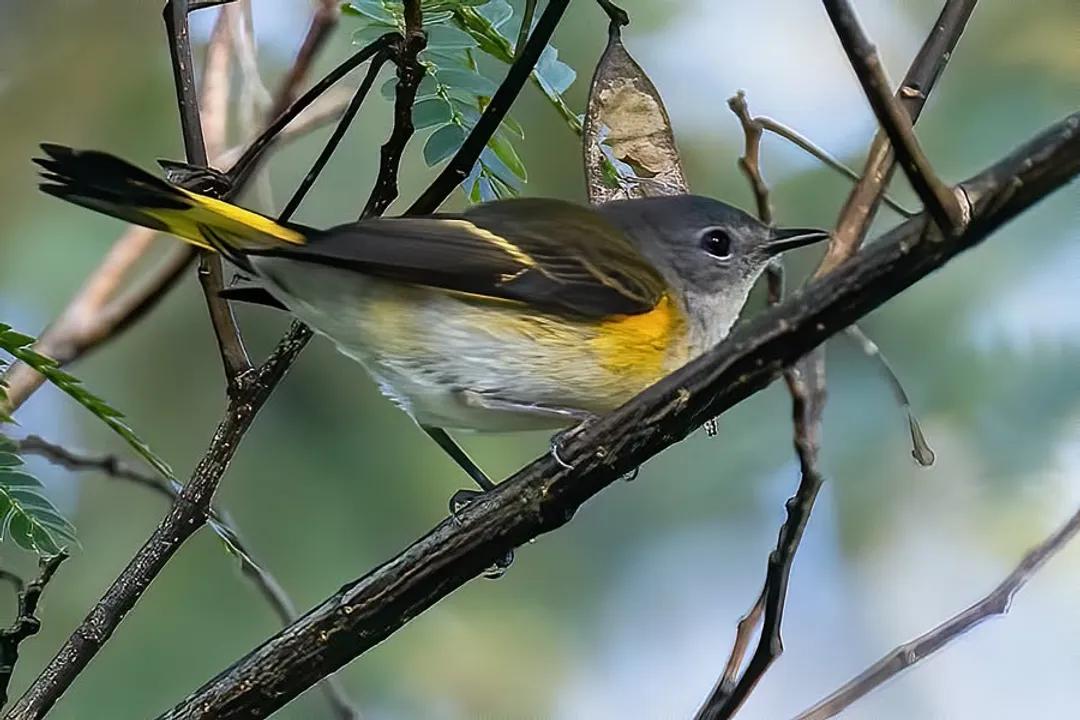
The term "redstart" often conjures an image of a small, active songbird, but it is important to note that this name applies to two distinct species separated by oceans: the American Redstart (Setophaga ruticilla) found in the Americas, and the Common Redstart (Phoenicurus phoenicurus) primarily residing in Europe and Asia. [1][3][6] While they share a common English name element derived from the bright reddish-orange coloration of their tails, their taxonomy, appearance, and ranges are quite different. [1][3] Understanding the characteristics of a redstart means appreciating this global diversity within a shared visual theme.
# Plumage Details
The most striking feature distinguishing both species is the vivid orange or red on the tail feathers, though the overall body plumage differs significantly between the sexes, a trait known as sexual dimorphism. [1][3]
For the American Redstart, the male is undeniably striking. [1][7] His body is primarily jet black, dramatically offset by bright patches of fiery orange or reddish-orange located on the flanks, the corners of the tail, and sometimes on the throat and wings. [1][7] This contrast is used effectively in their foraging displays. [1] The female, conversely, presents a much more subdued appearance. [1][7] She is generally grayish or olive-tinged above and paler below, with her distinguishing color being bright yellow patches where the male displays orange or red. [1][7]
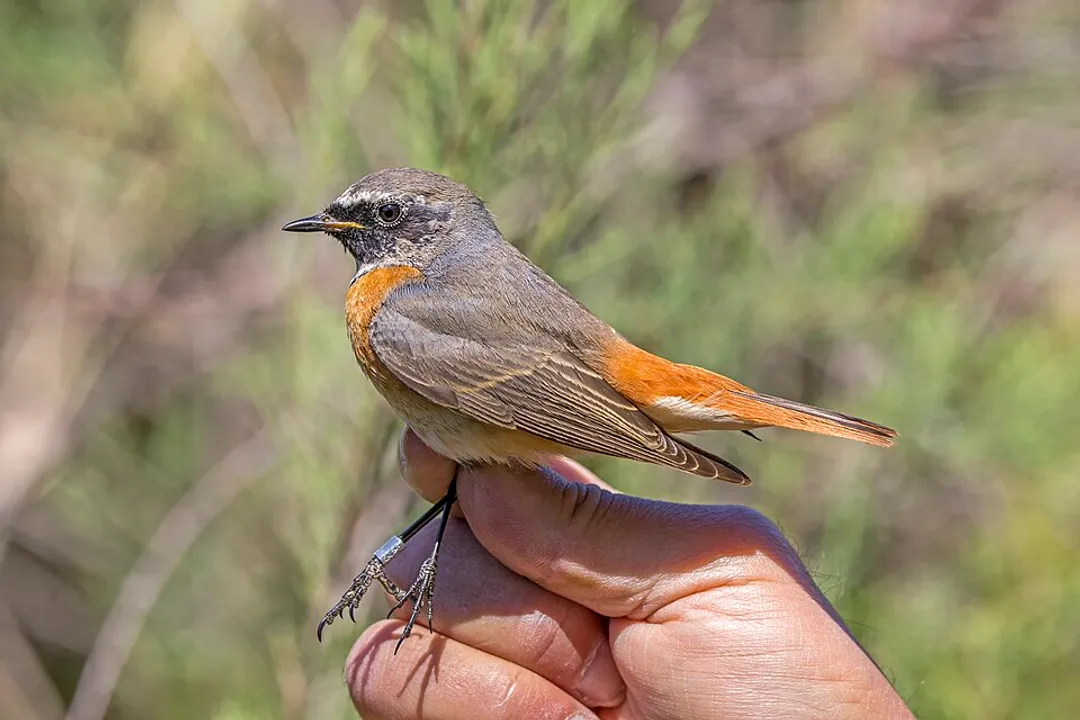
The Common Redstart male also exhibits clear color demarcation, though the pattern is different. [3][6] He features a bright, rusty-orange breast patch and a matching reddish-orange tail. [3][10] His upper parts are typically gray, and he has a conspicuous black bib and a white throat contrasting with a dark face mask. [3][10] The female Common Redstart is duller overall, showing brown or grayish-brown upper parts and a paler, buffy underside, retaining the characteristic rusty-orange tail color, albeit less intensely than the male. [3][6] Juveniles in both species tend to resemble the adult females in their more cryptic, streaked, or mottled plumage, offering essential camouflage during their first few months. [1][4]
# Size Shape

Both redstarts fall into the category of smaller passerines, or perching birds. [1][4] The American Redstart averages between 5 and 5.5 inches in length. [1][7] Its weight is relatively light, usually staying under half an ounce. [1] The Common Redstart is similar in size, often measured around 13 to 14 centimeters long. [3][10] While specific weights can vary seasonally, both species possess a delicate build suited for agile movement through dense foliage. [6] They have relatively short, thin bills, perfectly adapted for catching small invertebrates. [1]

# Calls Songs
Vocalization is a key differentiator, especially for birders trying to identify them across the continents. [7] The American Redstart is known for a relatively simple, yet distinct, song. [1][7] It is often described as a high, clear series of notes, sometimes transcribed as tsee-tsee-tsee-tew or a sharp chee-chee-chee-wit. [1][7] Their alarm or contact calls are usually a sharp chip. [1]
The Common Redstart has a more varied and often more musical vocal repertoire. [6][10] Its song is composed of clear, somewhat flute-like phrases interspersed with harsher, more scratching notes. [6] A key element of the Common Redstart's song is its abruptness and the tendency to end on a sharp, high note. [3][10] They often employ a characteristic "churring" call when agitated. [6]
# Habitat Range
The geographic separation between these two birds is perhaps their most significant ecological characteristic. [1][6]
The American Redstart is a bird of the New World. [1] It breeds widely across the deciduous and mixed forests of eastern and central North America, often preferring wetter woods or areas with dense understory growth during the breeding season. [1][7] Crucially, their wintering grounds are far to the south, spanning from southern Florida and the Caribbean islands down through Central America and into northern South America. [1][9] This long migration route means they rely heavily on tropical forest health for survival outside the nesting period. [9]
In contrast, the Common Redstart is a Palearctic species. [3][6] It breeds across much of Europe and western Asia, typically favoring open woodlands, parklands, and scrubby areas, often utilizing tree cavities or crevices in buildings for nesting. [3][4][6] Following the breeding season, Common Redstarts undertake an equally impressive migration, moving south to winter almost entirely in Africa, specifically south of the Sahara Desert. [3][6] Observing this separation leads to an interesting realization: an ornithologist studying the environmental pressures facing the American Redstart must focus on the Caribbean and Amazonian basins, while a colleague tracking the Common Redstart must monitor conditions across the Sahel and Southern African ecosystems.
# Diet Habits
Both species are fundamentally insectivores, relying heavily on small arthropods, especially during the breeding season when feeding young. [1][3] However, the method they use to acquire food highlights an interesting behavioral divergence tied to their coloration.
The American Redstart is renowned for its active, flashy foraging technique. [1][7] Males frequently fan their tails and partially open their wings while moving rapidly through the foliage. This behavior is believed to startle or flush hidden insects from leaves and branches, allowing the bird to quickly snap them up mid-air or from the surface of the foliage—a behavior called "flycatching" or "gleaning". [1][7][9]
The Common Redstart is also an agile insectivore, often seen hopping along the ground or low branches to dart out after prey. [3][6] While they certainly glean insects from vegetation, they are frequently observed hawking prey directly from the air, similar to their American counterpart, but their foraging display seems less reliant on the dramatic wing and tail flashing observed in the American species. [3][6] When resources are available, both species will supplement their diet with berries or small fruits during migration or in the non-breeding season. [3]
# Life Cycle
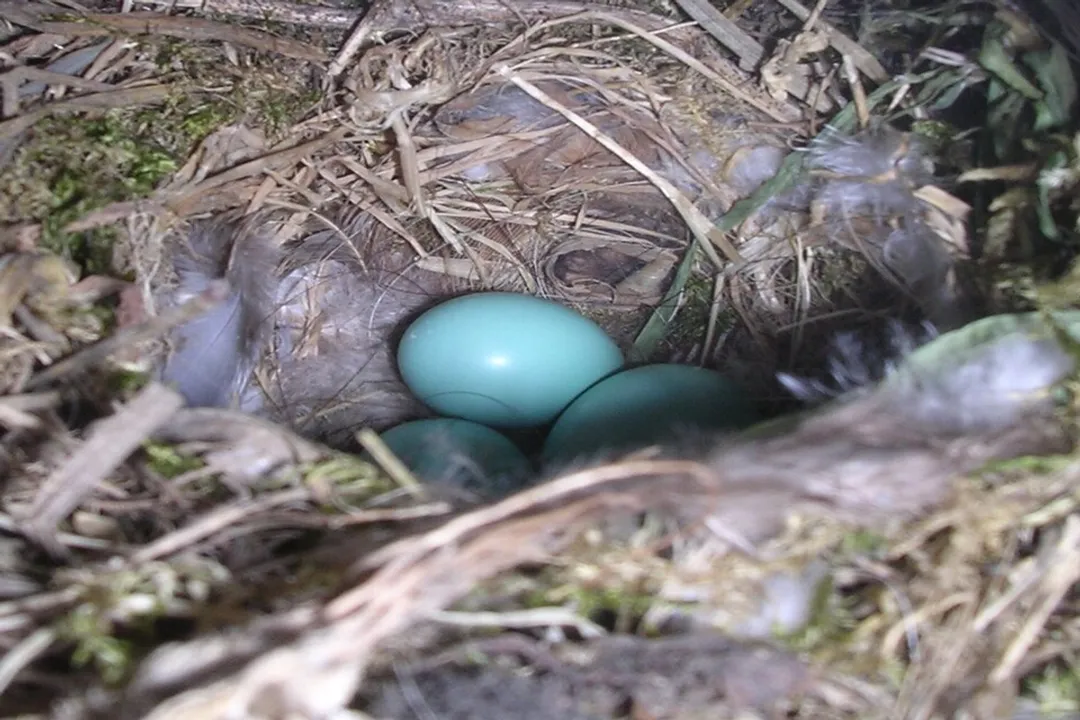
Reproduction strategies show modest variation, particularly in nest site preference. Common Redstarts strongly favor pre-existing cavities or crevices—in old trees, stone walls, or bird boxes—making them excellent candidates for nest box monitoring programs in Europe. [4][6] They typically lay 4 to 7 eggs. [4]
The American Redstart generally constructs a neat, open cup nest constructed of fine plant fibers, spider silk, and lichen, often placed low in the fork of a small shrub or sapling in dense cover. [1] They usually lay 3 to 5 eggs. [1] Both species exhibit strong migratory behavior, demanding high energy reserves to complete their long flights, connecting temperate breeding grounds with tropical or subtropical wintering areas. [1][9]
The table below summarizes the main distinguishing features between the two principal species commonly referred to as "redstarts":
| Characteristic | American Redstart (Setophaga ruticilla) | Common Redstart (Phoenicurus phoenicurus) |
|---|---|---|
| Primary Range | North America (Breeding) | Europe and Western Asia (Breeding) |
| Winter Range | Central America, Caribbean, Northern S. America [1][9] | Africa, South of the Sahara [3][6] |
| Male Color Accent | Orange/Red Flanks and Tail Corners [1] | Rusty-Orange Breast and Tail [3] |
| Female Color Accent | Yellow Flanks and Tail Corners [1] | Dull Orange Tail [3] |
| Foraging Style Note | Highly visible flashing/wing-flicking display [1] | Active ground hopping and darting [3] |
| Nest Site Preference | Open cup nest in low shrub forks [1] | Cavity or crevice nester [4][6] |
# Conservation Context
Considering the geography, conservation efforts must be tailored to the threats faced by each species locally. [1][3] For the American Redstart, threats might include the loss of specific understory shrubs in North American breeding sites or, more critically, habitat degradation in its complex network of Caribbean and Central American wintering locations. [1][9] Conversely, the pressures on the Common Redstart are often linked to the availability of suitable nesting cavities in European woodlands or drought conditions impacting its African wintering grounds. [3][6] While both are generally listed as Least Concern, recognizing these distinct geographical vulnerabilities is essential for long-term population stability across the global distribution of the redstarts. [1][3]
Related Questions
#Citations
American Redstart Overview, All About Birds, Cornell Lab ...
REDSTART (Phoenicurus phoenicurus) - songbird factfile
Common redstart
American Redstart - Montana Field Guide
American redstart bird species description
Redstart Bird Facts
Redstart Bird Facts
Setophaga ruticilla (American redstart) | INFORMATION
Common Redstart (Phoenicurus phoenicurus) identification