What are the characteristics of a porpoise?
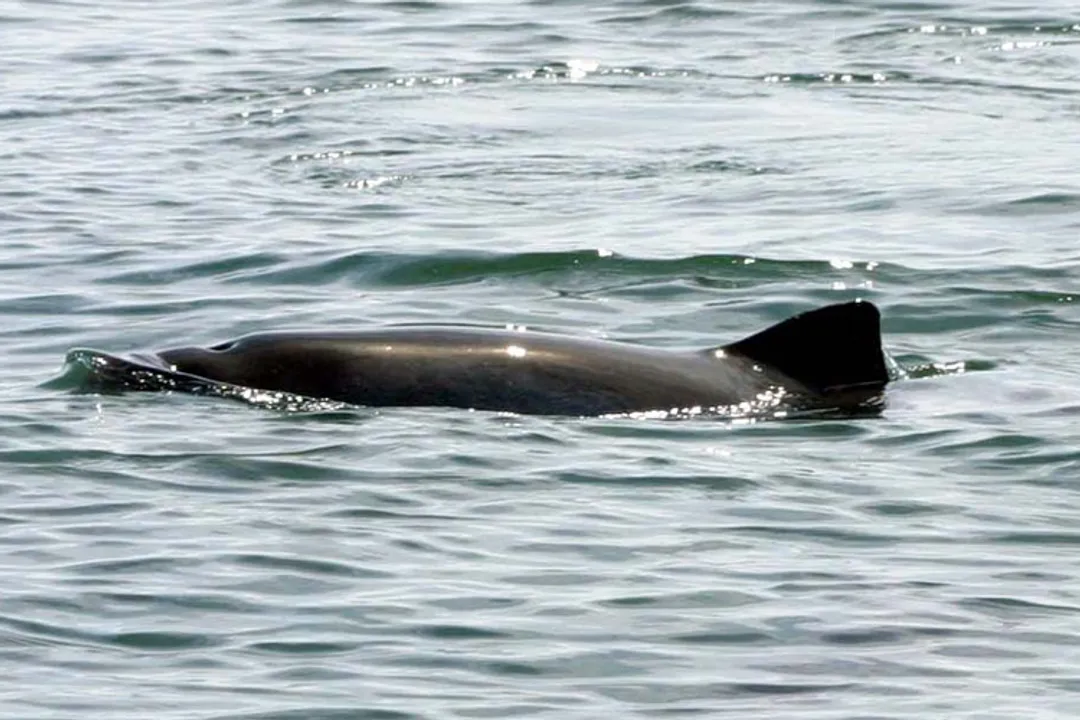
The world of small, intelligent marine mammals is often simplified, lumping all toothed whales together, but there are distinct differences between dolphins and their close relatives, the porpoises. These cetaceans belong to the infraorder Cetacea, order Odontoceti (toothed whales), but are classified into their own family, Phocoenidae, separating them from the oceanic dolphins (Delphinidae). While both groups are charismatic inhabitants of the world’s oceans, a closer look at their physical structure and social behavior reveals a unique set of characteristics that define the porpoise.
# Shape Teeth
Perhaps the single most defining characteristic separating a porpoise from a dolphin lies in its mouth. Dolphins typically possess conical, pointed teeth. Porpoises, however, have teeth that are distinctly spade-shaped, often described as flattened or spatula-like. This anatomical difference is a reliable field marker when trying to identify these sometimes-elusive animals in the wild.
# Body Structure
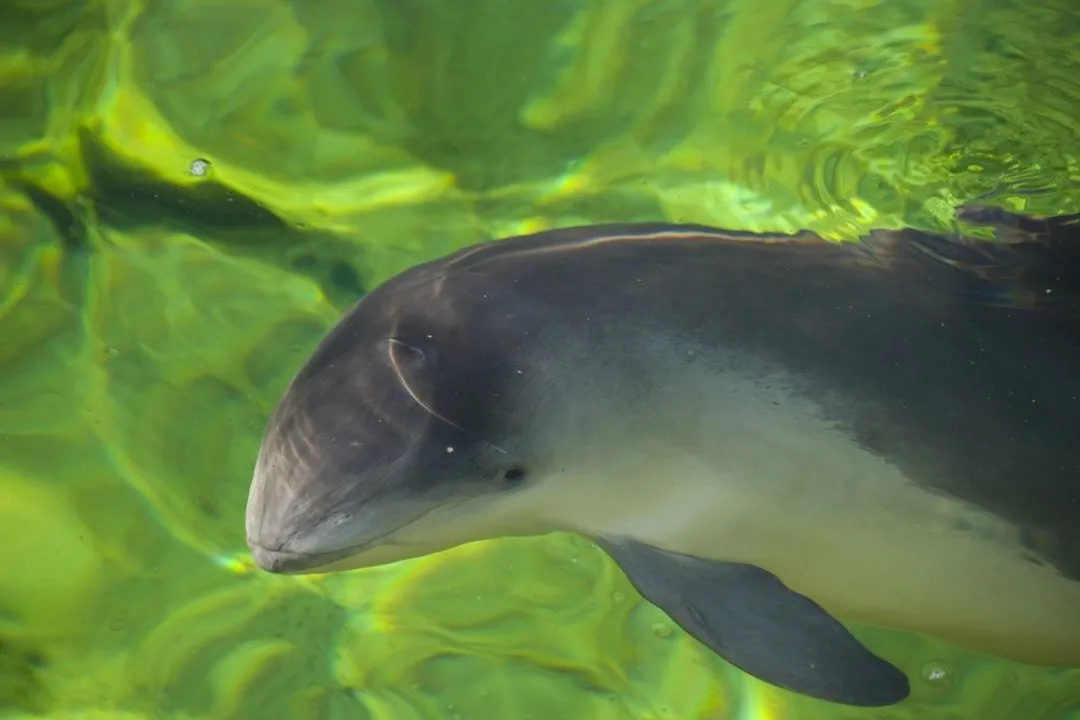
Porpoises are generally smaller than most dolphin species. While dolphin species can grow quite large, most porpoises rarely exceed 2.5 meters (about 8 feet) in length. Their bodies tend to be more stout and stocky compared to the sleeker, more gracefully curved bodies often associated with dolphins. This robust build contributes to their overall appearance as being more compact.
The forehead, or melon, of a porpoise is also different. They lack the pronounced, beak-like rostrum (snout) seen in many dolphin species, instead presenting a blunt, rounded head. This lack of a long beak is another immediate visual cue for identification.
# Dorsal Fin
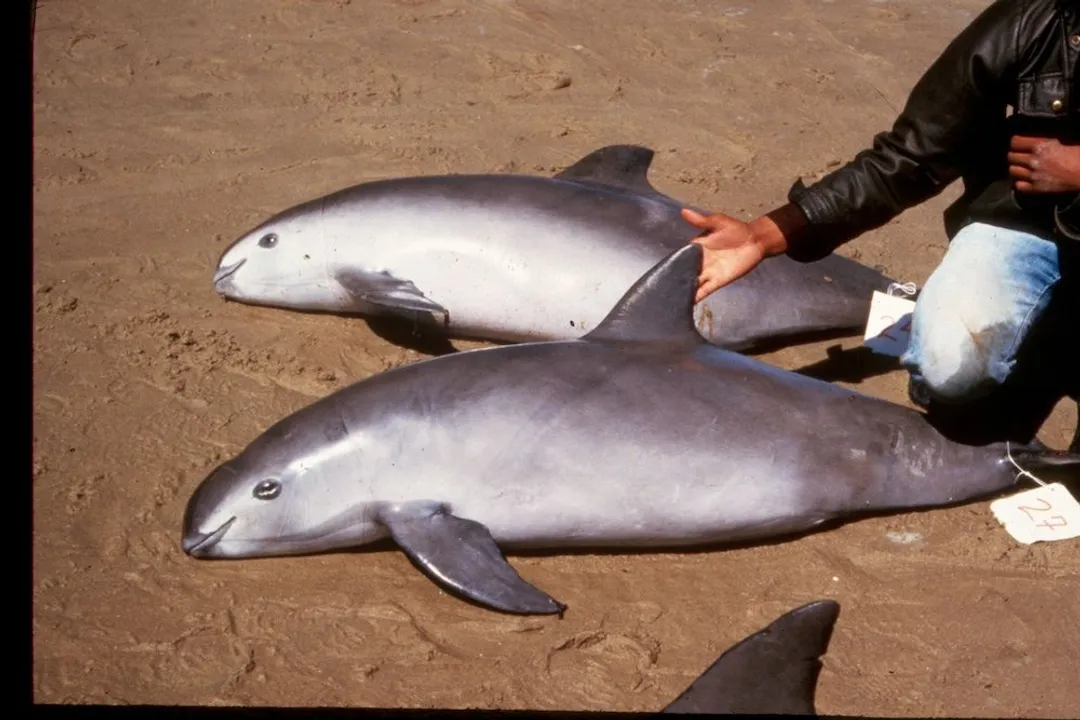
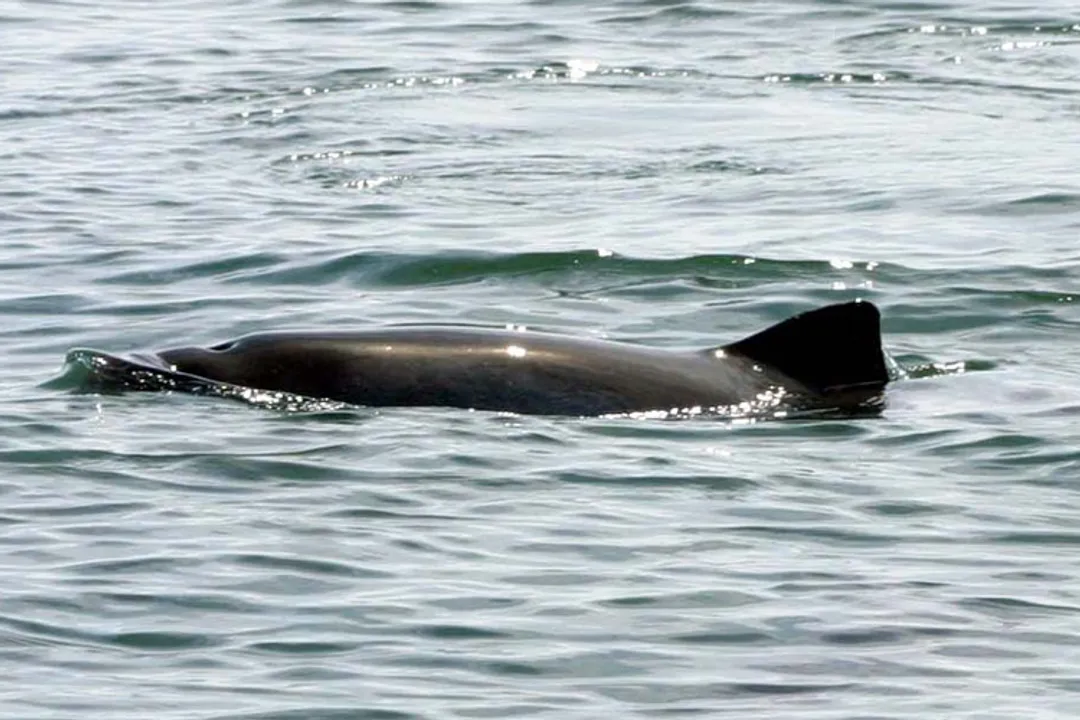
The dorsal fin, the triangular structure on the back, also offers distinguishing features. In dolphins, this fin is often curved backward, or falcate. In contrast, porpoise dorsal fins are usually short, stubby, and distinctly triangular, sometimes even appearing trapezoidal, giving them a somewhat less curved profile. For instance, the Harbor Porpoise, one of the most widely studied species, has a small, triangular dorsal fin.
To quickly compare these features, one might use this mental checklist: If you see a small cetacean in coastal waters with a spade-shaped mouth, a blunt head, and a triangular dorsal fin, you are almost certainly looking at a porpoise, not a dolphin.
# Species Range
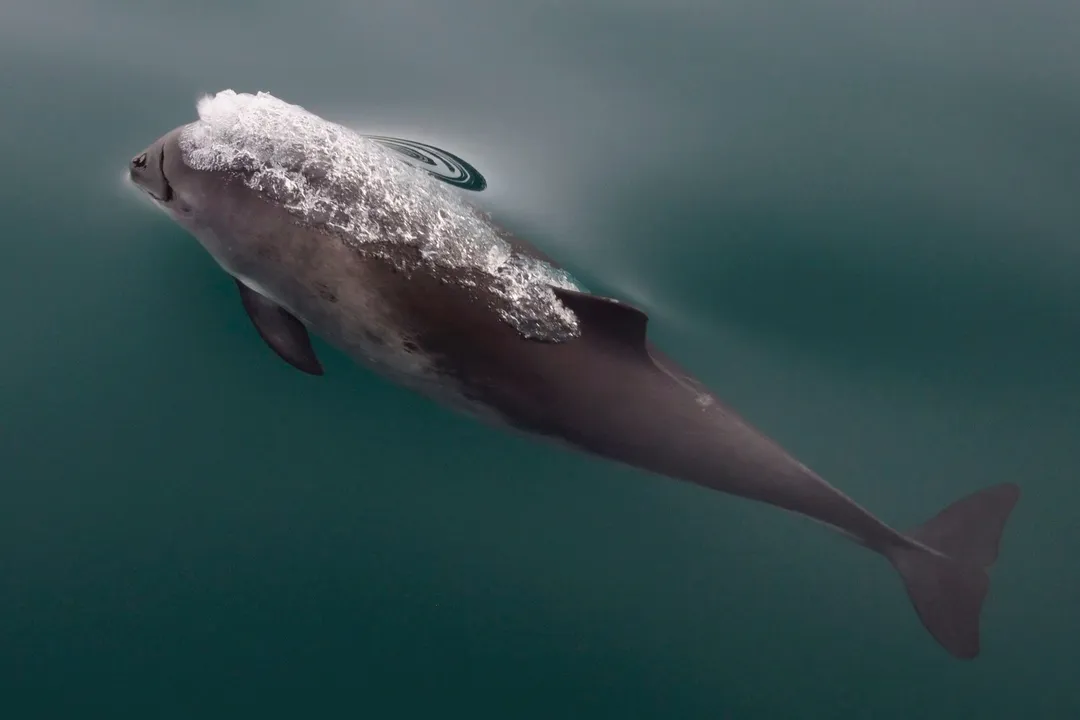
There are currently seven recognized species of porpoise globally. These species inhabit diverse environments, though many prefer cooler waters. The diversity within the family Phocoenidae is relatively small when compared to the numerous species of oceanic dolphins.
A notable example is the Harbor Porpoise (Phocoena phocoena), which is found in temperate and subarctic coastal waters of the North Atlantic and North Pacific Oceans. Another well-known species is Dall's Porpoise (Phocoenoides dalli), which is recognized for its striking black-and-white coloration. Dall's Porpoises are often seen in the cooler waters of the North Pacific, including the Gulf of Alaska. The Vaquita (Phocoena sinus), another member of this family, is perhaps the most critically endangered marine mammal in the world, endemic to the shallow, turbid waters of the northern Gulf of California.
# Habitat Preferences
While both porpoises and dolphins swim in the world's oceans, porpoises generally exhibit a stronger preference for shallow, coastal environments rather than the deep, open ocean favored by many dolphin species. Harbor Porpoises exemplify this tendency, frequently inhabiting areas near the coast, in estuaries, and in bays, often staying within a few kilometers of the shoreline. This proximity to human activity means that localized populations, like the Harbor Porpoise in the Northeast U.S. continental shelf waters, can sometimes be monitored more easily, though this proximity also exposes them to different sets of human-related pressures, such as vessel traffic and entanglement risks. In contrast, Dall’s Porpoises are often found further offshore, in deeper waters over the continental shelf and slope.
# Social Dynamics
The social structure of porpoises contrasts markedly with the large, highly coordinated social groups, or pods, that dolphins often form. Porpoises are generally considered to be much less social than dolphins. They are most often sighted alone or in very small groups, typically consisting of only two to five individuals. While dolphins might travel in groups numbering in the hundreds or even thousands, porpoises rarely congregate in large numbers. This quieter, smaller grouping behavior may reflect differences in foraging strategies or predator avoidance tactics in their preferred coastal habitats.
# Activity and Speed
When porpoises surface to breathe, their movements are often described as more shy or reserved compared to the often acrobatic displays of dolphins. They tend to surface gently, rolling slightly to expose their blowhole, rather than leaping completely clear of the water. Harbor Porpoises, for example, have a quick, somewhat jerky surfacing motion. However, this reserved nature does not imply they are slow. Dall's Porpoises, for instance, are renowned for their speed, often traveling at speeds up to 55 km/h (about 34 mph), and are famous for often traveling fast enough to create a visible bow wave, which may lead to them being confused with dolphins from a distance.
Understanding the typical surfacing pattern can be key to observation. If an animal is surfacing frequently with a quick, rolling motion near the coast, it is likely exhibiting typical porpoise behavior, perhaps indicating localized foraging activity. This contrasts with the deep, long dives characteristic of some offshore cetaceans.
# Diet and Foraging
Porpoises are carnivores that primarily feed on small fish and invertebrates. Their diet is heavily influenced by their specific habitat. For example, the diet of the Harbor Porpoise often consists of small schooling fish like herring and sand lance, as well as squid. The structure of their blunt jaws and spade-shaped teeth is well-suited for grasping these smaller, often slippery prey items. For species like the Dall's Porpoise, living in deeper, colder waters, their diet might include more benthic (bottom-dwelling) prey alongside schooling fish.
# Reproductive Cycles
Reproduction in porpoises tends to follow a relatively slow schedule, common among many small cetaceans. Generally, females give birth to a single calf after a gestation period that can last around 10 to 11 months, depending on the species. The time between successive births can be significant, often one to two years, meaning their populations can take longer to recover from declines. For example, Harbor Porpoise calves are typically weaned after about six to eight months, suggesting a relatively short dependency period compared to larger whales, yet the calving interval still limits rapid population growth.
# Conservation Concerns
The small size, coastal distribution, and lower reproductive rates of many porpoise species make them particularly vulnerable to human impacts. The primary threats often involve incidental capture in fishing gear, known as bycatch. Because many species, such as the Harbor Porpoise, live close to shore, they frequently overlap with active fisheries operating in the same areas. Pollution and habitat degradation also pose significant risks to these coastal dwellers. The extreme vulnerability of the Vaquita, reduced to only a few individuals due to illegal gillnet fishing for other species, serves as a stark example of how focused threats can decimate a porpoise population quickly. Marine conservation organizations often focus monitoring efforts on these smaller, inshore species because their health can serve as an important indicator of the overall environmental status of coastal ecosystems.
Related Questions
#Citations
Porpoise - Wikipedia
Harbor Porpoise | NOAA Fisheries
Facts About Porpoises | Live Science
Harbor Porpoise - The Marine Mammal Center
Porpoise | Definition, Habitat, & Facts | Britannica
Harbor Porpoise | National Wildlife Federation
Porpoise - Characteristics, Evolution, Behaviour and Definition
Dall's Porpoise Species Profile, Alaska Department of Fish and Game
Harbour porpoise - NAMMCO