What are the characteristics of a marmoset?
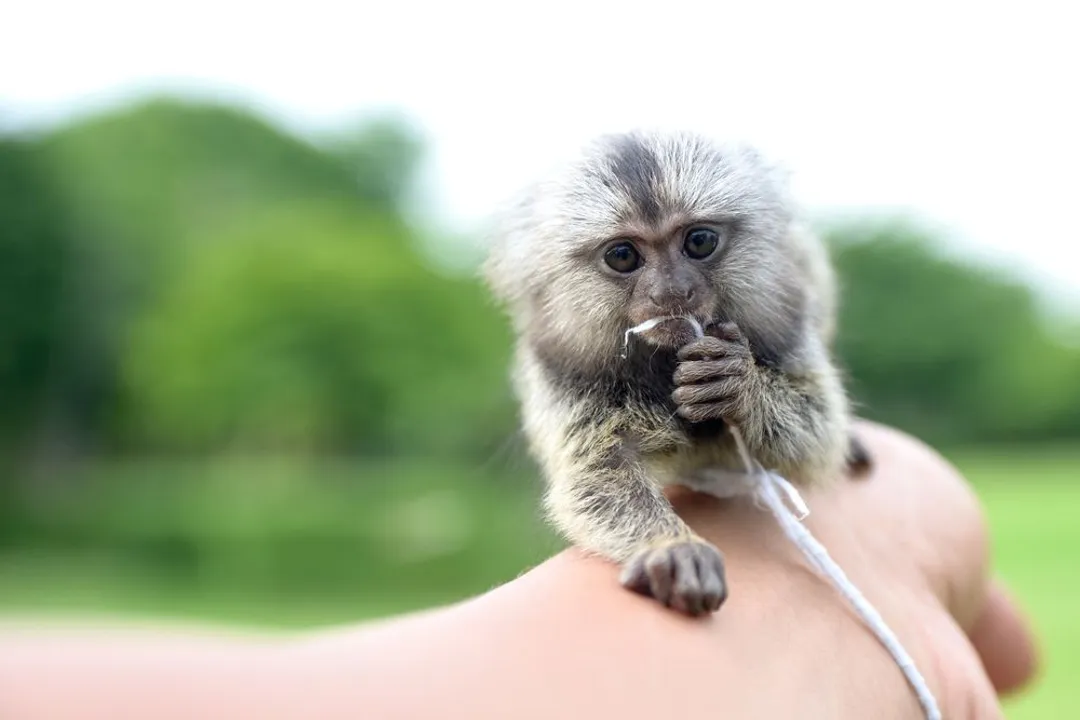
The world of small primates holds fascinating variations, and among the most distinct are the marmosets, tiny New World monkeys instantly recognizable for their size and specialized adaptations. [1][4] These creatures, native to the tropical forests of South America, present a unique blend of primate behavior and squirrel-like agility, making them subjects of significant interest for zoologists and primate enthusiasts alike. [1][4] Their characteristics range from remarkable physical features, such as specialized digits, to intricate social systems built around shared parenting duties. [3][6] To truly grasp what defines a marmoset, one must look closely at their physical build, their unique way of eating, and the complex dynamics within their family groups. [1][3]
# Tiny Stature
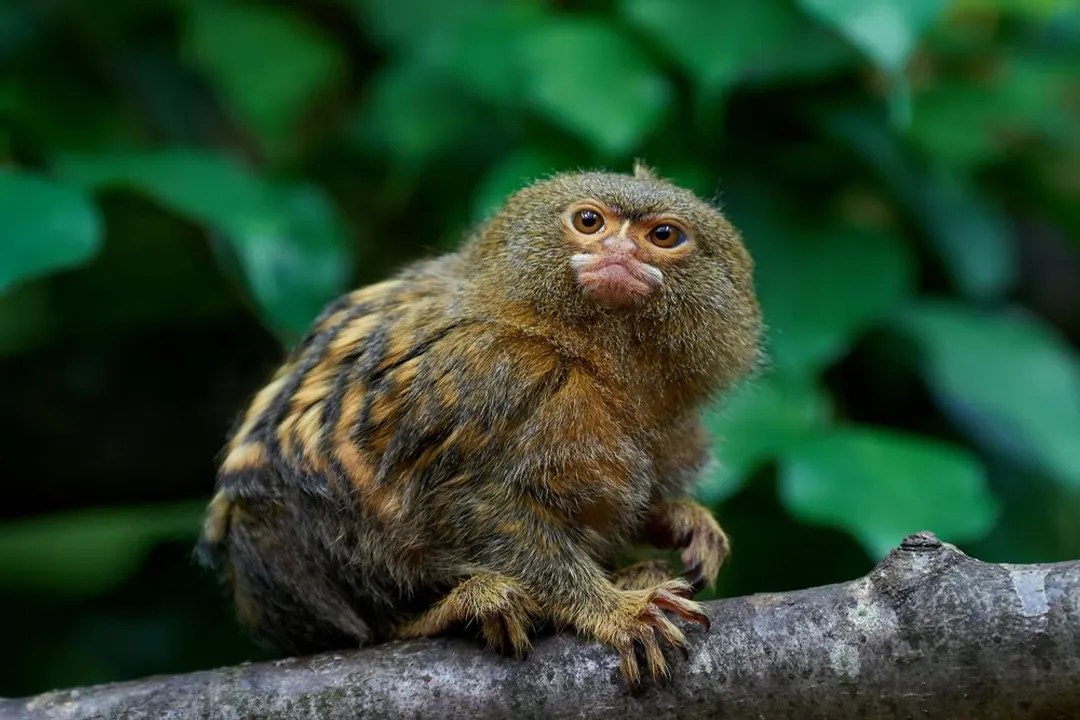
Marmosets are renowned for being some of the smallest monkeys globally, a trait that immediately sets them apart from larger New World species. [2][1] Their diminutive size is perhaps their most immediate characteristic. The smallest species, the pygmy marmoset (Cebuella pygmaea), holds the title of the world's smallest monkey. [7] A fully grown adult pygmy marmoset typically weighs around 100 grams, which is comparable to the weight of a standard chocolate bar, and their body length measures approximately 12 to 15 centimeters, not accounting for the tail. [7]
In contrast, the common marmoset (Callithrix jacchus) is slightly larger, generally weighing between 350 and 450 grams. [8] This size difference within the genus illustrates a gradient of smallness; even the "large" common marmoset is still remarkably petite, usually fitting comfortably in the palm of an adult human hand. [8] This small body mass dictates much of their lifestyle, requiring high metabolic rates and specialized feeding strategies to sustain energy demands within their dense forest habitat. [1]
# Claws Not Nails
A defining physical attribute, and one critical for their survival, is the structure of their hands and feet. [1] Unlike most monkeys, which possess flat nails on all digits except the big toe, marmosets have tegulae, which are claw-like nails on all digits except for the hallux (big toe). [1][4] These claws are not simply vestigial; they are highly functional adaptations. [1]
These sharp, curved digits enable marmosets to cling vertically and move rapidly up and down tree trunks, much like a squirrel. [1][4] This specialized clinging ability is directly linked to their primary feeding method, as discussed later, allowing them access to resources that arboreal primates with standard nails might miss. [4] While the tail is long, often exceeding the length of the body, it serves purely for balance during their quick movements through the canopy and is not prehensile, meaning they cannot use it to grasp branches. [1][2][8]

# Forest Dwellers
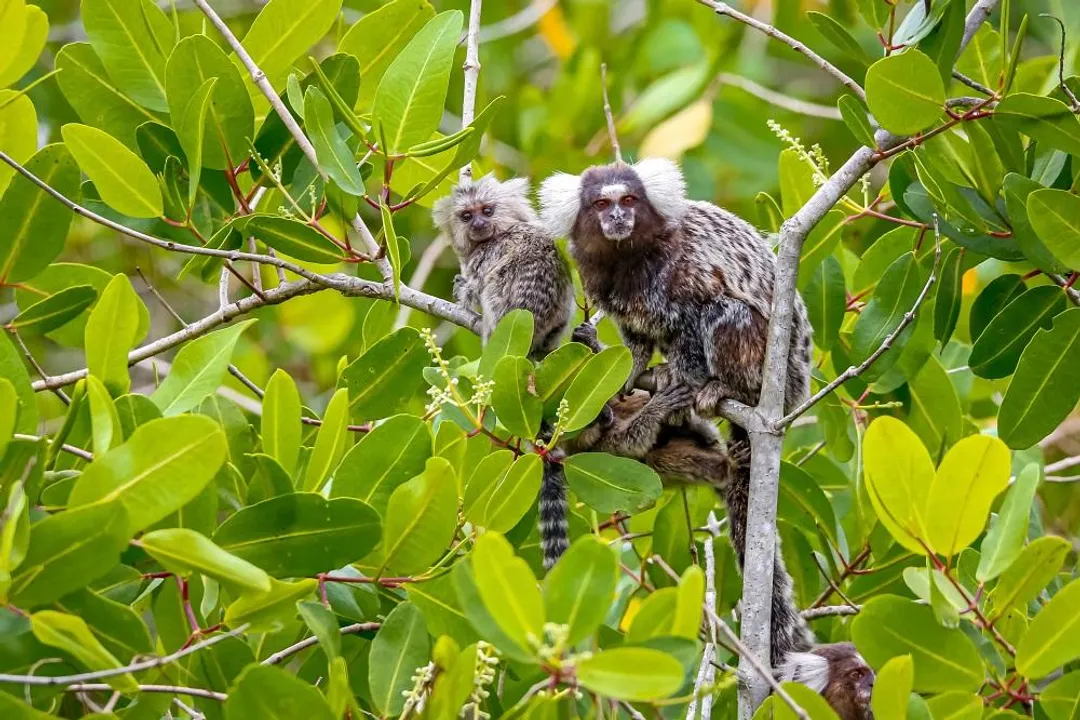
Marmosets are endemic to South America, primarily inhabiting the tropical forests of countries like Brazil, Ecuador, and Colombia. [1][4] Their ecological niche is deeply tied to the structure of these environments. They are arboreal, meaning they spend the vast majority of their lives in trees. [1]
Their preference is often for the middle to upper canopy layers, where they utilize their agility to navigate branches and trunks in search of food. [1] Different species may occupy slightly different strata or prefer specific types of forest, such as Callithrix species favoring secondary growth forests and gallery forests, which can sometimes be more disturbed areas compared to primary, untouched rainforest. [8] Understanding their habitat preference is key to conservation, as fragmentation and deforestation directly threaten these specialized tree-dwelling lifestyles. [1]
# Sap Feeding Niche
Perhaps the most specialized characteristic setting marmosets apart from many other primates is their dietary focus: they are exudativores. [1][4] While they consume a variety of foods—including insects, small vertebrates, nectar, and fruit—a substantial and characteristic part of their diet comes from tree exudates, such as gum, sap, and resin. [1][4][8]
This reliance on tree exudates necessitates a distinct feeding behavior. Marmosets possess unique, specialized lower incisor teeth that are elongated and chisel-like. [4] They use these teeth to gnaw or "gouge" holes into the bark of certain host trees. [4] After the hole is made, the animal waits for the sticky sap or gum to well up, which they then lick or peel off. [4] This behavior is vital because it provides a reliable, year-round source of energy, especially when ripe fruit is scarce. [4]
It is interesting to consider the caloric trade-off here: digging for sap requires energy and time, but provides a steady, predictable energy source compared to the sporadic availability of ripe fruit. [4] This dual reliance on both plant exudates and animal prey (insectivory) provides remarkable dietary flexibility, which may explain their ability to thrive in various disturbed forest environments where fruit production might fluctuate wildly. [4] This contrasts sharply with many other New World monkeys whose diets are predominantly frugivorous (fruit-based). [1]
# Family Structures
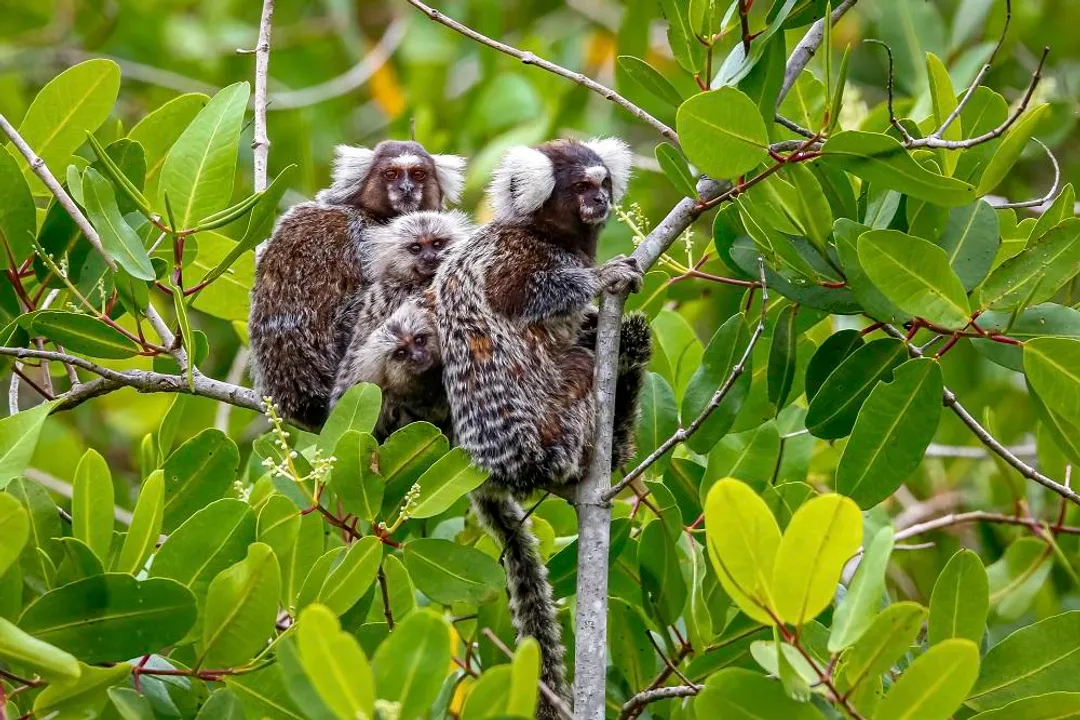
The social organization of marmosets is highly structured and fundamentally based on the family unit. [3][4] They live in small, cohesive family groups, typically consisting of an adult breeding pair and their offspring from various litters. [3] While group size can vary, it often ranges between two and fifteen individuals. [3]
A critical feature of this structure is cooperative breeding. [3][6] This means that while only the dominant female usually reproduces, all other group members, including older siblings, actively participate in raising the infants born to the pair. [3][6] This shared responsibility is an investment by the non-breeding members in the success of the next generation, as they will eventually share resources with them. [3]
Communication within these tight-knit units is constant and multifaceted. They rely on a wide range of vocalizations, including chirps, trills, whistles, and shrieks, to maintain contact, signal danger, and coordinate group movements. [3] Furthermore, they engage in scent marking, using specialized glands to deposit chemical signals on branches and surfaces to delineate territory and communicate social status to other groups. [3] The constant interaction and communication underscore the importance of group cohesion for survival in their often predator-filled environment. [3]
# Shared Childcare
The reproductive patterns and subsequent childcare duties among marmosets represent one of their most specialized behavioral characteristics. [6] Female marmosets typically give birth to twins, although single births or even triplets can occur. [4][6] However, carrying and caring for one or two infants, who cling tightly to the parent's back, represents a massive energy drain on the mother, especially given the mother’s own small size. [6]
This is where the cooperative breeding system becomes crucial. The father exhibits extensive involvement, often carrying the infants for the majority of the time, sometimes for up to 50% of the day, handing them over to the mother only for nursing intervals. [4][6] Other group members also assist by carrying the young or sharing food once the infants are slightly older and begin to diversify their diet. [3]
This high degree of paternal and alloparental (non-parental) care is essential for infant survival. [6] Without this shared effort, the energetic demands of raising twins would likely overwhelm the mother, drastically reducing the litter's chances of reaching maturity. [6] In environments where resources are somewhat scarce or unpredictable, the reproductive output of the breeding pair is directly correlated with the number of capable helpers available in the group. [3] This dependency on a stable social unit for successful reproduction means that a solitary marmoset, even a female, faces an enormous hurdle in successfully raising young compared to those embedded in a stable, cooperative group.

# Vocalizations and Sensory World
Marmosets navigate and communicate within their dense forest environment using a sophisticated array of sounds. [3] Their vocal repertoire is quite varied, allowing for precise messaging over short distances where visual contact might be obscured by foliage. [3]
The use of high-frequency calls, such as trills and whistles, helps maintain group contact while moving through thick vegetation. [3] Alarm calls are distinct and urgent, serving to warn the entire group of immediate threats, whether terrestrial predators or raptors from above. [3] The complexity of these acoustic signals suggests an advanced level of social coordination, necessary for a species that relies on group defense and cooperation for survival. [3]
# Physical Traits Summary
To offer a clearer comparison of some defining physical metrics across the group, one can look at a quick summary contrasting the smallest known species with a representative larger species:
| Characteristic | Pygmy Marmoset | Common Marmoset |
|---|---|---|
| Average Weight | ~100 grams [7] | 350–450 grams [8] |
| Body Length (Excluding Tail) | 12–15 cm [7] | Varied, generally larger |
| Digit Type | Claws (Tegulae) except big toe [1] | Claws (Tegulae) except big toe [1] |
| Primary Diet | Exudates, insects, fruit [4][7] | Exudates, insects, fruit [8] |
| Reproduction | Typically twins [6] | Typically twins [6] |
The consistency in digit structure and reliance on exudate feeding across the group highlights that these are the defining characteristics that unite the marmosets taxonomically, despite variations in size and coat patterns, such as the white ear tufts common to C. jacchus. [8]
For those interested in observing or caring for these animals, understanding their need for vertical space and opportunities to mimic gouging behavior is paramount. Even in captive settings, providing substrates that allow for vertical clinging, perhaps with safe, treat-dispensing materials mimicking the texture of bark exudates, can significantly enrich their environment and promote natural behaviors. [1] This focus on mimicking natural stressors and feeding methods is a hallmark of responsible husbandry for primates with such specialized adaptations. [4]
# Behavioral Patterns
Beyond their social structure, marmoset behavior is characterized by high activity levels appropriate for their small size and high metabolism. [1] They are quick, agile primates, constantly moving while foraging or traveling. [1] Their day is dominated by foraging, feeding, social grooming (an essential bonding activity), and patrolling territory. [3]
When feeding on sap, they may return to the same gouge mark repeatedly over several days, indicating that these resource sites are highly valued and defended. [4] Territorial defense involves both vocalizations and scent marking, ensuring that neighboring family groups are aware of boundaries. [3] Their need for constant security and interaction means that isolation is highly stressful for these social creatures. [3]
The energy required to maintain such a small, warm-blooded body while actively moving through the forest necessitates frequent feeding. This explains why their specialized feeding on tree sap—a dense energy source—is so deeply ingrained in their biology and behavior. [1][4]
# Evolutionary Context
Marmosets and their close relatives, the tamarins, form the family Callitrichidae. [4] Their evolutionary path has equipped them perfectly for their specific ecological niche in the Neotropics. [1] The development of the claw-like nails and the specialized dentition for exudate feeding likely represents an evolutionary divergence that allowed them to exploit a food source less utilized by other, larger primates. [4] This adaptation provided a stable food base in dense, often fluctuating forest ecosystems. [4] Their small size also keeps their energy requirements relatively low compared to larger primates, which can be an advantage when resources become difficult to locate. [2]
In summary, the characteristics of a marmoset are a fascinating combination of physical specialization and behavioral complexity: small stature, claw-like digits for vertical clinging, a primary diet revolving around tree exudates, and a mandatory cooperative breeding social system centered around the needs of nursing twins. [1][3][4][6] These traits define them as a highly successful, albeit specialized, group of New World monkeys thriving in the South American canopy. [1]
Related Questions
#Citations
Marmoset | Description, Habitat, & Facts - Britannica
Facts About Marmosets | Live Science
Understanding Behaviour - Common Marmoset Care
Marmoset - Wikipedia
The common marmoset
Common Marmoset, Callithrix jacchus
Pygmy Marmoset | San Diego Zoo Animals & Plants
Common Marmoset Facts and Information | United Parks & Resorts
Marmosets - ScienceDirect.com