What are the characteristics of a kestrel?

The kestrel, particularly the American Kestrel, holds a unique position in the world of birds of prey. Though it is North America's smallest falcon, its striking appearance and energetic behavior make it easy to spot and admire, provided one knows where to look. [1][7] Unlike larger raptors that dominate the skies, the kestrel often seems more akin to a colorful songbird at first glance, yet it possesses the sharp vision and predatory instincts characteristic of its falcon family. [3][7] This small hunter challenges the typical perception of a raptor; it requires constant vigilance and a distinct strategy to survive its demanding metabolism. [4] The American Kestrel is widely distributed, breeding across much of the continent, from Alaska and Canada south into Mexico. [1][9]
# Size Shape
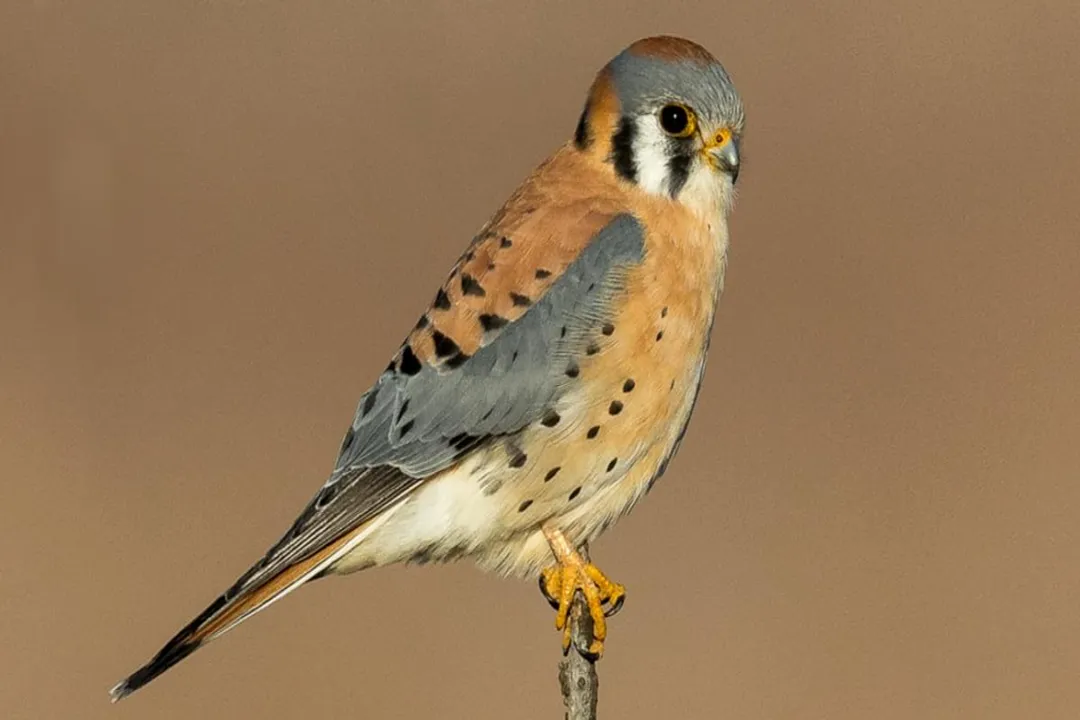
The physical definition of the kestrel is dominated by its diminutive stature among falcons. [7] The American Kestrel typically measures between 7 to 12 inches in length, with a wingspan averaging between 20 to 24 inches. [1][6] This size places it among the smallest raptors found in North America. [7]
Sexual dimorphism, the difference in appearance between males and females, is quite pronounced in this species, especially concerning plumage coloration. [1][8] Generally, females are slightly larger than males, though the distinction in size can be subtle and often overlaps. [1]
The Common Kestrel, found across Europe, Asia, and Africa, shares a similar small size profile, often measuring slightly larger or smaller depending on the specific subspecies, but generally remaining within the compact category of kestrels. [2] A fascinating comparison between the American and Common Kestrel reveals that while both are small, the intensity and pattern of their markings often differ significantly, aiding identification in the field. [2] For example, while the Common Kestrel often shows dark spots on a pale belly, the American male features slate-blue wings. [1][2]
# Plumage Color
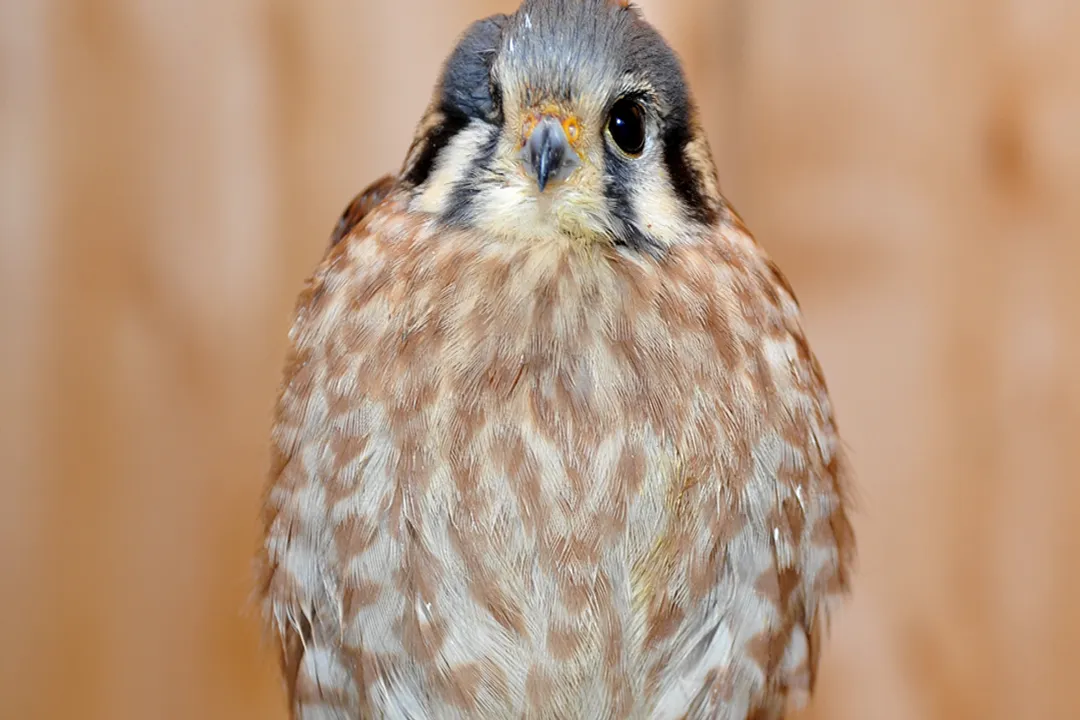
The visual characteristics of the American Kestrel are perhaps its most memorable feature, particularly due to the stark difference between the sexes. [1][3]
# Male Appearance
Adult males display a brilliant palette. Their backs and tail feathers are a soft, grayish-blue or slate-blue. [1][8] In contrast, the female exhibits a rich, reddish-brown or rusty coloration on her back and tail, often intricately barred with black markings. [1][3] The undersides of both sexes tend to be pale, frequently marked with dark spots or streaks, though the breast and belly are generally buff or whitish. [1][8]
# Facial Markings
Both sexes share distinctive vertical black markings, often described as "mustaches," on their white cheeks. [1][7] These markings are particularly striking on the American Kestrel. [3] The male kestrel possesses two distinct black patches on either side of its white throat patch, one above the eye and one below. [8] The female also features these markings, although they can sometimes appear less pronounced or slightly different in configuration than the male's. [1] The head of the male is typically a pale gray-blue, while the female’s head is more rufous, matching her back. [8][9]
If you observe a kestrel perched and notice bright blue-gray wings, you are almost certainly looking at a male; if the wings are reddish-brown with fine black barring, it is a female. [1] This striking visual sexual dimorphism means that field identification based on color is usually straightforward once you know what to look for. [3]

# Flight Hunting
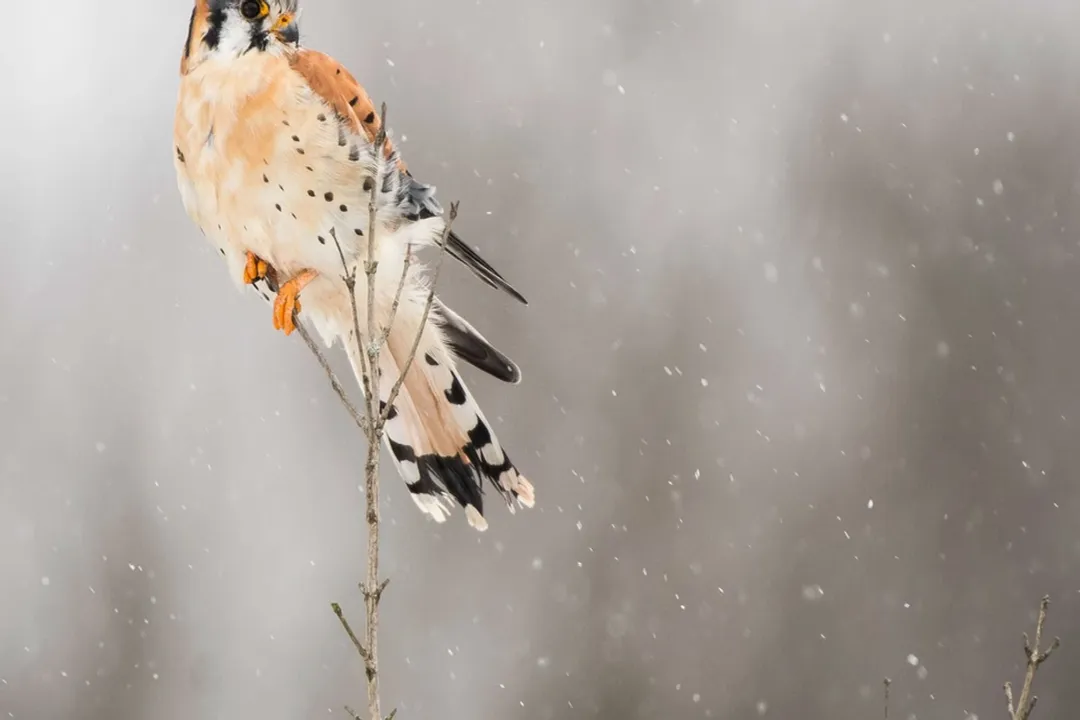
Kestrels exhibit several characteristic flight patterns that are critical both for hunting and for general locomotion. [8] They are famous for their ability to hover, a behavior that allows them to scan the ground with unparalleled focus before striking. [3][7]
# Hovering Mastery
This hovering, sometimes called "kiting," is achieved by rapid wing beats, holding the tail fanned out to act as a rudder and brake. [8] They can hold this stationary position in the air, even against a moderate headwind, for extended periods while assessing prey movement below. [7] This aerial reconnaissance is energy-intensive, meaning they must select their targets carefully. [4] When the prey is spotted, the kestrel typically drops straight down, performing a vertical plunge rather than the long, steep stoop characteristic of larger falcons like the Peregrine. [8]
# Travel Flight
When traveling between perches or moving across territory, kestrels display a surprisingly buoyant flight style for a raptor. [3] Their wing beats are fast, and they often alternate between flapping and short glides. [8]
A common sight, which can serve as an excellent identification cue, is the kestrel perching atop a utility pole, fence post, or roadside snag in open country. [1][9] Unlike larger hawks that favor the highest, most commanding view from a tall tree, kestrels frequently utilize smaller, more accessible structures near fields or roadsides. [3] This preference for lower, scattered perches across agricultural fields or open grasslands indicates a hunting strategy optimized for locating small, ground-dwelling invertebrates and rodents over open terrain, rather than scanning vast expanses from great heights. [9] Their need for frequent feeding due to high energy expenditure means minimizing the energy cost of travel between hunting spots is crucial to daily success.
# Habitat Niche
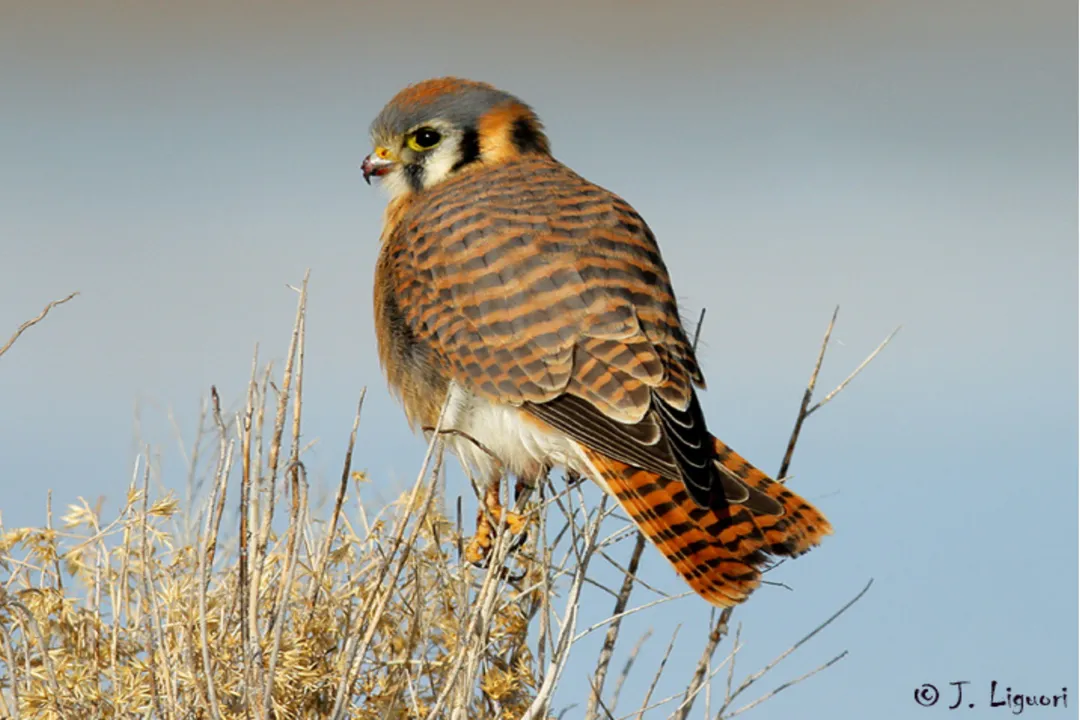
Kestrels demonstrate remarkable adaptability regarding their habitat, though they strongly favor open country over dense forest. [7][9] They are generally birds of fields, meadows, marshes, deserts, and agricultural areas. [1][3]
# Open Preference
The key requirement for a kestrel territory is the presence of scattered perches and a nearby abundance of low-lying prey. [9] This is why they are frequently seen along roadsides bordered by grassy verges, or perched on telephone wires. [3] If the environment becomes too heavily wooded, the dense canopy interferes with their preferred hunting style, which relies on high visibility to spot small movements on the ground. [1]
It's interesting to note that while they require open space for hunting, they are quite tolerant of human development, often nesting in human-made structures if natural cavities are scarce. [1] In urban or suburban settings, they may occupy suitable ledges or nest boxes, provided the surrounding areas offer adequate foraging grounds, illustrating their opportunistic nature when it comes to shelter. [3]
# Diet Prey
As true falcons, kestrels are carnivorous predators, yet their diet is skewed heavily toward the smaller end of the spectrum compared to many other raptors. [7]
# Primary Food Sources
Their diet is heavily reliant on large insects, particularly grasshoppers and crickets, especially during the warmer months. [1][6] Small rodents like mice and voles form a substantial part of their intake, particularly when feeding young or during the non-insect months. [7][9] They will also consume small birds, snakes, lizards, and earthworms. [1][3]
The American Kestrel’s hunting technique is adapted to this diet. While they can catch small birds in the air, their primary method involves sitting patiently on a perch—or hovering—waiting for movement in the grass, followed by a swift, controlled descent. [8] This patient sit-and-wait strategy, interspersed with active hovering, allows them to efficiently exploit the available biomass of insects and small mammals in their open habitat. [9]
# Vocal Calls
The vocalizations of the kestrel are quite distinct and serve as another reliable means of identification. [1] They are not silent hunters; rather, they possess a sharp, high-pitched repertoire of calls. [7]
The most common call is a rapid, high-pitched series of notes, often described as a loud, chattering *killy-killy-killy* or a sharp *kee-kee-kee*. [1][3] These calls are frequently used in territorial disputes or when alarmed near the nest site. [1] Comparing this sharp, almost squeaky call to the harsh screams of a Red-tailed Hawk helps immediately place the kestrel in a different category of vocal bird language. [7]
# Nesting Roosting
Kestrels exhibit strong philopatry, meaning they often return to the same nesting areas year after year. [4] They are secondary cavity nesters, which means they do not excavate their own holes but rely on pre-existing cavities, much like woodpeckers or bluebirds. [7][9]
# Cavity Dependence
Suitable nesting sites include natural tree cavities, old woodpecker holes, or artificial nest boxes placed in open areas. [1][9] In areas lacking suitable dead trees or snags, kestrels readily adopt man-made structures, such as holes in buildings, bridges, or specialized nest boxes designed for them. [1][3] The female typically lays between 3 to 6 eggs, and incubation is shared, although the female takes the majority of the duty. [1]
For roosting outside of the breeding season, kestrels maintain a similar preference for sheltered but exposed locations, often using dense tree cover or larger structures to shield them from the worst weather overnight, while still being positioned for a quick departure at dawn. [4]
# Range Behavior
The geographic distribution of the American Kestrel spans a vast area of the Americas. [1] While the eastern and mid-western populations tend to migrate south for the winter, populations in the western United States and southern regions may remain year-round residents if food sources persist. [1][9]
Migratory behavior in kestrels is tied directly to food availability, particularly the abundance of large insects and favorable weather conditions that allow for easier hunting. [9] A fascinating aspect of their movement is that young birds often disperse widely after leaving the nest, often traveling farther than the adults. [1] Observing whether a kestrel is resident or migratory often depends heavily on the latitude; in Montana, for instance, they are noted as summer residents and migrants, arriving in spring and leaving before the winter snows make insect foraging impossible. [9] This reliance on small prey means they are far more sensitive to winter weather than a hawk relying on cached fat reserves or larger, more robust prey.
Related Questions
#Citations
American Kestrel Overview, All About Birds, Cornell Lab of Ornithology
Common kestrel - Wikipedia
American Kestrel | Audubon Field Guide
Amelia – American Kestrel | College of Veterinary Medicine
American kestrel bird characteristics - Facebook
Facts about American Kestrels-Buffalo Bill Center of the West
American kestrel | The Raptor Center
American Kestrel Fact Sheet - HawkWatch International
American Kestrel - Montana Field Guide