What are the characteristics of a brush rabbit?
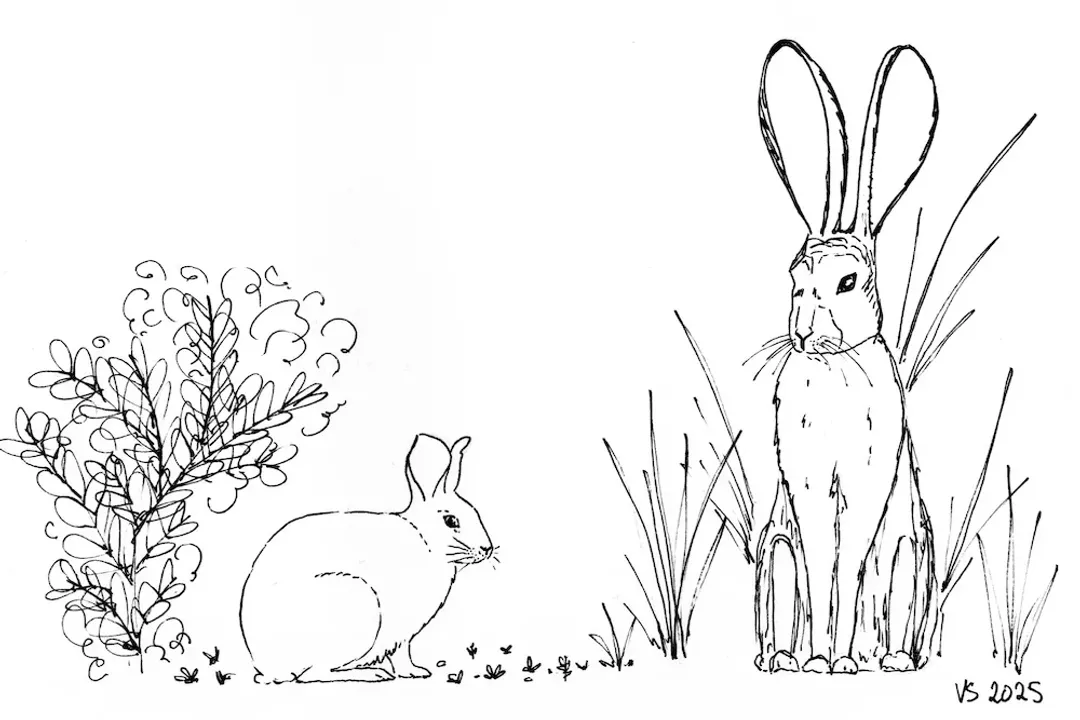
The brush rabbit, scientifically known as Sylvilagus bachmani, is a smaller, more secretive member of the rabbit family distinguished by its preference for dense, tangled vegetation across the western edges of North America. [1][2] Unlike some of its more visible relatives, this species rarely makes long, exposed dashes across open ground, preferring the safety offered by thickets and heavy cover. [1][4] Understanding its characteristics requires a closer look at its subtle physical attributes, its strict habitat demands, and its specialized lifestyle built around evasion.
# Size and Fur
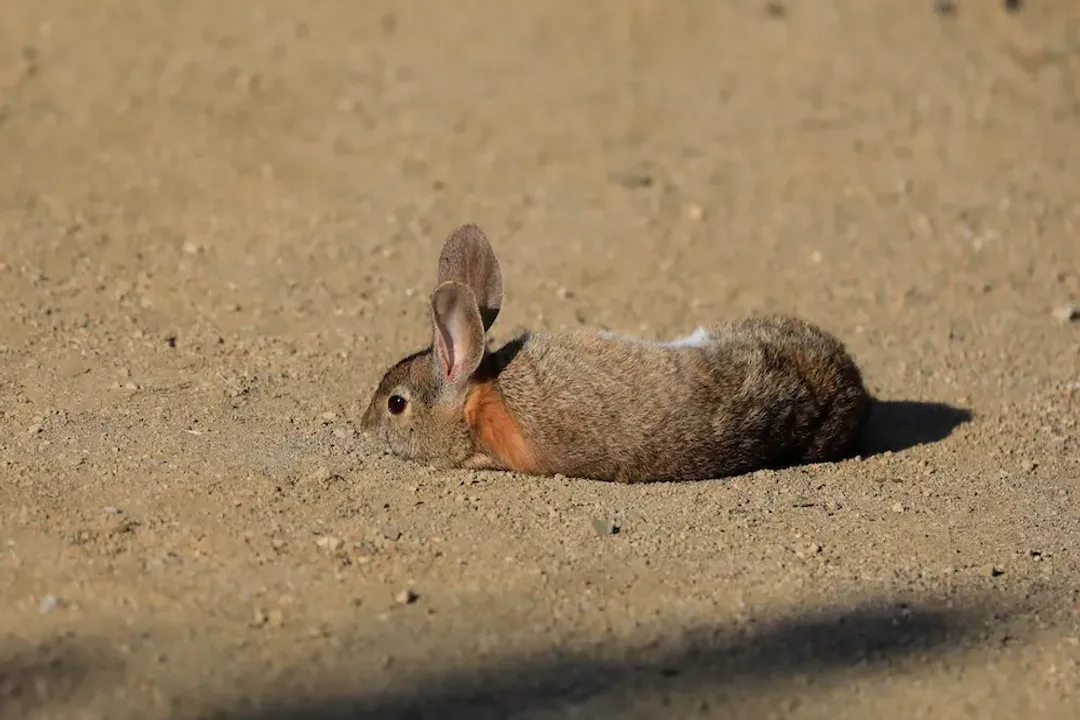
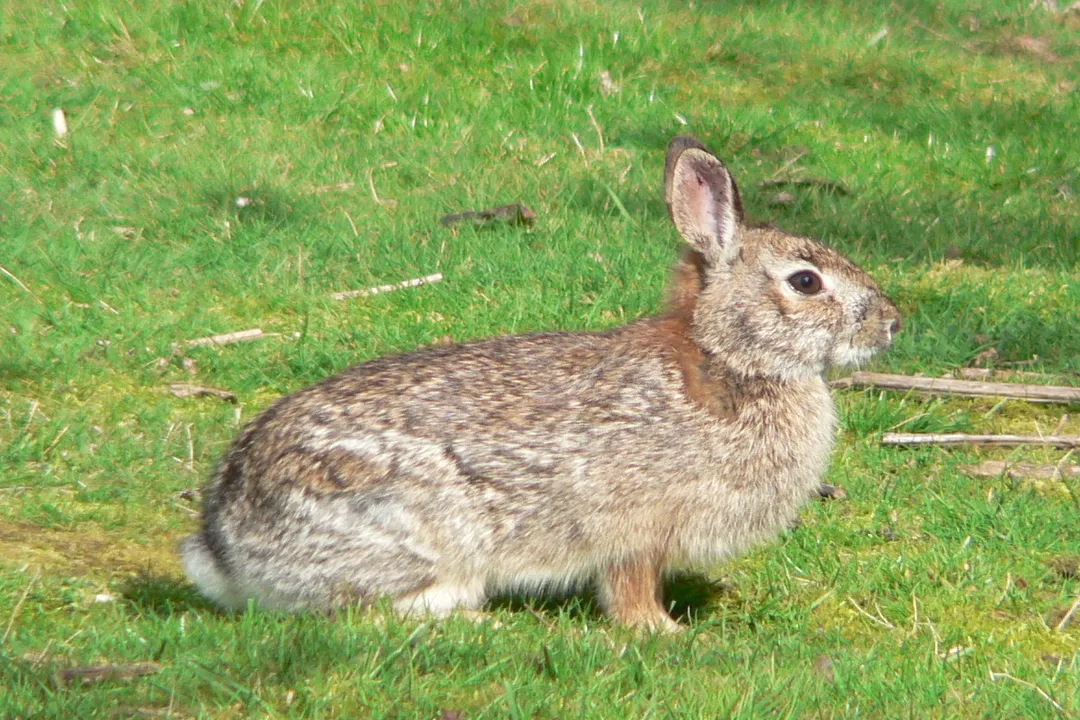
The brush rabbit is a relatively small lagomorph, typically measuring between 11 and 14 inches in length, or about 28 to 36 centimeters. [1] In terms of mass, an adult usually falls between 1.5 and 2 pounds (0.7 to 0.9 kg). [1][3] This compact size aids its ability to move quickly through tight spaces where larger species might get stuck. [2]
Its coloration is designed for camouflage within dry undergrowth. The fur generally presents as a grayish-brown or brownish-gray shade across the back and sides. [1][3] This coloring helps it blend seamlessly with the dead leaves, woody stems, and shaded earth found beneath dense shrubs. [3] Conversely, the underside, including the throat and belly, is distinctly white. [1]
Specific physical markers help differentiate it from other rabbits. Its ears are relatively small compared to many jackrabbits or even some other cottontails, though they often feature small black tufts on the tips. [1] Perhaps one of the most telling features, though often hidden, is the tail: it is short and stubby. [1][2] While many Sylvilagus species are famous for flashing bright white undersides when fleeing, the brush rabbit’s tail lacks this conspicuous white marking, offering less obvious visual signals to predators when it moves rapidly through the brush. [1][2] Furthermore, its hind feet are notably narrow when compared to other rabbit types. [1]
# Thicket Dweller
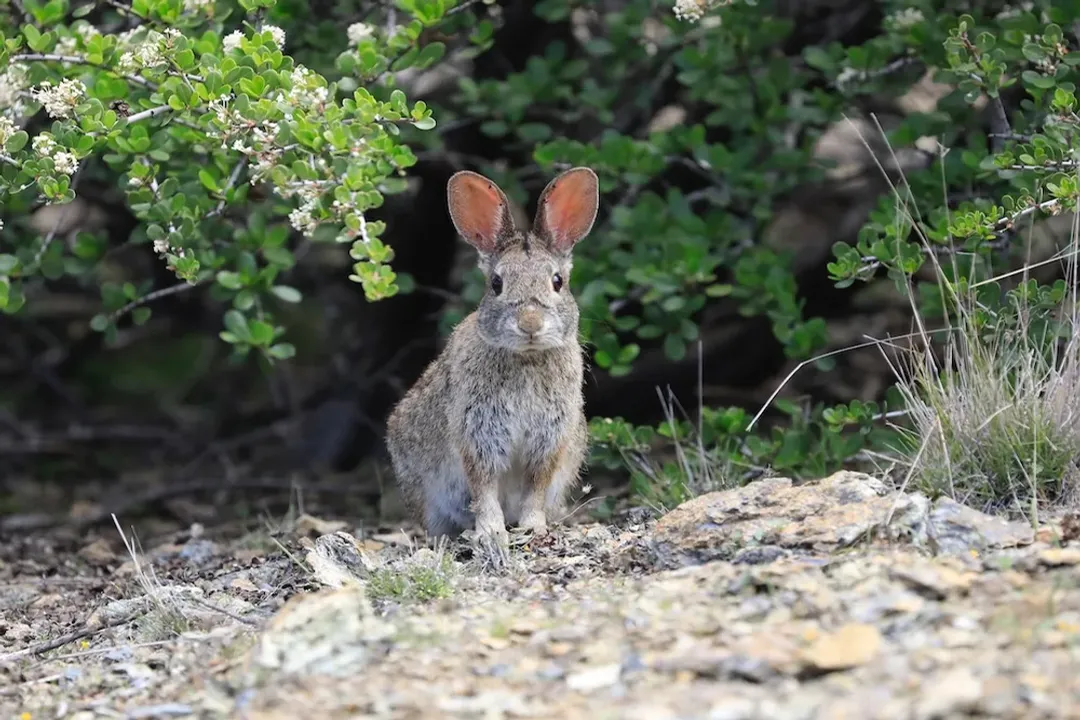
The defining characteristic of the brush rabbit is its unyielding reliance on dense vegetation—hence the common name. [2][4] These rabbits are not creatures of the open field; they inhabit areas rich in thickets, dense chaparral, tall grasses, and dense woody growth. [1][9] Their geographic range extends along the Pacific coast, generally spanning from southern Washington, through Oregon, and deep into California. [1][9]
This habitat preference is not merely a preference; it is a necessity for survival. The heavy cover provides protection from aerial predators like hawks and owls, as well as terrestrial hunters such as coyotes and domestic cats. [1] An interesting observation for those familiar with Western landscapes is that if you are hiking in a scrubby, brushy area, your chances of encountering a brush rabbit are significantly higher than if you find yourself in open, grassy pastureland. [4] They seem to favor the transition zones where shrubbery meets grassland, maximizing both foraging opportunities and immediate escape routes. [3]
They do not always construct extensive burrow systems themselves. [1] Instead, they frequently use existing shelters, often taking over abandoned burrows dug by ground squirrels or gophers to rest or nest. [3][4] They do, however, maintain a network of established, well-used paths, or runways, within their chosen thicket. [1][4]

# Daily Routine
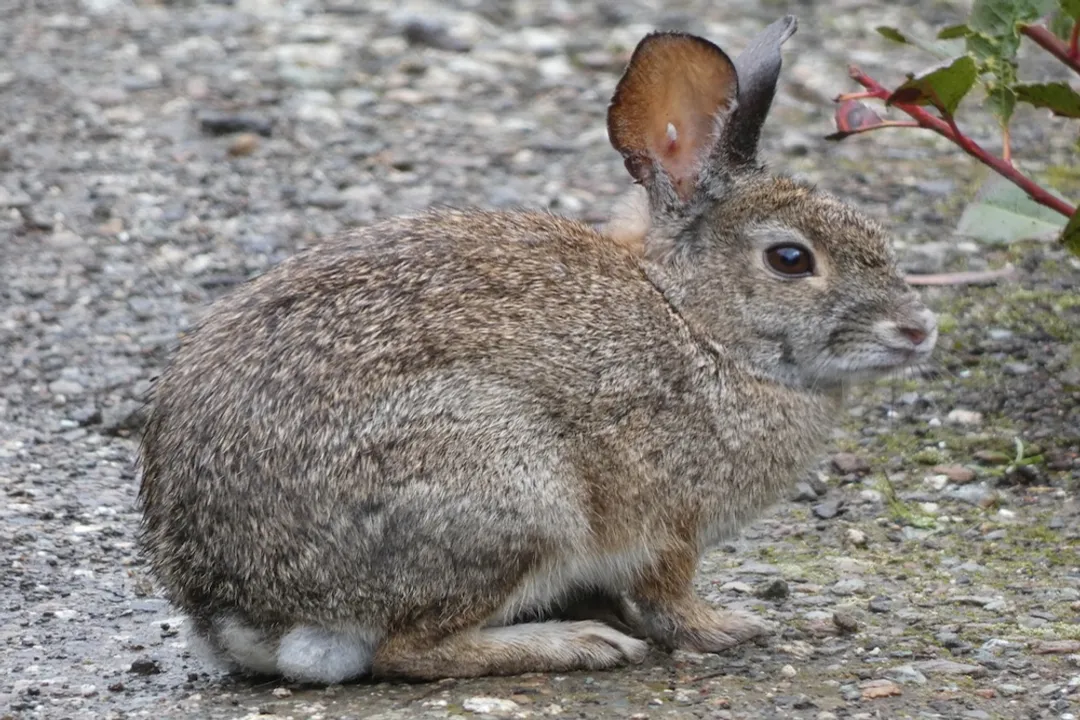
Brush rabbits are primarily crepuscular, meaning they are most active during the twilight hours—dawn and dusk. [1][3] This timing helps them avoid the highest temperatures of the day and potentially reduces their exposure to diurnal predators. [3] While this is their peak activity time, they can certainly be seen moving or feeding during the night or even on overcast days. [1]
The intricate network of runways they maintain through the undergrowth is crucial to their existence. These paths, often created by consistently moving through the same low-lying vegetation, allow the rabbit to travel quickly and safely between feeding areas and their bolt-holes (hiding spots or burrows). [1][4] Maintaining these thoroughfares requires constant travel, which represents an energetic investment. The trade-off is clear: while building and using these runways consumes time that could be spent foraging, it drastically increases the rabbit’s survivability against predators that rely on clear sightlines. [1] A well-established home range for a brush rabbit can be surprisingly small, provided the cover is sufficiently dense. [4]
# Seasonal Eating
As herbivores, the diet of the brush rabbit shifts predictably based on the availability of fresh growth throughout the year. [1] During the wet season, when moisture is abundant, their diet consists mainly of tender grasses and forbs (broad-leafed herbaceous plants). [1][3] This fresh greenery provides high moisture content and good nutritional value.
However, the dry summer months force an adaptation. As grasses cure and die back, the rabbits turn to browsing on the woody material available. [1][3] This involves eating twigs, bark, and the leaves of shrubs—tougher forage that requires different digestive processes but ensures they have sustenance when soft greens disappear. [3] This dietary plasticity is vital for their persistence in regions experiencing long, dry summers. [1]
# Nesting Habits
Reproduction is tied closely to the availability of palatable forage, generally beginning in late winter or early spring and continuing through the late summer or early fall. [1][3] The female builds a nest cup, often hidden deep within a thicket or sometimes in a shallow depression on the ground, lined with soft materials such as dry grasses and lined heavily with her own body fur for insulation. [1][3]
The litter size is relatively small, typically ranging from two to five young. [1][3] A key aspect of their reproductive strategy is their capacity for rapid cycling; a female can produce several litters within a single breeding season. [1] Like all rabbits, the young, often called kits, are born altricial—meaning they are born naked, blind, and completely dependent on the mother for survival. [1]
# Regional Forms
The brush rabbit is not a single, uniform population across its range; instead, it exists as several subspecies, which show slight variations in size, color saturation, and geographic restriction. [1][5] The most widespread is the Western Brush Rabbit (Sylvilagus bachmani bachmani). [1]
A particularly notable variant is the Riparian Brush Rabbit (Sylvilagus bachmani riparius). [5][6] This subspecies holds a distinct conservation status, often being listed as endangered. [5][6] Historically, the Riparian Brush Rabbit was found within the dense riparian corridors—the brushy areas along rivers and streams—of California's Central Valley. [6] The extensive conversion of these unique riverside habitats for agriculture and development has severely fragmented and reduced their populations, highlighting how a highly specialized habitat requirement can create vulnerability when that habitat is altered. [5]
# Relative Differences
When trying to identify a brush rabbit in the field, it is helpful to compare it against other rabbits common to the same area. [1] They are smaller than the larger species of cottontail found in their range. [1] One notable contrast is with the Pygmy Rabbit (Brachylagus idahoensis), which is even smaller but possesses comparatively larger ears. [1]
The most helpful distinguishing feature remains the habitat and movement pattern. If you see a rabbit that is small, brownish-gray, and seems reluctant to leave the absolute closest patch of brush when startled, it is highly likely a brush rabbit, as opposed to a Desert or Eastern Cottontail, which are generally more willing to use open edges for travel and have more obvious white tail flashes. [1][2] The overall impression one gets when observing this species is one of quiet, cautious residency within a specific patch of cover, rather than the bold, zigzagging escape artist typical of open-country rabbits. [4]
Related Questions
#Citations
Brush rabbit - Wikipedia
Brush Rabbit (Sylvilagus bachmani) - Oregon State University
Brush Rabbit - Facts, Diet, Habitat & Pictures on Animalia.bio
[PDF] Riparian Brush Rabbit (Sylvilagus bachmani riparius)
Brush Rabbit : - Friends of Edgewood
Riparian Brush Rabbit (Sylvilagus bachmani riparius)
riparian brush rabbit (Sylvilagus bachmani riparius) - Species Profile
Brush rabbit - Oregon Department of Fish & Wildlife
Wildlife Around Las Vegas, Brush Rabbit (Sylvilagus bachmani)