What are the characteristics of the European rabbit?
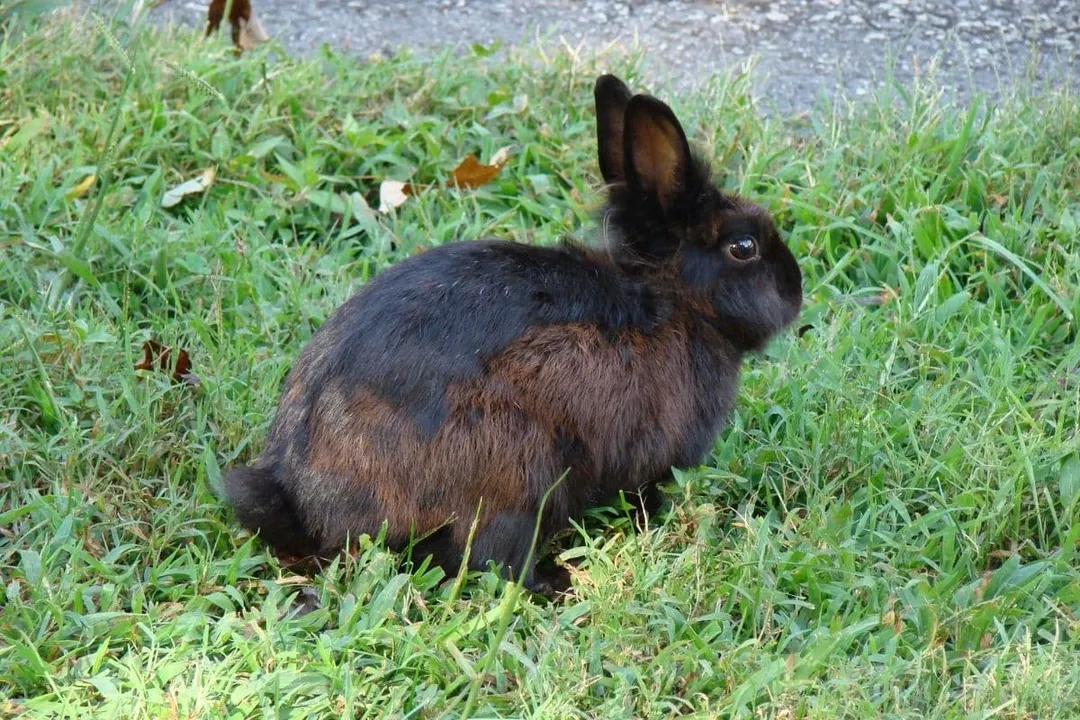
The European rabbit, Oryctolagus cuniculus, is a species instantly recognizable to many, though its global impact far exceeds the confines of its native European range. While often confused with hares due to superficial similarities, the rabbit possesses distinct physical and behavioral traits that define its ecological success and, conversely, its status as a pervasive invasive species in many parts of the world. [1][2] This small lagomorph plays a significant role in numerous ecosystems, whether as a primary food source or as a destructive competitor for vegetation. [6] Understanding its inherent characteristics is key to appreciating its evolutionary success story and the challenges it presents outside its ancestral home. [1]
# Physical Form
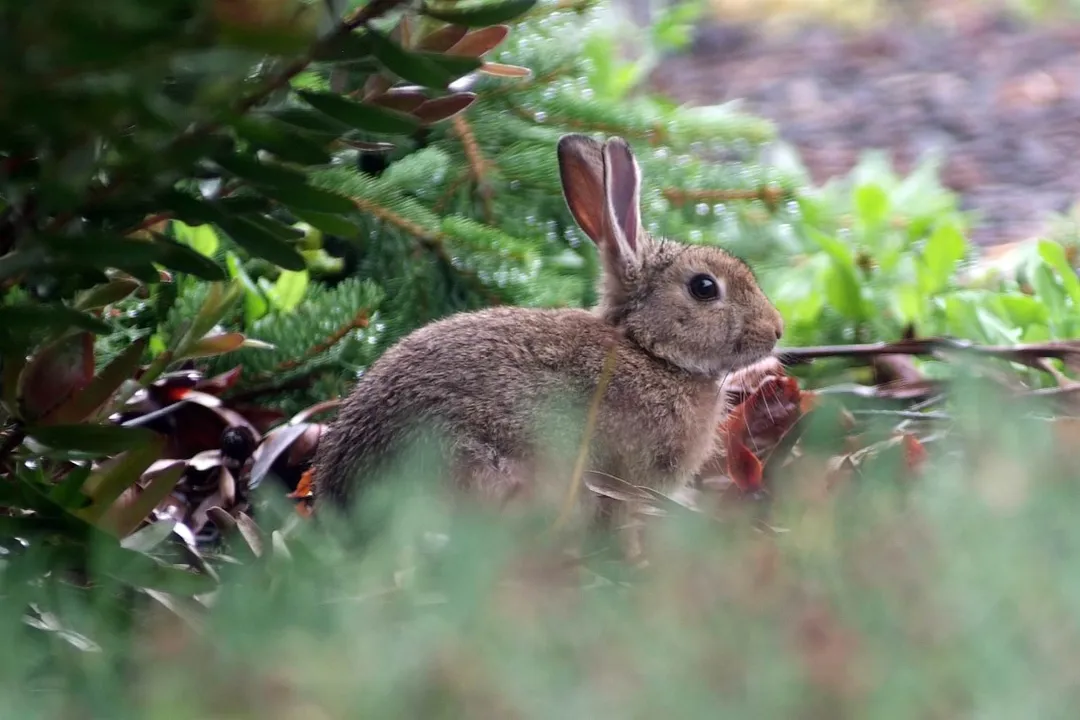
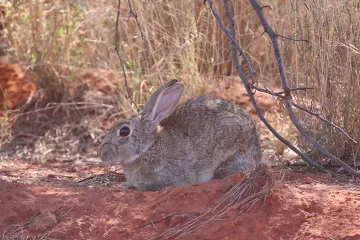
The wild European rabbit exhibits a relatively consistent physical profile optimized for escape and camouflage. Typically, an adult measures between 34 and 45 centimeters in length, excluding the tail, and weighs between 1.2 and 2 kilograms. [4] Females are often slightly heavier than males, exhibiting a minor degree of sexual dimorphism in size. [4] The coat color is classically described as agouti, a mottled greyish-brown that provides excellent blending into the scrub and grassland environments of the Iberian Peninsula and Southern France, where it originated. [1] This coloration is an essential defensive mechanism against aerial and terrestrial predators. [4]
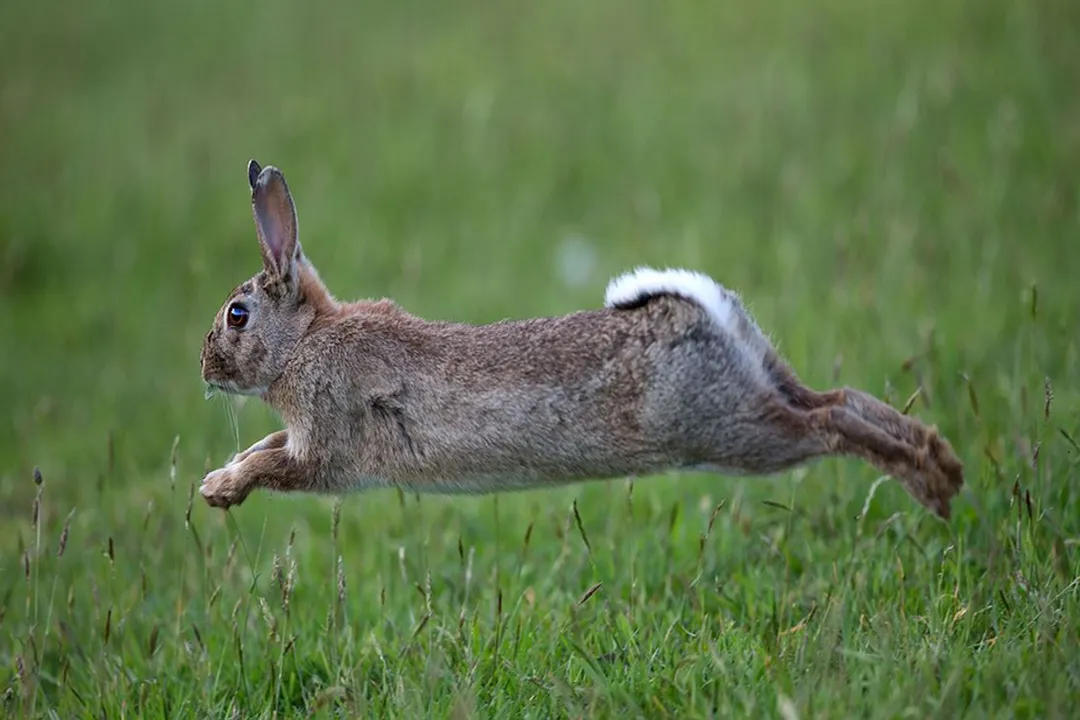
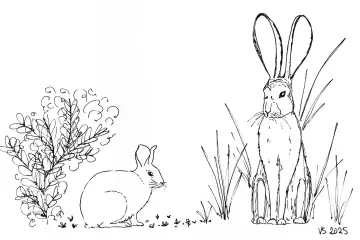
A distinguishing feature separating rabbits from hares is their relatively shorter ears and legs, though they are still built for rapid bursts of speed. [1] The tail, short and usually tipped with black on the upper side, is often flashed as an alarm signal to other members of the warren when danger is perceived. [4] Unlike hares, European rabbits also possess a soft, dense coat texture, which has been heavily exploited in their domesticated forms. [5] It is fascinating to note that while the wild phenotype is strictly controlled by natural selection for crypsis, the sheer variety seen in the domestic pet trade—from spotted patterns to solid black or white individuals—demonstrates the extensive genetic plasticity available when human selection replaces predation pressure as the primary driver of trait survival. [1]
# Social Structure
Perhaps the most critical characteristic defining the European rabbit is its highly social nature, centered around communal living in intricate underground networks known as warrens. [1][4] These warrens are not random holes; they represent complex feats of engineering designed for protection, breeding, and resting. [4] A single warren can house dozens of individuals, organized into distinct family groups, though they often share entrances and general space. [1]
Activity patterns are typically crepuscular, meaning they are most active around dawn and dusk. [1][4] This timing minimizes exposure to many diurnal predators while still allowing for significant foraging time. During the heat of the day or in the presence of high threat levels, rabbits retreat into the safety of the burrows. [4] The warren structure itself varies considerably based on local soil conditions and predator density. In areas with deep, stable soil, burrows can descend several meters, creating a temperature-stable refuge. [1] Conversely, in sandy or rocky terrain, the warrens might be shallower but cover a wider surface area. Understanding this site-specific complexity is vital; applying a generalized warfare depth model when attempting environmental management can easily overlook escape routes essential to the rabbit population's survival. [1][4]
# Feeding Ecology
As herbivores, European rabbits are predominantly grazers, with grasses and herbaceous plants forming the bulk of their diet. [4] Their digestive system, similar to other lagomorphs, involves a process called coprophagy, where they consume soft fecal pellets (cecotropes) directly from the anus to re-ingest partially digested food, extracting maximum nutrients, especially protein and B vitamins. [1][4] This efficiency allows them to thrive even on relatively poor-quality forage.
When preferred grasses become scarce, particularly during drier summers or harsh winters, their dietary flexibility becomes more pronounced. They will consume roots, tubers, bark, and even fallen fruit. [4][6] This adaptability is a major component of their invasive success outside their native lands. In environments like Australia or New Zealand, where native flora may not be accustomed to such intensive browsing pressure, the consistent, year-round grazing habits of large rabbit populations rapidly strip available vegetation down to the bare soil, leading to erosion and habitat degradation. [6][9] Their preference for new, young growth often stunts the regeneration of sensitive plant species.
# Breeding Dynamics
The reproductive capacity of the European rabbit is legendary, often cited as a primary driver of its widespread colonization success. [2][6] They are non-seasonal breeders in favorable climates, meaning they can reproduce nearly year-round if conditions—primarily food availability and temperature—permit. [4]
The breeding cycle is remarkably swift:
- Gestation Period: A short gestation period of approximately . [1][4]
- Litter Size: A female, or doe, can produce between 3 and 7 young per litter. [4]
- Litter Frequency: A doe can become pregnant again almost immediately after giving birth, potentially producing in ideal circumstances. [4]
The young, called kits or kittens, are born altricial—meaning they are completely helpless, born blind, hairless, and entirely dependent on the mother. [1][4] They are born within a special, hair-lined nest chamber dug deeper within the main warren for insulation and safety. [4] This system allows the mother to leave the kits unattended for long periods while foraging, minimizing the risk of attracting predators to the nursery site. Given these parameters, a small initial population can explode rapidly, a phenomenon that has caused severe ecological strain wherever Oryctolagus cuniculus has been introduced outside of Europe. [2][9]
# Range Status
The native distribution of the European rabbit is geographically restricted. It is endemic to the Iberian Peninsula (Spain and Portugal) and adjacent areas of Southern France. [1] However, through both intentional introduction by humans for hunting and accidental escapes from domestication, they have established massive, detrimental populations across the globe. [3][6]
Areas where they are now established as major invasive pests include:
- Australia [2][6][9]
- New Zealand [9]
- Various islands globally [2]
- Parts of North and South America [1]
In these non-native regions, the lack of evolved specialized predators, combined with milder climates that allow for year-round breeding, has led to population densities that far surpass those seen in their native European habitats. [2] For example, in Australia, their impact on native grasslands and agricultural land has been historically catastrophic, often cited as a textbook example of the need for stringent biosecurity measures concerning introduced species. [6][9] Conversely, in their native environment, they coexist within a balanced web of life, serving as a key prey item for predators such as the Iberian lynx and various birds of prey. [1] The difference in ecological role—from keystone prey in one region to dominant destructive force in another—stems directly from the presence or absence of historical biotic controls. [1][6]
# Domestic Contrast
While the focus here is on the wild characteristics, acknowledging the domestic European rabbit highlights the species' versatility. The domestic rabbit, Oryctolagus cuniculus domesticus, shares the core physiological traits—the rapid maturation, the warren-building instinct (though often suppressed in modern hutches), and the dietary requirements—but has been bred for traits desirable to humans. [5]
The key contrasts lie in:
- Coat & Color: Extreme variation in color, length (e.g., Angora), and texture. [5]
- Temperament: While wild rabbits are extremely shy and nervous, domestic breeds have been selected for docility, making them common companion animals. [5]
- Size: Some domestic breeds are significantly larger than their wild counterparts due to selective breeding for meat or utility. [5]
Despite these variations, a domestic rabbit that escapes or is released retains the fundamental wild survival programming, especially the ability to breed rapidly and utilize underground cover if available, often reverting visually toward the ancestral agouti coloration over several generations if natural selection takes hold. [1][5] This inherent wildness remains just beneath the surface of even the most pampered pet.
Related Questions
#Citations
European rabbit - Wikipedia
European Rabbit - Texas Invasive Species Institute
European Rabbit - Facts, Diet, Habitat & Pictures on Animalia.bio
Oryctolagus cuniculus (European rabbit) - Animal Diversity Web
Domestic European Rabbit - Palo Alto Junior Museum & Zoo
European rabbit | Established pest animal species | Biosecurity
European rabbit — Mammal Society
European rabbit - Invasive Species Council of British Columbia
European Rabbits