What are the characteristics of a bandicoot?
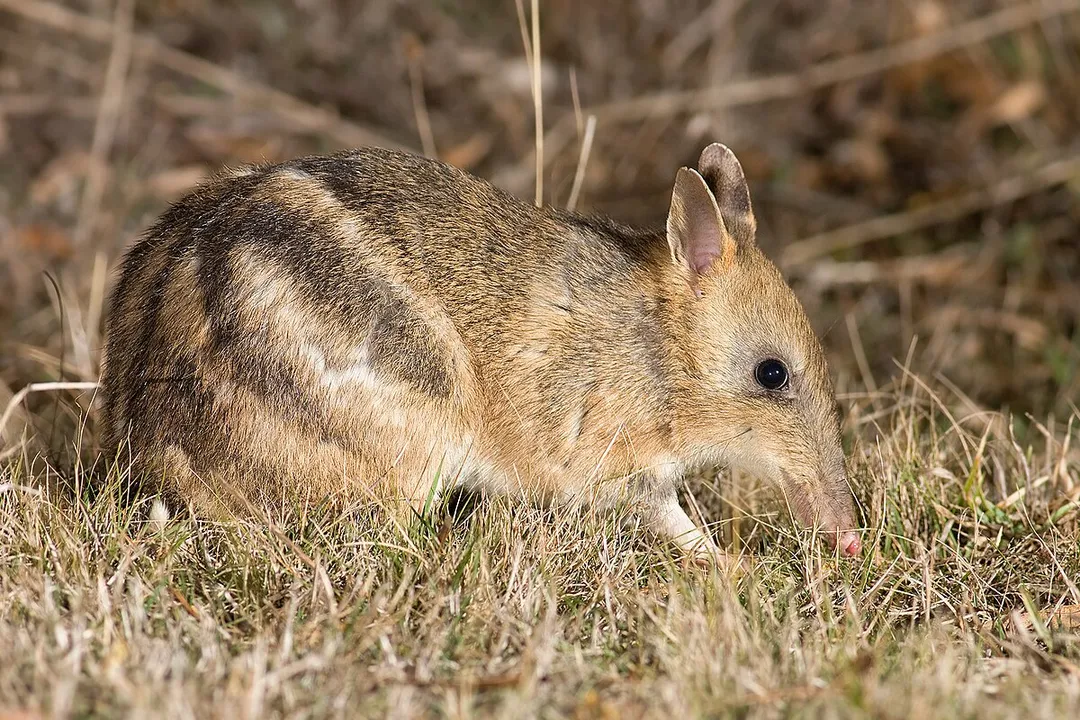
Bandicoots represent a fascinating and often overlooked group of small to medium-sized marsupials native primarily to Australia and New Guinea, with one species extending into Indonesia. [1][3] These creatures are not easily lumped into a single category; they possess a unique blend of physical attributes and behaviors that set them apart from kangaroos, possums, and even their close relatives, the bilbies. [8] Understanding what truly defines a bandicoot requires a close look at their anatomy, daily routines, and evolutionary adaptations, which paint a picture of a persistent, albeit often secretive, survivor in diverse ecosystems. [2][4]
# Order Placement
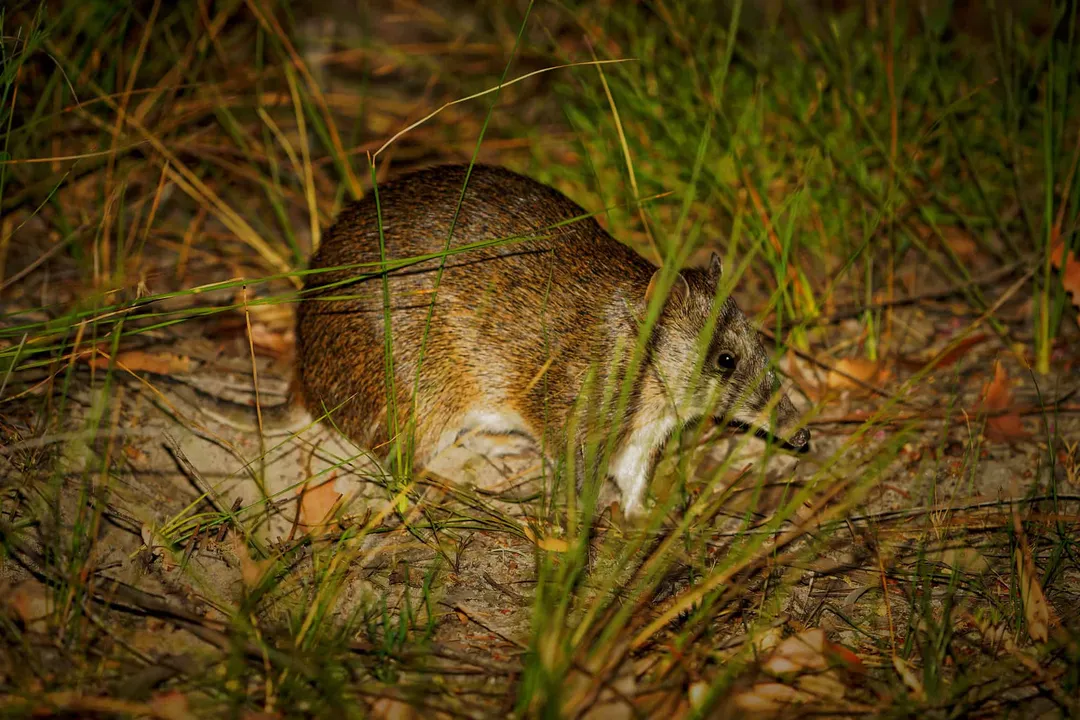
The classification of bandicoots places them within the order Peramelemorphia. [8] This group is distinct within the broader infraclass Marsupialia, separating them from kangaroos (Macropodidae) and possums (Phalangeriformes). [8][3] While superficially they might resemble rodents due to their size and terrestrial habits, their marsupial nature—carrying and nursing their young in a pouch—is their defining mammalian trait. [3][1] This evolutionary divergence means that while a casual observer might mistake a foraging bandicoot for a scurrying rodent, their internal biology and reproductive strategies are firmly rooted in the marsupial lineage. [8] The presence of the bilbies within this same order highlights a close relationship, although morphological and ecological differences are pronounced enough to warrant separate families in some classifications. [8]
# Distinctive Features
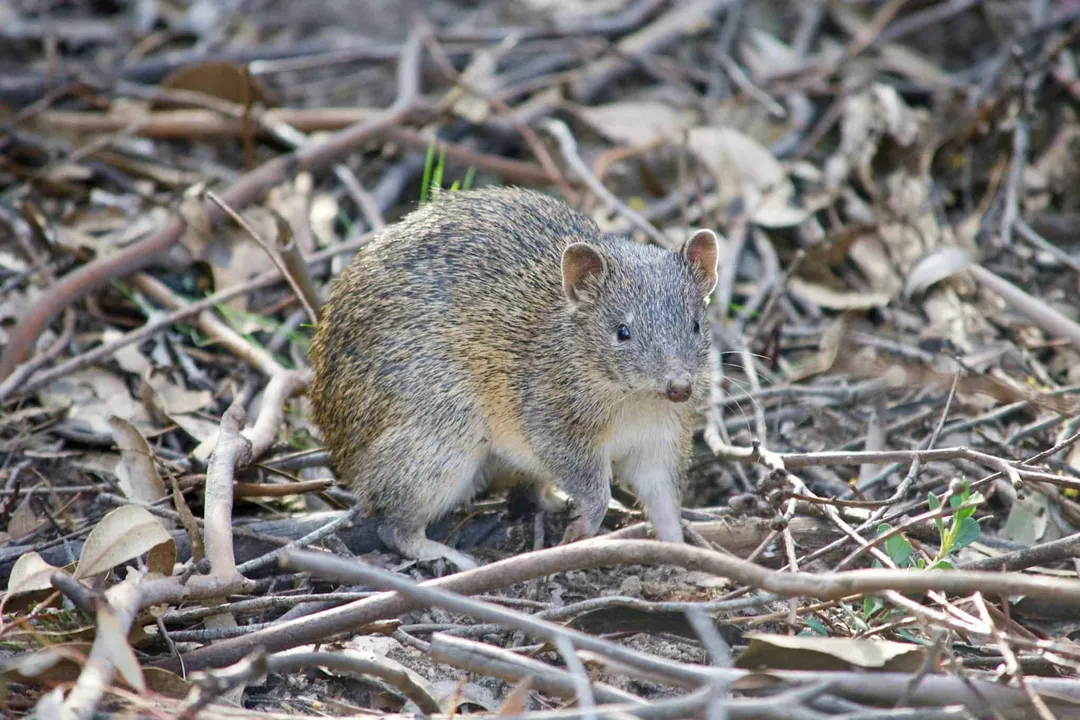
The most immediately striking characteristic of many bandicoot species is their long, pointed, and somewhat flexible snout. [3][2] This feature is not merely aesthetic; it is a specialized tool perfectly adapted for their method of finding food. [3] They possess a body shape generally described as somewhat stout or pig-like, supported by relatively short limbs. [1] Their movement, discussed later, relies heavily on hind legs that are noticeably longer than their forelegs, creating a distinct posture even when standing still. [2]
Fur coloration is another key identifier, though it varies significantly across the roughly twenty recognized species. [4] Generally, bandicoots display drab, earthy tones, often brown, grey, or reddish-brown, providing excellent camouflage within the leaf litter and soil of their habitats. [2] The fur itself is typically coarse or bristly, especially compared to the softer coats of some other small mammals. [1] Their ears are usually rather long and pointed, though this varies; for example, the long-nosed bandicoot has noticeably large ears. [4][2] Another key anatomical trait is the arrangement of their toes: the hind feet typically have four toes, with the second and third toes being reduced and fused together (syndactylous), a common characteristic among many Australian marsupials, while the front feet possess five well-developed toes equipped with strong claws suited for digging. [1][3]
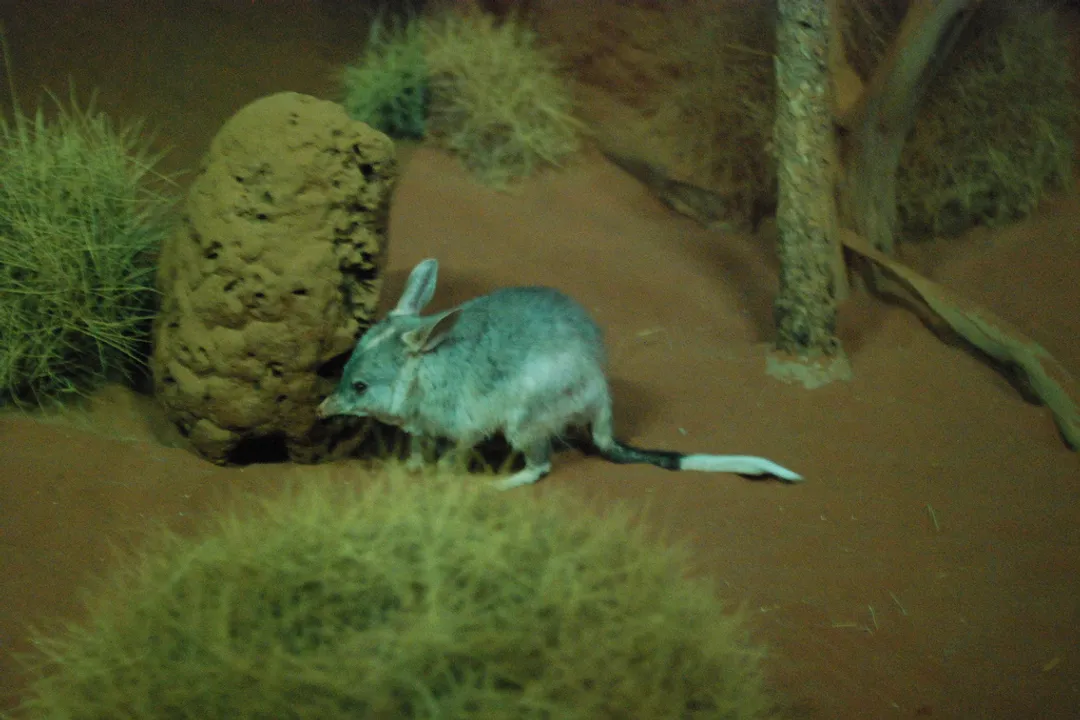
If one were to attempt to quickly differentiate a bandicoot from a bilby, the ears and tail offer quick clues, assuming you are looking at the right species. Bilbies typically possess very large, rabbit-like ears and long, often tufted tails, whereas most bandicoots have smaller ears relative to their head size and shorter tails that are usually thinly furred. [8]

# Locomotion Style

Bandicoots do not walk or run in the typical mammalian fashion. [2] Instead, their primary mode of terrestrial locomotion involves an awkward-looking, bounding gait where the hind legs propel the animal forward in a distinctive, slightly unbalanced hop. [2] This hopping motion is more energetic and less sustained than the bounding of a kangaroo, making their movement appear jerky or erratic as they navigate dense undergrowth. [2] This gait is crucial for rapid bursts of speed when escaping predators, a necessity given their relatively small size and ground-dwelling existence. [4]
The anatomy supports this locomotion: the hind limbs are significantly more powerful and longer than the forelimbs. [1] This difference in limb length dictates the hopping pattern, an adaptation optimized for short, quick movements through complex terrestrial environments rather than long-distance travel. [2] Observing a bandicoot foraging in low light reveals this characteristic movement pattern—a series of quick hops interspersed with sudden pauses to sniff or dig. [4]
It is interesting to consider the evolutionary trade-off here. While this bounding style is excellent for rapid escape and maneuvering through thickets, it likely makes them less energy-efficient for long-distance travel compared to cursorial (running) mammals of similar size. This suggests that bandicoots rely more on camouflage, hiding, and speed in short bursts, rather than endurance, to survive encounters with predators like dingos, foxes, or large birds of prey. [4] Their lifestyle seems inherently tied to staying close to their established, protected burrows or feeding grounds.
# Foraging and Diet
Bandicoots are best described as opportunistic omnivores, though many species lean heavily towards an insectivorous diet. [3][4] Their menu is diverse and opportunistic, consisting mainly of insects, larvae, earthworms, spiders, and other invertebrates they uncover in the soil or leaf litter. [3][1] However, they readily supplement this with seeds, fruits, fungi, and occasionally even small vertebrates or carrion when available. [4][3]
Their specialized snout plays its most vital role here. Bandicoots use their elongated noses to probe deep into the soil and rotting wood, relying heavily on their keen sense of smell to locate subterranean prey items like grubs or worms. [3] Once located, their strong, clawed forepaws rapidly excavate the food source, often leaving behind small, conical holes scattered across the ground—a telltale sign of a bandicoot foraging trail. [4][1] This specific feeding method separates them ecologically from many other small ground-dwelling marsupials which might primarily graze or use sight to hunt. [2]
They typically forage alone, moving methodically through the undergrowth during their active hours. [4] Their success relies on their ability to detect small organic movements beneath the surface, making the health of the soil ecosystem directly proportional to the bandicoot population's success. [2] A damp, rich forest floor provides a veritable buffet, whereas dry, compacted earth presents a significant challenge to their feeding strategy. [4]
# Behavior and Niche
The vast majority of bandicoot activity occurs under the cover of darkness, as they are predominantly nocturnal animals. [4][3] This night-time schedule serves as a primary defense mechanism, allowing them to avoid many diurnal predators while capitalizing on the availability of invertebrates that are also active after sunset. [4] They are generally considered solitary creatures, interacting mainly for mating purposes. [4]
A critical characteristic of their daily existence is their reliance on shelters. Bandicoots construct nests or use existing burrows for daytime resting and rearing young. [2] These shelters are often relatively simple structures, sometimes just a depression lined with leaves and grasses tucked under dense vegetation, logs, or in abandoned burrows. [1] Some species, like the Eastern Barred Bandicoot, are known to utilize existing underground structures extensively. [2] The construction of these temporary or semi-permanent nests is essential for thermoregulation and protection from immediate threats. [1]
The solitary nature and nocturnal habits contribute to their elusiveness. Finding a bandicoot in the wild often requires patience, tracking skills, and a willingness to be out when the rest of the forest is quiet. [4] Their relatively small home ranges mean that if a patch of habitat is suitable, several individuals might be present, but they rarely tolerate close proximity to one another outside of breeding circumstances. [4]
# Reproductive Strategy
As marsupials, bandicoots exhibit a reproductive strategy common to their infraclass, yet with specific peculiarities. [3] Females possess a pouch, or marsupium, where the underdeveloped young complete their growth after birth. [3][1] A notable characteristic in many bandicoot species is that the pouch opens backward or caudally (towards the rear). [1][3] This backward-facing orientation is believed to be an adaptation related to their prolific digging habits; a forward-facing pouch would likely fill with soil and debris while the mother foraged. [1]
Gestation periods are extremely short, often lasting only about 12 to 14 days. [3] The resulting litter size varies, but typically ranges from one to five tiny, jellybean-sized young. [3] Immediately after birth, these embryonic young crawl unassisted into the mother's pouch, where they attach to a teat and remain enclosed for several weeks while they develop fur, eyes, and limbs. [3][1] The young eventually emerge from the pouch and may stay near the mother for a short period before becoming independent. [3]
This reproductive tempo—short gestation followed by quick development in the pouch—allows bandicoots to rapidly replenish their populations when conditions are favorable, which is a key factor in their resilience despite high predation rates. [4]
# Diversity and Variation
The term "bandicoot" encompasses a wide range of species, leading to considerable size and appearance variation across the geographical spread from the Australian mainland and Tasmania through to New Guinea and the surrounding islands. [1][4]
For instance, the Perameles nasuta (Long-nosed Bandicoot), often found in eastern Australia, is a medium-sized example, typically weighing around a kilogram or slightly more, identifiable by its long snout and relatively large ears. [2][4] Conversely, some species are much smaller, while the larger species can weigh up to 4 kg. [1]
A crucial point for identification, especially for those new to Australian wildlife, is the distinction between bandicoots and bilbies. While both belong to Peramelemorphia, bandicoots generally belong to the family Peramelidae, while bilbies belong to Thylacomyidae. [8] As noted earlier, the differences in ear size, tail structure, and sometimes snout length help separate them, but their shared terrestrial, insectivorous niche means they can sometimes appear ecologically similar until closely examined. [8][2]
Consider the ecological niche: an insight drawn from observing regional population dynamics suggests that where bilbies and bandicoots coexist, there is often a subtle partitioning of resources, such as bilbies focusing more on drier areas or slightly larger prey, while bandicoots thrive in moister, more sheltered forest environments, demonstrating how slight anatomical differences translate into distinct microhabitat preferences. [2][4] This subtle differentiation allows two similar marsupials to share an environment without constant, direct competition overwhelming one or the other.
# Threats and Survival
Despite their adaptability in terms of diet and shelter use, bandicoots face significant threats across their range, particularly in areas where they overlap with introduced European predators. [2] The primary challenges are predation by feral cats and foxes, which have decimated many populations, especially on the Australian mainland. [2][4] Habitat loss and fragmentation due to human development, agriculture, and altered fire regimes also severely restrict their movement and access to secure nesting sites. [2]
The vulnerability of certain species, such as the Eastern Barred Bandicoot, which has become extinct on the mainland and now survives only in protected island sanctuaries or highly fenced mainland reserves, underscores the severity of these threats. [2][4] Conservation efforts often focus heavily on predator exclusion fencing and habitat restoration to create corridors that allow these small animals to move safely between feeding areas and secure retreats. [2]
Their ecological role, however, is vital. As soil engineers, their incessant digging aerates the earth, mixes organic matter, and helps in nutrient cycling, effectively functioning as miniature, furry tilling machines. [1] Protecting bandicoots is, therefore, not just about saving a single species, but about maintaining the health and structure of the topsoil in their native habitats. [1] The constant, small-scale disturbance they create actually promotes biodiversity by preventing dense, uniform ground cover from dominating, allowing a greater variety of plants to establish themselves in the disturbed patches. [1] This means that areas with healthy bandicoot populations often exhibit greater structural complexity in their understory compared to adjacent, predator-free zones, offering a tangible metric of ecosystem health that goes beyond simple species counts. [2]
Related Questions
#Citations
Bandicoot - Wikipedia
Bandicoots (Facts & Photos) - Bush Heritage Australia
Bandicoot | Habitat & Facts | Britannica
Bandicoot Facts | Australia South Wildlife Guide
Bandicoot facts for new members to the group - Facebook
Bandicoot - Facts4Me
Bandicoot Animal Facts - Perameles
Perameles nasuta (long-nosed bandicoot) - Animal Diversity Web
Mammals - Peramelemorphia or Bandicoots - Mammalsrus.com