What are some facts about elf owls?
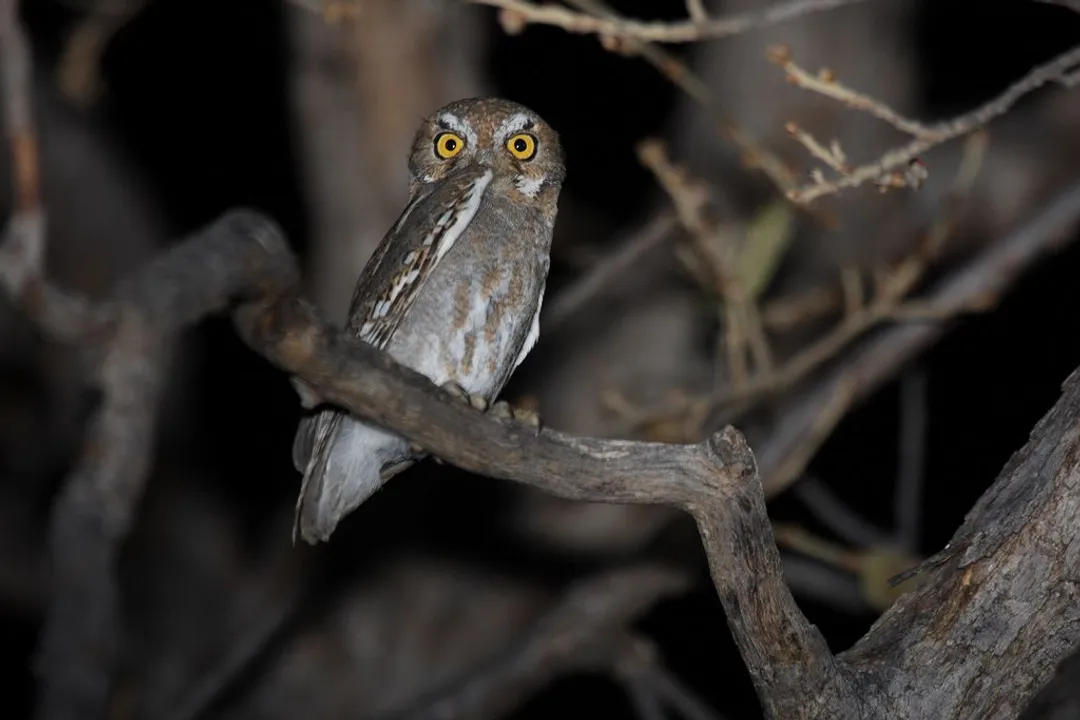
The world harbors an astonishing array of avian life, and nestled within the arid landscapes of the American Southwest and Mexico resides a creature so small it often escapes notice: the Elf Owl (Micrathene whitneyi). This bird challenges the common perception of what an owl should be, trading the imposing stature of its larger cousins for a truly diminutive profile. It is, in fact, recognized as the smallest owl on Earth. To truly grasp its size, picture it next to everyday objects: it measures barely longer than a typical songbird, sometimes compared to the size of a juice box or a soda can. Weighing in at around 1.4 ounces or sometimes noted as under 2 ounces, this tiny raptor is a powerhouse of adaptation, perfectly molded by the rigors of desert life.
# Physical Blueprint
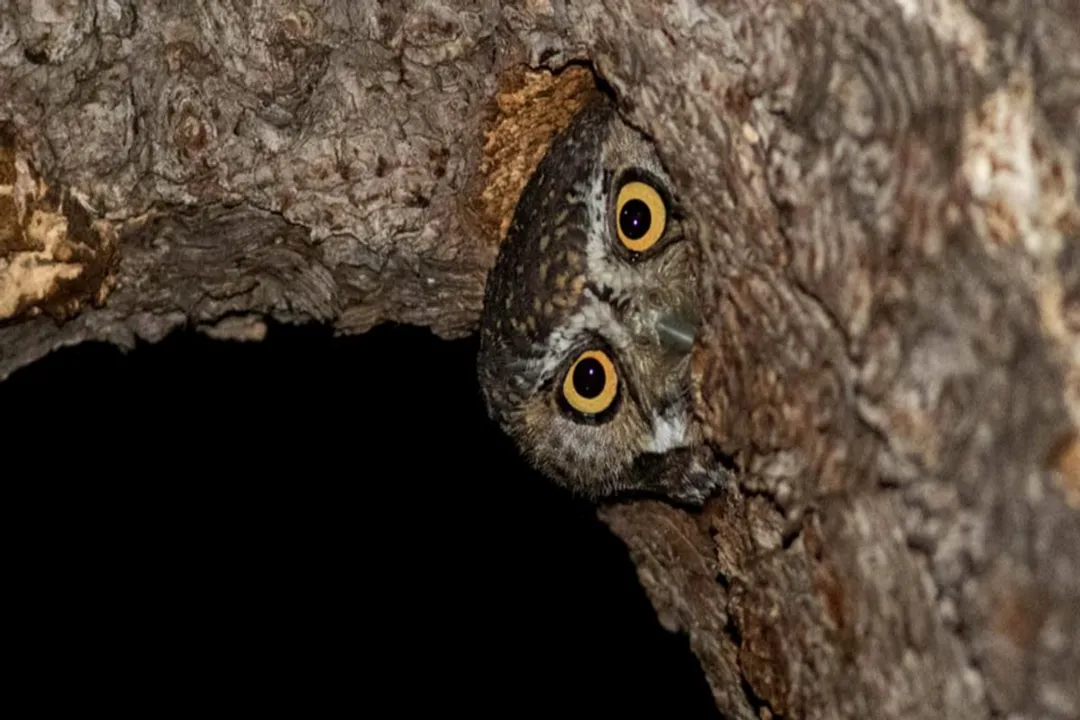
These miniature predators possess features distinct from many other owl species. Their overall appearance is grayish-brown, offering excellent camouflage against the bark and shadows of their desert habitat. A key identifier, especially when viewed up close, is the presence of pale yellow eyes, which are sharply outlined by thin white "eyebrows"—markings that help define their facial structure. The bill is greenish-yellow, often tipped with horn color.
One interesting physical variation involves gender and morphs. While generally similar, source information suggests female Elf Owls might be slightly larger than males. However, other sources indicate that males and females share comparable heights and weights. Furthermore, while the typical male is gray, a rufous (reddish) morph exists, adding a splash of unexpected color to the species' typical palette. Young owls start out gray or grayish-brown, displaying less pronounced chest markings and less conspicuous ear tufts than the adults.
In terms of sheer dimensions, the measurements show a bird that barely exceeds a hand's length. Adults typically reach a total height between 12.5 to 14.5 centimeters (about 4.9 to 5.7 inches). Their wingspan is relatively constrained, usually reported around 22 centimeters (9 inches), though one reference suggests it can extend to about 27 centimeters (10.5 inches). It is worth noting that these owls have relatively long legs, which can sometimes give them a slightly "bow-legged" appearance when they stand.
| Metric | Average Range/Detail | Comparative Note |
|---|---|---|
| Height | 12.5–14.5 cm (4.9–5.7 in) | Size of a sparrow or soda can |
| Weight | 36–45 g (1.4 oz) | Under 2 ounces |
| Wingspan | ~22 cm to 27 cm (9–10.5 in) | Concise wings for maneuvering in scrub |
| Lifespan (Wild) | Around 5 years | Can reach 14 years in captivity |
# Home Range

The geographic distribution of the Elf Owl is closely tied to the Sonoran Desert ecosystem and adjacent arid regions. Across North America, their breeding range is confined to the southwestern United States, specifically parts of Arizona, New Mexico, and Texas, extending into northern Mexico. They are creatures of the summer in the US, arriving in mid-April to early May and departing fairly early in the fall.
These migratory populations retreat south to central and southern Mexico for the non-breeding season. Interestingly, resident populations—those that stay year-round—exist in parts of south-central Mexico and isolated areas like the Baja California peninsula. One subspecies, the Socorro Elf Owl (M. w. graysoni) from Socorro Island off west Mexico, is now sadly presumed extinct, last recorded in 1931.
Their preferred habitat is adaptable yet specific, centering on areas that offer both cover and suitable nesting cavities. This includes Saguaro deserts, wooded canyons, riparian woodlands, and pine-oak forests. Within these zones, they favor arroyos and canyons. Their presence is often dictated by the availability of their primary nesting substrate—large cacti or mature trees—rather than simply the presence of open desert.
For anyone hoping to spot one in the US, the best strategy involves listening for their distinctive calls late at night or during crepuscular periods near quiet desert or canyon roads. They are also known to congregate near artificial lights that attract their insect prey.
# Cavity Dependency
Perhaps no fact better illustrates the Elf Owl’s unique ecological niche than its strict reliance on pre-existing cavities for shelter and reproduction. Unlike many birds that excavate their own homes, the Elf Owl is a classic secondary cavity nester. Their survival hinges on the labor of others, primarily woodpeckers. They actively seek out and utilize old nest holes drilled by species like the Gila Woodpecker, Golden-fronted Woodpecker, Ladder-backed Woodpecker, and even the Gilded Flicker.
In the iconic Saguaro cactus forests of Arizona, these abandoned holes become essential apartments in a desert condominium complex. These structures offer critical refuge from the intense daytime heat, protection from rain, and defense against ground-based predators. While they favor cacti, they will also use cavities in hardwood trees such as mesquite, sycamore, and oak. When natural cavities are scarce, they have shown adaptability, occasionally nesting in man-made structures like telephone poles.
They typically nest high up, ranging from 10 to 30 feet off the ground in cacti, or sometimes up to 50 feet in streamside sycamores, aiming to keep their young safe from snakes, coyotes, and bobcats. Interestingly, while some cavity nesters line their space with vegetation, Elf Owls have been observed removing nesting material, preferring a bare cavity floor.
Thinking about this interdependency offers a subtle insight into desert ecology. In many temperate zones, secondary cavity nesters compete fiercely for limited tree holes. Here, the Elf Owl’s relationship with the woodpecker is foundational to its reproductive success in an otherwise harsh environment. The presence of healthy, older cacti that are suitable for excavation by woodpeckers directly dictates the owl’s breeding viability in a given area. This creates a dependent cascade where the health of the cactus dictates the presence of the excavator, which in turn dictates the presence of the Elf Owl.
# Diet Secrets
The Elf Owl’s tiny size mandates a correspondingly small diet, making it an insect specialist among owls. While larger owls focus on mice or voles, the Elf Owl subsists almost entirely on arthropods. Their menu includes moths, beetles, crickets, spiders, and katydids—creatures often active at night or attracted to desert blooms.
They are highly resourceful hunters, employing a "perch and pounce" strategy, watching patiently before swooping down onto ground prey. They are also capable of agile aerial pursuit, flying low and hovering briefly to snatch insects mid-air, a flight pattern sometimes compared to that of a tyrant flycatcher. They may also glean insects from foliage.
A particularly notable dietary item is the scorpion. These tough little owls are known to consume them, but only after a critical safety measure: they carefully remove the stinger before eating it themselves or feeding it to their young. This careful processing suggests an understanding of immediate danger or toxicity that is remarkable for such a small bird.
A major challenge in their desert home is water scarcity. The Elf Owl side-steps this problem by obtaining virtually all the moisture it requires directly from the bodies of its prey. This physiological adaptation is essential for life where standing water is rare. When prey becomes scarce, particularly during cooler nights, they adjust their foraging habits, sometimes even utilizing outdoor lights in urban areas as makeshift insect traps. Though predominantly insectivorous, they are occasionally documented eating small vertebrates like lizards or even small snakes, though this is rare.
# Courtship Acoustics
The Elf Owl’s voice is anything but intimidating, often described as adorable, puppy-like, or resembling a series of yips or chuckles. These surprisingly loud calls echo through the canyons on moonlit nights.
Vocalizations are crucial for territory defense and mate attraction, with males exhibiting a more complex repertoire than females. The male’s territorial proclamation involves persistent singing from inside the potential nest hole, effectively advertising the quality of his real estate to prospective partners.
Ornithologists categorize these complex male songs into distinct classes. Class A songs are variable in length (perhaps 5 to 15 notes) and serve as general territorial announcements or to signal the male’s presence to females in the vicinity. These Class A calls can even shift in frequency based on environmental factors like wind or temperature. The Class B song is recognized as the primary mating call, designed specifically to stimulate a female and encourage her acceptance of his advances. As the mating season progresses, the frequency of Class B songs often overtakes Class A.
Beyond these primary calls, both sexes use locational calls, often described as a soft whistling sound, to communicate with each other and their young. The chicks themselves start with soft peeps and squeaks, increasing in volume and rate as their hunger grows.
# Family Dynamics
Elf Owls generally exhibit seasonal monogamy, meaning a pair stays bonded for a single breeding season, though some pairs may mate for life. The breeding process begins with the male securing and advertising the nest site. Once a pair is formed, the female takes on the role of sole incubator, laying a clutch of one to five white, oval eggs, with three being the most common number.
During the roughly 24-day incubation period, the male proves an attentive provider, hunting for the female and bringing her food while she remains with the nest. After the owlets hatch, this division of labor continues; the female usually stays close to the nest while the male hunts for the brood for the first couple of weeks. After about two weeks, the female will join the hunting effort, as the parents share the rearing duties until the young are roughly 17 to 21 days old.
Fledging occurs when the young are approximately 10 weeks old or, by another account, around 27 to 28 days. Even after they leave the cavity, the parents continue to care for them for several days. There is a noted parental behavior where, close to the time of fledging, parents may intentionally reduce food delivery to encourage the young owls to become independent and leave the nest cavity to forage on their own. The entire lifespan in the wild is generally cited as about five years, although individuals in captivity have been known to survive much longer, up to 14 years.
# Defense Mechanisms
Despite their diminutive stature, Elf Owls are not defenseless and employ a surprising array of anti-predator tactics. When an intruder nears their nest site, they are known to emit a loud barking sound, rapidly clap their bills, and move their tails quickly back and forth in an attempt to intimidate the threat.
Their most dramatic defense, however, is practiced when cornered or captured: they engage in thanatosis, or playing dead. This act of feigning death is hypothesized to cause a predator to momentarily relax its grip, creating an opening for the tiny owl to escape.
Their social behavior also plays a defensive role. Elf Owl pairs frequently band together during nesting season to mob perceived threats, such as snakes, larger owls, or mammals. Mobbing involves a coordinated, aggressive aerial pursuit meant to drive the predator away by removing its element of surprise. This mobbing behavior serves the dual purpose of deterring attacks and perhaps teaching younger birds predator recognition. Ironically, the Elf Owl is itself mobbed by smaller, often more common, species like Bushtits, Bridled Titmice, wrens, warblers, and even American Robins, who view the owl as a threat to their own nests or young.
# Conservation Reality
The conservation status of the Elf Owl presents a complex picture based on the scale of observation. Globally, the International Union for Conservation of Nature (IUCN) lists the species as Least Concern. This status is often based on the large, stable, or relatively abundant populations found further south in Mexico.
However, this global designation masks severe localized crises, particularly in the northern reaches of their range. In the United States, populations have seen a drastic decline due to widespread habitat destruction driven by residential expansion, agricultural development, and changes in water management that degrade riparian zones. The impact is most acutely felt in southern Texas and areas along the Colorado River. In California, the situation is dire: the species has been listed as endangered since 1980, and some reports suggest the population there is almost extirpated.
This divergence—Least Concern globally but Endangered or nearly gone locally—serves as a significant commentary on conservation efforts. It demonstrates that a species can remain viable across its total range while simultaneously disappearing from sensitive, heavily developed edges, such as the US borderlands. Efforts, including captive breeding programs in California, aim to reverse this trend, but the fundamental requirement remains the preservation of their specific desert and canyon homes, including the mature trees and saguaros that provide essential nesting sites. The health of the Elf Owl population north of the border is a direct barometer for the ecological integrity of our rapidly changing southwestern arid lands.
Related Questions
#Citations
10 Facts About Elf Owls, the Smallest Owls in the World - Treehugger
Elf Owl Overview, All About Birds, Cornell Lab of Ornithology
Elf owl - Wikipedia
Elf Owl I Owl Research Institute
Elf Owl | Audubon Field Guide