What are African civets related to?
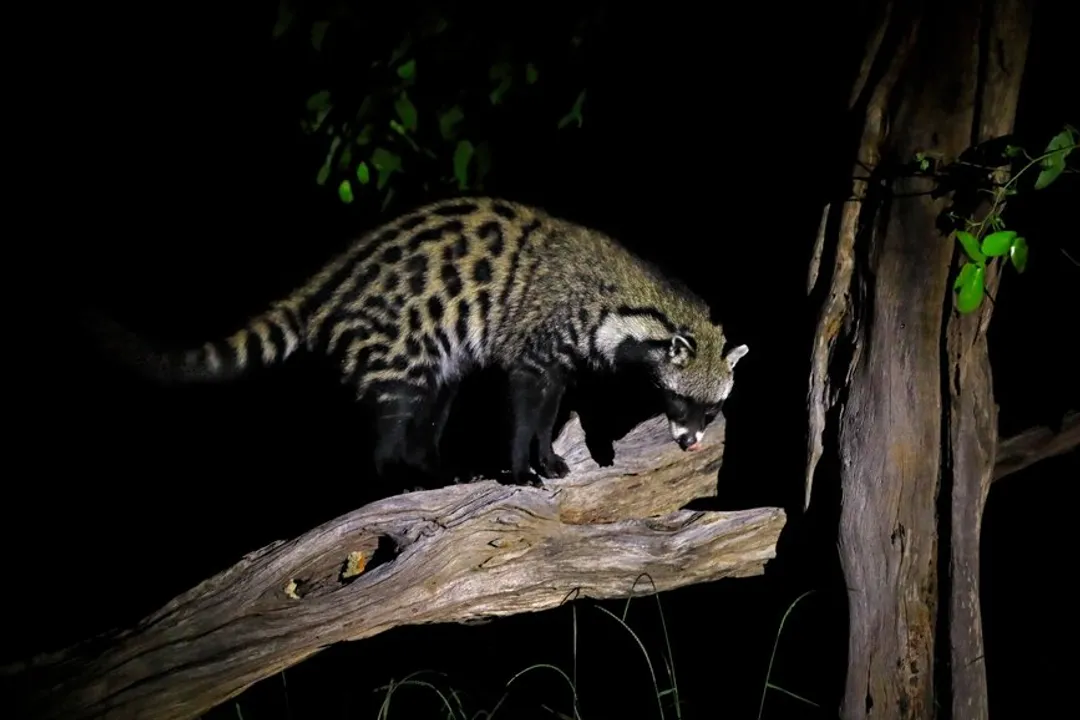
The African civet, with its striking black and white coat and elongated body, certainly presents a unique silhouette among the mammals of the African savanna and forest regions. When considering its place in the grand scheme of the animal kingdom, the immediate question of its kinship often arises, especially given its somewhat cat-like or perhaps even raccoon-like appearance to the casual observer. However, this animal is not closely related to either cats (Felidae) or raccoons (Procyonidae). Instead, the African civet (Civettictis civetta) belongs to a distinct and interesting group of carnivores known as the family Viverridae.
# Family Ties
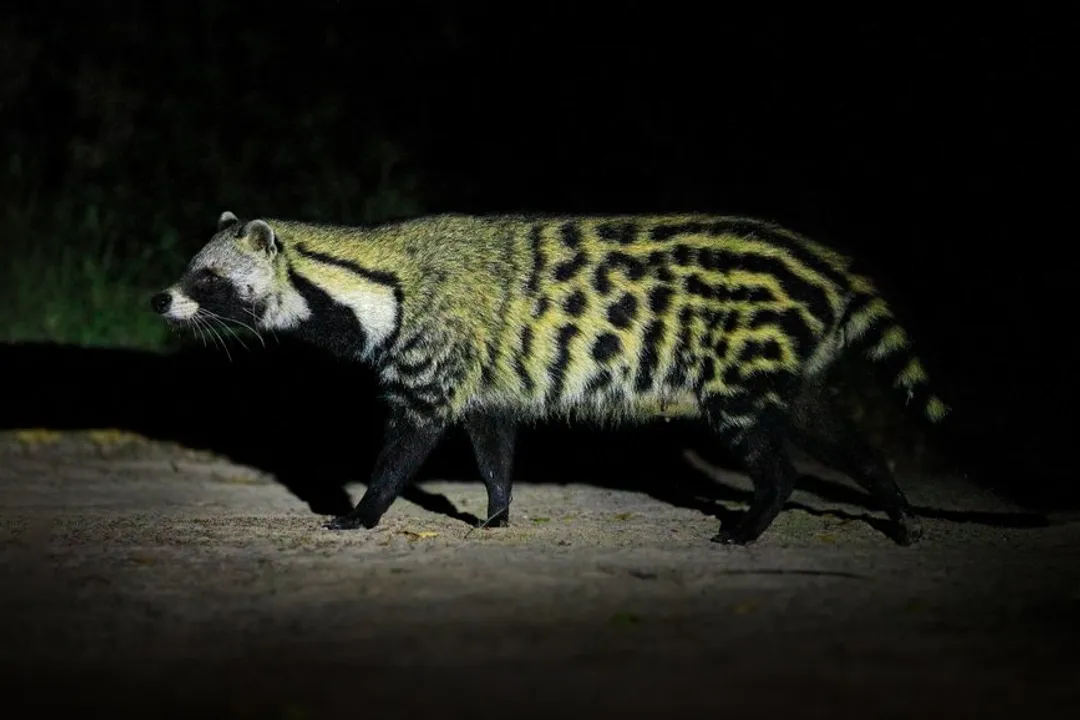
The family Viverridae is where the African civet finds its closest relatives. This group is quite diverse, though many of its members are found across Asia rather than Africa. While the African civet is the sole representative of its genus, Civettictis, within this family, it shares its ancestry with other well-known civets and their kin.
The Viverridae family encompasses several distinct genera, including the various species of palm civets and the binturongs. Asian palm civets are perhaps the most famous, not just as wild animals but due to their association with coffee production. Binturongs, sometimes referred to as "bearcats," are another notable member, possessing a prehensile tail that aids their arboreal life. Although all are within Viverridae, the evolutionary distance between Civettictis civetta in Africa and, say, an Asian palm civet, reflects a significant split within the family tree that occurred long ago.
A key point of comparison often arises when differentiating the African civet from other local carnivores. While it shares habitat space with true cats, mongooses, and hyenas, its internal structure places it far from them, despite superficial similarities in some behaviors or diets. The specialized musk gland, which produces the aromatic substance civetone—historically valued in perfumery—is a feature common, though varying in intensity, across many civet species within this family. This specialized trait helps define the Viverridae group against other carnivores.
# Suborder Placement
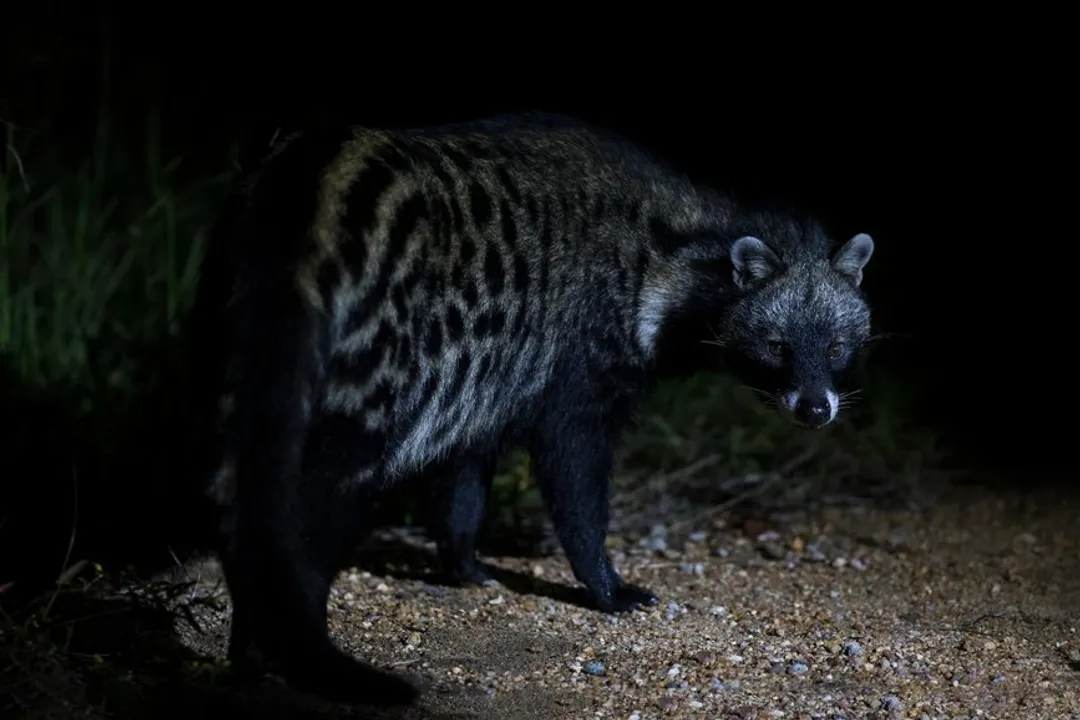
To truly understand the African civet’s relationships, one must look beyond its immediate family to the larger suborder classification. Viverrids, including the African civet, belong to the suborder Feliformia. This classification groups together carnivores that generally share a more cat-like anatomy, particularly concerning the structure of the skull and teeth, though this is a generalization that has exceptions.
The Feliformia suborder is a fascinating collection of mammals, often referred to as the "cat-like" carnivorans. Within this group, the African civet stands alongside some of the most specialized predators on Earth: the true cats (Felidae), the hyenas (Hyaenidae), and the mongooses (Herpestidae). It is important to grasp that while they share this suborder, the evolutionary divergence among these families is considerable. The African civet, representing the Viverridae, sits at a point in the Feliformia lineage that is often considered more basal or ancestral compared to the highly derived forms like the modern domestic cat or the powerful hyena. This suggests that the Viverrids retained more ancestral carnivorous traits while the other families pursued specialized predatory roles, such as the bone-crushing adaptation seen in hyenas or the extreme cursorial speed and ambush specialization of large cats.
To put this in perspective, consider the other major branch of terrestrial carnivores: the suborder Caniformia, which includes dogs, bears, seals, and weasels. The African civet is decidedly not in that lineage; its anatomical characteristics firmly plant it among the feliforms. This distinction is fundamental to understanding its evolutionary history, placing it on a separate track from creatures that resemble dogs or weasels. The Viverridae family's success lies in its adaptability across various niches, occupying an intermediate evolutionary space that allowed it to survive and diversify where specialized forms might have failed.
This intermediate placement offers a view into early carnivoran evolution. If we look at the ancestral morphology of the Feliformia, the Viverridae often serve as a morphological bridge, possessing characteristics that hint at the common ancestor from which true cats and hyenas later evolved. They represent a branch that successfully diversified across the Old World, particularly in Asia and Africa, without specializing to the extremes seen in their more famous relatives.
# Carnivora Order
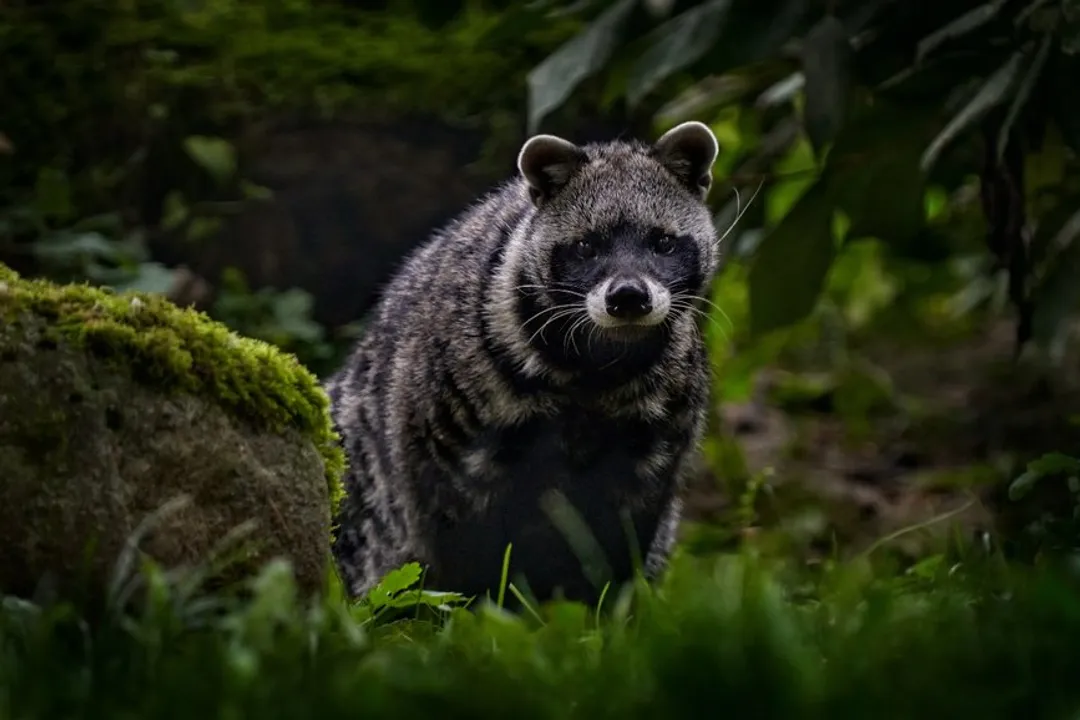
At the highest level of classification relevant here, the African civet, along with all its relatives in Viverridae, Felidae, Hyaenidae, and Herpestidae, belongs to the Order Carnivora. This order groups together mammals primarily characterized by a diet that leans heavily toward meat, though many species within the order, including the African civet, are highly omnivorous.
The defining characteristic of the Order Carnivora, which unites creatures as different as a binturong and a polar bear, is the specialized tooth structure known as the carnassial pair. These are modified upper fourth premolars and lower first molars that function like a pair of scissors to shear flesh. While the African civet certainly possesses these teeth, its diet is considerably broader than that of a dedicated hypercarnivore like a lion. The African civet is known to consume fruits, insects, small vertebrates, and other invertebrates, making it an omnivore.
The sheer range of body sizes and lifestyles within the Order Carnivora is staggering, and the Viverridae family contributes to this variety. If we were to arrange the African civet’s closest relatives on a spectrum of specialization, the Viverrids would sit on the more generalized end of the Feliformia side of the Order Carnivora. For example, comparing the African civet to the mongooses (also Feliformia), one notes that while mongooses often exhibit highly social, cooperative hunting strategies, the African civet is typically solitary and nocturnal. This behavioral difference, coupled with the distinct evolutionary paths of their respective families, highlights how relatedness at the suborder level does not dictate identical ecological roles.
This ecological flexibility, evidenced by the civet’s varied diet—consuming small rodents, birds, insects, and substantial amounts of fruit—is a hallmark of groups that have successfully navigated changing environments over deep time. It contrasts sharply with the dietary restrictions often seen in the highly specialized Felidae.
# Geographic Divergence Insight
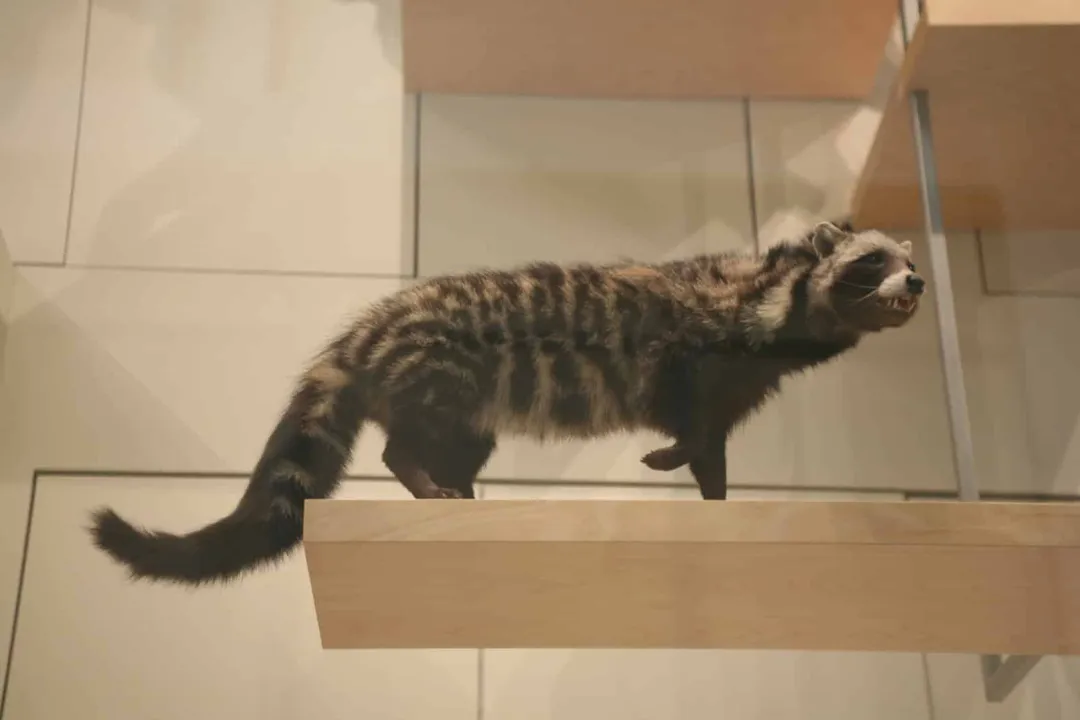
It is quite revealing to map the distribution of the Viverridae family members. While the African civet (Civettictis civetta) is endemic to significant portions of the African continent, the majority of the other civet genera—the palm civets and binturongs—are distributed across the Indian subcontinent and Southeast Asia. This strong geographic split within the same family suggests that the ancestral Viverrid lineage was present on both landmasses prior to, or during, the subsequent isolation events that shaped modern biogeography. One can infer that the African lineage experienced a unique set of selective pressures, leading to the development of species like C. civetta, while the Asian contingent evolved separately to fill arboreal and terrestrial niches across the Oriental realm. The survival of the African civet today, alongside the success of its Asian cousins, speaks to the Viverridae family's remarkable capacity for adaptive radiation following an ancient geographic separation within the Feliformia order.
# Distinguishing the African Civet
To fully appreciate what the African civet is related to, it helps to briefly outline what it is, separate from its kin. It is a mammal that averages about 50 to 80 centimeters in head and body length, with a distinctively long, bushy, black-and-white ringed tail. It is a mid-sized carnivore, generally weighing between 5 and 11 kilograms. It is primarily active during the night, resting in dense cover during the day. It possesses scent glands used for marking territory, which produce the famous civetone. Its physical characteristics, such as its general build, non-retractile claws (unlike true cats), and its prominent sagittal crest (a ridge on the skull), are features that help zoologists place it accurately within Viverridae, distinct from the Felidae.
# Summary of Kinship
The African civet’s relations can be mapped out layer by layer, moving from the most closely related to the most distantly related within the order:
| Taxonomic Level | Group Name | Key Relatives Mentioned |
|---|---|---|
| Family | Viverridae | Asian Palm Civets, Binturongs |
| Suborder | Feliformia | True Cats (Felidae), Hyenas (Hyaenidae), Mongooses (Herpestidae) |
| Order | Carnivora | All members of Feliformia and Caniformia (Bears, Dogs, etc.) |
This hierarchy clearly shows that while it shares the Order Carnivora with creatures like seals and bears, its primary evolutionary cousins are found within the Feliformia suborder, specifically its family, Viverridae.
# Ecological Niche Comparison
Diving deeper into the ecological differences among these relatives provides further context on the civet’s place. A fascinating comparison emerges when contrasting the Viverrids with the Herpestids (mongooses) within the Feliformia suborder. Mongooses are often known for their high levels of social interaction, sometimes forming cooperative hunting units to tackle larger prey, such as snakes. The African civet, conversely, is generally solitary. This suggests that the ancestral Viverrid line favored an independent, nocturnal, omnivorous strategy, relying on broad dietary intake and stealth rather than group coordination for survival. This difference in social structure and foraging pattern—solitary omnivore versus social insectivore/carnivore—illustrates how closely related families can diverge significantly in their adopted ecological roles after splitting from a common ancestor millions of years ago. The African civet’s success is thus rooted in its generalized, solitary approach to finding food under the cover of darkness, a niche largely unoccupied by its more socially structured or strictly carnivorous relatives in Africa.
The African civet, Civettictis civetta, is firmly established as a member of the Viverridae family, an ancient lineage of carnivores that thrives primarily across Asia but maintains a significant foothold in Africa. Its closest living relatives are those other civets and binturongs found across the Asian continent. Its broader classification places it within the cat-like carnivorans, the Feliformia, alongside the true cats, hyenas, and mongooses. This placement confirms that despite its unique appearance and habits, the African civet is evolutionarily closer to a leopard than it is to a fox or a bear.
Related Questions
#Citations
African civet - Wikipedia
African Civet Animal Facts - Civettictis civetta
Viverridae - The Civet Project
5 Interesting Facts About the African Civet - We Love Catz
African Civet | Online Record Book Preview
African Civet Facts, Worksheets, Taxonomy & Appearance For Kids
African Civet - The Animal Kingdom Wiki - Fandom
Civettictis civetta (African civet) - Animal Diversity Web
African Civet - Animal Photos