Why is a civet not a cat?
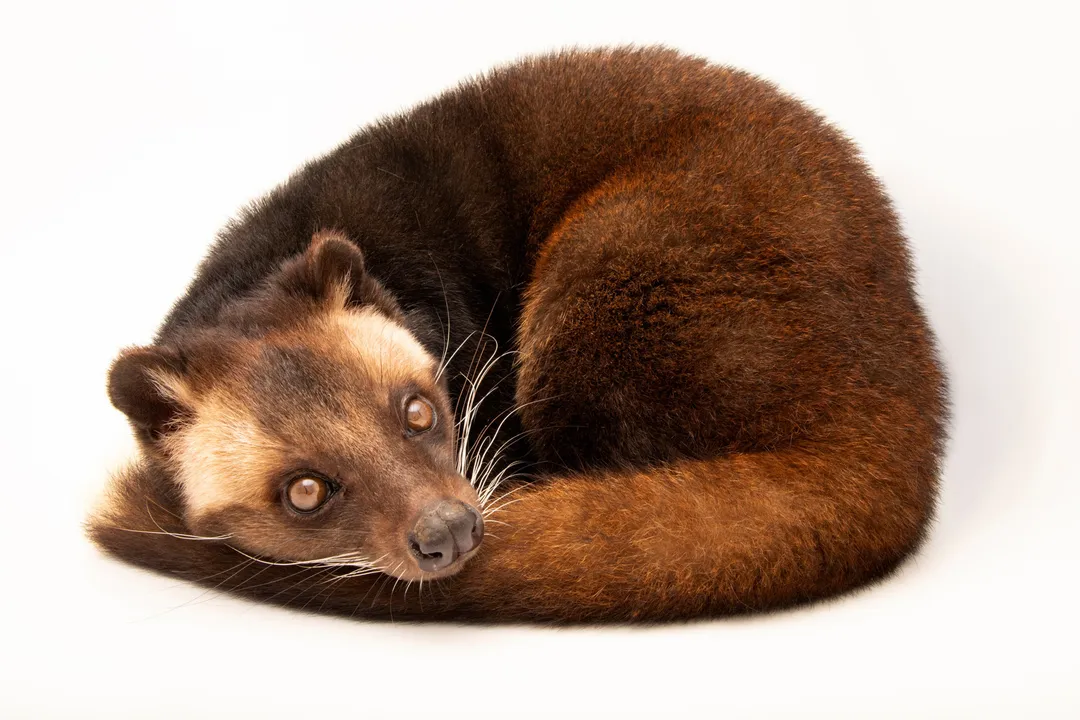
The term "civet cat" surfaces often enough to cause legitimate confusion, perhaps in a nature documentary or when reading historical accounts of perfumery, leading many to assume these creatures are simply exotic members of the domestic feline lineage. In reality, this moniker is a prime example of how superficial resemblance can lead common language astray from scientific fact. While civets share a distant common ancestor with the house cat—both belonging to the mammalian suborder Feliformia, meaning "cat-like"—they are fundamentally different animals, inhabiting their own distinct evolutionary branch.
To understand this separation, one must look at the family tree. True cats belong to the family Felidae, a relatively specialized group. Civets, however, are members of the family Viverridae. The Viverridae family is itself ancient and diverse, encompassing not just civets, but also genets, binturongs, and linsangs. These viverrids are considered among the most primitive of the living Feliformia. This means a civet is taxonomically closer to a mongoose or a genet than it is to a lion or a tabby cat. The common usage of names like "toddy cat" or the German name Zibetkatze (civet cat) merely reflects their superficial cat-like bodies, long tails, and sometimes their predatory habits, rather than any close genetic relationship.
# Anatomy Divergence

The visual similarity between a civet and a cat is strongest when they are seen briefly or in poor light, often leading people to categorize them simply as "small cats". However, closer inspection, or a look at their skeletal structure, reveals significant distinctions that highlight their separate evolutionary paths.
One immediate difference lies in the facial structure. A civet typically possesses a more extended and pointed muzzle, one that bears a stronger resemblance to an otter or a ferret than to the shortened face typical of many cat species. Furthermore, anatomical scrutiny shows differences in their limbs and feet. Civets generally have shorter legs compared to their feline counterparts. More critically, their feet differ: most viverrids possess five toes on their hind feet, whereas true cats possess only four.
The divergence continues inside the mouth. Civets, unlike cats, are often omnivores or even herbivores, with many species subsisting heavily on seasonal fruits and nectar. This varied diet has influenced their dentition. Civets have less developed carnassial teeth when compared to cats, which are generally obligate carnivores requiring specialized teeth to shred meat efficiently. The fact that many civets can thrive on fruit means their jaw structure and crushing surfaces are adapted for a broader range of foods, a trait rarely seen in the Felidae family outside of the more generalized domestic cat, which is still fundamentally carnivorous.
# Scent and Solitude
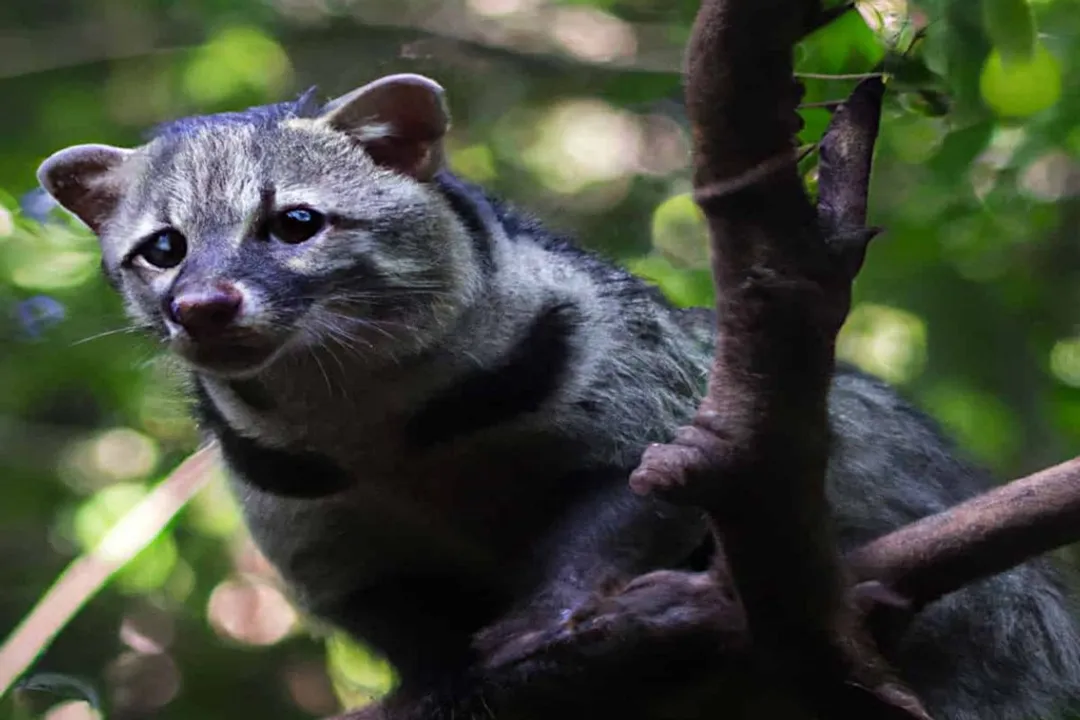
Beyond the bones and teeth, the sensory and social lives of civets contrast sharply with those of cats, offering further evidence of their non-feline nature.
Civets are highly distinguished by their reliance on scent, produced by a pair of perineal glands located near their genitals. This secretion, called civet, is a strong, musky odor used primarily for territorial marking. This musk is so potent and unique that it has been harvested for centuries as a base and fixative in high-end perfumery. This practice, though ethically challenged and diminishing, is a biological feature far removed from the typical scent marking employed by domestic cats, which rely more on facial rubbing and urine spraying.
In terms of social structure, most civet species exhibit a solitary and nocturnal lifestyle, only congregating briefly for breeding purposes. This contrasts, in a fascinating way, with the evolutionary trajectory of the domestic cat. While wildcats are somewhat solitary, the ancestors of Felis catus were social enough to tolerate, and eventually exploit, the loose social structures humans offered in early agricultural settlements. Civets, being largely solitary, did not naturally progress toward the self-domestication that benefited the wildcat ancestor, making them far less likely candidates for a mutually beneficial, low-conflict coexistence that led to the massive global population of Felis catus.
| Feature | Civet (Viverridae) | True Cat (Felidae) |
|---|---|---|
| Scientific Family | Viverridae (and some in Eupleridae/Nandiniidae) | Felidae |
| Muzzle Shape | Extended, pointed (otter-like) | Generally shorter, rounded |
| Hind Toe Count | Typically five | Four |
| Primary Diet | Omnivorous/Frugivorous common | Obligate Carnivore |
| Unique Trait | Musky secretion from perineal glands | Specialized, highly developed carnassial teeth |
# Untangling Linguistic Relatives
The confusion is compounded because the Viverridae family contains other animals frequently mistaken for cats or incorrectly lumped with civets. For instance, genets are also viverrids, but they are distinctly different from civets. Genets are typically smaller and more slender than civets, and their coat markings differ; a key distinction is that the dark rings on a genet’s long tail often extend all the way to the very tip, whereas a civet’s tail usually concludes in a solid dark color. Furthermore, genets are primarily carnivorous, contrasting with the more generalized diet of many civet species. This internal diversity within the Viverra family suggests that using the generic term "civet cat" for any small, spotted, nocturnal animal from that region is a persistent naming error, much like calling a North American ringtail a "miner's cat".
It is a remarkable ecological point that while both civets and cats fall under the umbrella of "cat-like" carnivores (Feliformia), their subsequent dietary specialization has been so different. Cats honed their tools for pure predation, leading to domestication in environments rich with grain-eating rodents, where their specialized hunting offered a clear benefit without competing for the human food source. Civets, being highly adaptable omnivores, might have been seen as potential competitors for fruits or other scavenged edibles, coupled with the strong odor of their musk making close proximity undesirable for early agrarian societies.
# The Olfactory Calling Card
The way civets mark their territory versus how cats communicate offers another illustrative contrast. While a cat’s purr is an internal vibration many humans find inherently calming—possibly even promoting their own healing—a civet's primary broadcast is the external, pervasive musk. Where a cat’s sound signature promotes attachment to human dwellings, a civet’s musk serves a purely wild, territorial function. This difference in biological priorities likely played a substantial role in which Feliformia lineage succeeded in integrating with developing human civilizations. The need for wild civets to produce this specific musk is why they are subject to cruel captive farming practices for the perfume trade, or why Asian palm civets are involved in the Kopi Luwak industry, as they digest the coffee beans before defecating the processed material. These intensive human interactions, which focus on unique biological products—musk or processed coffee—demonstrate the specialized, non-companion animal role civets occupy in the human sphere, entirely separate from the symbiotic, pest-control relationship established with the domestic cat.
Related Questions
#Citations
Civets are small carnivores. They ...
Civet
Meet the Civet, the Mammal Behind the Coffee
Civet or civet cat - - natural perfumes by AbdesSalaam Attar
A civet is not a cat?? - Chimp & See Talk
What gave cats the edge over genets, civets, mongooses ...
Are Civet Cats and Genet Cats the Same Animals?