Are cantil snakes related to copperheads?

The close evolutionary ties between the snakes known as Cantils and the familiar Copperheads of North America are rooted deep within their scientific classification, placing them under the same taxonomic roof. Specifically, both groups belong to the genus Agkistrodon, a grouping of pit vipers known for possessing heat-sensing pits between their eyes and hemotoxic venom. [2][3][4] This shared genus designation immediately confirms a close relationship, much like cousins sharing a grandparent, even if their current lifestyles and homes differ significantly. [1][4] Copperheads, which are often found throughout the eastern and central United States, are one of the most recognized New World members of this group. [4] Cantils, on the other hand, generally inhabit regions further south, primarily Mexico and Central America. [2][3]
# Shared Lineage
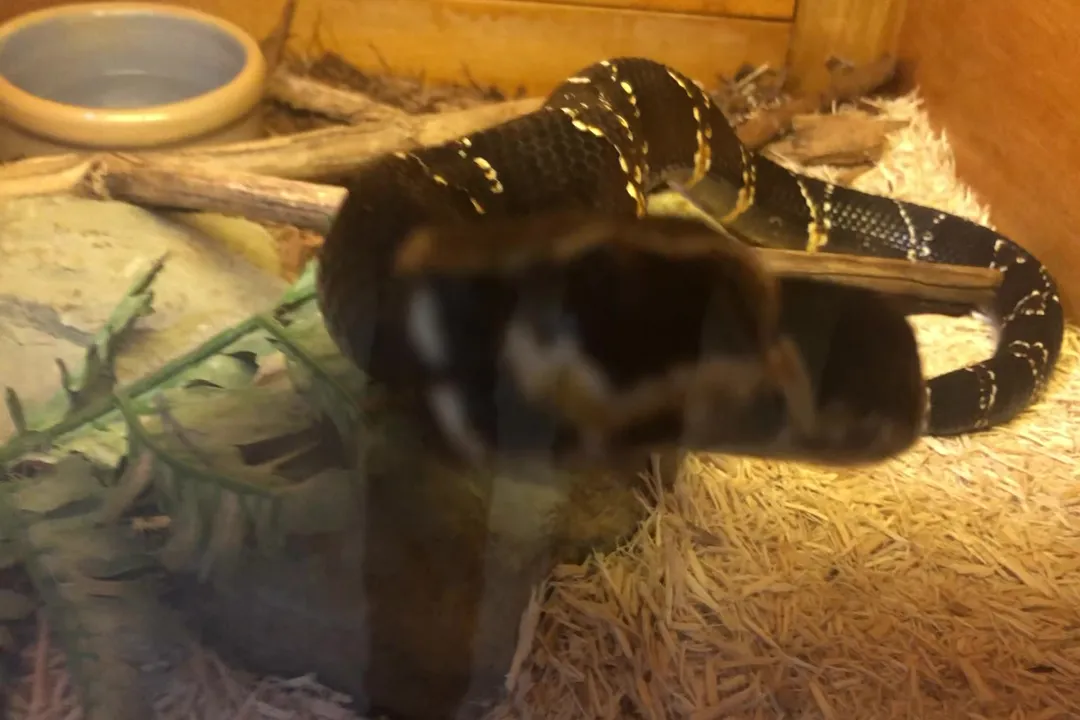
The Agkistrodon genus is comprised of several venomous species, and its members are united by shared ancestral traits. [2][4] This genus unites three major groups commonly encountered in North America: the Copperheads (Agkistrodon contortrix), the Cottonmouth or Water Moccasin (Agkistrodon piscivorus), and the various species of Cantils found in Mesoamerica, such as Agkistrodon bilineatus or Agkistrodon taylori. [3][4] When naturalists examine the phylogeny—the evolutionary history—of these snakes, they find that the Cantils are not simply distant relatives; they are immediate relatives within the same established grouping. [1][4] For example, the Taylor's Cantil (Agkistrodon taylori) is explicitly noted as being closely related to the Copperhead. [1]
This biological grouping suggests that their common ancestor was a species that gave rise to these distinct, yet related, lineages which subsequently adapted to different environmental pressures across their respective ranges. [9] The shared presence of the Agkistrodon name signifies that fundamental characteristics, from their venom composition to their general morphology (body shape), are conserved across the group, even as superficial traits evolve to suit local camouflage needs. [2][3]
# Genus Memberships
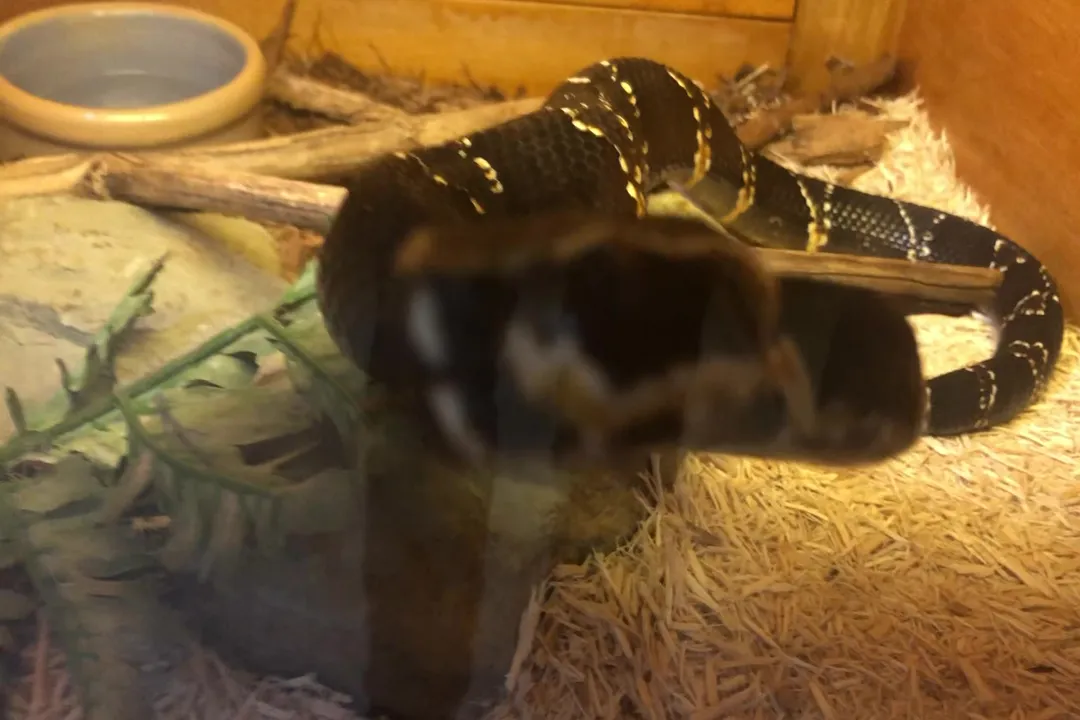
To better understand the relationship, one must look at the distinct sections within Agkistrodon. While Copperheads are distinctly North American pit vipers, the Cantils represent the Central American contingent of the genus. [3][4] The group is characterized by having elliptical pupils and triangular heads, typical features of the Viperidae family, but specifically pit vipers within the subfamily Crotalinae. [2]
Consider the distribution of the genus members across North and Central America. This geographic separation within a single genus often reveals distinct evolutionary paths taken after an initial divergence from a common ancestral population.
| Group | Example Species | Primary Location | Key Characteristic Connection |
|---|---|---|---|
| New World Moccasins | Copperhead (A. contortrix) | Eastern/Central USA | Shared genus with Cantils [3][4] |
| New World Moccasins | Cottonmouth (A. piscivorus) | Southeastern USA | Shared genus with Cantils [3][4] |
| Neotropical Vipers | Cantil (A. bilineatus) | Mexico/Central America | Closely related to Copperheads [1][2] |
| Neotropical Vipers | Taylor's Cantil (A. taylori) | Mexico | Member of Agkistrodon [4][8] |
This table helps illustrate how North American and Mesoamerican venomous snakes are united under the same scientific banner. While a layperson might easily confuse a Copperhead with a Cottonmouth based on location and general appearance, the fact that a Cantil—found hundreds or thousands of miles away—shares the same genus name emphasizes the depth of their shared ancestry. [3]
# Regional Distinctions
Although the underlying genetics link them, practical identification for someone in the field relies heavily on geography, as the specific appearances have diverged significantly. For instance, the Cantil species, such as Agkistrodon bilineatus, is frequently described by its dark, often black, coloration or striking patterns. [2] Taylor's Cantil (Agkistrodon taylori) is another species within this group, often noted for its relatively small size compared to some of its northern relatives. [8]
In contrast, Copperheads are famous for their hourglass-shaped crossbands, which are typically shades of brown or reddish-brown against a lighter background, providing exceptional camouflage in leaf litter. [4] While both groups are venomous and possess the characteristic triangular head shape of pit vipers, the specific color patterns and dorsal markings are adaptations to their respective local environments—the humid forests of Central America versus the deciduous woods of the Eastern US. [2][3] It is an interesting observation that habitat specialization drives such distinct visual phenotypes even within a tightly knit genus; the camouflage of a Copperhead in temperate woods is entirely different from the camouflage needed by a Cantil in tropical scrubland, yet the underlying skeletal and venom delivery systems remain fundamentally similar. [9]
If one were to encounter a snake exhibiting the general build and head shape of a Copperhead but found in, say, southern Texas or Mexico, the initial identification would lean toward a Cantil species like A. taylori or A. bilineatus because of the strict geographic segregation of the primary species groups within the genus. [4][8] This highlights a critical piece of practical knowledge: in herpetology, where you are often as important as what you see when dealing with closely related genera.
# Venom Systems
As pit vipers belonging to the same genus, both Copperheads and Cantils possess hemotoxic venom, which primarily affects the blood and surrounding tissues, leading to symptoms like pain, swelling, and potential tissue damage. [4] While the precise composition and potency of the venom can vary significantly even between closely related species—a common pattern in venomous snakes—the basic mechanism of action is shared due to their common ancestry. [9] For example, the venom of A. bilineatus has been subject to study, revealing its complex enzymatic makeup typical of vipers in this group. [9]
It is important for anyone interested in snake biology to recognize that "close relation" does not imply identical threat level. While both deliver hemotoxic venom, the severity of the bite reaction is dose-dependent and species-specific. A Copperhead bite is rarely fatal to a healthy adult, often resulting in moderate envenomation. However, Cantil bites, depending on the exact species and volume of venom injected, can sometimes result in more severe local effects, though fatalities are still rare with prompt medical attention. [2][3] Treating all Agkistrodon bites with extreme seriousness is the only responsible course of action, regardless of whether the snake is a Copperhead or a Cantil. [4]
# Adaptation and Speciation
The divergence within Agkistrodon provides a textbook example of allopatric speciation, where populations become geographically separated and evolve independently until they become distinct species. [1] The emergence of the Copperheads and Cottonmouths in the northern latitudes, likely adapting to cooler seasons and different prey bases, contrasts with the Cantils evolving under consistent tropical or subtropical conditions further south. [3]
This isolation allows for the development of unique traits, such as the specific shade of copper on a Copperhead’s head or the distinct stripe pattern on the A. bilineatus Cantil. [2] Yet, the underlying blueprint—the sensory pits, the hinged fangs, and the primary venom components—remains recognizable across the genus barrier. The presence of Agkistrodon taylori being studied in one context and A. contortrix in another showcases how researchers use these related species to map out the evolution of pit vipers in the Americas. [1][8] The fact that these snakes, separated by a vast stretch of territory, are still grouped together speaks volumes about the strength of their shared evolutionary history over the surface-level differences driven by adaptation. [4]
# Practical Identification Tip
For anyone hiking or living in areas where these ranges overlap or border one another—such as the southern edges of the United States near Mexico—a simple mental checklist based on genus affiliation can be highly informative. If you identify an Agkistrodon pit viper, immediately check your geographic context. If you are deep in the American Southeast, it is overwhelmingly likely to be a Copperhead or Cottonmouth. If you are in southern Mexico, it is a Cantil. This reliance on local endemic knowledge saves time and potentially prevents misidentification based on ambiguous patterns alone, as the regional species dictate the probability of encountering a specific snake type. [3][4] A person should never rely solely on a field guide photograph when safety is involved; location provides the crucial filter for identification among closely related groups like the Cantils and Copperheads. [1]
#Videos
The Biology of Cottonmouths, Copperheads, and Cantils - YouTube
Related Questions
#Citations
The Taylor's cantil was being very curious! These snakes are closely ...
Agkistrodon bilineatus - Wikipedia
Cantil Animal Facts - A. bilineatus, A. howardgloydi, A. russeolus, A ...
Cantilurday viperid: Mexican mocassin - Why Evolution Is True
The Biology of Cottonmouths, Copperheads, and Cantils - YouTube
Taylor's Cantil (Agkistrodon taylori) : r/snakes - Reddit
Genus-wide comparisons of venom proteomes across Agkistrodon