What adaptations do desert rain frogs have?
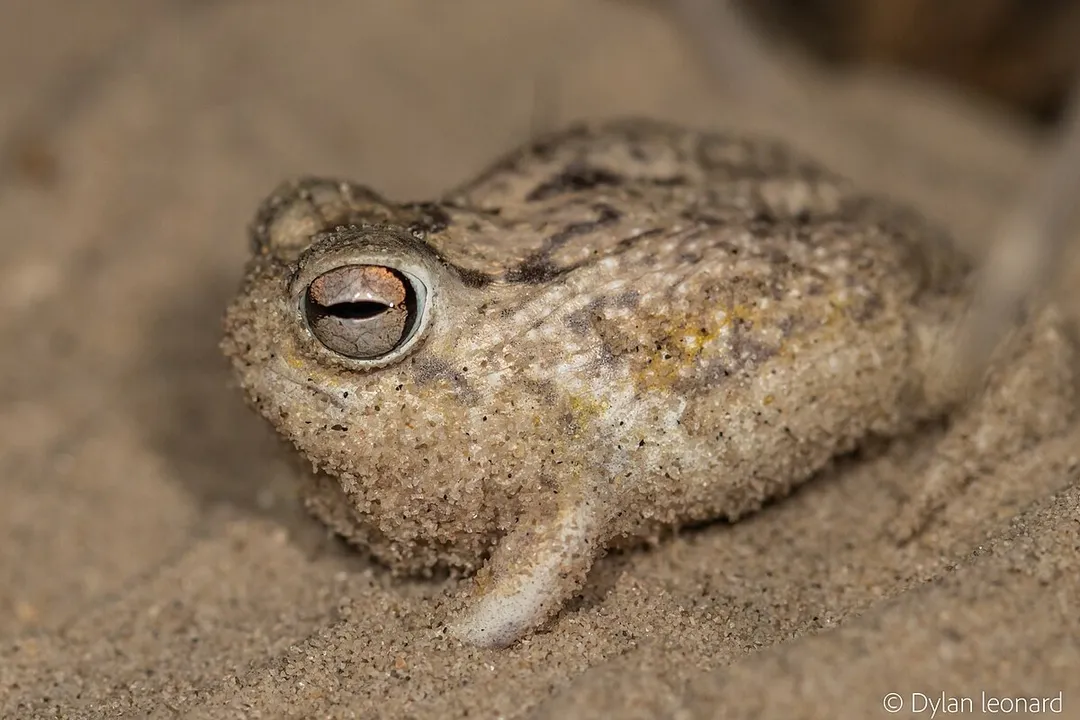
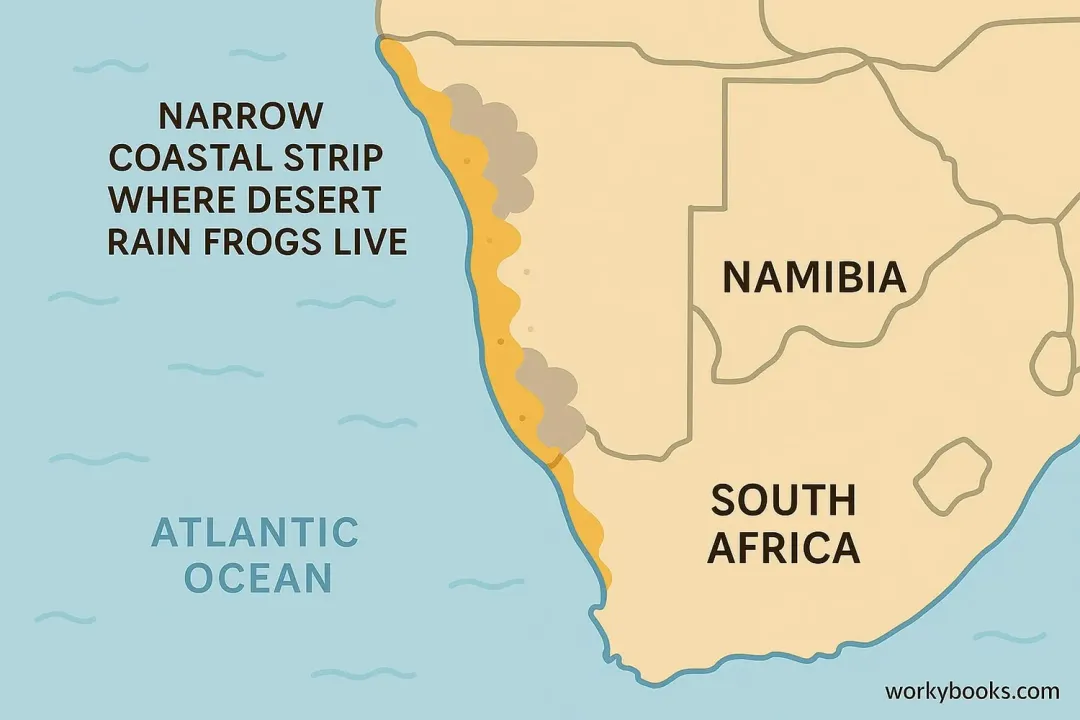
The Desert Rain Frog (Breviceps macrops) presents one of nature’s most charming contradictions: an amphibian thriving in one of the driest coastal deserts on Earth. These little creatures, often appearing like miniature, grumpy balloons, have engineered a lifestyle that defies the fundamental dependence most frogs have on constant surface water. Found only in a remarkably narrow band along the coast of Namibia and South Africa, their survival hinges on a suite of specialized physical traits and deeply ingrained behavioral routines tailored for their arid, sandy domain.
# Physical Structure
The frog’s very name, Breviceps macrops, offers a concise summary of its most noticeable features: a "short head with big eyes". Physically, they are built for sand, not for leaping. They possess a distinctive, plump, round body supported by short, stubby limbs. This compact shape, combined with small legs, renders traditional hopping impossible; instead, the Desert Rain Frog walks deliberately across the dunes, leaving behind unique footprints that often betray their nocturnal movements. Their typical adult size is quite small, ranging between 4 and 6 centimeters in length.
One striking physical feature is their large, bulging eyes, which aid their nocturnal activities in the low-light environment of the dunes. Their coloration is generally yellowish-brown, which provides excellent camouflage against the sand. Furthermore, their entire body surface, save for the mouth and nose, seems perpetually dusted with sand, which sticks stubbornly to the skin. This adherence is thought to be due to a sticky secretion the frog produces, making it difficult to clean off. A less obvious, but structurally significant, characteristic is the transparent patch of skin found on the underside of the frog, allowing a view of its internal organs.
# Sand Mastery
The specialized feet are perhaps the most essential physical tool for their desert existence. The Desert Rain Frog is equipped with spade-like feet and webbed toes. These are not for swimming in ponds but are perfectly adapted for digging and navigating the loose, shifting sands of their habitat. They are burrowing specialists, spending the vast majority of their daylight hours deep beneath the surface.
These burrows are strategically placed, typically dug down 10 to 20 centimeters into the sand where the substrate retains crucial moisture, offering a cool refuge from the harsh daytime heat. The act of digging itself is an observable sign of their presence; researchers can often locate where a frog has been by observing the small piles of dislodged, loose sand left near the burrow entrance when they emerge.
It is fascinating to consider how this reliance on walking and digging contrasts with the morphology of other amphibians. While most frogs have elongated hind legs designed to maximize surface area for propulsion across ground or water, the Desert Rain Frog has essentially forfeited that speed advantage for specialized excavation power. This trade-off makes the frog slow-moving on the surface, but it grants unparalleled access to the regulated microclimate underground. When threats arise on the surface, the frog has a defense mechanism centered around its shape: it will puff up its body, dramatically increasing its apparent size to discourage predators from attempting to swallow it.
# Water Secrets
Amphibians famously suffer from high rates of cutaneous water loss, meaning they must keep their skin moist to breathe and survive. For a frog living in an environment that receives only about 60 millimeters of annual precipitation and has virtually no standing surface water, this is a near-insurmountable challenge. Their primary moisture input comes not from rain or puddles, but from the coastal fog that rolls in from the ocean, dampening the upper layers of sand.
Adaptively, these frogs are able to absorb water directly through their skin from the damp sand layers they inhabit. This dermal absorption is critical. Interestingly, while many desert-dwelling amphibians employ sophisticated methods to seal in moisture—such as some general desert frogs secreting a layer of mucus that hardens around their burrow entrance to form a protective, moist cocoon, a state known as aestivation—the specific description of Breviceps macrops suggests a slightly different reality. One detailed account notes that this specific species surprisingly "does not have any apparent adaptation to prevent water loss," relying instead on burrowing deep to find existing dampness. This apparent dichotomy warrants further investigation; it suggests that either the need for specialized water-loss prevention is negated by the constant, though minimal, humidity found consistently at their burrow depth, or perhaps that their primary defense against desiccation is avoidance (staying buried) rather than resistance (sealing themselves in). Their ability to survive by remaining underground for extended periods, entering a state of dormancy called aestivation, allows them to wait out dry stretches for up to three years until the moisture returns.
# Night Life
Survival in this arid niche necessitates a strict schedule. The Desert Rain Frog is almost exclusively nocturnal. They emerge from their cool, moist burrows when the sun sets to hunt, a behavior that keeps them safely away from the dangerous, dehydrating heat of the day.
Their diet reflects what is available on the sparsely vegetated dune surface at night. They are insectivores, feeding on small invertebrates they encounter, including ants, beetles, termites, and other tiny prey items. Hunting is a surface activity, utilizing a sticky tongue to snatch prey.
The frog’s vocalization is another defining adaptation, particularly for reproduction. Unlike the deep, resonant croaks of many other frog species, the Desert Rain Frog produces a high-pitched, insistent squeak. This sound has famously been compared to a squeaky toy. This high-frequency call serves a practical purpose: it allows the male to advertise his presence to females while conserving the precious water and energy that a louder, more prolonged croak would demand in such a dry climate. The males call from the surface during the breeding season, which generally runs between June and October.
# Life Cycle Strategy
The reproductive cycle of the Desert Rain Frog is a masterclass in adapting the amphibian life cycle to terrestrial life. The majority of frogs require standing water for their aquatic larval stage—the tadpole. This is a fatal dependency in the Namibian desert.
Breviceps macrops circumvents this entirely through direct development. After the male attracts a female with his distinctive squeak and mating occurs, often underground, the female lays a clutch of eggs, typically ranging from 12 to 40, within a chamber dug into the moist sand. The eggs develop directly into miniature versions of the adults, emerging as fully formed froglets capable of walking and hunting insects immediately, completely bypassing the vulnerable tadpole phase. This means the frog’s entire existence, from egg to adult, is tied to the stability of the damp subsurface sand rather than ephemeral pools. The proximity of their breeding season to the region's meager winter rains (June and July) suggests they are capitalizing on the slight increase in ground moisture when it is available.
# Conservation Context
Despite their incredible adaptations, the Desert Rain Frog faces severe threats due to its highly restricted habitat. They are currently listed as Near Threatened by the IUCN Red List. Their entire global range is confined to a small, fragmented strip of land, less than 2,000 square kilometers in total area.
The primary dangers stem from human activity along this sensitive coastline. Coastal development for housing, road construction, and, historically, opencast diamond mining have directly destroyed significant portions of their dune habitat. Increased tourism activity, particularly the use of off-road vehicles, continues to damage the fragile dune structure required for their burrowing. While the cessation of opencast diamond mining in South Africa offers a glimmer of hope, and restoration attempts have been made, there is no definitive evidence that the frogs have successfully recolonized these restored areas.
This habitat specificity creates a fascinating ecological vulnerability. Because their existence is so tightly bound to a narrow coastal margin where the fog line meets the sand dunes, any change in climate patterns that alters the frequency or intensity of this fog could spell disaster, even if the land itself remains undeveloped. Furthermore, because they walk and have limited mobility compared to leapers, recolonizing restored or adjacent habitats, if their initial area is lost, would be a very slow process. The commitment to staying underground for long periods means any surface disturbance during their brief active window can have disproportionately large impacts on breeding success. Their lifespan, noted as anywhere from four to fourteen years, offers a significant window for long-term monitoring, but also indicates a slow reproductive rate, making population recovery challenging.
Related Questions
#Citations
Desert rain frog - Wikipedia
Desert Rain Frog - Definition, Examples, Quiz, FAQ, Trivia
Bonus curios: frog mucus bunkers & desert rain - Tinybop