Which animal is best adapted to mimic the coral snake?
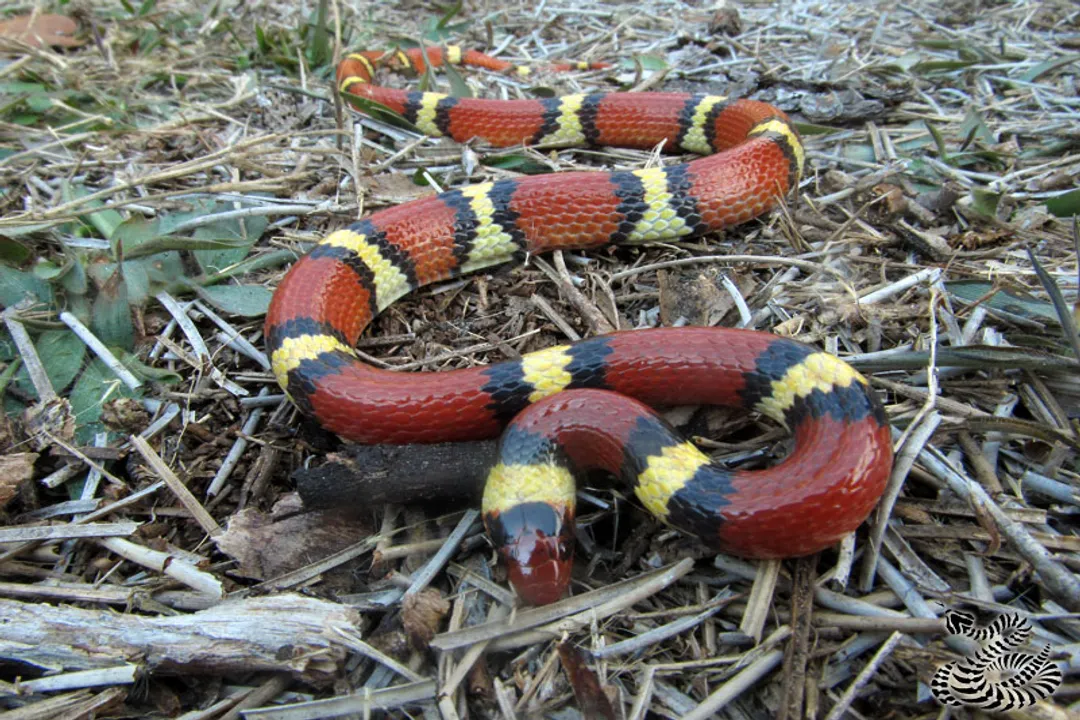
The vibrant, banded pattern of red, yellow, and black found on certain North American snakes has fascinated naturalists and worried hikers for generations. This striking coloration is not merely for show; it is a deadly warning sign in the case of the venomous coral snake, and a brilliant deception when worn by its mimic. When discussing which animal is best adapted to mimic the coral snake, the answer points overwhelmingly to certain species of Kingsnakes, particularly the Scarlet Kingsnake, which has perfected the art of looking dangerous without actually being venomous.
# Aposematic Coloration
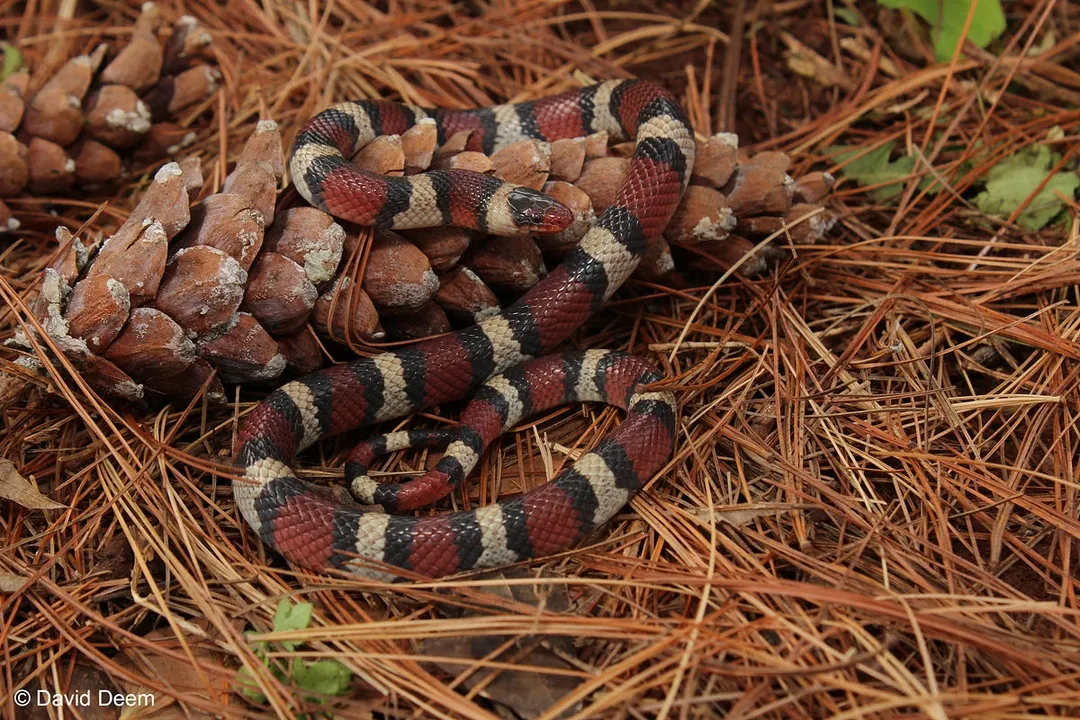
The coral snake itself is the benchmark for this evolutionary arms race. These snakes, belonging to the family Elapidae, possess potent venom capable of causing severe harm or death to humans. In the natural world, advertising danger clearly is a survival strategy known as aposematism, or warning coloration. The bright, high-contrast bands of red, black, and yellow/white serve as an immediate, easily learned signal to potential predators: do not eat me. A predator that has had one unpleasant encounter with a coral snake will likely avoid any snake sporting that specific combination of colors in the future, even if the snake it encounters is harmless.
It is this established warning system that the imposters exploit. The adaptation is not about matching the coral snake’s behavior or venom delivery system—it’s purely about visual trickery.
# The Master Mimic
The title of "best adapted" mimic generally falls to the Scarlet Kingsnake (Lampropeltis elapsoides), although other species, such as the Scarlet Snake and the Milk Snake, also engage in similar protective mimicry depending on their geographic range. The Scarlet Kingsnake is a constrictor, non-venomous, and poses no threat to humans compared to the actual coral snake it imitates. This specific form of imitation, where a harmless species evolves to resemble a harmful one, is classically defined as Batesian mimicry, named after the 19th-century English naturalist Henry Walter Bates.
The success of the Scarlet Kingsnake lies in how closely its pattern aligns with that of the highly dangerous Eastern Coral Snake. The mimicry must be convincing; if the resemblance is poor, the visual warning fails, and the predator might attack, resulting in the death of the mimic. Evolutionary pressures have thus fine-tuned the Kingsnake’s banding to closely mirror that of its toxic counterpart, ensuring maximum deterrence for the energy invested in growing the bright pigments.
# Decoding The Bands
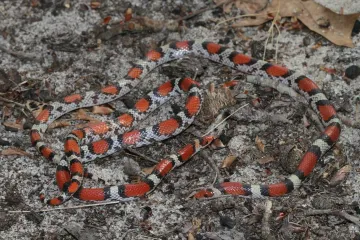
For the untrained eye, especially in high-stress situations, distinguishing the venomous native coral snake from its non-venomous double can be nearly impossible without knowing the critical pattern distinction. This is where traditional folklore comes into play, often taught through simple rhymes designed to help people quickly assess danger in regions where these snakes co-exist, primarily the southeastern United States.
The most common mnemonic relies on which colors touch the red bands:
- "Red touches black, friend of Jack" (or "Red on black, venom lack"). This pattern is characteristic of the mimic, like the Scarlet Kingsnake. The red bands are bordered by black bands.
- "Red touches yellow, kill a fellow" (or "Red on yellow, deadly fellow"). This pattern signifies the truly venomous coral snake, where the red bands are bordered by yellow or white bands.
However, relying solely on this rhyme demands a high degree of local expertise and awareness of its limitations. For instance, in some regions, there are variations in the pattern, or entirely different banding sequences exist among various species of coral snakes and their look-alikes, rendering the simple rhyme unreliable across all sightings. A slightly misplaced band or a faded pattern due to age or wear can easily trick someone relying only on this shorthand.
It is a fascinating consequence of ecological pressure that this rule only applies reliably to the North American species. When considering coral snakes found in Central or South America, this rhyme is essentially useless, illustrating that the "best adapted" mimicry is often only locally adapted to the specific predator-prey dynamics of a small geographic area.
# Imperfect Mimicry and Adaptation
While the Scarlet Kingsnake is often cited as the gold standard, the adaptation is not always perfect, which introduces another layer of complexity to the mimicry dynamic. Some sources suggest that the mimicry may not be exact, or that the mimic's pattern might sometimes be a blend or variation. The success of the mimicry hinges on the fact that predators perceive them as dangerous, even if entomologists or herpetologists can spot subtle differences in scale count, head shape, or exact band width.
This leads to an interesting evolutionary comparison. If the mimic is too good, it might attract extra attention from predators that specifically learn to hunt coral snakes, even if the mimic is harmless. If it is not good enough, it gets eaten. The sweet spot achieved by the Scarlet Kingsnake suggests a balance where the pattern is frightening enough to deter most generalized predators without being so common as to be actively hunted by specialized predators looking for the exact coral snake signature.
Some complex mimicry systems extend even further. One recognized phenomenon is Emsleyan mimicry, described as a situation where a harmless species mimics a slightly less dangerous species, which in turn mimics a highly dangerous one. While the direct coral snake/kingsnake model is pure Batesian, this layered form shows the breadth of deceptive strategies evolving in response to multiple levels of toxicity in an ecosystem.
# Beyond the Color Test
For those needing to identify these snakes outside of the strict parameters where the rhyme applies, other physical cues can sometimes differentiate the mimic from the genuine article, although these require closer inspection—something a predator might not have the luxury of doing.
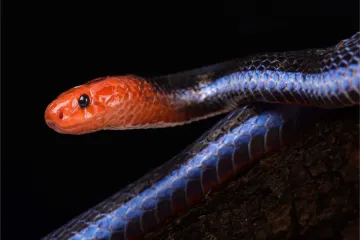
For example, the snout color can sometimes be a distinguishing factor. In many North American coral snakes, the snout is black. The mimics, however, often have a red or yellowish snout, though this is not a universal rule and varies by species and subspecies.
Another factor relates to behavior and habitat. Coral snakes tend to be secretive, spending much of their time underground or under leaf litter, making them less frequently seen than the terrestrial Kingsnakes that might be basking in the open.
| Feature | Venomous Coral Snake (General US) | Batesian Mimic (Scarlet Kingsnake) |
|---|---|---|
| Red Band Border | Touches Yellow/White | Touches Black |
| Danger Level | Highly Venomous (Neurotoxin) | Non-Venomous Constrictor |
| Snout Color | Often Black | Often Red or Yellow |
| Behavior | Secretive, fossorial tendencies | More terrestrial/visible |
A practical consideration for anyone observing these snakes in the wild, particularly where new or intermediate mimics might be evolving, is to treat any snake with bright bands with respect until positively identified. The metabolic cost for the Kingsnake to produce these pigments is an investment in survival, meaning that even if the mimicry isn't perfect to the human eye, it is almost certainly successful against the average avian or mammalian predator that doesn't carry a field guide.
Ultimately, the animal best adapted to mimic the coral snake is the one whose coloration has evolved to hit the threshold of deterrence for local predators. In the context of well-documented North American species, the Scarlet Kingsnake represents the peak of this adaptation, utilizing Batesian mimicry to gain protection by association with a lethal model, a testament to the powerful shaping force of predation pressure on coloration and pattern.
Related Questions
#Citations
Coral Snake Look Alikes - Batesian Mimic Copy Colors
Batesian mimicry examples with kingsnake and coral snake | FWS.gov
Coral snake resemblance: batesian mimicry debate - Facebook
Is there any snake which is alike to coral snake, and is less ... - Quora
Emsleyan mimicry - Wikipedia
Snake mimicry - Page 2 - MorphMarket Reptile Community
Study finds mimicry increased in scarlet kingsnake snake after ...
Mimicry and Illusion: How the Kingsnake Tricks Its Predators
Master of Mimicry? Untangling the Impossssster from the Authentic