Where do rat snakes come from?

The term “rat snake” covers a group of fascinating, non-venomous constrictors belonging primarily to the genus Pantherophis. [1][2] When people ask where these snakes originate, the answer generally points toward the eastern half of North America, but the specifics depend on which particular species is being observed. [2][6] These snakes are widespread, adaptable reptiles known for their impressive size and their diet, which often includes rodents, eggs, and birds. [1][3] Distinguishing between the major types—like the Eastern Rat Snake (P. alleghaniensis), the Black Rat Snake (P. obsoletus), and the Texas Rat Snake (P. lindheimeri)—is key to pinpointing their exact ancestral home, as their ranges overlap but do not perfectly coincide. [1][5][9]
# Defining Species

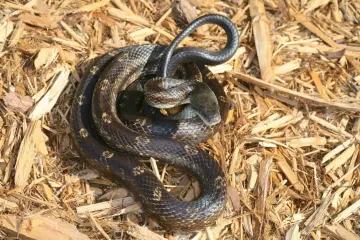
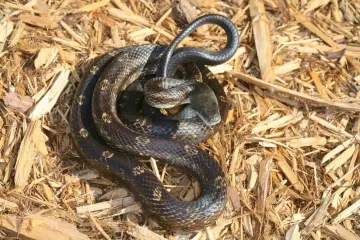
The snakes generally referred to as rat snakes are members of the family Colubridae and are famous for their impressive length, often reaching six feet or more. [1][6] While there are several species falling under this common name, they share a heritage rooted deeply in the deciduous forests and mixed habitats of the United States. [2] For example, the Eastern Rat Snake, sometimes still referred to by its older classification as the Black Rat Snake (P. obsoletus), is a major representative whose range extends significantly across the Eastern and Midwestern states. [1][3][5]
It is important to note that taxonomy shifts can sometimes confuse the origin story. The large, dark rat snakes of the eastern United States were once considered a single species, P. obsoletus. [1] Modern classification often recognizes several distinct species within this lineage, such as the species found in states like Maryland, Massachusetts, and North Carolina, all sharing a common evolutionary background in that region. [5][6][7] The Texas Rat Snake, P. lindheimeri, occupies a separate, though adjacent, region further south and west, showcasing the dispersal of this successful group across varying North American ecosystems. [1]
# Geographic Span

The collective origin point for most rat snakes recognized in North America is firmly established in the Eastern and Midwestern United States. [1] This region provided the necessary environmental conditions—forests, open fields, and agricultural areas—for these snakes to proliferate. [2]
The distribution map reveals a broad sweep across this area:
- The Eastern Rat Snake range is extensive, stretching from the southeastern portions of Canada south through the eastern United States, down to the northern parts of Florida, and westward into states like Missouri and Illinois. [5][6][9] This snake is frequently the one encountered in the more humid, forested regions of the East Coast. [5]
- The Black Rat Snake (P. obsoletus sensu stricto, if recognized separately depending on the taxonomy used) often shares territory or is closely related to the Eastern Rat Snake complex, contributing to the snake's presence across the Mississippi River valley region and adjacent areas. [1][3]
- The Texas Rat Snake (P. lindheimeri), as its name suggests, is predominantly found in Texas, though its range might touch bordering southern states. [1]
Comparing these ranges, one sees a pattern: these snakes originated in habitats that offered a transition zone—areas not entirely deep, dark forest, but rather mixed woodland, fields, and edges where prey like rodents and bird eggs were consistently available. [2] Their success in establishing populations throughout such a large swath of the continent speaks to their generalist nature, allowing them to originate and thrive in diverse local climates from cooler northern extremes to warmer southern lowlands. [5][7]
# Habitat Niches

Understanding where they come from isn't just about latitude and longitude; it's about the specific micro-environments that supported their initial populations. Rat snakes are not obligate inhabitants of one single ecosystem type; rather, they are habitat generalists, a trait that has secured their wide distribution. [2] They thrive where climbing opportunities meet plentiful food sources.
Key habitat components that define their origin areas include:
- Forest Structure: They require areas with trees or structures that allow them to climb effectively, as they are known to be excellent climbers. [3][6] Mature forests provide shelter and nesting spots, though dense, unbroken wilderness is not strictly necessary. [2]
- Open Cover: Fields, meadows, and brushy edges near wooded areas are crucial hunting grounds, providing access to their primary rodent prey. [2][6]
- Rock and Debris: Rocky outcroppings, stone walls, and areas with abundant ground cover offer daytime retreats and hibernation sites. [6]
An interesting observation when tracing their ancestral roots is their strong affinity for human structures, even historically. Before large-scale modern farming, the snakes were likely drawn to early settlements, barns, and silos precisely because these structures concentrated prey like mice and rats. [4] This inherent attraction to human-modified landscapes is not a modern development; it is a defining characteristic woven into their ecological history, meaning their effective range often expanded alongside human settlement across the Eastern US. [2] In essence, wherever agriculture provided concentrated rodent populations, these snakes found an evolutionary advantage. [4]
# Breeding Beginnings

The origin of individual rat snakes occurs with the laying of eggs. Rat snakes are oviparous, meaning they lay eggs, and this reproductive strategy anchors them to environments that offer suitable incubation conditions. [2] While they might travel widely as adults, the continuation of the species relies on specific nesting sites.
Typically, females deposit their clutches of eggs during the early summer months, usually between June and July. [2][9] The location where these eggs are laid is telling of their preferred environment:
- Natural Sites: Underneath rotting logs, beneath rock slabs, or inside tree hollows—anywhere that provides consistent warmth and protection from predators. [2]
- Human-Associated Sites: Attics, crawlspaces, abandoned buildings, or even well-insulated compost heaps offer artificially heated, safe nesting environments near human dwellings. [6]
The incubation period usually lasts around 60 days. [2] When the young hatch, they are entirely self-sufficient. Their initial size and immediate need to hunt small prey mean their survival is immediately linked to the availability of resources in the immediate area where they originated from the egg, reinforcing their reliance on edge habitats and areas with dense small mammal populations. [9]
If you observe a rat snake in your immediate yard or structure, thinking about where it came from involves considering two possibilities: it might have hatched in a nearby wooded area, or it might have emerged from a nest within an outbuilding or foundation structure on your property—the latter is particularly likely if it is a juvenile. [10] A local landowner in the Delmarva region once noted that finding shed skins of juveniles consistently near a woodpile suggested a successful nesting site nearby, confirming that the snake's "origin" point for that season was likely just yards away, hidden in debris. [4]
# Range Expansion Insight
While their base origin is the Eastern US forest edge, their current success offers a compelling ecological insight. Unlike some specialist species that struggle when their specific ancient forest type is fragmented, rat snakes have done the opposite: they have seemingly benefited from habitat simplification and human intrusion over the last few centuries. [2]
Consider this: A deep, primary forest offers cover but perhaps fewer consistent rodent targets than a mosaic of second-growth woodland, scattered farms, and suburban lots. The rat snake’s adaptability means that the thermal requirements for basking (often provided by open fields or south-facing rock slopes) combine perfectly with the abundant rodent supply found near human food storage and waste. [2][6] This means that while we can pinpoint their geographic origin historically to the broad eastern biome, their current abundance in many areas stems from their unique ability to thrive where human activity creates a resource-rich environment. They are, therefore, masters of the historical boundary zone between wild and domestic landscapes. [4]
# Practical Placement and Encounter
For homeowners or naturalists attempting to understand the local presence of a rat snake, understanding its birthplace informs management. Since they are excellent climbers and often seek high vantage points for hunting or basking, finding one in an attic or on a high deck is common. [3][10] If an adult snake is present, it is almost certainly originating its daily foraging route from a nearby area that offers good cover (like a woodline or dense shrubbery) and good access to prey (like a shed, garage, or compost pile). [6]
If you are trying to minimize unwanted visits, focusing efforts on exclusion becomes more relevant than trying to change the regional climate that supports them. A practical approach when dealing with recurring sightings, especially of large adults, is to treat the presence not just as a random visit but as evidence of a viable local hunting ground. [10] Sealing gaps wider than a quarter-inch around utility penetrations in foundations, ensuring sheds are closed, and keeping woodpiles neatly stacked and slightly elevated can drastically reduce the immediate "origin" points available for shelter and nesting near the house itself. [10] By making your immediate vicinity less appealing as a base of operations, you encourage the snake to continue its foraging route in the less disturbed, more historically appropriate habitats nearby. [2][6] This strategy respects their native range while managing the interface between wildlife and the built environment.
Related Questions
#Citations
Rat snake - Wikipedia
Rat snake | Diet, Habitat & Lifespan | Britannica
Eastern Rat Snake | National Wildlife Federation
Black rat snake facts and characteristics - Facebook
Black Rat Snake - The Maryland Zoo in Baltimore
Eastern Ratsnake | Mass.gov
Rat Snake - NC Wildlife
Rat Snakes Animal Facts - various
[PDF] Eastern Ratsnake Fact Sheet - CT.gov
What is this in my house and how can I make sure it never ... - Reddit