Welsh Black Cattle Evolution
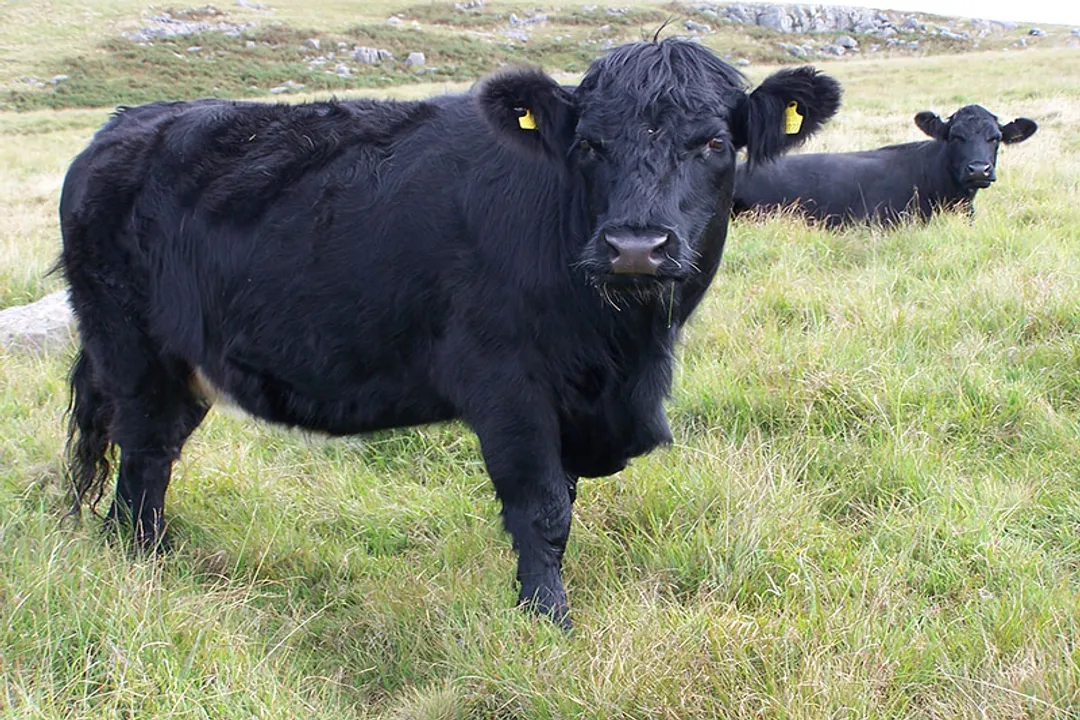
The Welsh Black cattle represent a breed intrinsically linked to the rugged, often challenging terrain of their native Wales, making their story one of resilience and adaptation over millennia. [1][5] Tracing the lineage of these animals back to their earliest appearances is difficult, as formal record-keeping is a relatively modern concept, but evidence suggests they are descendants of cattle that roamed the area perhaps as far back as the Bronze Age. [3][5] The Ancient Cattle of Wales project aims to uncover more about these deep origins, suggesting a persistent, native bloodline that predates many standardized modern breeds. [5] Their survival in the demanding Welsh environment—characterized by steep hills and sometimes sparse grazing—is testament to their inherent hardiness. [1][2][3]
# Ancient Stock
These ancestral cattle developed naturally within the distinct climatic and geographical boundaries of Wales. [5] This environmental pressure acted as a rigorous selection process, favoring animals that required less intensive management and could extract adequate nutrition from poorer quality pasturelands. [1][2] Initially, these herds would have been managed locally, often loosely connected groups maintained by different farmers across the Welsh landscape. [5] They were not yet a standardized 'breed' in the modern sense, but rather a collection of native quadrupeds sharing key survival traits suited to the mountains. [3]
# Dual Purpose
For centuries, the economic reality for Welsh farmers meant that livestock needed to provide multiple benefits to sustain a household. [3] The Welsh Black cattle perfectly fit this requirement as a true dual-purpose breed. [2] They were valued equally for their ability to produce sufficient milk for family needs and for producing quality meat when the animal reached the end of its productive milking life. [2][3] This efficiency was crucial when landholdings were often small and the need for specialized, high-output production was not yet the driving force in agriculture. [1]
A noticeable feature of their historical appearance involved color. While the modern standard leans heavily toward a solid black coat, historical cattle within this type often exhibited significant white markings. [3] It is understood that these cattle were sometimes referred to as 'Welsh Black and White,' suggesting a spectrum of color rather than a single fixed phenotype. [3] This variation in pigmentation, even appearing around the udder or eyes of modern cattle, reflects the diversity present before strict breed standards were applied. [2] The black color, which became dominant, is often associated with the breed’s ability to withstand the weather, perhaps absorbing more heat in the cooler, wetter Welsh climate. [3]
# Decline Causes
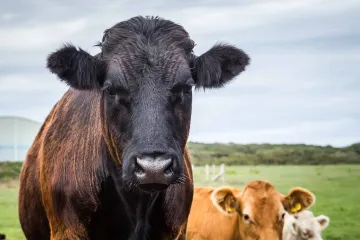
The evolutionary path of the Welsh Black nearly took a sharp, negative turn during the 20th century. [1] As agricultural practices industrialized and economics shifted toward specialization, the dual-purpose nature of the breed became a perceived weakness rather than a strength. [3] Farmers began introducing continental European breeds or English breeds, such as Herefords, hoping to maximize either milk yield or pure beef conformation quickly. [1][3] This crossbreeding diluted the specific, time-tested genetics of the native Welsh animal. [1] The push for uniformity and high output in specialized markets meant that the hardy, adaptable Welsh Black was gradually superseded, leading to a sharp reduction in purebred numbers. [3]
This near loss underscores a common pattern in livestock evolution: when economic drivers prioritize a single trait (like rapid muscle gain or extreme milk volume) over all-around hardiness, heritage breeds adapted to mixed utility often face obsolescence. [1] The value inherent in their ability to thrive on marginal land was temporarily discounted in favor of systems relying on improved lowland pastures and supplementary feed. [2]
# Preservation Efforts
Recognizing the danger of losing this important piece of Welsh agricultural heritage, dedicated efforts were made to conserve the bloodline. [1] The establishment of the Welsh Black Cattle Society marked a critical intervention point, aimed at maintaining and promoting the pure breed standard. [1] By formally recording eligible animals, the Society ensured that breeding stock could be identified and utilized to rebuild the pure population, effectively acting as a genetic insurance policy against total dilution. [1] This dedication has allowed the breed to regain a foothold, moving from scarcity to a recognized, albeit niche, pedigree. [1][3]
# Modern Traits
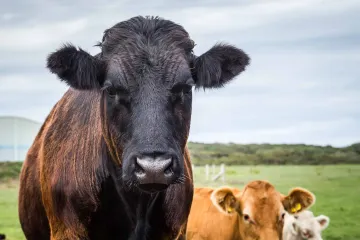
Today, the Welsh Black is celebrated for many of the same traits that allowed its ancestors to survive centuries ago. [2] Their key strengths revolve around efficiency in less-than-ideal conditions. [1] They exhibit excellent foraging ability, meaning they can utilize rough grazing effectively where other breeds might struggle to maintain condition. [1][2] Furthermore, they are renowned for being excellent mothers, known for their fertility, ease of calving, and good milk supply to raise their calves well. [2]
The inherent robustness translates into economic benefit for producers choosing to maintain them on lower-input systems. When considering their suitability for conservation grazing or lower-yielding farms, their natural hardiness means that producers can often reduce reliance on expensive concentrates and intensive veterinary care, making them a financially prudent choice for sustainable land management. [1][2] This ability to perform well with minimal external support is perhaps their most valuable evolutionary inheritance. [2]
# Global Spread
While firmly rooted in Wales, the desirable traits of the Welsh Black have attracted interest internationally. [6] Breeders in other parts of the world, seeking hardy, easy-calving cattle that offer high-quality beef without requiring intensive management, have imported the breed. [6][7] Countries such as Australia, Canada, and the United States have established societies or registries for Welsh Black cattle. [6][7][4] In these varied climates, the breed continues to prove its adaptability, often being crossed with local stock to introduce traits like hardiness and superior maternal ability into commercial herds. [4][7] For instance, in Australia, their ability to cope with the dry conditions has been particularly valued. [6]
The continuing evolution of the Welsh Black cattle is therefore twofold: it involves the ongoing, careful selection within the native Welsh gene pool to enhance modern beef conformation, and it involves their adaptation as a foundational genetic resource in different international environments. [3][6] The breed stands as a living example of natural selection refined by dedicated human stewardship, ensuring that the ancient hardiness of the Welsh hills continues to contribute to modern agriculture across the globe. [5]
Related Questions
#Citations
History of the Breed
Welsh Black
Welsh Black cattle
The Welsh Black Cow: beauty from darkness
History
About the breed — Australian Welsh Black Cattle ...
Welsh Black Cattle | Oklahoma State University
My Daily Cow® Welsh Black at krankykids.com
Welsh Black - Cattle International Series