Weasel Scientific Classification
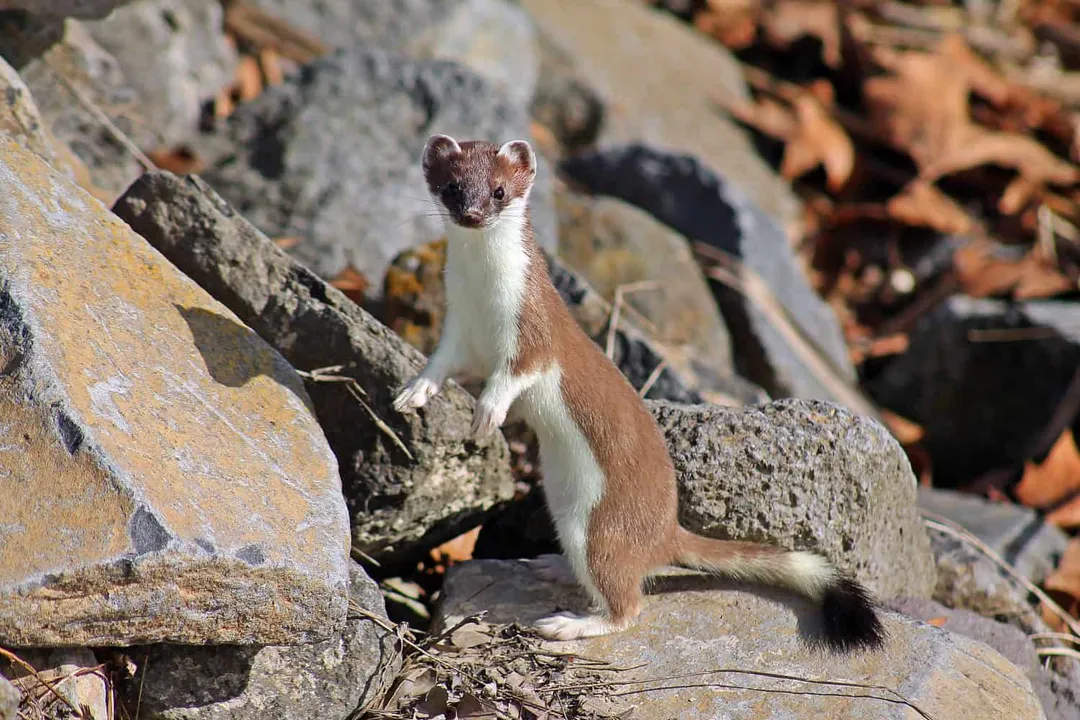
The term "weasel" often conjures an image of a small, slinky predator, but defining its place in the grand tree of life requires moving systematically from the broadest categories down to the specific species designation. Scientifically, this group of animals belongs firmly within the Order Carnivora, establishing them as true meat-eaters whose evolutionary lineage is shared with animals as diverse as cats, dogs, and seals. This placement immediately sets expectations for their dentition, muscle structure, and dietary habits, which are adapted for hunting and consuming other animals.
# Kingdom Animalia
The first step in placing any weasel in its scientific context is recognizing it as an animal. This places it in Kingdom Animalia, an ancient and vast grouping defined by multicellularity, eukaryotic cells lacking cell walls, and heterotrophic nutrition—meaning they must consume other organisms for energy. Within this kingdom, they share characteristics with nearly everything that moves, from insects to whales, prompting the need for increasingly specific taxonomic ranks to narrow down their identity.
# Phylum Chordata
Moving down the hierarchy, weasels belong to the Phylum Chordata. This places them among animals possessing, at some stage in their life cycle, a notochord, a dorsal hollow nerve cord, pharyngeal slits, and a post-anal tail. This phylum includes the familiar Subphylum Vertebrata, signifying that the weasel possesses a backbone or spinal column, a defining feature separating them from invertebrates like spiders or clams.
# Class Mammalia
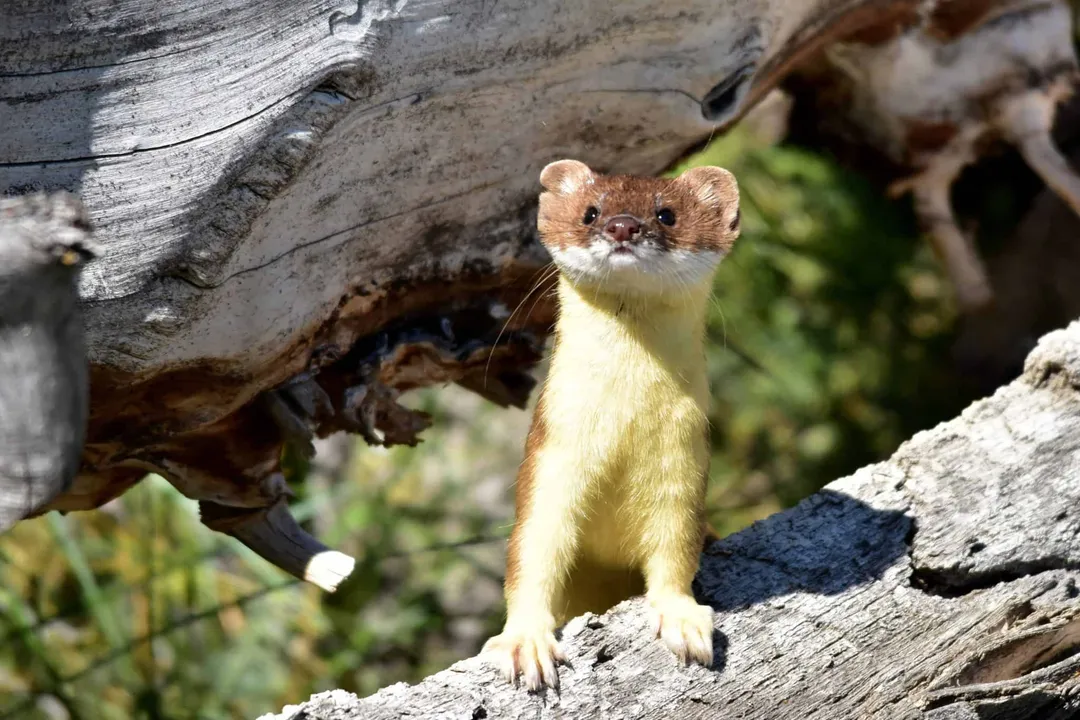
The next crucial grouping is Class Mammalia, which firmly establishes the weasel’s key life-sustaining characteristics. Mammals are warm-blooded vertebrates, possess fur or hair, and, most notably, females nurse their young with milk produced by mammary glands. Weasels, like all mammals, give live birth and breathe air using lungs. This class membership unites them with rodents, bats, primates, and whales, showing the breadth of mammalian evolution.
# Order Carnivora
The Order Carnivora is where the weasel’s lifestyle begins to dictate its classification structure. Members of this order are generally adapted for a diet consisting primarily of meat, evidenced by specialized teeth like the carnassials, which function like shears for slicing flesh and crushing bone. While not all carnivores exclusively eat meat—some, like bears, are omnivores—the ancestral and typical form within the weasel's lineage leans heavily toward a carnivorous existence. The Caniformia (dog-like carnivores) and Feliformia (cat-like carnivores) are the two major suborders within Carnivora, and weasels fall into the former.
# Family Mustelidae
This is where the weasel's identity sharpens considerably. Weasels belong to the Family Mustelidae. This family is recognized as one of the most diverse within the Carnivora order, encompassing creatures such as otters, badgers, polecats, ferrets, and wolverines.
Mustelids share several common traits that make them distinct from other carnivores:
- They typically have elongated bodies and short legs, allowing them to pursue prey into burrows.
- They possess five toes on each foot, often with non-retractile claws.
- Many species have scent glands used for marking territory or defense, which can produce a potent odor.
Comparing the Mustelid family to others in the order helps illustrate their specialized morphology. For instance, while both weasels and cats are predators, the weasel's slender build and shorter snout are morphologically distinct from the more robust skulls and specialized retractable claws of true cats (Felidae). The diversity within Mustelidae itself is remarkable; consider the robust, solitary wolverine versus the aquatic, social otter—all unified by that characteristic mustelid body plan.
# Genus Distinctions
Within Mustelidae, the weasel falls into one of several genera, most notably Mustela. The genus Mustela contains the true weasels, ferrets, and stoats/ermines. Animals in this genus are generally characterized by their small to medium size and the most slender, elongated bodies among the mustelids.
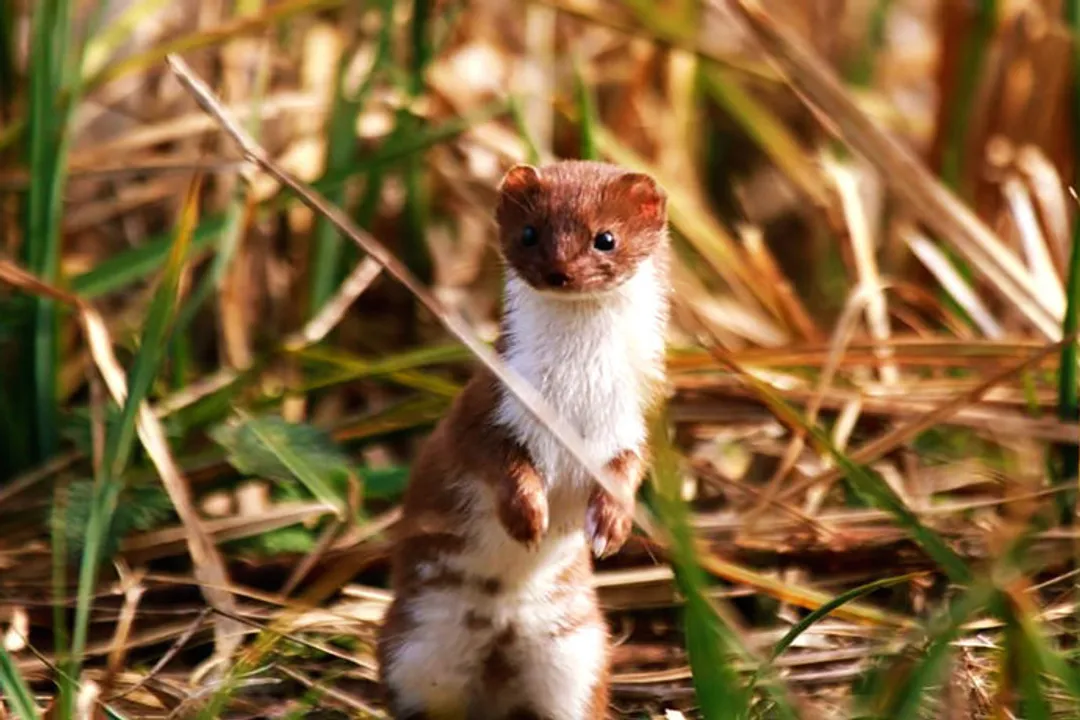
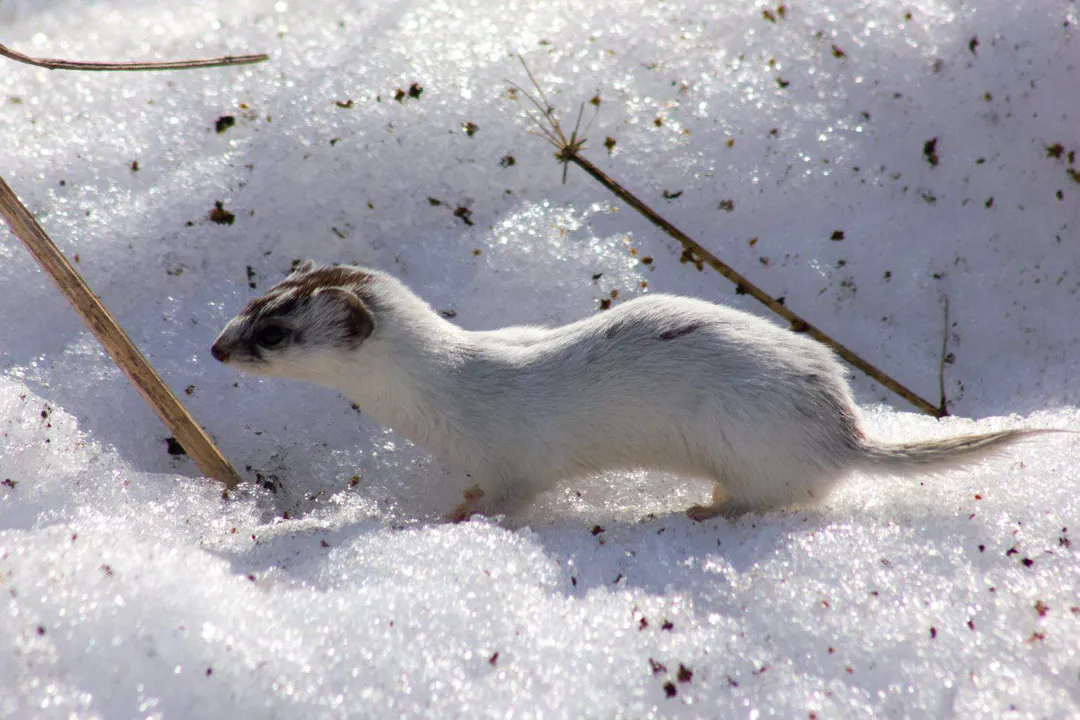
One interesting point of classification arises when comparing the terms "weasel" and "ermine." In many regions, especially North America, the terms can become confusing because the animal known as an Ermine (the short-tailed weasel, Mustela erminea) is simply a Mustela species that changes its coat color seasonally to white in winter for camouflage, while the smaller Least Weasel (Mustela nivalis) may or may not change its coat depending on the location. An ermine is essentially a stoat that has turned white. This demonstrates how common names often lag behind or overlap with scientific distinctions, where the genus Mustela groups them together based on anatomy and shared ancestry, irrespective of seasonal pelage.
If we look at the classification structure for a North American example, the Long-tailed Weasel provides a good reference:
- Family: Mustelidae
- Genus: Mustela
- Species: Mustela frenata
Contrast this with the Least Weasel:
- Family: Mustelidae
- Genus: Mustela
- Species: Mustela nivalis
The specific epithet (frenata vs. nivalis) is what separates these distinct species within the same genus, often reflecting subtle anatomical differences, geographic separation, or genetic divergence. For example, the Long-tailed Weasel is typically larger than the Least Weasel. The classification system forces us to acknowledge that while both are "weasels" (Mustela), they are reproductively isolated species with different ecological niches.
# Species-Level Specifics: The Long-tailed Weasel
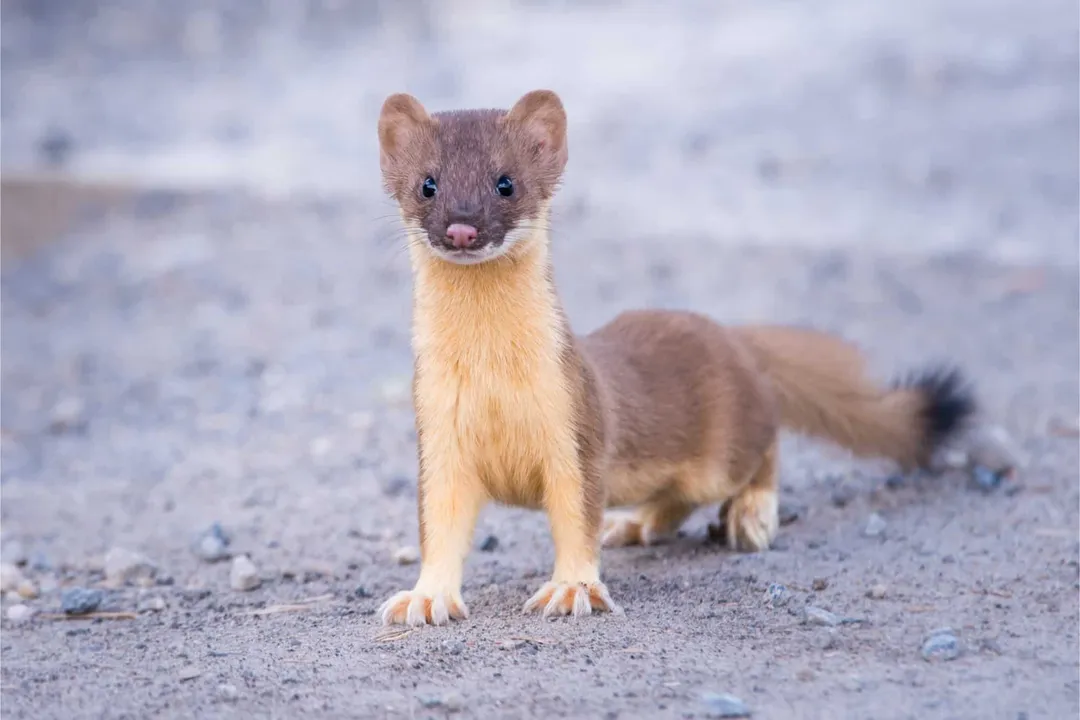
To appreciate how classification informs our understanding of an animal, examining a specific, well-documented species like the Long-tailed Weasel (Mustela frenata) is helpful. In North Carolina, for instance, this species is recognized as Mustela frenata noveboracensis, indicating a subspecies designation within the broader species definition. This level of detail is vital for biologists studying localized populations.
Key characteristics noted for this species, which help justify its classification within Mustela, include:
- A very long tail relative to body size, which aids in balance during active hunting.
- A dark brown or tan coat on the back, contrasted with a creamy white or yellowish belly.
- It is known for its slender build, essential for maneuvering through tight spaces while pursuing prey like mice and voles.
The fact that this animal is found across a vast range, from southern Canada down through South America, necessitates the subspecies naming convention to account for local adaptations, even though the overall Mustela classification remains consistent.
# The Least Weasel (Mustela nivalis)
The Least Weasel (Mustela nivalis) offers a contrast within the same genus. It holds the distinction of being the smallest true weasel and the smallest living carnivore worldwide. Its small size is the primary feature that separates it ecologically from its larger Mustela relatives. In the United Kingdom, for example, the weasel (Mustela nivalis) is commonly distinguished from the stoat (Mustela erminea, which becomes the ermine in winter coat) primarily by its consistent brown-and-white coloration—it typically does not turn entirely white in winter, unlike the stoat/ermine, which serves as a visual cue for field identification. This difference in seasonal camouflage strategy is a subtle yet important ecological distinction reflected in the species-level classification.
The differences between species within Mustela often come down to size, tail length proportions, and genetic markers, rather than fundamental differences in body structure, which are conserved at the genus level. If we were to construct a simple comparison table based on general descriptions:
| Feature | Least Weasel (M. nivalis) | Long-tailed Weasel (M. frenata) | Stoat/Ermine (M. erminea) |
|---|---|---|---|
| Relative Size | Smallest carnivore | Medium-small | Larger than Least Weasel |
| Tail Length | Shorter proportion | Very long relative to body | Longer than Least Weasel |
| Winter Coat | Usually remains brown/white | Varies by latitude | Turns white (Ermine) |
Here is an analytical observation regarding taxonomy and adaptation: The consistency of the Mustela genus structure, defined by elongation, suggests that the evolutionary pressure favoring this morphology—accessing prey underground or in dense cover—was stronger and more consistent than the pressure that selected for coat color change, which is more geographically dependent. This is why the body plan unites them in the genus, while pelage dictates the specific species or subspecies designation.
# Regional Variations in Taxonomy
Taxonomic reality often reflects geography. In places like Montana, Mustelids are grouped based on the characteristics common to the family, such as being active year-round and having relatively small litters. When looking at Pennsylvania's wildlife, the term "weasel" might refer to the Least Weasel or the Long-tailed Weasel, both inhabiting the area, necessitating the use of their scientific names to avoid ambiguity between the two co-occurring species. This underscores the Expertise required in field biology: knowing that the common name "weasel" is an umbrella term for at least two different species within the Mustela genus in that region.
For a general reader trying to identify a small predator, understanding this classification hierarchy is key. If you see a very slender, active brown animal, it is a mustelid. If it is exceptionally small, it is likely Mustela nivalis. If it has a tail noticeably longer than its body length, it leans toward Mustela frenata. This practical application shows that classification is not just an abstract ordering but a functional tool for identification.
# The Broader Musteloid Clade
To fully appreciate the Mustelidae family, it's helpful to step back one rank to the Superfamily Musteloidea. This places mustelids alongside relatives like raccoons, skunks, and red pandas. While weasels share the general carnivore adaptation, the Musteloidea grouping highlights shared, albeit sometimes distant, ancestry with these other families. The primary difference between the mustelids and, say, the raccoons (Procyonidae) often lies in the structure of their teeth and skulls, which reflect different dietary specialization, even though both groups share the musteloid lineage. The Weasel's classification within Mustelidae signifies a refinement away from the more generalized features of the broader superfamily toward the highly specialized, elongated form typical of weasels, otters, and badgers.
The scientific classification system, from Kingdom down to Species, acts as an ever-refining filter. Starting with the very basic requirement of being a living, moving thing (Animalia), to being warm-blooded (Mammalia), to being a specialized predator (Carnivora), the system guides us precisely to the Mustela genus, where the characteristics of extreme elongation and small size define the weasel relative to its larger, stockier cousins like the badger or wolverine within the same Mustelid family. This detailed structure confirms that, despite superficial similarities among many small carnivores, the weasel occupies a very specific and well-defined niche in the mammalian world.
Related Questions
#Citations
Weasel - Wikipedia
ermines, ferrets, minks, and weasels - BioKIDS
Long-tailed Weasel | NC Wildlife
Long-tailed Weasel - Mustela frenata - New Hampshire PBS
(Family) Weasels - Montana Field Guide
Weasels | Game Commission | Commonwealth of Pennsylvania
Weasel (Mustela nivalis) - British Mammals - Woodland Trust
Weasel Taxonomy: A Weasel by Any Other Name Is Still a Weasel