Walrus Scientific Classification
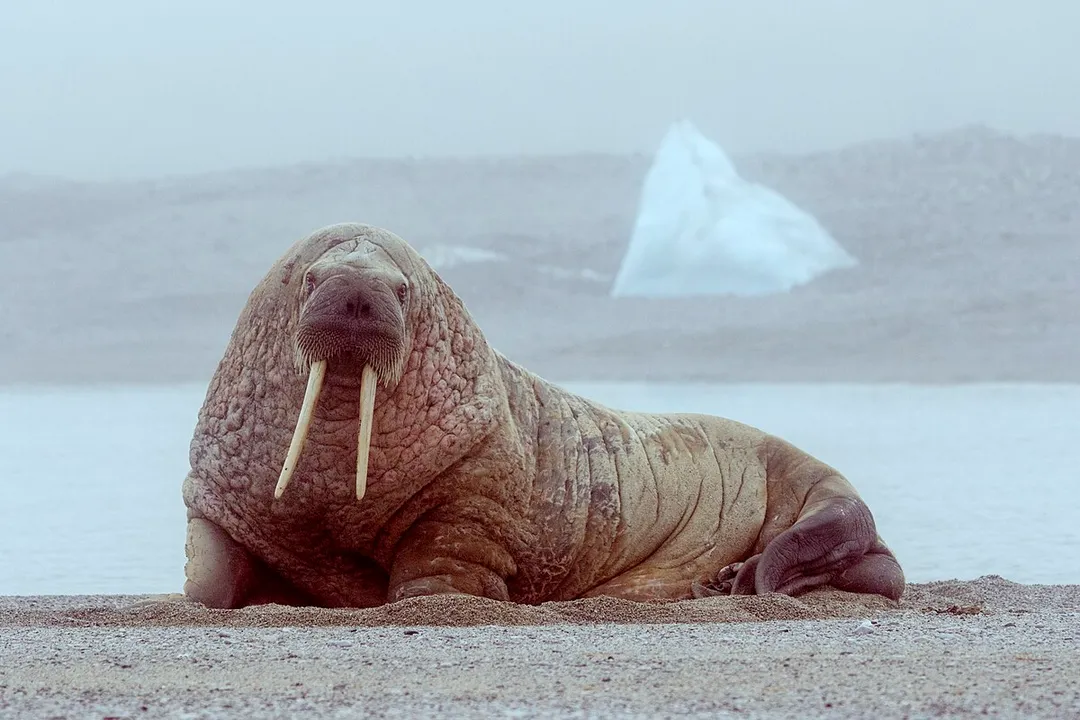
The walrus, Odobenus rosmarus, stands as one of the Arctic’s most recognizable and formidable inhabitants, an animal whose sheer size and magnificent tusks immediately set it apart in the marine world. To truly appreciate this "tooth walker," we must delve into the structured language of science that defines its place in the natural order, tracing its lineage from the broadest grouping down to its specific subspecies. This classification reveals not only its nearest relatives but also hints at deep evolutionary history shaped by the very icy landscapes it calls home.
# Rank Placement
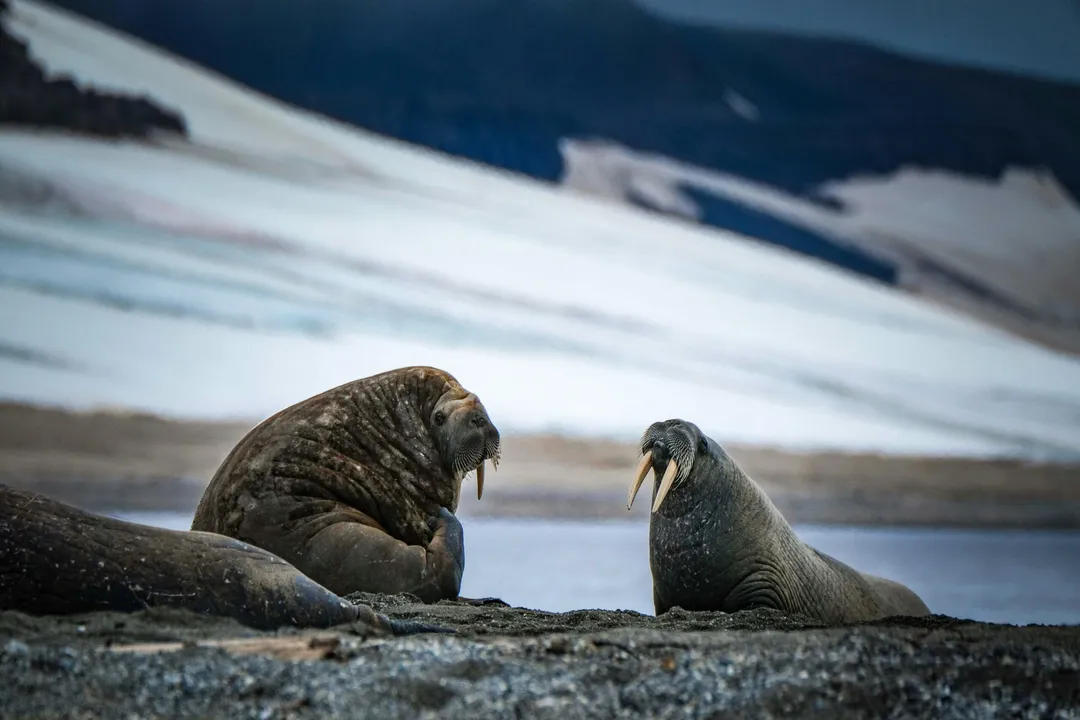
The formal scientific classification begins with the highest ranks, establishing the walrus as a familiar type of life. It belongs to the Kingdom Animalia, meaning it is a multicellular, heterotrophic organism. Following this, it falls under the Phylum Chordata, confirming it possesses a notochord at some stage of development, which in the walrus's case evolves into a vertebral column, placing it within the Vertebrata subphylum. Its Class is Mammalia, the group we associate with warm-bloodedness, hair, and nursing their young, traits certainly held by the walrus.
Moving into the Order, the walrus is classified under Order Carnivora. While its diet relies heavily on invertebrates, this placement highlights its evolutionary descent from land-dwelling, meat-eating ancestors, a connection that might surprise those who only picture the animal sucking meat from clams. Within Carnivora, walruses are grouped into the Parvorder or Clade Pinnipedia, which groups together all "fin-footed" marine mammals—seals, sea lions, and the walrus itself.
# Family Lineage
The next significant step down separates the walrus from the other pinnipeds into its own Family, Odobenidae. This singular surviving family sets the walrus apart from the Phocidae (true seals) and the Otariidae (eared seals or sea lions). The Odobenidae family tree was once much more diverse, including several extinct genera, but today Odobenus rosmarus is the only extant species.
The relationships within the Pinnipedia are complex, mirroring the walrus’s unique adaptations. Morphologically, the walrus shares some physical characteristics with the true seals (Phocidae), yet behaviorally, it shows closer resemblance to the eared seals (Otariidae). For example, like otariids, the walrus can rotate its rear flippers forward to aid movement on land, enabling it to "walk" on all fours. However, its underwater swimming technique leans more toward the undulatory movements characteristic of true seals. This duality in locomotion suggests that its evolutionary path represents a specialized divergence within the broader pinniped group, which recent molecular data suggests descended from an ancestor related to modern bears. The fact that the modern walrus is the last surviving species of the subfamily Odobeninae underscores how significant its evolutionary success has been in a lineage that saw much diversification and subsequent loss.
It is worth noting that historical classifications sometimes placed Odobenidae as a subfamily within either Otariidae or Phocidae, but many modern researchers argue that grouping them this way would make the other family paraphyletic—meaning it would not contain all descendants of a single common ancestor. Recognizing Odobenidae as a distinct family, therefore, provides a more accurate picture of pinniped evolution.
# Genus and Species
The defining name for the walrus is its genus and species: Odobenus rosmarus. This specific binomial name carries significant meaning derived from the animal’s notable anatomy. The genus name, Odobenus, comes from the Greek words odous (teeth) and baino (walk), literally meaning “tooth walker”. This nomenclature is a direct reference to how walruses use their prominent tusks—elongated upper canines—to haul their massive bodies out of the water onto ice floes or rocks. While tusks are vital for pulling themselves up, they are not used for digging prey from the seabed; that task relies on their highly sensitive mystacial vibrissae, or whiskers.
The species name, rosmarus, has Scandinavian roots. For the local populations of the Arctic, the animal carries cultural names, such as aivik among the Inuit, which contrasts with the common English name "walrus," thought to derive from the Danish word hvalros, meaning "sea horse" or "sea cow". The archaic term, morse, is traced back to Slavic languages.
A single species, Odobenus rosmarus, encompasses all living walruses, but their distribution across the Arctic basin has led to distinct regional groups. Despite being classified under one species, the genetic and morphological differences between these groups are pronounced enough to warrant subspecific recognition.
# Subspecific Variation
The widely recognized classification divides the walrus into two primary subspecies, distinguished primarily by geography:
- Odobenus rosmarus divergens: The Pacific walrus. This is the largest subspecies, inhabiting the Bering and Chukchi Seas between Alaska and eastern Russia.
- Odobenus rosmarus rosmarus: The Atlantic walrus. This group ranges from the eastern Canadian Arctic, across Greenland, and into the western Arctic regions of Russia.
When comparing the two, the Pacific walrus (O. r. divergens) generally boasts a larger body mass, longer tusks, and a broader skull compared to its Atlantic counterpart. For instance, Pacific males can exceed 2,000 kilograms, while Atlantic males average around 900 kilograms.
A third subspecies, Odobenus rosmarus laptevi, the Laptev walrus, is recognized by some Russian investigators due to its isolation in the Laptev Sea of the central Russian Arctic. This population is the smallest, numbering only around 5,000 individuals, and has historically been the least studied. However, taxonomic clarification has occurred, as recent genetic differences suggest the Laptev population may actually be of Pacific walrus (O. r. divergens) origin, meaning the primary split remains between the Atlantic and Pacific groups.
This geographic division offers a natural case study in speciation. Fixed genetic differences between the Atlantic and Pacific subspecies suggest a relatively recent separation, estimated to be between 500,000 and 785,000 years ago. If we frame this time frame against the cyclical nature of the Pleistocene Ice Ages, this divergence time suggests that the separation likely occurred when ancestral populations became isolated in the Atlantic, gradually adapting to the extreme cold, potentially via a Central American seaway connection before modern Arctic routes were consistently available. The fact that they remain classified under the same species name, O. rosmarus, indicates that despite this long period of isolation and morphological distinction, enough shared characteristic remains to prevent full species designation—a point where population genetics and traditional taxonomy often meet with ambiguity.
# Classification in Practice: Conservation Status
The final placement within the system is often defined by how ecologists and regulatory bodies view the species' viability, which links the formal taxonomy to real-world management. The walrus is considered a keystone species in the Arctic marine ecosystem due to its foraging habits, which heavily influence benthic communities by bioturbating the seafloor.
Their conservation status, as assessed by different authorities, provides insight into the perceived health of the classified groups:
| Authority | Status | Context/Notes |
|---|---|---|
| IUCN Red List (Global) | Vulnerable | Classified as Vulnerable, primarily due to threats from climate change causing sea ice loss. |
| NatureServe Global | G4 | Apparently Secure. This differs from the IUCN assessment, suggesting regional data interpretation varies. |
| U.S. ESA | None Listed | The Pacific walrus (O. r. divergens) was a candidate species but listing was deemed not warranted as of 2017. |
| CITES | Appendix III | Indicates that parties to the convention have asked for help in controlling trade in the species. |
It is interesting to observe the divergence between the NatureServe G4 status (Apparently Secure) and the IUCN Vulnerable status. This discrepancy might stem from how the G4 rank aggregates the three recognized—or debated—subpopulations. While the massive Pacific population (O. r. divergens) is estimated to be around 200,000 individuals, the Atlantic and Laptev populations remain much smaller, fragmented, and potentially more precarious. The G4 designation may be heavily weighted by the healthy Pacific numbers, while the "Vulnerable" listing reflects the overall systemic threat, particularly to the Atlantic stock, which was nearly eradicated historically by commercial ivory hunting.
Understanding the scientific classification of the walrus—from its placement in Carnivora to its designation as Odobenus rosmarus—is fundamental to appreciating its unique biology, its evolutionary relationship with seals and sea lions, and the specific conservation challenges facing its geographically isolated subspecies in a rapidly changing Arctic environment. This Linnaean structure provides the necessary shared language for scientists worldwide to coordinate efforts to protect this vital Arctic icon.
Related Questions
#Citations
Walrus - Wikipedia
All About the Walrus - Scientific Classification | United Parks & Resorts
Odobenus rosmarus (walrus) | INFORMATION - Animal Diversity Web
Walruses - Explore the Taxonomic Tree | FWS.gov
Walrus Fact Sheet | Blog | Nature - PBS
Odobenus rosmarus (Walrus) - OBIS-SEAMAP Species Profile
Odobenus rosmarus - NatureServe Explorer
Walrus - Polar Latitudes Expeditions
Walrus - WWF Arctic