Vole Facts
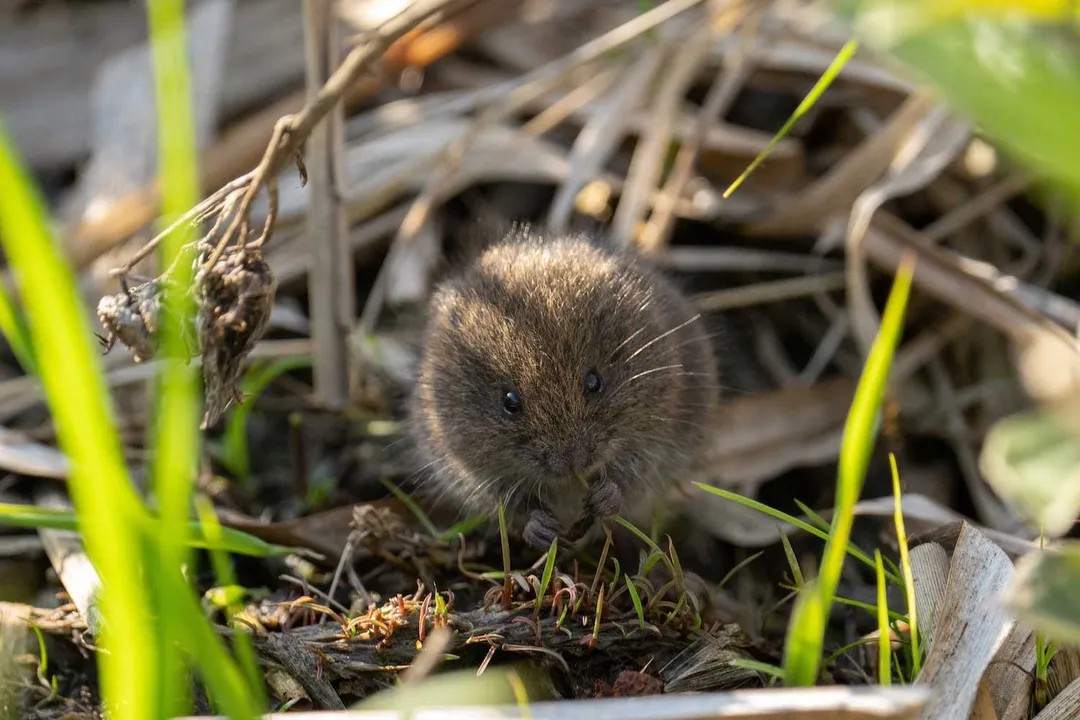
Voles, often mistaken for field mice or the subterranean mole, are small, stocky rodents belonging to the subfamily Arvicolinae, closely related to lemmings and hamsters. [2][3] These creatures are perennial residents of lawns, gardens, and fields across North America and Europe, known more for their appetite for roots and bark than for their charming appearance. [3][4] While superficially similar to some mice, their physical profile is distinct: voles possess rounder bodies, very short, stubby tails, and small, almost hidden ears and eyes. [1][2][6] A meadow vole, for example, usually weighs just a few ounces. [1] Understanding these fundamental differences is the first step in correctly identifying the source of garden mischief. [6]
# Physical Distinctions
The key differentiator when separating a vole from its more famous counterpart, the mole, lies in locomotion and external features. [6] Moles are specialized for digging, possessing large, spade-like front feet and long, sparsely haired tails. [6] Voles, conversely, have shorter tails, which is a major clue, as a mole’s tail is often nearly as long as its body, whereas a vole’s tail is usually less than a third of its body length. [6] Furthermore, moles are almost entirely subterranean, rarely seen above ground, and have barely visible eyes and ears, while voles are surface travelers, meaning their eyes and ears are more evident, even if small. [1][6]
| Feature | Vole | Mole |
|---|---|---|
| Tail Length | Short (less than one-third body length) [6] | Long (approaching body length) [6] |
| Body Shape | Stocky, robust [3][6] | Cylindrical, streamlined [6] |
| Activity | Surface travel, visible runways [1][4] | Primarily subterranean [6] |
| Front Feet | Small, used for walking/feeding [6] | Large, spade-like for digging [6] |
A common field vole, Microtus agrestis, exemplifies this typical structure, built more for scurrying through dense ground cover than for deep excavation. [8] This difference in physical specialization directly dictates where you find their evidence: moles leave raised mounds of dirt, whereas voles leave intricate networks of surface trails. [1][6]
# Daily Habits
Voles are notable for their unrelenting activity schedule; they do not hibernate. [1][3] This means they are busy foraging year-round, day and night, which explains why damage often appears most severe during the winter months when other food sources are buried under snow or dormant. [1][5] Their diet is strictly herbivorous, centered on plant material they can access easily near the ground. [1][3]
Their menu typically consists of grasses, seeds, and other available vegetation. [1][5] However, when preferred greens are unavailable, their focus shifts to the less desirable but vital parts of woody plants, such as roots, tubers, bulbs, and the bark around the base of stems. [4][5][9] This ability to switch to woody tissues when herbaceous matter declines makes them a significant threat to young trees and ornamental shrubs during cold periods. [9] Because they consume large amounts of food relative to their body size to maintain constant energy levels, their feeding impact can accumulate quickly. [3]

# Runway Systems
The most telling sign of a vole infestation isn't the animal itself, but the highways it constructs through the grass. [4] Voles establish complex surface runways, essentially packed-down tunnels etched into the vegetation or just beneath the soil surface. [1][4] These pathways are used for rapid travel between feeding sites and burrows, offering protection from aerial predators like hawks. [1] These trails often appear as thin, smooth pathways visible in lawns, especially where the grass is thick. [4] In snowy regions, voles frequently travel under the snowpack, using the insulation for warmth while continuing their feeding activities unimpeded. [1]
When you encounter these visible tracks, take a moment to assess the terrain; in areas with very hard, dry soil, the runways might be shallow indentations, but in well-mulched garden beds or areas with dense, soft turf, the tunnels can be surprisingly well-defined, sometimes nearly an inch deep, allowing for quicker access to root systems. This variation in tunnel depth based on soil structure is an important consideration when planning exclusion methods, as a barrier meant only for shallow soil might be easily bypassed where mulch provides easy cover. [4] Furthermore, look closely at the entrance points of these runways; unlike the central, volcano-shaped mounds left by moles, vole entrances are typically small, inconspicuous holes, often hidden under foliage or debris. [6]
# Plant Damage
The damage inflicted by voles often targets the most critical structural parts of plants, leading to decline or outright death. [5] For established trees and shrubs, the primary concern is girdling. [9] Girdling occurs when voles chew entirely around the base of the trunk, removing the bark in a ring. [4][9] This ring removes the phloem layer, which is responsible for transporting sugars produced in the leaves down to the roots, effectively starving the root system. [9] If the girdle goes all the way around, the plant cannot survive, making this behavior especially destructive to young fruit trees or expensive landscape specimens. [4]
In garden settings, the damage focuses underground. Voles feast on the tender, energy-rich parts of plants like bulbs, corms, and root vegetables. [5] They will tunnel directly to a prized tulip bulb or potato and hollow it out, leaving only the dry, papery remnants of the skin behind. [5] Because they are active year-round, damage can persist even when you believe the garden is safe during the late fall or early spring thaw. [1]
# Population Dynamics
Voles are well-known in ecological circles for their prolific reproductive capabilities, which can lead to sudden, large population increases. [1][3] A single female vole can become sexually mature very quickly and may produce multiple litters within a single growing season. [1][3] This rapid turnover means that populations can explode seemingly overnight if environmental conditions—like mild winters or abundant food—are favorable.
The high reproductive potential is intrinsically linked to their role in the broader ecosystem. [8] While they are pests to the gardener, they are essential food sources for numerous predators, including snakes, coyotes, foxes, owls, and hawks. [8] This reliance places voles squarely in the middle of the food web. One interesting ecological dynamic to consider is the predator-prey balancing act; periods of low vole populations often correlate with fluctuations in predator numbers, as predators move to other areas when their primary food source crashes, only to return and help suppress a subsequent vole boom once numbers recover. This cyclical nature means that controlling an outbreak is often best approached by encouraging natural predation where feasible, rather than relying solely on removal efforts that might not account for the sheer volume of new arrivals. [8]
# Identification Clues
When you suspect a problem but cannot see the animal, the nature of the tunnels offers clues that separate voles from other small mammals. [6] Shrew tunnels are usually shallower and often more haphazard, as shrews are primarily insectivores and their surface trails are less organized. [6] Mouse runways are typically less distinct and often involve gnawing on above-ground seeds or debris rather than constant root grazing. [1][3] The presence of small, distinct, pebble-sized droppings near the runways, combined with the girdling marks on woody stems or the hollowed-out remnants of bulbs, points strongly toward vole activity. [4][5] The key is consistent surface use over time, unlike a mole which creates new mounds as it digs deeper, or a mouse which relies more on existing cover. [6] A homeowner observing consistent, well-worn surface paths in established grass in the winter is almost certainly dealing with voles seeking winter sustenance. [1][5]
Related Questions
#Citations
Facts About Voles | Vole Facts | Havahart®
Vole - Wikipedia
Five fast facts about little-known voles
Vole | Description, Types, Rodent Behavior, Habitat, Diet, & Facts
Vole Facts for Kids - Pest World for Kids
Moles and Voles – What's the Difference? - Purdue Extension
Voles - Penn State Extension
Field vole | The Wildlife Trusts
Voles (Meadow Mice) - UC IPM
Vole - Forestry and Natural Resources - University of Kentucky