Viper Facts
Vipers are a globally recognized group of snakes, often associated with danger due to their potent venom and large, retractable fangs. [1][5] While the term "viper" is sometimes used loosely in common language, scientifically, it refers to a specific family of snakes known as Viperidae. [2] These reptiles showcase a remarkable diversity in size, habitat, and predatory specialization across the globe, from arid deserts to humid forests. [2][3] Unlike some other venomous snakes, vipers rely heavily on their venom delivery system rather than speed or constriction to subdue prey. [6]
# Snake Grouping
The snake family Viperidae is divided into two primary subfamilies: the Viperinae, commonly called Old World vipers, and the Crotalinae, known as pit vipers. [2][5] The distinction between these two groups is significant, though both share the characteristic of having long, hinged fangs that fold against the roof of the mouth when closed, allowing them to deliver deep venom injections when biting. [1][2]
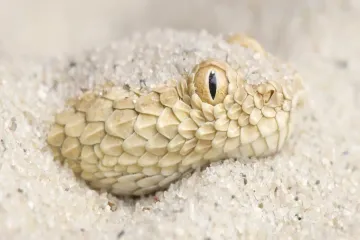
Old World vipers, or Viperinae, are found across Africa, Asia, and Europe. [2] They typically lack the heat-sensing pits that distinguish their New World cousins. [5] Examples of Old World vipers include the common European viper (Vipera berus) and species of saw-scaled vipers. [2]
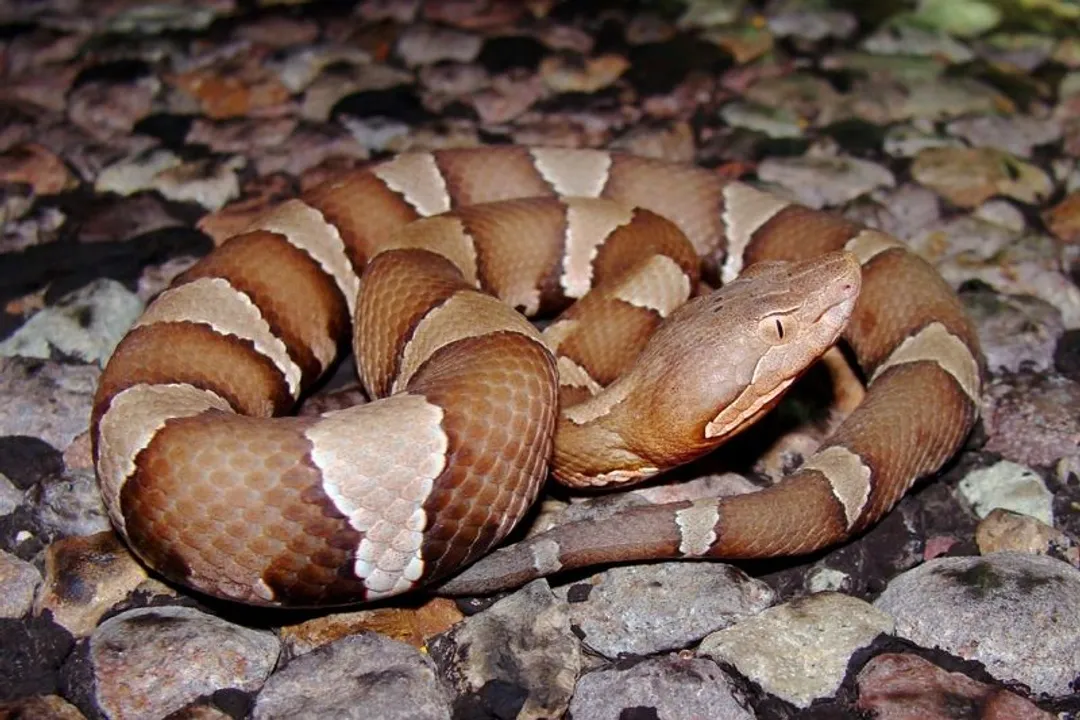
New World vipers, the Crotalinae, are predominantly found in the Americas. [2] The most distinguishing feature of pit vipers is the presence of a loreal pit, a deep opening located between the eye and the nostril on each side of the head. [1][5][6] This pit is a highly specialized, sensitive infrared receptor that allows the snake to "see" the body heat of warm-blooded prey, even in total darkness. [1][6] Rattlesnakes, copperheads, and cottonmouths are all examples of pit vipers. [5] It is interesting to consider that while both subfamilies possess complex venom systems, the evolution of the loreal pit in Crotalinae provided a substantial sensory advantage for hunting nocturnal or concealed prey, potentially influencing their success in varied New World environments compared to the Viperinae, which rely more on sight and ground vibration. [1][6]
# Physical Traits
Vipers exhibit considerable variation in appearance, though most possess a relatively heavy or stout body structure compared to many other snake families. [5] They often have broad, triangular-shaped heads that are distinctly wider than their necks, a feature commonly associated with venomous snakes. [6] Their pupils are usually vertical slits, which helps them control light intake, but this characteristic can vary, especially in diurnal species. [2]
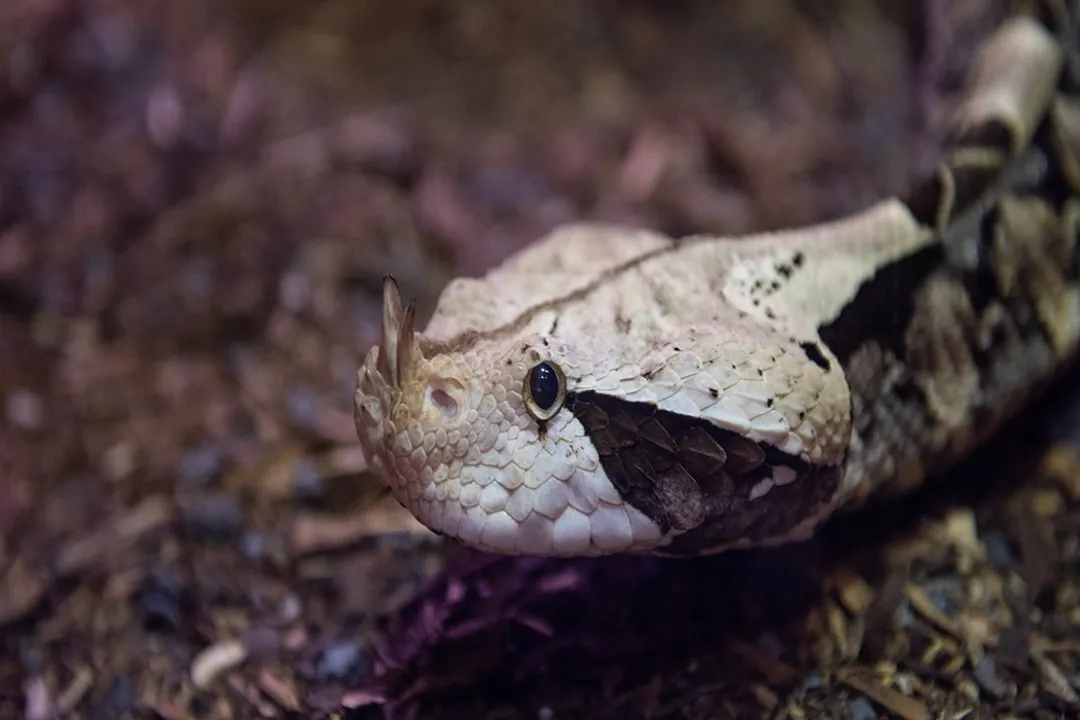
Size is highly variable across the family. While many species are of moderate length, some vipers reach impressive dimensions. The Gaboon viper (Bitis gabonica) is a prime example of viper heft. [4] This species is known for being one of the heaviest and most bulky snakes in Africa, capable of reaching lengths of over six feet, though they are often slow-moving and prefer to remain hidden. [4]
The defining characteristic of all vipers is their specialized dentition for envenomation. They possess solenoglyphous dentition, meaning they have long, hollow fangs that are attached to a hinge in the upper jaw. [1][2] When the mouth is closed, these fangs fold backward against the roof of the mouth, protecting them from damage. [1] When they strike, the maxilla rotates forward, erecting the fangs into a piercing position, which allows for a much deeper and more efficient venom injection than the fixed fangs found in elapids like cobras. [2][6]
| Feature | Old World Vipers (Viperinae) | New World Vipers (Crotalinae) |
|---|---|---|
| Primary Location | Africa, Asia, Europe | The Americas |
| Defining Sensory Organ | None comparable to pits | Possess heat-sensing loreal pits |
| Fangs | Hinged, long, venom-injecting | Hinged, long, venom-injecting |
| Body Type | Often stocky | Often stocky, can be slender (e.g., some rattlesnakes) |
# Venom Mechanism
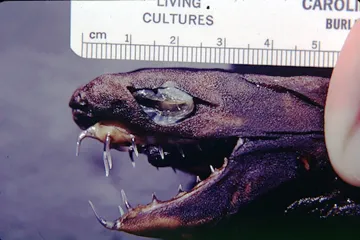
Viper venom is primarily hemotoxic, meaning it targets the circulatory system and blood cells. [1][5] The primary goal of the venom is to liquefy the tissues of the prey, facilitating easier digestion by the snake. [1] When injected, the venom can cause intense pain, severe swelling, tissue death (necrosis), and hemorrhage. [1][5]
The Gaboon viper’s venom apparatus is particularly noteworthy. It possesses the longest fangs of any snake, which can reach up to two inches in length, allowing it to inject a large volume of venom deep into its target. [4] While it has a massive venom yield, its temperament is generally docile; it prefers to rely on its camouflage rather than striking unless directly threatened or stepped upon. [4]
Understanding the composition reveals why vipers are effective predators. Their venom often contains a complex cocktail of enzymes, including proteases, which break down proteins, and hemorrhagins, which destroy the lining of blood vessels. [1] This specialized cocktail contrasts with the primarily neurotoxic venoms (affecting the nervous system) found in many elapids. [5] The exact composition varies significantly even within the Viperidae family, which is why a bite from one species may cause drastically different symptoms from another. [2]
# Habitat and Lifestyle
Vipers are found in a wide array of environments, demonstrating remarkable ecological adaptability. [3] They inhabit deserts, grasslands, forests, and even mountainous regions. [2][5] Their distribution covers large parts of the globe, though they are entirely absent from Australia and Antarctica. [2]
Most vipers are terrestrial, spending their time on the ground, often camouflaged among leaf litter or rocks. [3][4] However, some species are arboreal (tree-dwelling), and some pit vipers, like the water moccasin, are semi-aquatic. [2] The Gaboon viper, for instance, is a ground-dweller in African forests, relying on its incredible camouflage—patterned with browns, reds, and purples—to disappear into the forest floor. [4]
As ectotherms, their daily activity is often regulated by ambient temperature. Many species become more active during cooler times of the day, such as dawn and dusk, or during the night, especially in hotter climates. [3] Their diet generally consists of small mammals, birds, lizards, and amphibians, depending on the size and species of the viper. [5][6] They are ambush predators; they wait patiently for unsuspecting prey to wander within striking range before launching a rapid, venomous attack. [6]
# Reproduction
Vipers show interesting variation in their reproductive strategies, which seems to correlate somewhat with their geographic location and climate. The two main subfamilies exhibit different methods of bearing young. [2]
Most species in the Viperinae subfamily, the Old World vipers, are oviparous, meaning they lay eggs. [2] This strategy is common in many reptiles, allowing the embryo to develop outside the mother's body, protected by the eggshell. [2]
In contrast, the Crotalinae subfamily, the pit vipers, are largely viviparous. [2] Viviparous snakes give birth to live young that have developed inside the mother, nourished through a placental connection, similar to mammals. [2] This method is often favored in colder climates because the developing embryos are kept warm internally by the mother, ensuring a higher survival rate than eggs laid in unpredictable or cool environments. [2] This difference in reproductive mode offers a fascinating area of study in serpentine adaptation; a viper species living in a consistently warm, stable environment might favor egg-laying, whereas one in a temperate region with cold winters would strongly benefit from retaining the young internally until birth.
# Conservation Status
Despite their fearsome reputation, many viper species face significant conservation challenges across the globe. [3] Habitat loss due to agriculture, development, and deforestation directly threatens viper populations by eliminating suitable hunting grounds and breeding sites. [3] Collection for the illegal pet trade or for their venom—which is sometimes harvested for antivenom production—also puts pressure on certain populations. [3]
Vipers are categorized by the IUCN (International Union for Conservation of Nature) in various threat categories, ranging from Least Concern to Critically Endangered. [3] For instance, the conservation status of several viper species highlights the localized nature of their threats; some desert species may be thriving, while forest-dwelling relatives might be struggling due to habitat fragmentation. [3] Educating the public about their ecological role, particularly in controlling rodent populations, is a key component of effective conservation efforts. [3]
# Engaging with Vipers Safely
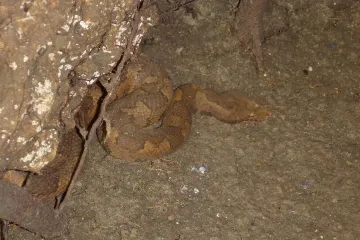
Given their venom, responsible interaction with vipers is essential for human safety. [1] Vipers generally do not seek out humans and bites almost always occur when the snake is intentionally harassed, accidentally stepped on, or provoked. [4][6]
If you encounter a viper in the wild, the best course of action is to remain calm and slowly retreat, providing the snake with ample space to move away. [6] Never attempt to handle, corner, or kill a viper. [6] Because many vipers, such as the Gaboon viper, rely heavily on camouflage, they may remain perfectly still until an actual threat is directly upon them. [4] Maintaining awareness of your surroundings, especially when stepping over logs or reaching into rocky crevices in known viper territory, is a simple yet crucial measure for preventing accidental contact. [6] This proactive awareness, rather than reacting to a sighting, shifts the encounter from a potential emergency to a simple observation of wildlife.
The use of antivenom remains the most critical medical response to a confirmed viper bite, and immediate professional medical attention should always be sought if a bite occurs. [5] The specific antivenom required depends on the viper genus involved, emphasizing why immediate identification or information about the snake can be helpful for medical teams treating the patient. [2]
Related Questions
#Citations
Facts About Vipers
Viper
Vipers are amazing creatures
Gaboon viper - National Zoo
viper
Viper Snake Species Are Always Venomous
Viper Facts for Kids