Viper Shark (dogfish) Facts
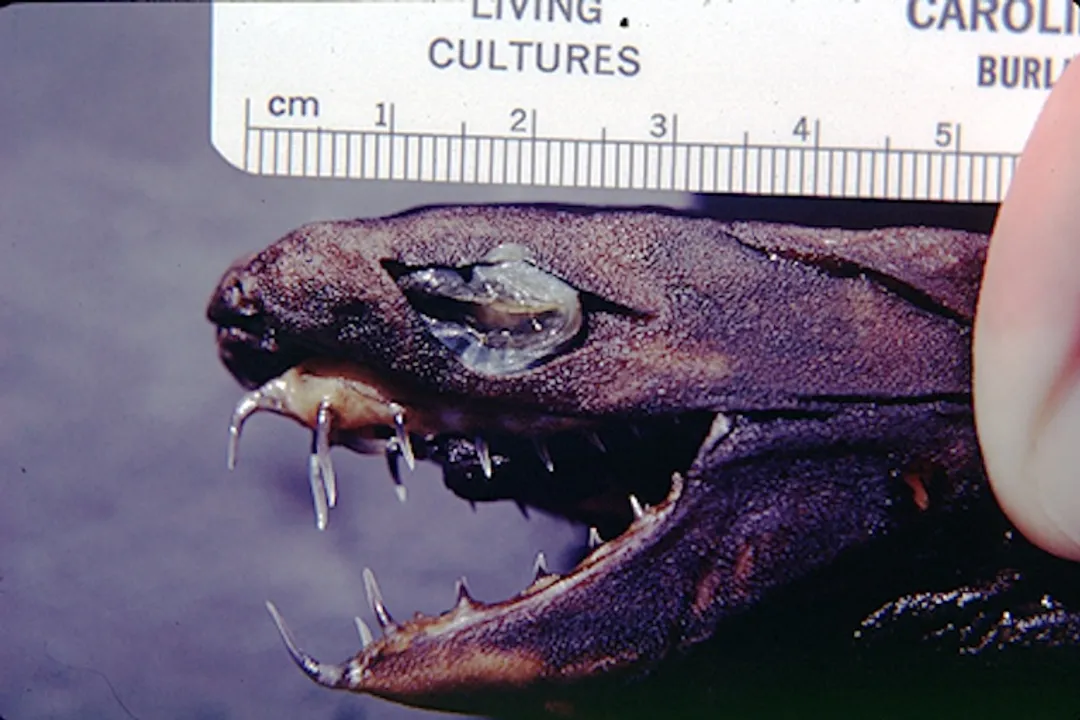
The viper shark, also frequently referred to as the viper dogfish, is a creature shrouded in the darkness of the deep ocean, making any confirmed sighting a significant event for marine biologists. Its appearance is unlike the more familiar sharks found near coastlines, presenting an almost alien profile adapted perfectly for life under extreme pressure and perpetual twilight. [2][7] This species, scientifically named Trigonognathus kabeyai, belongs to the order Squaliformes, placing it within the broader category of dogfish sharks, though its morphology sets it apart considerably from shallower relatives. [1][6] Despite its fearsome common name, which suggests a large, aggressive predator, the viper dogfish is actually quite small, usually measuring less than a meter in length. [3][4] The sheer mystery surrounding this animal stems from its habitat; most of what we know has been pieced together from specimens caught accidentally in deep-sea trawls or remotely observed in its native environment. [7]
# Deep Dweller
The primary defining characteristic of the viper dogfish is where it chooses to live. It is a true denizen of the deep, residing almost exclusively in the mesopelagic or bathypelagic zones, often referred to as the twilight or midnight zones of the ocean. [4][6] While exact depth ranges can vary slightly between reports, they generally occupy waters between approximately 200 and 1,300 meters deep, though they have been recorded even deeper. [2][8] This places them well beneath the reach of sunlight penetration, where the pressure is immense and temperatures are consistently cold. [4]
Their distribution appears to be widespread, having been recorded in various locations across the Pacific and Atlantic Oceans, often associated with continental slopes where the seabed drops sharply into deeper water. [1][4] When these delicate deep-sea inhabitants are accidentally brought to the surface by fishing gear, the rapid change in pressure is often fatal, and their bodies frequently suffer significant barotrauma, meaning intact specimens for study are exceedingly rare. [2] Because of this, analyzing their anatomy and physiology requires careful extrapolation from limited samples, which inherently makes understanding their behavior and population dynamics a challenge. [7] The physiological demands of living under such sustained high pressure mean that the viper dogfish possesses a cartilaginous structure that is likely less calcified and more pliable than that of shallower sharks, allowing it to withstand the crushing environment—a key adaptation that conversely makes recovery for study so problematic. [1]
# Strange Looks
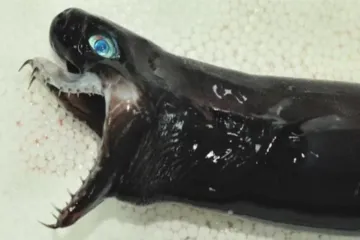
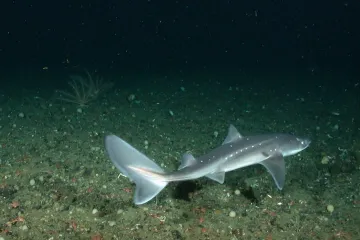
When one finally gets a clear look at a viper dogfish, the combination of features is instantly striking. It possesses an elongated, somewhat eel-like or slender body shape compared to many compact dogfish species. [2][6] While its overall size is small—often cited around 50 centimeters to a maximum of just under one meter—its head is relatively large in proportion to its body. [3][4]
The eyes are another noteworthy feature. They are quite large, which is a common adaptation for maximizing light capture in dimly lit environments. [2] This adaptation is essential for processing the minimal bioluminescence present at those depths. [4] The snout is relatively short, and the mouth is situated terminally, meaning it is located at the very front of the head, unlike sharks whose mouths are positioned ventrally (on the underside). [2] This terminal mouth placement, coupled with the massive gape potential, suggests a feeding strategy focused on engulfing prey head-on, which ties directly into its unique dental arrangement. [6] The coloration tends to be dark, ranging from brownish-black to a dark gray, helping it blend into the abyssal background. [3][8]
# Dental Weapons
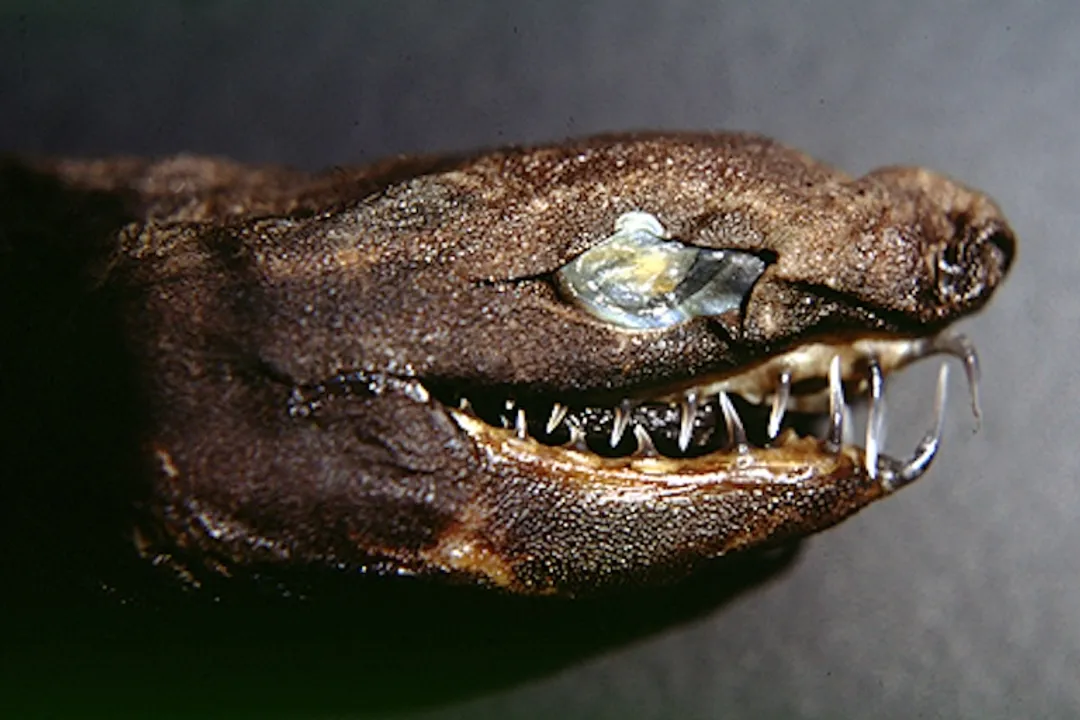
Perhaps the most dramatic feature lending the shark its intimidating name is its dentition. The viper dogfish is equipped with specialized, sharp teeth that seem disproportionately large for its body size. [4] These teeth are needle-like and slender. [3] A unique aspect of their jaw structure is that the teeth in the lower jaw are often described as being particularly long and, sometimes, slightly hinged or movable. [6]
When the shark's mouth is closed, these formidable lower teeth can often protrude beyond the upper jaw, giving the fish a perpetually menacing, fanged appearance, even when not actively feeding. [2][4] This dental configuration is highly specialized for grasping soft-bodied prey, such as small fish or squid, that might be encountered in the dark waters. [4] The sheer number and sharpness of these teeth suggest an adaptation for securing slippery prey quickly before it can escape capture in the vast, open water column. [1]
# Light Control
Life in the bathypelagic zone means dealing with very little natural light, but the environment is not entirely dark; it is filled with the faint, self-generated light of other organisms—bioluminescence. [4] The viper shark has developed its own internal lighting system to navigate or interact within this environment. [6]
The shark possesses numerous photophores, which are light-producing organs, scattered across its body. [3][8] These light organs create patterns along its flanks and underside. [4] While bioluminescence in deep-sea creatures serves multiple purposes—such as attraction, communication, or defense—the placement of the viper dogfish's photophores strongly suggests a role in camouflage against any residual downwelling light filtering from above. This technique is known as counterillumination. [4] Counterillumination works by matching the intensity and color of the faint overhead light, effectively erasing the shark’s silhouette when viewed from below by a potential predator or prey item. This indicates a level of visual sophistication and environmental adaptation beyond what is seen in many shallower-dwelling dogfish species which rely more on countershading (dark top, light bottom). [4]
# Life Cycle
Due to the challenges of observing them, details about the viper dogfish’s life cycle, reproductive strategy, and exact diet are based on limited evidence, yet some key biological facts are known. [1]
# Reproduction
Like many other sharks, the viper dogfish exhibits ovoviviparity. [2][8] This method means that the eggs develop and hatch internally within the mother's reproductive tract, and the pups are born live, rather than being laid as external egg cases (like skates or some catsharks). [8] While the exact size of the litter is not firmly established across all sources, it is understood that they give birth to a small number of young, a pattern typical for K-selected species living in stable, energy-scarce environments like the deep sea. [2]
# Diet
Analysis of stomach contents from recovered specimens points towards a diet consisting primarily of smaller deep-sea creatures. [4] This likely includes various small bony fishes and cephalopods, such as squid. [4] The combination of its specialized, engulfing mouth and sharp, protruding teeth confirms its role as an active predator, likely using its bioluminescence to its advantage while hunting in the deep. [4][6]
# Rarity Context
The viper shark remains an elusive subject for marine science, making it difficult to assess its conservation status accurately. [1] While some classifications list it as Least Concern due to its vast, deep-sea range, this assessment is often provisional because the extent of human interaction, such as deep-sea trawling, is unknown in many regions. [4]
One interesting point often overlooked when discussing deep-sea sharks is the comparison of their capture rates. If a specific region’s trawling operations frequently bring up one type of deep-sea shark but almost never the viper dogfish, it suggests that T. kabeyai might actively avoid certain fishing gear or that its preferred micro-habitat within the depth zone is patchier than its relatives. [7] For instance, if a survey captures numerous sleeper sharks but zero viper dogfish over a decade, it tells researchers that their sampling net geometry or vertical tow patterns might be missing the shark’s specific migratory layer or preferred current. [7] Since the species is generally not targeted commercially and is rarely observed, general population trends are very hard to establish, placing it in a perpetual state of data deficient status in many conservation reports. [1] It remains a fascinating example of how much of the planet's biodiversity remains hidden beneath the sunlit surface waters. [7]
Related Questions
#Citations
Viper dogfish - Wikipedia
Viper Shark (dogfish) Fish Facts - Trigonognathus kabeyai
Viper Dogfish - Sharkwater Extinction
March Elasmobranch of the Month: Viper Dogfish - Sharks4kids
Viper dogfish - Facts, Diet, Habitat & Pictures on Animalia.bio
Viper Shark (dogfish) Facts & Photos | Wowzerful
The viper dogfish is a rare species of shark that resides deep in the ...
Viper Dogfish Facts - Fact Animal
Trigonognathus kabeyai, Viper dogfish - FishBase