Vinegaroon Locations
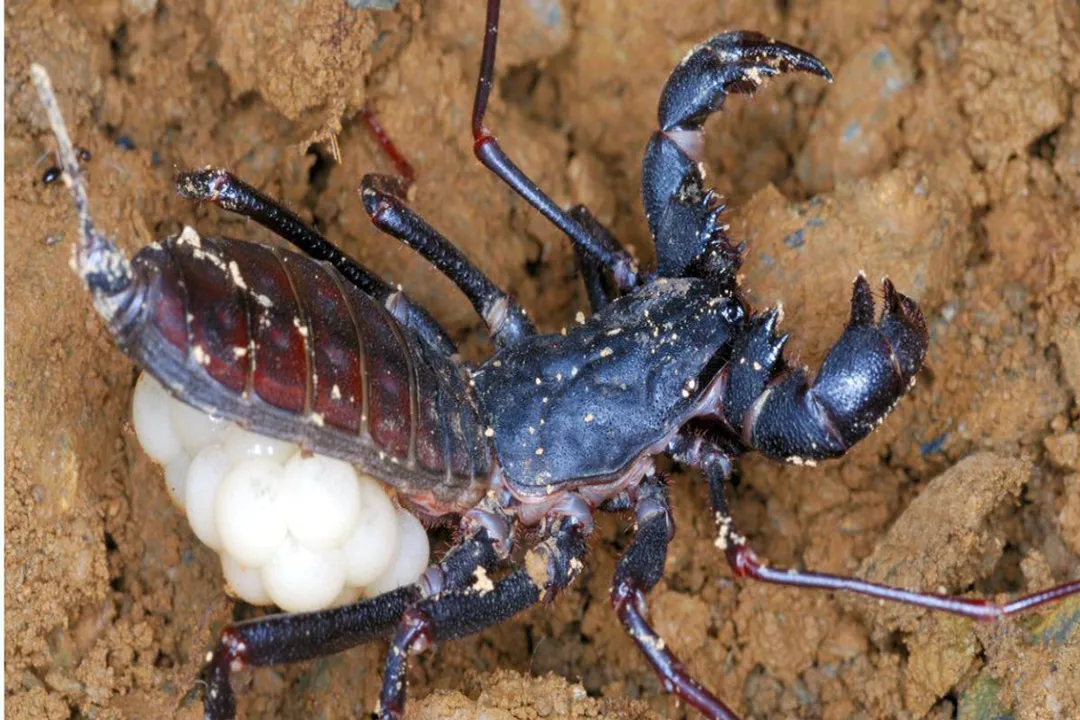
The vinegaroon, an arachnid belonging to the order Thelyphonida, possesses a distribution that spans several continents, though its presence in North America is particularly well-documented, especially within the United States. [8] These creatures, often mistaken for scorpions due to their whip-like tail (which lacks a stinger), thrive in specific climates that suit their semi-fossorial, nocturnal lifestyle. [4] While the order itself is found globally in tropical and subtropical zones, [8] focusing on the well-known species like Mastigoproctus giganteus reveals fascinating geographical clusters. [10]
# Worldwide Presence
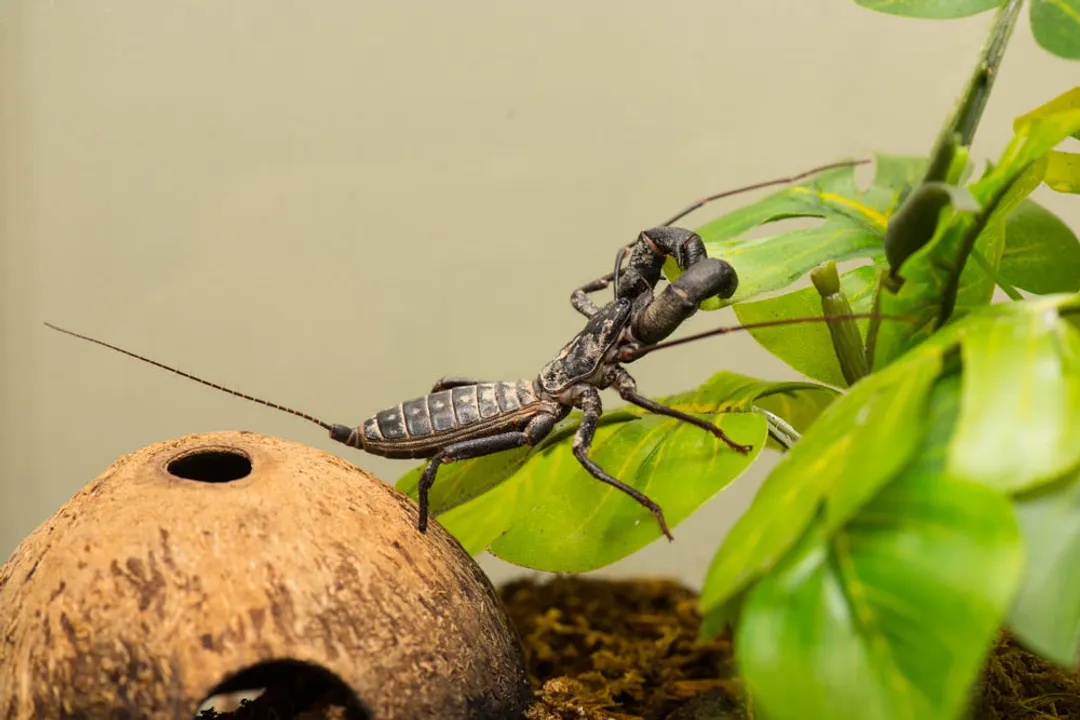
Globally, vinegaroons generally inhabit warmer regions. [8] The order Uropygi, which encompasses the vinegaroons, is distributed across tropical and subtropical areas worldwide. [8] This broad global spread suggests that while American species dominate conservation and hobbyist discussions, their relatives exist across vast swathes of the planet where conditions permit burrowing in the soil and avoiding prolonged desiccation. [8] They are part of a larger group of arachnids that have successfully adapted to numerous terrestrial environments outside of the most extreme cold. [8]
# American Range
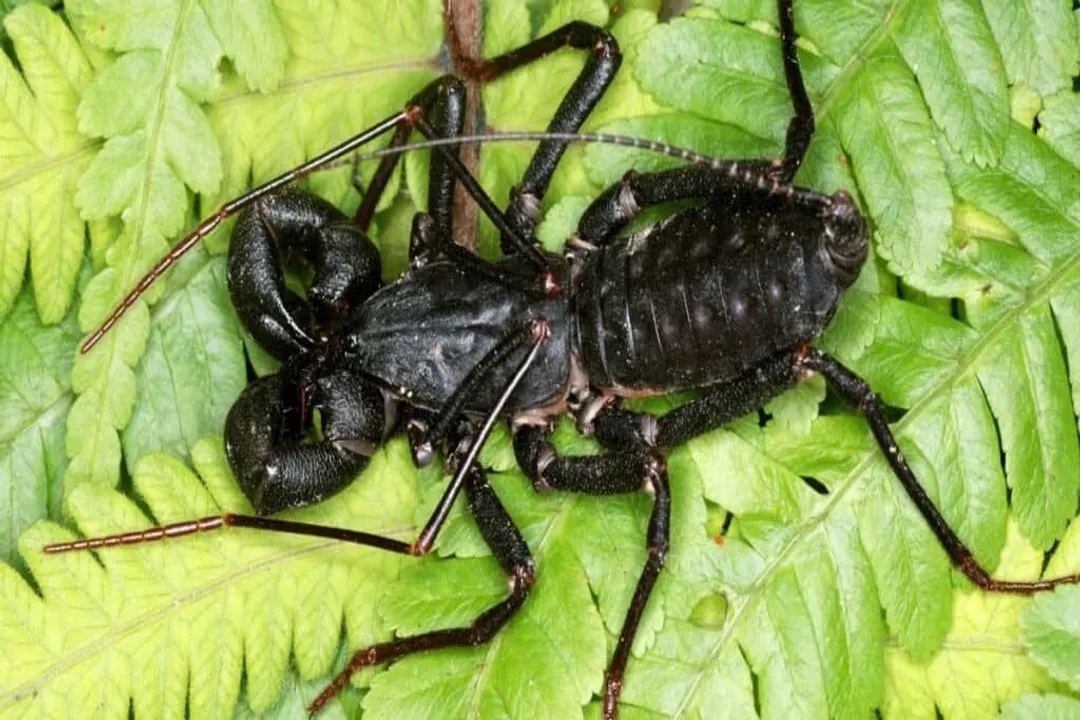
Within the United States, the distribution of the common vinegaroon, Mastigoproctus giganteus, shows a clear split between the arid Southwest and the humid Southeast. [10] This species has a surprisingly broad territory across the Southern US. [10] Observations place its range extending from South Carolina westward through states like Florida and Texas, and reaching north into Oklahoma and Missouri. [10] This coverage suggests that humidity levels, perhaps more than outright aridity, dictate suitability in the eastern part of their range. [7][10]
The habitat preference within these states strongly leans toward environments where they can dig or find pre-existing shelters. [4][9] For instance, in Florida, vinegaroons are associated with sandy soils and scrub habitats, where they can easily construct the deep burrows that serve as their primary refuge from the heat and predators. [7]

# Desert Habitats
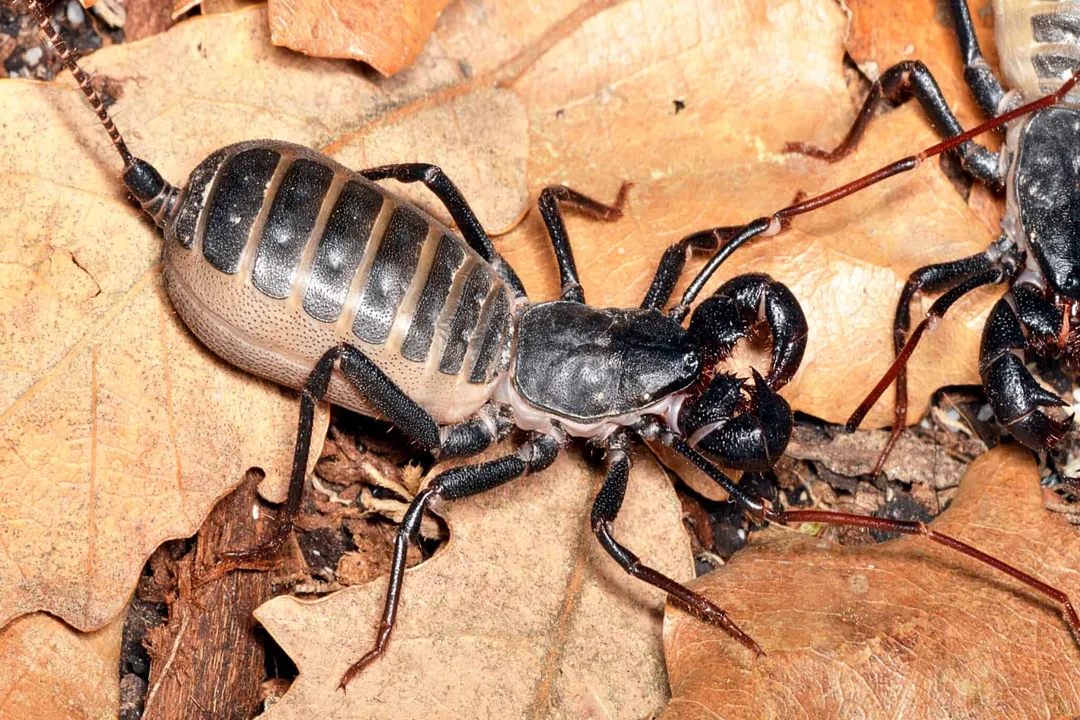
The American Southwest is frequently highlighted as a primary area for vinegaroon sightings, often characterized by desert or semi-arid scrubland. [9] This region is home to Mastigoproctus giganteus, but also potentially other, more localized species, depending on the exact latitude and elevation. [5] The life of a desert dweller necessitates specific adaptations, and the vinegaroon’s nocturnal habits are a direct response to the extreme daytime temperatures found in places like the Sonoran Desert. [9]
It is worth noting the geographical distinction suggested by some records. While M. giganteus covers a wide area, observation data on platforms like iNaturalist sometimes highlights specific regional variants or species distributions. [5] For example, Mastigoproctus tohono, a related species, appears to have a more confined range, frequently reported in the region bordering Arizona and Northern Mexico. [5] When researchers or enthusiasts are seeking vinegaroons in places like Arizona, they are often looking in rocky, well-drained areas where the soil structure supports deep, secure hiding spots away from the scorching sun. [9] If you find yourself in a desert region known for these arachnids, understanding that they prefer areas with a mix of sand and perhaps some leaf litter or rock cover can significantly narrow your search area. [4]
The common name "desert vinegaroon" often gets applied broadly, but many individuals living in the humid Southeast are encountering M. giganteus in their lawns or gardens, which are certainly not arid deserts. [7][10] This linguistic overlap can sometimes confuse the understanding of their core ecological requirements, which center on soil stability for burrowing rather than strictly low precipitation. [4]
# Captive Environments and Education
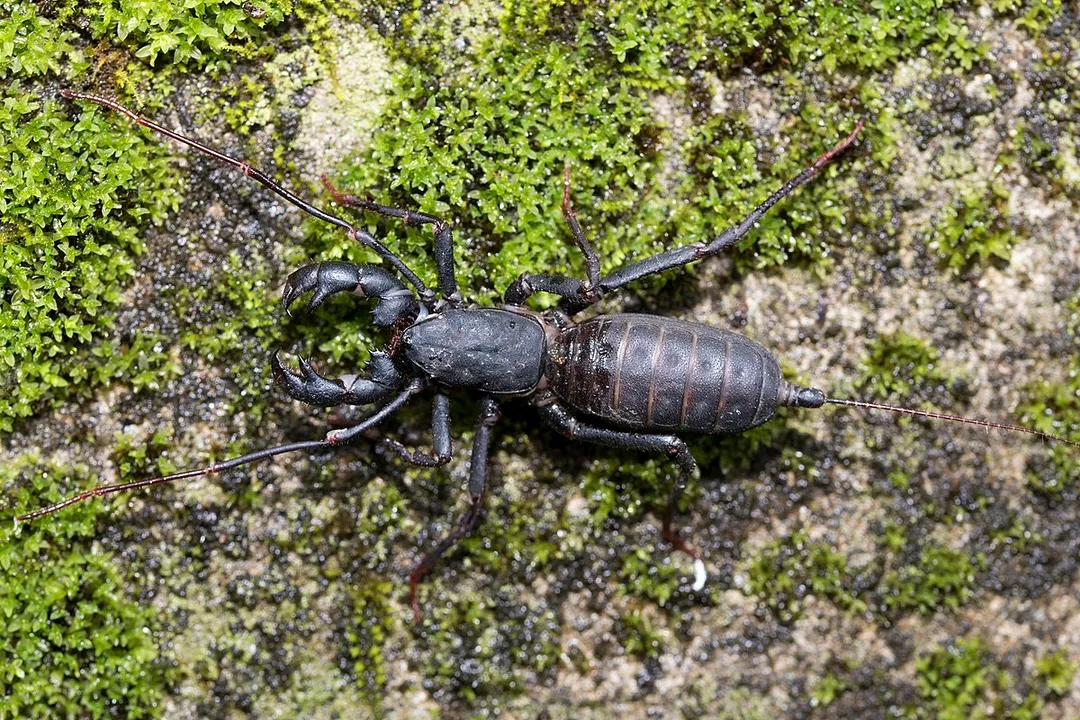
Beyond their native ranges, vinegaroons are located in educational institutions and the exotic pet trade, which provides access points for people who would otherwise never encounter them in the wild. [6] Zoos, like the Oregon Zoo, frequently house these fascinating arachnids as part of their invertebrate collections, often displaying them in simulated desert environments. [6] These captive locations serve a dual purpose: they provide controlled environments for study and offer the public a chance to observe the animal's unique behavior, such as the use of their elongated flagellum, without disturbing wild populations. [4][6]
For those interested in keeping them as pets, knowing the exact requirements for replicating their natural location is key. A successful enclosure must mimic the substrate and humidity gradient of their home range, whether that's the loamy soil of the Southeast or the sandy, rocky substrate of the Southwest. [4] A substrate depth of at least 6 to 8 inches is typically recommended to allow for adequate burrowing, which is critical for their well-being regardless of the specific locale they originate from. [4]
# Habitat Specifics and Activity Correlation
A key insight when considering where to find a vinegaroon—either in the wild or understanding why they are present in a certain area—is linking location to activity cycles. The distribution data across the US, from South Carolina to Texas, suggests a common thread: adequate organic material or soil composition for digging. [7][10] They spend the vast majority of their lives underground, sometimes for weeks at a time, emerging only to hunt, mate, or disperse during specific weather conditions. [9]
In areas where they are common, such as parts of Texas or Arizona, local observers often report high activity following summer rains. This environmental trigger prompts them to leave their burrows to hunt, making the hours immediately following a significant rainfall the best time to potentially observe them traversing the ground surface at night. [9] This behavior means that even if you are in a region geographically known to host them, when you look is as important as where you look. [2]
Considering the wide geographical spread across different microclimates, the ability of M. giganteus to regulate its internal environment by simply moving deeper into the soil is remarkable. [10] A deep burrow offers a constant, moderate temperature and humidity level, buffering the animal against the surface extremes, whether those extremes are the scorching heat of the Arizona desert or the high humidity swings of a Florida summer. [7] This adaptability explains their presence across such varied latitudes within the Southern United States. [10]
If you were to map out the known US localities for M. giganteus based on verifiable reports, you would notice a concentration along the southern tier of states, with a secondary, albeit lower density, presence further north into Missouri and Oklahoma. [10] This pattern strongly suggests that while they can tolerate cooler winters (a feature of states like Missouri), the availability of suitable, deep soil for year-round survival is the ultimate limiting factor for their presence. [4] A quick check of soil type maps against known vinegaroon distribution in the US reveals that areas with deep, non-compacted sandy loam soils often correlate strongly with reported sightings, offering an educated guess for where they might exist even in undocumented counties. [7] This geological preference overrides simple latitude or general climate zone classification in predicting their local spots. [10]
# Species Differentiation in Range
While the general term "vinegaroon" is often used for the American species, recognizing the difference between M. giganteus and others like M. tohono is key to understanding precise locations. [5][10] M. giganteus appears to be the species with the widest distribution, stretching across the Gulf Coast states and westward. [10] In contrast, M. tohono seems more intrinsically tied to the specific conditions of the US Southwest borderlands. [5] If you are tracking records for a scientific survey in, say, New Mexico, you are highly likely to be dealing with M. giganteus, but if you are focusing on the drier, more immediate border zone with Mexico, M. tohono becomes a more likely candidate based on current observational data. [5] This subtle ecological partitioning—where closely related species occupy adjacent but slightly different niches—is a common theme in arachnid biogeography. [8]
When encountering a vinegaroon, even without laboratory analysis, its general size and location can offer a clue about its identity. While specific measurements are often needed for certainty, the sheer geographic spread of M. giganteus makes it the most commonly encountered species by the general public in the US, whether they are finding them in their backyard in South Carolina or while camping in central Texas. [2][10] The fact that a single species can thrive in environments ranging from humid, subtropical forests to semi-arid scrub provides a testament to its behavioral plasticity, anchored by its dependence on stable subsurface environments. [7][9]
Related Questions
#Citations
Vinegaroon found in southeastern Arizona - Facebook
Vinegaroon Animal Facts - A-Z Animals
Vinegaroon - Gamer Escape's Final Fantasy XIV (FFXIV, FF14) wiki
Mastigoproctus giganteus - The Tarantula Collective
Tohono Vinegaroon (Mastigoproctus tohono) - iNaturalist
Vinegaroon | Oregon Zoo
EENY493/IN890: Giant Whip Scorpion Mastigoproctus giganteus ...
Uropygi - Wikipedia
WonderLab's Desert Dwellers: Vinegaroon
Mastigoproctus giganteus | INFORMATION - Animal Diversity Web