Vicuña Facts
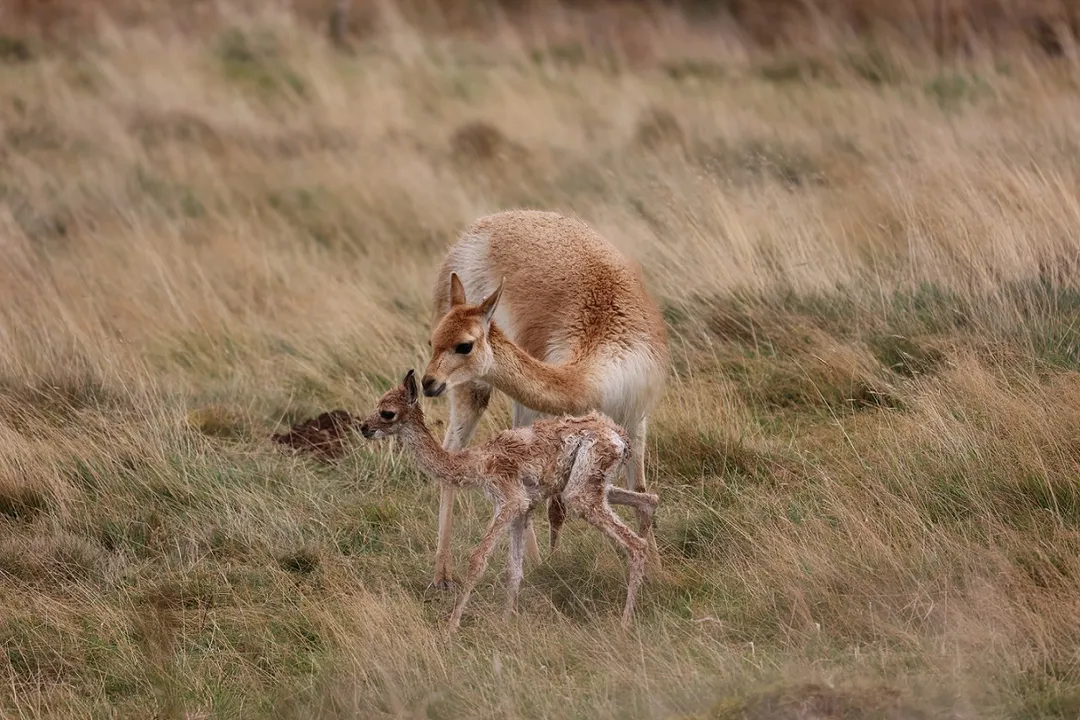
The vicuña, a graceful and slender inhabitant of the high Andean plains, represents one of the most remarkable success stories in modern wildlife conservation, even as its fleece remains among the most coveted textiles on earth. This animal is a true emblem of its harsh, lofty environment, surviving where few other mammals can thrive. [1][2][6][8] Though often confused with llamas and alpacas, the vicuña holds a distinct and historically significant place in the camelid family tree, being the wild ancestor of the domesticated alpaca. [1][3][8]
# Camel Family Member
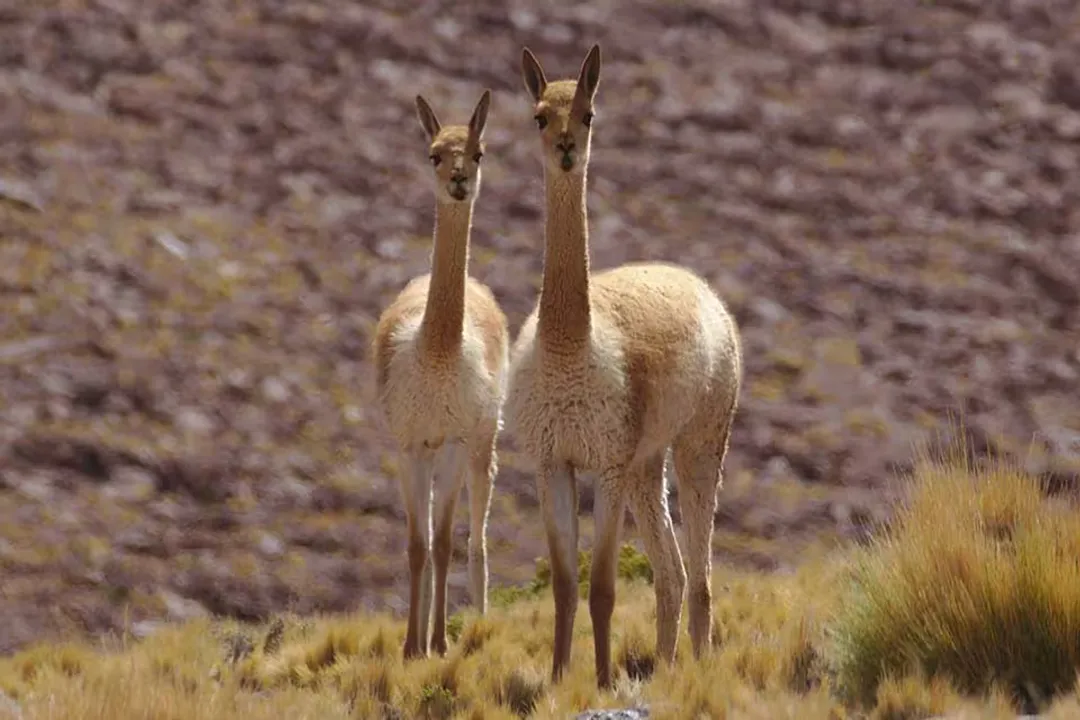
Vicuñas belong to the order Artiodactyla and the family Camelidae, a group that also includes camels found in Africa and Asia. [1][2] Within the South American camelids, there are two wild species: the vicuña (Vicugna vicugna) and the guanaco (Lama guanicoe). [1][2][8] The other two members are domesticated: the llama (Lama glama), descended from the guanaco, and the alpaca (Vicugna pacos), which shares a direct lineage with the vicuña. [1][3][8] Genetic studies have confirmed this close relationship, noting that the alpaca was domesticated primarily for its fine fiber, a trait inherited directly from its wild relative. [1][3] Unlike llamas, which can be quite large, the vicuña is the smallest member of the South American camelid group. [1][3][5][8]
# Fine Coat Details
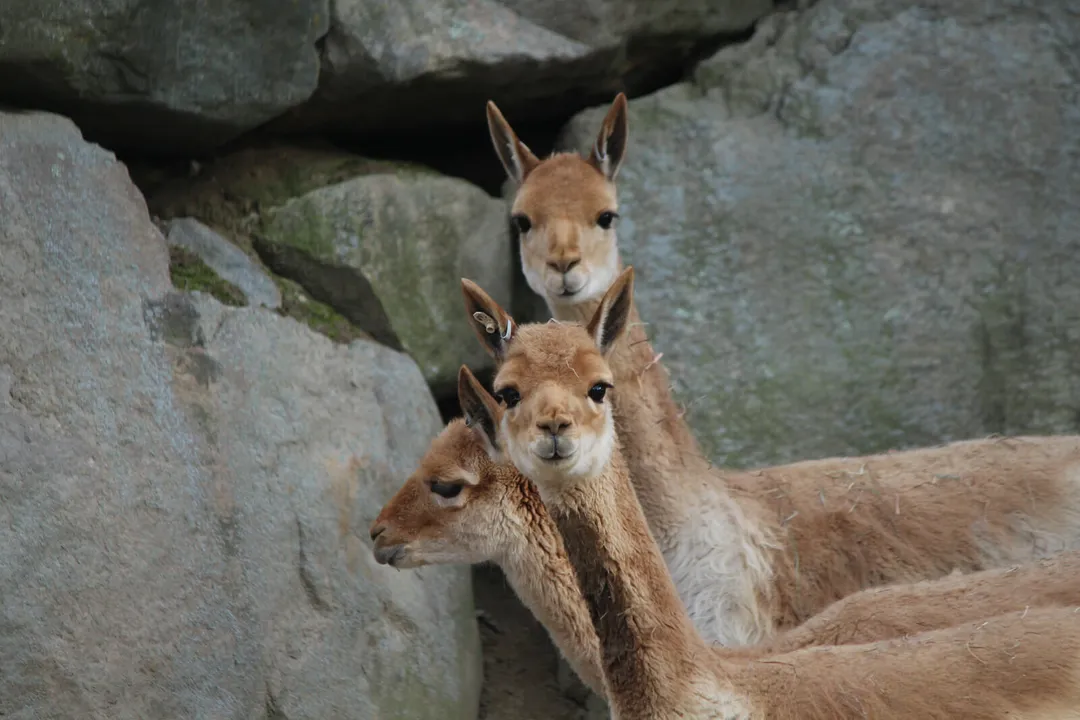
Physically, the vicuña is built for elevation and cold. An adult stands about 0.75 to 1 meter (about 3 feet) tall at the shoulder and typically weighs between 35 and 65 kilograms. [1][2][5][8] Their coat is renowned worldwide for its exceptional quality, characterized by extremely fine, soft fibers that provide incredible insulation against the frigid mountain nights. [1][2][6] The coloration is generally a light cinnamon or tawny brown across the back and flanks, which contrasts sharply with the white fur on the chest, throat, and inner legs. [1][2][5]
The critical feature setting the vicuña apart is the micron count of its fiber. Vicuña wool measures between 6 to 12 micrometers in diameter. [1][2][6] To put this fineness into perspective, the finest commercially available cashmere usually measures around 14 to 19 microns, meaning the vicuña's coat is significantly finer than even top-tier cashmere. [2][6] This characteristic fineness, combined with the dense growth pattern—estimated at about 500,000 hairs per square inch—creates a lightweight yet immensely warm garment. [2][6] This natural adaptation is an evolutionary masterpiece, allowing the animal to maintain core temperature in an environment where temperatures can swing drastically between day and night. [6]
# High Altitude Home
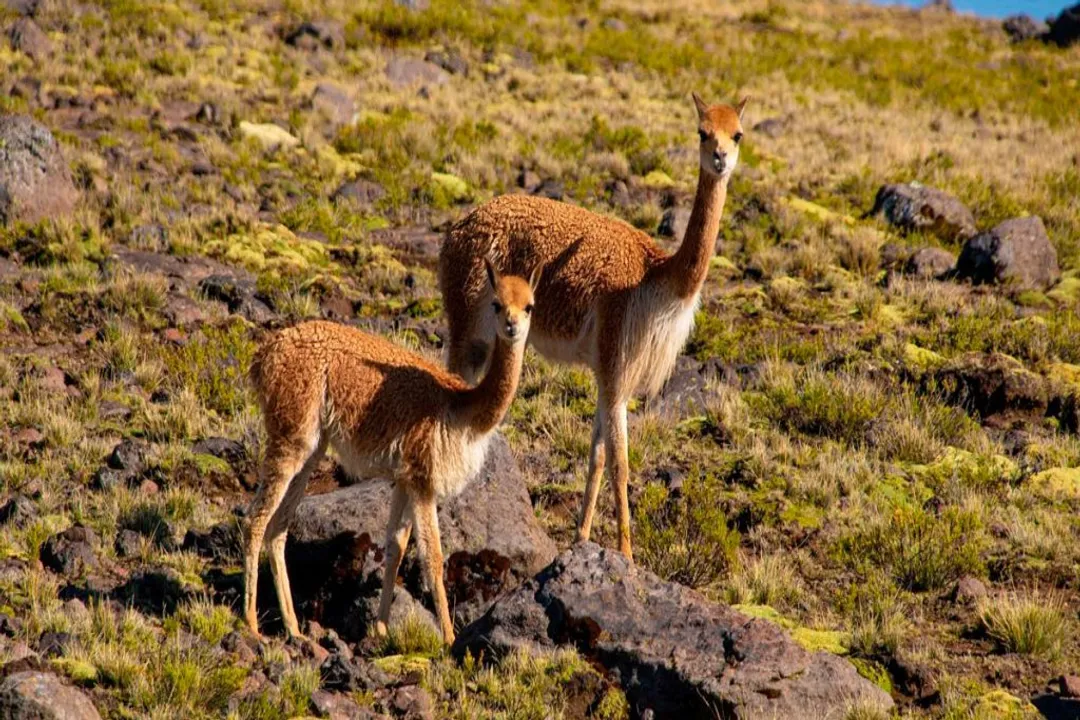
Vicuñas are specialists of the puna and altiplano regions of the Andes Mountains. [1][2][6] Their geographic range spans parts of Peru, Bolivia, Argentina, and Chile. [1][5][6][8] They prefer the dry, grassy steppes at elevations generally ranging between 3,200 and 4,800 meters (approximately 10,500 to 15,700 feet) above sea level. [1][2][6][8]
This specific habitat preference is directly linked to their physiology, including their specialized blood structure that efficiently transports oxygen in the thin atmosphere. [1][6] The vicuña is so tied to this environment that it is considered the representative species of the Peruvian highlands. [6][7] In fact, the vicuña holds the distinction of being featured on the coat of arms of Peru, symbolizing the nation’s animal wealth. [6][7]
# Group Structure
Social organization dictates much of the vicuña’s daily life. They live in highly structured family units, or harems, which are territorial. [1][2][5] A typical harem consists of one dominant male, several breeding females, and their offspring. [2][5] The male fiercely defends a specific territory that encompasses both feeding grounds and sleeping areas. [1][2] Non-breeding males or older, subordinate males are often excluded from these harems and form loose bachelor groups that roam peripheral areas. [1][5] The female-to-male ratio in family groups can vary, but groups generally range from five to fifteen individuals. [5] Territorial boundaries are often marked visually and through dung piles, providing clear signals to neighboring family groups. [2]
# Grazing Habits
The diet of the vicuña is strictly herbivorous, focusing mainly on grasses and low-growing vegetation found in the high-altitude grasslands. [1][5][8] Their feeding style is unique among grazers. Unlike cattle or even domestic llamas, which often pull grass up by the root, vicuñas possess specialized lower incisor teeth that grow continuously, similar to rodents. [1][8] This dental adaptation allows them to clip the grass very close to the ground surface without disturbing the root system. [1][8]
This specialized grazing technique has significant ecological implications in the fragile altiplano environment. Because they clip rather than uproot, they help maintain the health and rapid regrowth of the sparse grasses that form the foundation of the ecosystem, minimizing soil erosion in an area prone to high winds and temperature extremes. [1][8] This contrasts sharply with continuous, heavy grazing by domestic livestock, which can lead to long-term degradation of high-altitude pastureland, highlighting the vicuña's role as a more sustainable native browser. [1]
# Status Shift
The history of the vicuña is deeply intertwined with human exploitation. During the Inca Empire, vicuñas were highly protected; only royalty could wear their fiber, and shearing was done according to strict, sustainable rituals. [6][7] Following the Spanish conquest, these protections vanished, and indiscriminate hunting began, driving populations down dramatically. [6] By the mid-20th century, the species was perilously close to extinction, with estimates suggesting that fewer than 10,000 animals remained globally. [2][6][8]
Intensive conservation efforts, including CITES listing and national protection laws in range countries, reversed this catastrophic trend. [2][6] Peru banned all hunting and imposed strict commercial restrictions on the trade of vicuña wool starting in the 1970s. [6][7] These measures were highly successful, causing the population to rebound significantly across the Andes. [2][6] Today, the vicuña is generally classified as Least Concern globally, though some regional populations are still managed carefully. [2][6][8] This dramatic recovery stands as a major international conservation achievement. [6]
# Fiber Gold
The economic value attached to the vicuña fiber is extraordinary, often referred to as the "Gold of the Andes". [6] The reason for its high price is twofold: its unmatched quality (fineness) and the extremely low yield per animal. [2][6] A single adult vicuña produces only about 200 grams (or less than half a pound) of usable fiber every two years. [2][6][7]
Because they are wild and legally protected, shearing is strictly regulated, usually occurring only once every two years following a traditional roundup. [6][7] While the raw fiber is incredibly valuable, the cost escalates steeply once processed into yarn and then finished garments, making it one of the most expensive natural fibers available in the world. [2] Exporting the raw fiber is heavily controlled, usually requiring documentation proving it was harvested humanely from live animals under government supervision. [7]
# Shearing Rituals
The method used to obtain this precious fiber is as culturally significant as the fleece itself. Known locally as chaccu (or chacu), this practice is an ancient Andean tradition revived for modern sustainable use. [6][7] The process involves hundreds of community members forming a massive human chain, often kilometers long, to slowly drive the wild vicuñas into temporary corrals built in open areas. [6][7] This herding is done slowly and carefully to minimize stress on the animals. [6]
Once corralled, the animals are gently shorn by hand, with only the fiber from their backs and sides being collected. [7] Crucially, after the shearing is complete—a process that ensures the animal retains enough coat for survival in the harsh climate—the vicuñas are immediately released back into the wild without harm. [6][7] This controlled harvesting, conducted under state supervision, ensures that commercial activity supports, rather than depletes, the wild population, effectively linking the economic welfare of local Andean communities to the continued survival of the species. [6][7]
Related Questions
#Citations
Vicuna | Habitat, Diet, Lifespan, & Facts | Britannica
Vicuña - Wikipedia
Vicuna - Facts, Diet, Habitat & Pictures on Animalia.bio
Vicuña | Southwick's Zoo
Vicuna - Highland Wildlife Park
10 VICU? FACTS - National Park
Vicuna Facts For Kids | AstroSafe Search - DIY.ORG
The Vicuña: Peru's Representative and Emblematic Species
Vicuña Animal Facts - Lama vicugna - A-Z Animals
Vicuña facts, distribution & population - BioDB