Vervet Monkey Facts
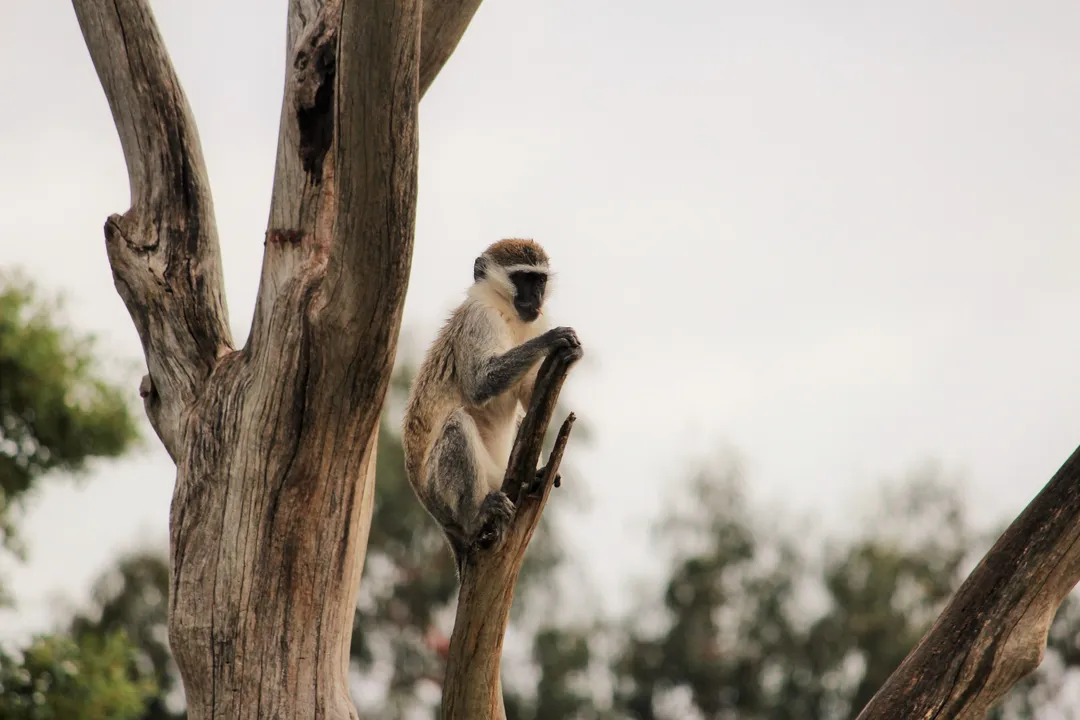
The vervet monkey, Chlorocebus pygerythrus, presents a fascinating study in primate adaptation, easily recognizable by its distinct facial markings and highly evolved communication methods. These small-to-medium-sized primates are widespread across sub-Saharan Africa, making them one of the more familiar faces of the African primate world. [2][4] While they are often grouped generally as "vervet monkeys," taxonomists recognize several closely related species or subspecies, all sharing core characteristics, though their exact distribution and genetic differences are subjects of ongoing study. [2] Observing them in the wild reveals a complexity in social interaction and warning systems that belies their relatively small stature. [1][6]
# Physical Traits
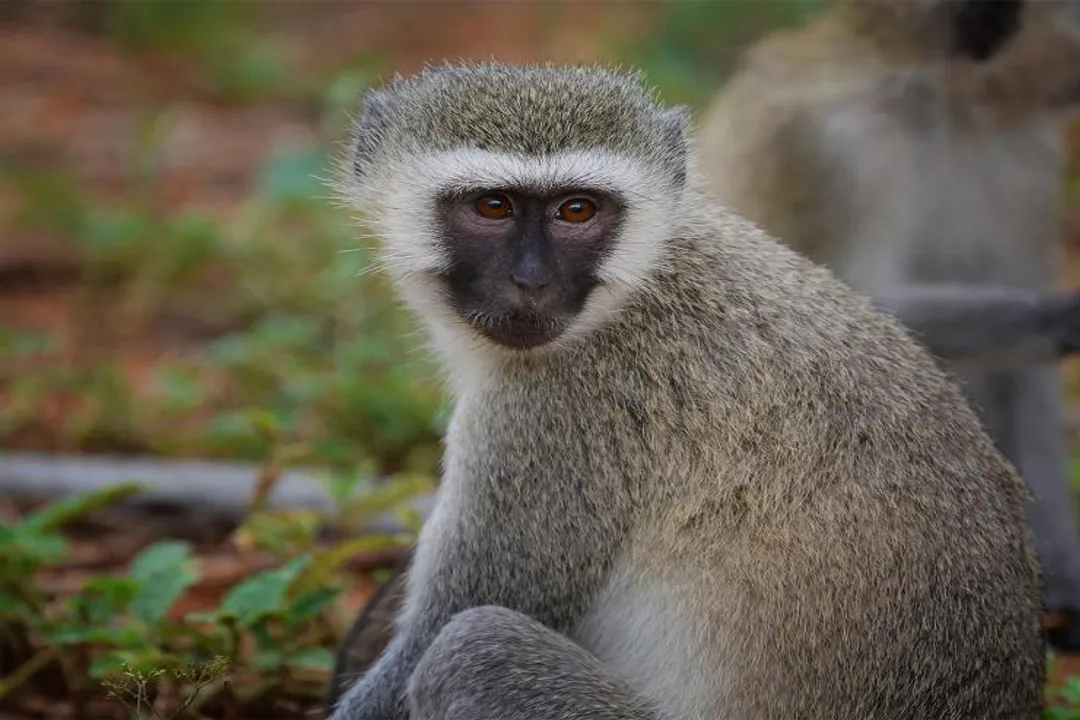
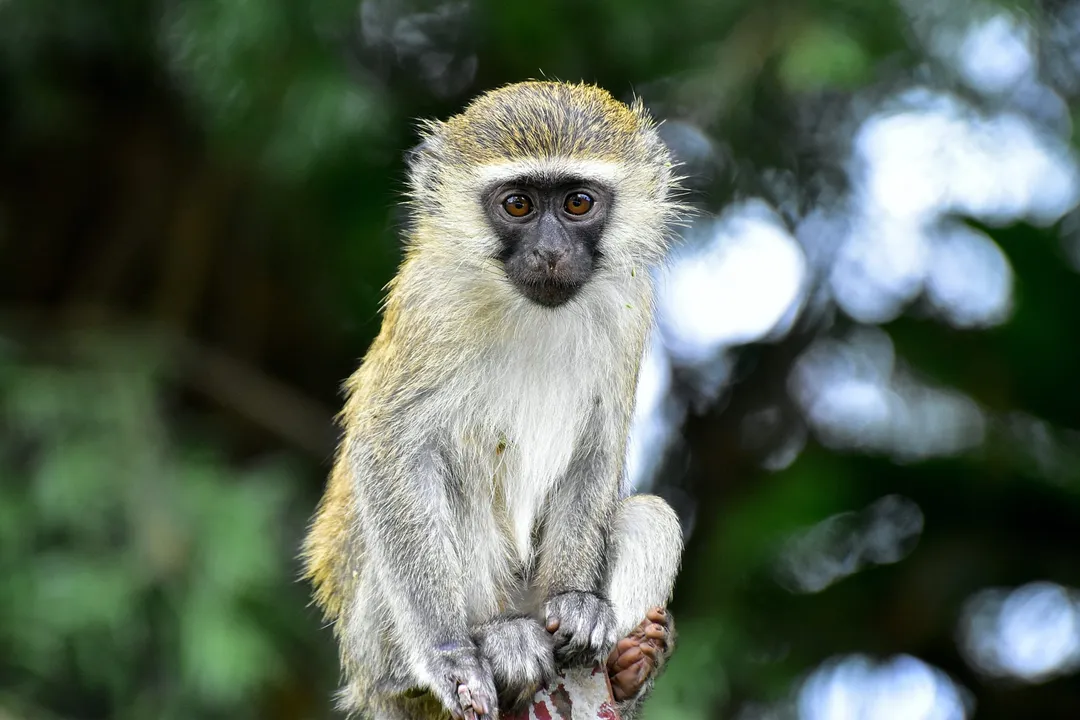
Vervet monkeys are characterized by a coat that typically appears grayish-green or olive-gray, offering excellent camouflage against the backdrop of savanna grasses and sparse woodland foliage. [1][6] A notable feature is the black face, contrasting sharply with the white fur circling the forehead, creating a distinct "brow" effect. [1][2] They also possess a black tip on their tail and dark skin on their lower abdomen. [2] Males are generally larger than females, a common pattern in many primate species, reaching weights up to around 8 kilograms, while females usually top out near 4 kilograms. [2] Their body length, not including the tail, is typically between 38 and 60 centimeters. [2] Like many Old World monkeys, they have non-prehensile tails, used primarily for balance while navigating branches and during locomotion on the ground. [2]
# Coloration Nuances
It is important to note that "vervet monkey" can sometimes be used broadly. For example, the Tana River crested mangabey, while sometimes confused or grouped loosely in broader discussions, is a distinct species, but within the Chlorocebus genus itself, variations exist. [2] For the classic vervet, the olive-green dorsal fur is the result of a mixture of black, white, and yellow hairs, giving it that characteristic hue that blends into their preferred environment. [6]
# Geographic Spread
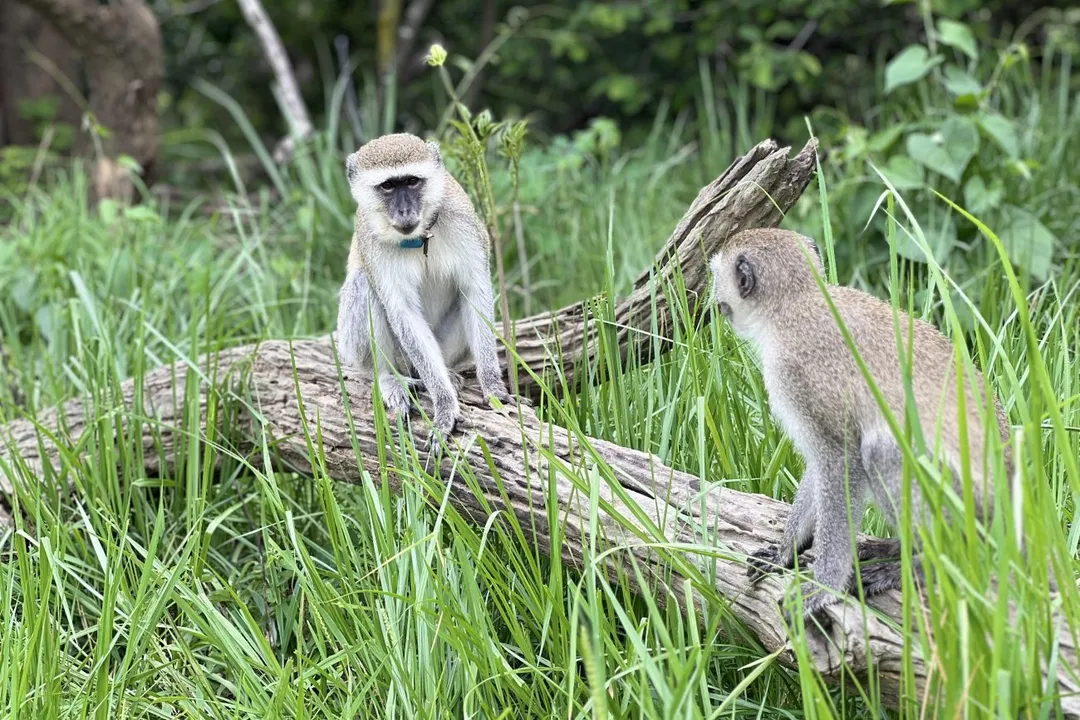
The native range of the vervet monkey is expansive, stretching across much of eastern and southern Africa. [1][5] They thrive in a variety of habitats, showing remarkable ecological flexibility, though they are most closely associated with savanna woodlands, riparian zones (areas along rivers), and scrubland areas. [1][2] They are less likely to be found deep within dense rainforests, preferring areas with a mix of trees for sleeping and open ground for foraging. [1][4] Countries like Kenya, Ethiopia, South Africa, and Tanzania are all part of their historic domain. [2]
If you are tracking wildlife in Southern Africa, for instance, you might find them in areas like Kruger National Park, where the environment is predominantly open woodland and bushveld. [8] Their distribution extends across eastern Africa as well, where different subspecies may be present, though they generally occupy similar ecological niches within their respective territories. [2]
# What Monkeys Eat
Vervets are opportunistic omnivores, meaning their diet is highly varied depending on what is seasonally available. [2][4] This adaptability is a significant factor in their broad distribution and general success compared to more specialized eaters. [1] Their diet primarily consists of leaves, flowers, fruits, seeds, and blossoms. [6][10] However, they supplement this vegetation intake with animal protein. [2] This animal matter frequently includes insects, larvae, and small vertebrates such as bird eggs, nestlings, and occasionally small lizards or rodents. [1][2][4]
Because they spend a significant amount of time foraging on the ground, they can access food sources unavailable to more strictly arboreal primates. [8] They have been observed digging for roots and tubers, showcasing their resourcefulness. [6] This flexibility means that a troop living near human settlements might incorporate cultivated crops into their diet, leading to human-wildlife conflict, whereas a troop deep in a national park might subsist entirely on wild acacia pods and beetles. [1] This capacity for rapid dietary pivoting, substituting high-value items like ripe fruit with less preferred but readily available leaves or insects when resources become scarce, likely explains why they maintain stable populations across diverse African landscapes, even when faced with habitat fragmentation that restricts access to preferred food trees [1][6].
# Group Dynamics
Vervet monkeys are highly social animals, living in cohesive, multi-male and multi-female social groups known as troops. [2][6] These troops can vary considerably in size, often ranging from about 10 to 50 individuals, but numbers can fluctuate based on local resource availability and predation pressure. [2][4]
The social structure is complex, featuring clear hierarchies among both males and females. [2] Female dominance hierarchies are often linear and established early in life, typically passed down matrilineally—meaning a daughter inherits her mother's rank. [2][6] This strong female kinship bond forms the stable core of the troop. [2] Male hierarchies are generally more fluid, with status often determined by age, size, and success in direct confrontations. [2]
Grooming is a central social activity, serving not just for hygiene but also for reinforcing social bonds, appeasing rivals, and establishing alliances within the troop. [6] Parental care is usually the responsibility of the mother, but cooperative breeding, where other females, often older sisters or unrelated alloparents, assist in caring for the infants, is a common observation. [2][6] The troop will typically sleep together in trees for safety at night before dispersing to forage during the day. [4]
# Alarm Calls
Perhaps the most studied and impressive aspect of vervet monkey life is their sophisticated communication system, particularly their use of alarm calls. [2][10] Unlike simple expressions of generalized fear, vervets possess distinct, referential vocalizations that communicate the type of predator they have spotted. [2][10] This is a significant cognitive achievement, as the call refers to an external object or event, much like a word. [10]
Researchers have identified specific calls corresponding to at least three major aerial and terrestrial threats:
- Leopard Call: A specific cough or bark used when a ground predator like a leopard is spotted. Upon hearing this, monkeys typically climb up into the thinner branches of trees, where the heavier predator cannot follow easily. [2][10]
- Eagle Call: A chuttering or clucking sound made in response to an aerial threat, such as a martial eagle. When this call is heard, the monkeys run for dense bushes or look up and hide under foliage, as climbing up might make them more visible against the sky. [2][10]
- Snake Call: A low, chuttering sound given when a snake is detected on the ground. This usually prompts the monkeys to stand on their hind legs and scan the area or move away cautiously. [2][10]
This system requires immense cognitive processing—the monkey must correctly identify the threat, select the appropriate label (the call), and the rest of the troop must interpret that label correctly to enact the appropriate anti-predator response. [10] It is a clear demonstration of semantic communication in non-human primates. However, living near human settlements introduces novel sounds—cars backfiring, machinery, gunshots—which can confuse this finely tuned system. If a novel, loud sound is consistently ignored or results in no threat, the monkeys might start exhibiting 'call fatigue,' potentially ignoring a genuine, though unusual, predator alarm in the future due to acoustic noise pollution [2].
# Threats Status
Despite their widespread distribution and adaptability, vervet monkeys face numerous pressures across their range. [4][5] The International Union for Conservation of Nature (IUCN) often lists the species as "Least Concern" overall, but this can mask severe local declines. [1]
The primary threats include:
- Habitat Loss: Conversion of savanna and woodland for agriculture, logging, and human settlement directly reduces their available space and food sources. [1][4]
- Persecution: In agricultural areas, vervets are often viewed as pests because they raid crops, leading to retaliatory killings by farmers. [1][5]
- Pet Trade: Their intelligence and manageable size when young make them attractive, though unsuitable, pets, contributing to trapping and removal from wild populations. [1][5]
The survival of local populations often depends heavily on land management practices. Where they are protected within national parks, their numbers tend to remain healthy. [8] Where land-use change is rapid and unregulated, local extirpation (local extinction) can occur quickly. [4] Managing the balance between human agricultural needs and primate survival remains a key conservation challenge for these adaptable monkeys. [1]
# Reproduction
Vervet monkeys typically reach sexual maturity around four years of age. [2] Females generally give birth to a single infant after a gestation period of about five to six months. [2][6] Births can occur year-round, although some studies suggest a slight peak in birth rates corresponding with periods of higher food abundance. [2] As mentioned earlier, infant survival is strongly supported by the social network, as non-mother females often engage in allomothering behaviors, offering protection and comfort to the young. [2] The dependency period for a young vervet is relatively long compared to some other small mammals, requiring consistent parental and troop investment before independence is achieved. [6]
#Videos
Vervet Monkey facts Vervet ranges throughout much of Southern ...
Related Questions
#Citations
Vervet Monkey | African Wildlife Foundation
Vervet monkey - Wikipedia
Vervet Monkey | San Diego Zoo Animals & Plants
Everything you need to know about vervet monkeys - Born Free
Vervets - Facts, Habitat, Endangered Status | Species Spotlight
Vervet Monkey - Columbus Zoo
Vervet Monkey (Chlorocebus pygerythrus) Fact Sheet - LibGuides
Vervet Monkey Facts | Southern Africa Wildlife Guide
Vervet Monkey Facts: Lesson for Kids - Study.com
Vervet Monkey facts Vervet ranges throughout much of Southern ...